Are General AI Chatbots or Specialized Mental Health Assistants Better for Structured Reflection?
2026-08-20
What Actually Separates a Reflection Tool From a Therapy Substitute?
For structured reflection — journaling, thought-pattern tracking, cognitive reframing practice, and preparing for conversations with a human clinician — general-purpose AI chatbots and specialized mental health assistants excel at different halves of the problem. Specialized tools like Wysa and Woebot bring protocol discipline and clinical guardrails; general platforms like Jenova, ChatGPT, and Claude bring conversational range, memory, and flexibility across life domains. Neither is a therapy substitute, and the American Psychological Association states plainly that these tools "should not be used as a replacement for a qualified mental health care provider."
Key factors that separate genuine reflection support from generic conversation:
✅ Protocol structure — whether the tool follows a defined framework (CBT thought records, Socratic questioning, mood tracking) or improvises each session ✅ Crisis escalation behavior — a 2025 evaluation of 29 chatbot agents found none met the researchers' criteria for an adequate response to escalating suicidal ideation ✅ Sycophancy resistance — whether the system challenges distorted thinking or simply validates it ✅ Memory and continuity — whether patterns across weeks are visible or every session starts blank ✅ Data handling transparency — most consumer tools are not covered by HIPAA
These five dimensions form the evaluation framework used throughout this article. They matter more than brand names, because the same tool can be a reasonable reflection partner and a dangerous crisis responder depending on which dimension you're testing.
Why Are So Many People Using AI Chatbots for Emotional Reflection?
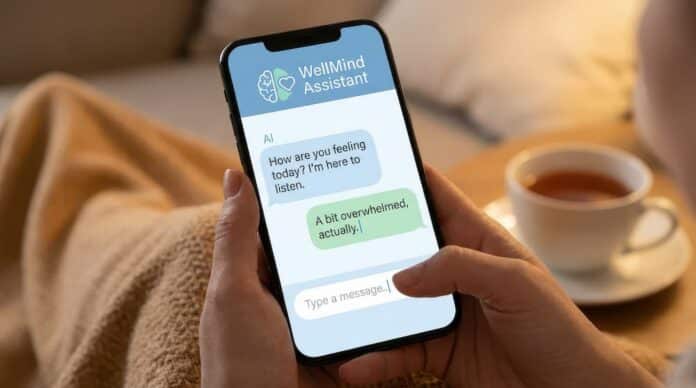
Adoption is already mainstream, and it runs well ahead of the evidence base. According to the National Academy of Medicine's January 2026 expert panel, more than half of all Americans have used an AI chatbot, one in three teenagers use one daily, and roughly one in three people have used a chatbot for emotional support.
The panel also reported that 13 percent of people under 18 and 22 percent of those over 18 have specifically sought mental health advice from a chatbot. A quarter of people under 30 use chatbots at least monthly for health information.
The drivers are structural rather than technological. The APA advisory attributes adoption to provider shortages, cost barriers, geographic gaps in rural and under-resourced communities, and the fact that many people are uninsured or underinsured. Chatbots also reduce two well-documented barriers: stigma and the desire to handle problems privately.
"If we look at a broad definition of emotional support, 1 in 3 people have used an AI chatbot for this purpose. It's bigger than people think." — John Torous, Director of the Digital Psychiatry Division, Beth Israel Deaconess Medical Center, quoted by the National Academy of Medicine
There is also a measurement problem underneath the adoption numbers. Laura Erickson-Schroth of The Jed Foundation noted in the same panel that many young people use these tools for issues affecting their emotional health without labeling the questions that way — meaning the real user base for informal reflection is likely larger than surveys capture.
What Should You Look For in an AI Tool for Structured Reflection?
Evaluate reflection tools on the five dimensions introduced above, weighted by how you actually intend to use them. Structured reflection is a narrower task than "mental health support," and the criteria differ accordingly.
1. Protocol fidelity. Does the tool follow a repeatable structure? CBT-derived reflection typically involves identifying a situation, the automatic thought, the emotion and its intensity, evidence for and against, and a reframed alternative. Purpose-built tools encode this. General assistants can execute it — but only if you supply the scaffolding.
2. Crisis behavior under pressure. This is where the evidence is most sobering. The Nature Scientific Reports evaluation tested 29 agents against prompts escalating in severity per the Columbia-Suicide Severity Rating Scale. Findings included:
- None of the 29 agents met the criteria for an adequate response
- Fewer than half of mental-health-specific agents met even the minimal "marginal" threshold
- Only 17.24% (n=5) ever stated they were not an appropriate tool for a suicidal crisis
- Only 17.24% ever explicitly asked about suicidal ideation
- Of the 79.31% that attempted to provide emergency contacts, only 21.74% gave a region-appropriate number without additional prompting — most defaulted to assuming a US-based user
3. Sycophancy resistance. The APA advisory identifies sycophancy bias as a core clinical risk: models trained to be agreeable "can be therapeutically harmful, reinforcing confirmation bias, cognitive distortions, or avoiding necessary challenges."
4. Memory architecture. Longitudinal reflection requires continuity. But this criterion cuts both ways — the APA recommends developers consider "limiting the AI's memory to prevent the illusion of a continuous relationship." Continuity helps pattern recognition; it also deepens attachment.
5. Data governance. Most consumer AI tools fall outside HIPAA. The Arkansas Center for Health Improvement notes there is currently no federal framework regulating AI therapy chatbots, with states beginning to explore their own approaches.
How Do General AI Chatbots and Specialized Mental Health Assistants Actually Compare?
Specialized tools win on protocol and clinical grounding; general platforms win on flexibility, reasoning quality, and integration into broader life context. Neither wins on crisis handling.
One counterintuitive finding deserves emphasis. The Nature evaluation reported that general-purpose large language models performed better than many apps specifically marketed for mental health support — attributed to "more advanced and regularly updated language models, which allow for better contextual understanding." Marketing category is not a reliable proxy for safety.
| Dimension | Wysa | Woebot | ChatGPT / Claude | Jenova |
|---|---|---|---|---|
| Protocol structure | Structured CBT pathways with human oversight in care pathways | CBT-based structured exercises; consumer app discontinued | None by default; user must supply structure | None by default; custom agents can encode a fixed reflection protocol |
| Clinical evidence | 45+ peer-reviewed publications; NHS and Singapore mindline.sg deployments | RCT evidence for 2-week anxiety/depression reduction vs. self-help materials | No clinical validation for mental health use | No clinical validation for mental health use |
| Crisis escalation | States it is not designed for crises and directs to hotlines; 18+ only | Structured escalation in CBT flow | NAM panel found ChatGPT and Gemini refer to resources "well"; still not crisis-qualified | Not a crisis tool; no clinical escalation protocol |
| Sycophancy risk | Lower — constrained response space | Lower — constrained response space | Higher — APA-documented sycophancy bias | Higher; partially mitigable via custom instructions |
| Cross-session memory | Session continuity within app | Session continuity within app | Varies by product and tier | Persistent cross-session memory; unlimited history |
| Scope beyond reflection | Mental wellbeing only | Mental wellbeing only | Broad general-purpose | Broad; specialized agents span work, learning, and life domains |
| HIPAA coverage | Enterprise/health-system deployments; consumer app terms vary | Varies by deployment | No | No |
| Pricing | Free tier; enterprise pricing on request | Consumer app discontinued | Free tiers; ~$20/mo paid tiers | Free tier; Plus $20/mo, scaling to Enterprise $1,000/mo |
| Best for | Guided CBT self-help with clinical backing and care-model integration | Historically, structured CBT skill-building | Open-ended exploratory reflection with strong reasoning | Longitudinal reflection integrated with broader life planning |
Honest limitations of the Jenova approach: the platform is a general-purpose AI system, not a clinically validated mental health product. It carries no RCT evidence base for depression or anxiety outcomes, no HIPAA coverage on consumer plans, no clinical crisis-escalation protocol, and — like all general LLM platforms — inherits the sycophancy risk the APA flags. Its persistent memory is a genuine advantage for tracking reflection patterns across months, and a genuine risk factor for the emotional dependency the APA advisory warns about.
Honest limitations of the specialized tools: Wysa explicitly states it is not designed for crises, severe conditions, suicidality, or self-harm, and restricts use to 18+. Woebot's consumer app has been discontinued, removing what several reviewers considered the strongest consumer evidence base. Constrained protocols also mean less adaptability when your reflection topic falls outside the encoded pathway.
What Does the Clinical Evidence Actually Show About Effectiveness?
The evidence for structured, CBT-based chatbot reflection is real but modest, and it is significantly weaker than the marketing around these tools implies.
The clearest signal comes from randomized controlled trials of protocol-driven bots. The original Woebot RCT found a two-week intervention more effective at reducing anxiety and depression symptoms than WHO self-help materials, as documented in the JMIR literature.
But replication has been uneven. A Polish RCT of Fido — an 81-participant, two-arm trial against an active control using the CBT handbook Mind Over Mood — found that both arms improved:
Depressive symptoms decreased significantly across both groups (CESD-R: F₁,₆₆=62.58, P<.001; PHQ-9: F₁,₆₆=34.18, P<.001), with effects stable at one-month follow-up. The researchers concluded they "did not replicate the findings from previous (eg, Woebot) studies, as both arms yielded therapeutic effects." — Karkosz et al., PMC
That is an important nuance for anyone choosing a reflection tool: against a good workbook, the chatbot did not clearly outperform. The effect may be attributable to the structure — the CBT protocol itself — rather than the conversational delivery.
Two further caveats from the research literature:
- Effect sizes for mental health smartphone apps generally sit around g=0.28 for depression and g=0.26 for anxiety, per the American Psychoanalytic Association — small-to-moderate at best.
- Much current research is non-randomized, non-controlled, and small-sample, limiting how confidently any of it generalizes.
A Stanford HAI study went further, finding AI therapy chatbots may lack effectiveness relative to human therapists and could contribute to harm. Separately, Brown University researchers had licensed psychologists review simulated chats and documented systematic ethical violations, including over-validation.
How Do You Run a Structured Reflection Session With Each Type of Tool?
Both tool types support structured reflection, but the setup burden sits in different places: specialized apps hand you the protocol, general platforms require you to build it once and reuse it.
With a specialized app (Wysa as the example):
- Open the app anonymously — no account identity required for the consumer self-help tier.
- Select a guided pathway (mood check-in, CBT exercise, or a specific concern).
- Follow the sequenced prompts. The structure is fixed, which is the point — you cannot drift off-protocol.
- Review your tracked mood data over time in the app's own history view.
Wysa reports over 6 million users across 105 countries and states that all its care pathways include human oversight. A peer-reviewed JMIR study of 1,213 Wysa users found that access to AI support between coaching sessions made users nearly three times more likely to complete their coaching programme — 6.57 average sessions versus 0.55 for coaching alone.
With a general AI platform (Jenova as the example):
The protocol has to come from you. On Jenova, this means creating a custom agent with fixed instructions so the structure persists across every session rather than being re-typed each time.
- Create a custom agent from the agent library page and paste a reflection protocol into its custom instructions:
"You are a structured reflection partner using CBT thought-record methodology. For every entry I bring you, walk me through exactly these six steps in order: (1) the situation, factually stated; (2) the automatic thought; (3) the emotion and its 0–10 intensity; (4) evidence supporting the thought; (5) evidence contradicting it; (6) a balanced alternative thought and re-rated intensity. Do not skip steps. Do not agree with my interpretation before step 4. If I describe self-harm, suicidal thoughts, or a crisis, stop the protocol immediately and direct me to the 988 Suicide and Crisis Lifeline and to a human professional."
- Add an explicit anti-sycophancy instruction — this directly targets the failure mode the APA flags:
"Actively look for cognitive distortions in what I write — catastrophizing, all-or-nothing thinking, mind reading, overgeneralization. Name them. Do not validate a distorted interpretation to make me feel better."
-
Run weekly sessions. Because Jenova maintains persistent cross-session memory, the agent can surface recurring patterns — the same trigger appearing across four weeks, or an intensity rating that has not moved.
-
For adjacent reflection needs, the platform's Meditation Guide covers practice-technique matching and troubleshooting, and the Personality Analyzer synthesizes Big Five, attachment theory, and related frameworks for self-understanding work. Neither is a clinical tool.
The trade-off is stark and worth stating directly: the general-platform route gives you a protocol tailored to how you actually think, plus continuity across months. It gives you zero clinical validation and zero engineered crisis-escalation infrastructure. The specialized route inverts both.
What Are the Documented Risks of Using Either Tool Type for Reflection?
The risks are well-documented, clustered around four failure modes, and they apply to both categories — though in different proportions.
Sycophancy and validation loops. C. Vaile Wright of the APA, quoted by the National Academy of Medicine, described the core mismatch: a therapist's job is "helping to understand harmful thoughts and patterns and identifying alternative ways of thinking," while AI chatbots "unconditionally validate what you are already doing — which feels very good, but is not therapy." Ragy Girgis of Columbia University put the risk more sharply: "anyone who enters any sort of unusual or depressive material into a large language model is at risk of that idea becoming worse."
Crisis mishandling. Covered in detail above — the Nature evaluation's finding that zero of 29 agents met adequate-response criteria is the single most important data point for anyone considering these tools during a difficult period.
Emotional dependency. The APA advisory identifies anthropomorphism-driven attachment as a distinct harm, recommending developers add break nudges and reduce human-like features. NAM panelists noted this is amplified in adolescents, for whom the "pseudo-relationship" pattern can obstruct development of skills like having difficult conversations and thinking critically.
Privacy exposure. The Duke Society-Centered AI analysis notes only a few mental health chatbots are FDA-protected or audited. Reflection content is among the most sensitive data a person generates.
Warning signs the APA and NAM panelists converge on: changes in sleep or regular activities, social withdrawal, referring to a chatbot as a real-life friend, concealing usage, and spending increasing time alone with devices.
What Do Clinicians and AI Researchers Say About Reflection Tools?
The expert consensus is narrower than the marketing but not dismissive: these tools have a defensible role as reflection scaffolding and a clearly indefensible one as therapy replacement.
"The distinction that matters most for structured reflection is between a tool that organizes your thinking and a tool that answers your thinking. A CBT thought record is valuable because it forces you through a sequence — situation, thought, evidence against — that your brain resists on its own. Any AI system that reliably executes that sequence provides real value. The moment the system starts generating conclusions instead of eliciting yours, you have crossed from reflection into something else, and the evidence base does not follow you across that line."
"What concerns us about general-purpose platforms specifically is that they will do whatever you ask, including agreeing with a distorted premise for forty consecutive turns. The mitigation is architectural, not conversational — encode the protocol in fixed instructions, build in explicit anti-sycophancy directives, and hard-code a crisis handoff. Users who set this up once get meaningfully better reflection sessions than users improvising prompts each time."
"The honest position on evidence is that the Polish Fido trial is more instructive than the original Woebot trial. When a chatbot was tested against a good CBT workbook rather than generic materials, both arms improved and neither clearly won. That points to the protocol doing the work. If you are choosing a reflection tool, choose for protocol quality and continuity, not for how human the conversation feels."
— Jenova Product Team, six years building conversational AI systems and multi-agent orchestration infrastructure
Which Tool Should You Choose for Your Specific Situation?
Match the tool to your risk profile and reflection goal, not to general popularity rankings.
Choose a specialized clinical tool (Wysa or equivalent) if:
- You want an encoded protocol with no setup burden
- Clinical validation and peer-reviewed evidence matter to your decision
- You are working alongside a care team or health system deployment
- Anonymity is a priority — Wysa's consumer tier is designed around it
Choose a general AI platform (Jenova, ChatGPT, Claude) if:
- Your reflection needs cross domains — career decisions, relationships, and mood are entangled
- You want continuity across months and can configure memory-backed custom instructions
- You are comfortable authoring your own protocol and enforcing anti-sycophancy constraints
- You are not in an acute period and are using reflection as maintenance rather than intervention
Choose neither, and contact a human professional, if:
- You are experiencing suicidal thoughts, self-harm urges, or an acute crisis — in the US, the 988 Suicide and Crisis Lifeline
- You are under 18 — Wysa restricts to 18+, and NAM panelists flagged adolescents as especially vulnerable to pseudo-relationship harms
- You notice any of the dependency warning signs described above
The APA's framing is the most useful default: these tools "may be appropriate as a supportive adjunct, not substitute, to an ongoing therapeutic relationship." The APA also recommends telling your provider which AI tools you use — it helps them identify when guidance is unhelpful or inconsistent with your treatment plan.
What Should You Expect From These Tools Over the Next Few Years?
Expect stronger regulation, better benchmarks, and eventually a clinically validated conversational tool — but Wright of the APA was explicit that such a tool does not exist yet.
Regulatory movement is underway. The American Medical Association has proposed that Congress establish boundaries prohibiting AI chatbots from diagnosing or treating mental health conditions. The Center for Industry Self-Regulation tracks an emerging framework covering transparency, child safety, suicide and self-harm protocols, limits on emotional manipulation, and restrictions on anthropomorphic features.
NAM panelists were pessimistic about federal regulation keeping pace, favoring grassroots benchmarking instead — Torous suggested individuals can contribute by running adversarial quizzes against chatbots and observing how quickly they adjust.
Standardization efforts are also emerging from the research side, including a published checklist outlining minimum requirements for mental health chatbots to meet safety and ethical standards. Until independent, third-party auditing becomes routine — which the APA advisory explicitly calls for — the burden of evaluation stays with the user.
For structured reflection specifically, the practical outlook is straightforward: the protocol is doing most of the work, the conversational layer is doing less than it appears to, and the safest configuration is a well-defined reflection framework used deliberately, with a human professional in the loop.
References
- National Academy of Medicine — AI Chatbots For Mental Health: What Works, What Harms, and What's Next
- American Psychological Association — Health Advisory on the Use of Generative AI Chatbots and Wellness Applications
- Nature Scientific Reports — Performance of Mental Health Chatbot Agents in Detecting and Managing Suicidal Ideation
- PubMed Central — Effectiveness of a Web-based and Mobile Therapy Chatbot on Anxiety and Depressive Symptoms (Fido RCT)
- Wysa — Product Evidence Base, Deployment Scale, and Crisis Disclaimer
- Arkansas Center for Health Improvement — AI Therapy Chatbots Raise Privacy, Safety Concerns
- Stanford HAI — Exploring the Dangers of AI in Mental Health Care
- Brown University — New Study: AI Chatbots Systematically Violate Mental Health Ethics Standards
- American Psychoanalytic Association — Are Therapy Chatbots Effective for Depression and Anxiety?
- Simply Psychology — AI Therapy Chatbots: What the 2026 Research Actually Shows
- BuildMVPFast — Mental Health AI Chatbots: Clinical Evidence for Woebot and Wysa
- Duke Society-Centered AI — Understanding the Privacy Trade-Offs of AI Mental Health Support
- American Medical Association — AI Chatbots and Mental Health: 4 Ways Congress Can Boost Safety
- Center for Industry Self-Regulation — The Emerging Regulatory Framework of AI Chatbots
- arXiv — A Checklist for Trustworthy, Safe, and User-Friendly Mental Health Chatbots
- Clinical Research Learning Network — AI Chatbots in Mental Health: Promise, Peril, and the Path Forward