Alternate History Roleplay AI: Persistent Worlds That Remember
2026-08-29
Jenova helps you inhabit counterfactual timelines by pairing expert historical reasoning with persistent memory, so a “what if” session can become a living world instead of a one-off chat. In August 2026, most AI roleplay still forgets your last scene, flattens period detail, and treats history as costume rather than cause and effect. This platform gives you specialized agents that can argue a divergence, stay in character for weeks, and carry the consequences forward.
- ✅ Persistent memory that tracks characters, treaties, and turning points across sessions
- ✅ Domain experts for military doctrine, geopolitics, court etiquette, and screenwriting
- ✅ Multi-model access so you can switch narrative voice without rebuilding the world
- ✅ Custom agents you can shape around a specific timeline, empire, or original character
To understand why that combination matters, it helps to look at how alternate history roleplay actually fails—and what a platform built for long-form worlds does differently.
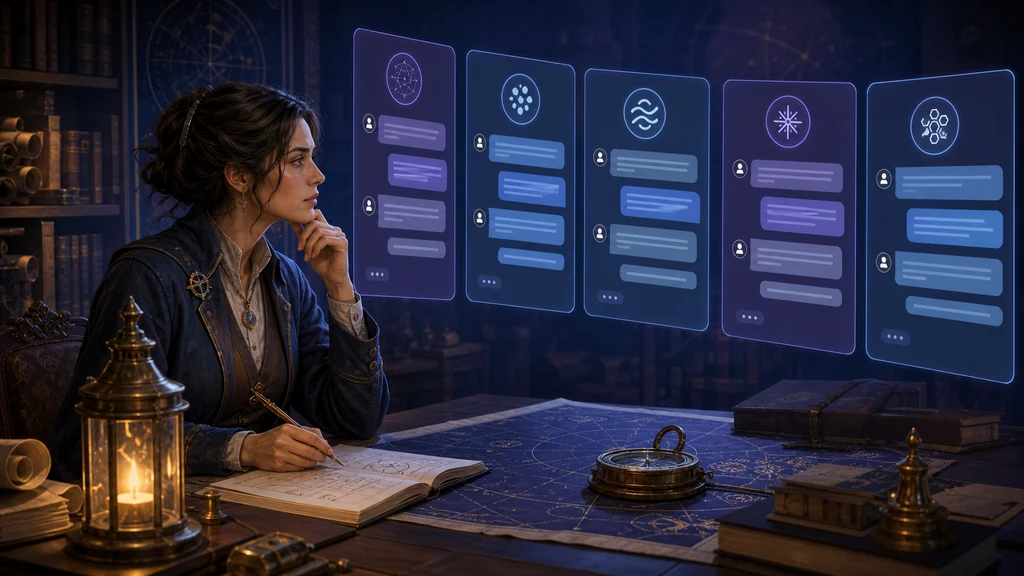
Quick Answer: What Is Alternate History Roleplay AI?
Alternate history roleplay AI is a class of intelligent tools that let you inhabit counterfactual timelines, stay in character across long sessions, and explore what-if history with persistent memory. It is not a trivia bot in period clothing. The point is continuity: choices stick, relationships evolve, and the world remembers.
Key capabilities:
- Causal “what if” reasoning that traces second- and third-order effects, not just a flashier battle
- Character-consistent roleplay across weeks of play, with unlimited conversation memory
- Specialist support for war, diplomacy, court culture, and creative production
- Research-backed worldbuilding so your timeline feels inhabited, not improvised
Why Most Alternate History Roleplay Falls Apart
The appetite for this kind of play is not niche. Mixed-use AI companion platforms—the ones that blend creative writing, historical debate, and character roleplay—already show far stronger return behavior than single-purpose chat toys. Research on the UK market found users of mixed-use platforms coming back an average of 16 times per month, while the broader companionship category is now a multi-billion-dollar industry.
$36.8 billion — Global AI companion market size in 2025
Demand is not the problem. Continuity is. Alternate history only works if yesterday’s assassination still matters tomorrow, and most chat products were never designed for that.
But getting a timeline that actually holds together is frustratingly difficult:
- Memory resets mid-campaign, so your chancellor forgets the treaty you signed last week
- Historical knowledge is thin—dates without doctrine, costumes without logistics
- Filters and generic “safety” rewrites snap you out of character at the exact moment the scene gets interesting
- One general-purpose chatbot is asked to be diplomat, general, novelist, and linguist at once
- There is no way to research, roleplay, and then produce a screenplay or game bible without starting over
Memory That Evaporates Mid-Scene
A chatbot that reacts only to the last message cannot sustain a counterfactual. Alternate history is cumulative: a delayed telegram in 1914 should still be shaping 1916. Industry observers have described first-wave AI roleplay as template personalities with memory that reset every few messages. Academic work on LLM memory makes the same structural point: without retained interaction history, models cannot support complex, ongoing use cases.
45% more efficient interactions — when conversational AI has memory, because users do not re-establish context every turn
For a weekend chat, re-explaining the premise is annoying. For a six-week campaign in a surviving Byzantine Empire, it is fatal.
History as Costume, Not Cause
Most character platforms can produce a vaguely Victorian sentence. They cannot tell you why a grain shortage would collapse a coalition, or how a different outcome at Lepanto would rewrite Mediterranean trade. Alternate history without causal chains is fanfiction in a powdered wig. You need an agent that will argue with you about logistics, succession law, and world-systems—not one that agrees because agreement keeps you typing.
One Bot, Every Job
A single companion is a poor substitute for a war college, a foreign office, and a writers’ room. When you ask one model to wargame the Schlieffen Plan, then write the scene from the Belgian civilian’s point of view, then design the tabletop system that simulates it, quality collapses. The interesting work happens when specialized agents hand off: analysis, then character, then production.
Immersion That Breaks on Contact With the Product
Opaque filters, context windows that truncate, and memory gated behind premium “storage” all train you to keep scenes short. Character.AI’s scale shows the hunger—over 20 million users averaging about two hours a day—but high traffic is not the same as a world that remembers. Players who want a living timeline need infrastructure, not a character picker.
This is exactly what Jenova was built for.
The Jenova Solution
Jenova treats alternate history as a long-running project, not a prompt. You get a gallery of expert agents, unlimited chat history, persistent cross-session memory, and the option to attach documents—maps, campaign notes, primary-source excerpts—so the world is grounded. Multi-model access means you can write a court scene on one model and pressure-test the logistics on another without leaving the same timeline.
| Traditional Approach | Jenova |
|---|---|
| Generic chatbot in a period hat | Specialist agents for history, war, diplomacy, etiquette, and writing |
| Memory that truncates or resets | Unlimited history and persistent memory across sessions |
| One model, one personality | Switch among OpenAI, Anthropic, Google, DeepSeek, xAI, and more |
| Research in another tab, roleplay in this one | Deep research, maps, and scholarly search inside the same workflow |
| Scene ends when the context window does | Custom agents plus knowledge bases that keep the timeline coherent |
Historical Reasoning That Will Argue With You
The Alternate Historian is built for the question that starts every good campaign: what if. It uses causal-chain reasoning and world-systems thinking instead of textbook hedging, so a divergence is treated as a sequence of incentives, constraints, and accidents—not a vibes-based remix. Pair it with Deep Research when you need the real baseline first: hundreds of sources, inline citations, then the counterfactual on top of something solid.
War, Power, and the Map
Alternate history without force and diplomacy is a travel brochure. The Military & Defense Analyst brings doctrine, force assessment, and wargaming to the table. The Geopolitics Analyst handles escalation, geoeconomics, and regional power. Machiavelli Mentor is the court operator—incentive decoding, succession intrigue, the ugly move nobody puts in the museum plaque.
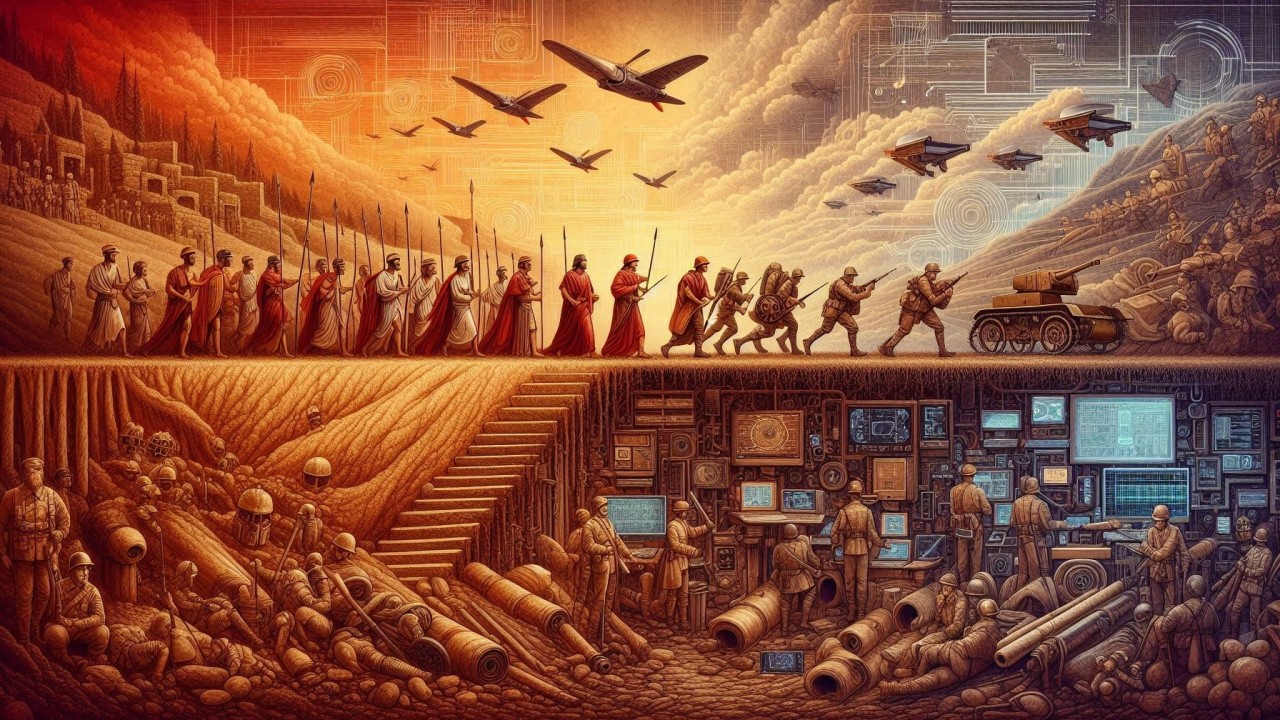
From Timeline to Artifact
A world that only lives in chat is easy to lose. Film Screenwriter turns a campaign into structure, dialogue, and visual storytelling. Game Designer Assistant extracts systems, factions, and win conditions. Comic Creator, Manga Creator, and Webtoon Creator give the same timeline a sequential-art form—useful when you want the siege of an alt-Vienna as pages, not paragraphs.
Character Work That Survives Contact With Period Detail
Roleplay dies when speech, manners, and body language are modern. Acting Coach works dialect, objective, and scene craft. Etiquette Coach covers unwritten rules across courts and classes. Tour Guide walks the city that would have existed. Learn English Through Roleplay (or Japanese, French, and others) lets you inhabit the language of the setting instead of annotating it from outside.
While a character library gives you someone to talk to, Jenova specializes in agents that can actually hold a timeline together—and in the memory required to keep it.
Specialized AI Agents for Alternate History Roleplay
These are the agents most players reach for in the first month of a serious campaign. Each one is a full product, not a personality skin.
Alternate Historian
If you are also trying to pressure-test a divergence before you commit a campaign to it, this is the first conversation. It will take a single change—no American entry in 1917, a surviving Inca state, a Ming treasure fleet that does not get scrapped—and walk the causal chain without softening the ugly parts.
- Bold, opinionated counterfactuals instead of “on the one hand”
- World-systems framing: trade, climate, institutions, not just great men
- Useful as a GM-adjacent oracle when players propose an implausible twist
Military & Defense Analyst
If you are also wargaming how a different army would actually fight, this agent stays in doctrine. It will not give your 1862 Confederacy stealth bombers. It will talk rail gauge, powder, staff systems, and why a “better general” still loses without logistics.
- Strategy, force assessment, and tabletop-grade wargaming
- Defense-industry and technology paths when your timeline invents a new weapon
- A check against cinematic nonsense that breaks immersion for knowledgeable players
Geopolitics Analyst
If you are also running the peace after the war, this is the foreign office. Alternate history often obsesses over the battle and neglects the settlement. This agent models coalitions, energy, chokepoints, and the slow violence of debt.
- Escalation analysis and game-theoretic framing
- Regional coverage so your alt-Ottoman crisis is not a Europe-only cartoon
- A natural partner when the Alternate Historian hands you a messy new map
Film Screenwriter
If you are also turning the campaign into something you can show people, start here. Counterfactual worlds are notorious for lore dumps. This agent is trained on structure, character, and visual storytelling, so the interesting history becomes scenes instead of a Wikipedia article with dialogue.
- Concept through outline, draft, and revision
- Dialogue and character work that can survive a table read
- A bridge from “cool premise” to a feature, pilot, or limited series
Game Designer Assistant
If you are also building a TTRPG, grand strategy mod, or narrative game on top of the timeline, this agent thinks in systems. Factions need resources. Victory conditions need to create interesting decisions. The year 1938 in your world should play differently from 1938 in ours.
- Brainstorming, systems analysis, and documentation
- Genre and platform fluency, from crunchy wargames to story-led indies
- A place to dump campaign notes and get a design bible back
Machiavelli Mentor
If you are also playing the person who actually keeps the throne, this is the whisperer. Alternate history roleplay often dies in the council chamber because the AI is too polite to scheme. This one maps power, decodes incentives, and plans multi-move campaigns.
- Negotiation tactics and succession architecture
- Useful as an NPC advisor who does not share the player’s morals
- A complement to geopolitics when the question is personal, not structural
Try Jenova free — no credit card required.
How Alternate History Roleplay AI Works
Step 1: Pick the Divergence, Not Just the Costume
Open the platform and start with a precise change plus a date, a place, and a constraint. Vague prompts (“make the Romans win”) produce vague worlds. Specific ones (“Varus is not betrayed in 9 CE; the Rhine is no longer the frontier”) give agents something to push against.
"The year is 1816. Napoleon won at Waterloo but Britain still controls the sea. I am a junior clerk in the Tuileries. Stay in period French court register and do not modernize the politics."
Step 2: Ground the World Before You Improvise
Use Deep Research or attach your own notes, maps, and primary sources. The point is not to freeze the story. It is to give memory something true to hold, so later improvisation does not contradict the harvest, the fleet, or the succession law.
"Summarize the actual grain trade of the Eastern Mediterranean in 1180, then list the three most likely second-order effects if Saladin never takes Jerusalem."
Step 3: Split the Table Between Specialists
Bring in the Military & Defense Analyst for the campaign season, the Etiquette Coach for the banquet, the Acting Coach when you need to play a specific person rather than a Wikipedia entry. You can @mention another agent into the same thread so the war plan and the character work share context.
"Stay in character as the Habsburg envoy. The military analyst already established we cannot hold Milan through winter. Negotiate as if you know that and the French do not."
Step 4: Let Memory Do the Record-Keeping
Do not recap every session. Persistent memory and unlimited history are the difference between a chat and a saga. Refer to events as if they happened—because for the agents, they did. Correct the record when something is wrong; otherwise let relationships drift the way real courts do.
"Three sessions ago I promised the guilds a tariff. They are here to collect. Do not remind me of the promise. Make them angry that I forgot."
Step 5: Export the World Into a Form You Can Keep
When the campaign has a shape, send it to Film Screenwriter, Game Designer Assistant, or a comics agent. The roleplay is the discovery process. The artifact is how the timeline survives a new device, a new collaborator, or a six-month pause.
"Turn the last eight sessions into a three-act outline. Protect the moral ambiguity of the empress. Cut the lore dump in session two."
Results & Use Cases
📊 The Campaign That Survives Past Session Three
- Scenario: A group wants a 20-session TTRPG in a world where the Mongol conquests stop at the Oxus. They have lost three previous campaigns to recap fatigue and GM burnout.
- Traditional Approach: A human GM plus Discord plus a wiki that nobody updates. Mid-campaign retcons. Players who missed a session are lost.
- Jenova: The Alternate Historian builds the divergence; the Game Designer Assistant turns it into factions and clocks; memory keeps NPCs consistent when the table meets two weeks later.
- The world accumulates history instead of resetting
- Prep time drops because the record is the conversation
- Players can query the timeline between sessions without pinging the GM
💼 A Screenwriter Stress-Testing a Counterfactual Pilot
- Scenario: A writer has a pitch: the Portuguese never round the Cape, and the Indian Ocean stays a closed Muslim-Hindu trading system into the 18th century. Executives will ask “why would anyone care.”
- Traditional Approach: Weeks of secondary reading, a brittle one-page, and a pilot that explains instead of dramatizes.
- Jenova: Deep Research builds the real trade network; geopolitics and military agents attack the premise; Film Screenwriter turns the surviving ideas into scenes.
- Weak divergences die in conversation instead of in a writers’ room
- Characters come out of institutions, not from a tropes list
- You leave with an outline you can actually send
📱 A Commute-Length Court Intrigue
- Scenario: You have 25 minutes on a train and want to play a lady-in-waiting in an alt-Heian court where the Fujiwara never consolidate. You are on your phone, one-handed, in public.
- Traditional Approach: A character app that forgets last Tuesday’s slight and answers in modern English.
- Jenova: Full feature parity on iOS and Android, speech-to-text if you want it later, and Learn English Through Roleplay or a Japanese roleplay tutor if you want the language itself to be the immersion. Tour Guide can walk a street you just photographed as if the other timeline won.
- Sessions as short as a commute still compound
- Etiquette and speech stay period-specific
- The same memory is waiting when you sit down at a desk
🎯 A Modder Building an Honest Alt-History Scenario
- Scenario: A grand-strategy modder wants “Byzantium holds Anatolia” without turning the map into a power fantasy. They need plausible armies, trade, and AI behavior—not cheat codes with flavor text.
- Traditional Approach: Forum arguments, scattered PDFs, and a design doc that contradicts itself by week four.
- Jenova: Military & Defense Analyst and Geopolitics Analyst constrain the fantasy; Machiavelli Mentor writes the factional AI personalities; Comic Creator or Manga Creator can storyboard the loading-screen lore.
- Balance decisions have stated historical reasons
- NPCs have motives, not just bonuses
- Art and systems come from the same timeline
FAQ
What is the best alternate history roleplay AI if I care about continuity?
The best fit is a platform with persistent memory and specialist agents, not a single character card. Jenova keeps unlimited chat history, remembers preferences and prior events across sessions, and lets you bring a historian, a military analyst, and a screenwriter into the same world. Continuity is the product. A chatbot that only sees the last few turns cannot run a campaign.
Is alternate history roleplay AI free on Jenova?
Yes. Jenova has a free tier with all core features and limited usage, so you can test a divergence, a character, and a multi-session arc before paying. Paid plans increase usage and unlock custom model selection. There is no requirement to put a credit card down to start. Check current plan details in the product when you are ready to scale a long campaign.
How is this different from Character.AI for historical roleplay?
Character.AI is built around a large library of community characters and short, high-frequency chats. Jenova is built around expert agents, document-backed knowledge, and memory that is meant to last. You can still play a person. You can also wargame, research, and write the book of the war. If your goal is a living timeline rather than a character to talk to, the difference is structural.
Can I use alternate history roleplay AI on mobile?
Yes. Web, iOS, and Android have full feature parity, including the same memory and the same agents. That matters for this genre: a court scene on the commute only works if the throne still remembers you at the desk. Speech-to-text is available when you want to play without typing. Settings sync, so you are not maintaining two campaigns.
Can these agents handle dark or violent historical material?
Alternate history includes famine, occupation, and atrocity; sanitizing them produces bad history and worse stories. Jenova’s specialist agents are built for serious analysis and adult fiction, not for a children’s encyclopedia voice. You remain responsible for your own boundaries and for how you use the output. If you need a scene to stay in character through conflict, say so explicitly in the opening prompt.
Can I build a custom agent for my own timeline?
Yes. You can create an agent in minutes with custom instructions, a preferred model, a private knowledge base, and specific tools. That is how a homebrew setting—an original empire, a family chronicle, a modded map—stops living in a notes app. The custom agent then sits beside the Alternate Historian and the rest of the gallery instead of replacing them.
Start a Timeline That Still Knows You Next Week
Alternate history roleplay fails when the world is a costume and the memory is a goldfish. It works when a divergence has consequences, specialists can disagree, and the record of what happened is the same record the agents use to answer you.
Jenova is the place to run that kind of world: the Alternate Historian to break the past open, military and geopolitics agents to keep it honest, writers and game designers to make it portable, and persistent memory so you are not the only one who showed up for session four. Explore the full agent library and start the timeline you actually want to inhabit.
For Developers: Every agent in this article is available programmatically via the Jenova API — build AI-powered alternate-history features into your application with a single integration. Full documentation →