AI Zodiac Compatibility: Find Your Cosmic Match with AI-Powered Astrology (May 2026)
2026-05-15
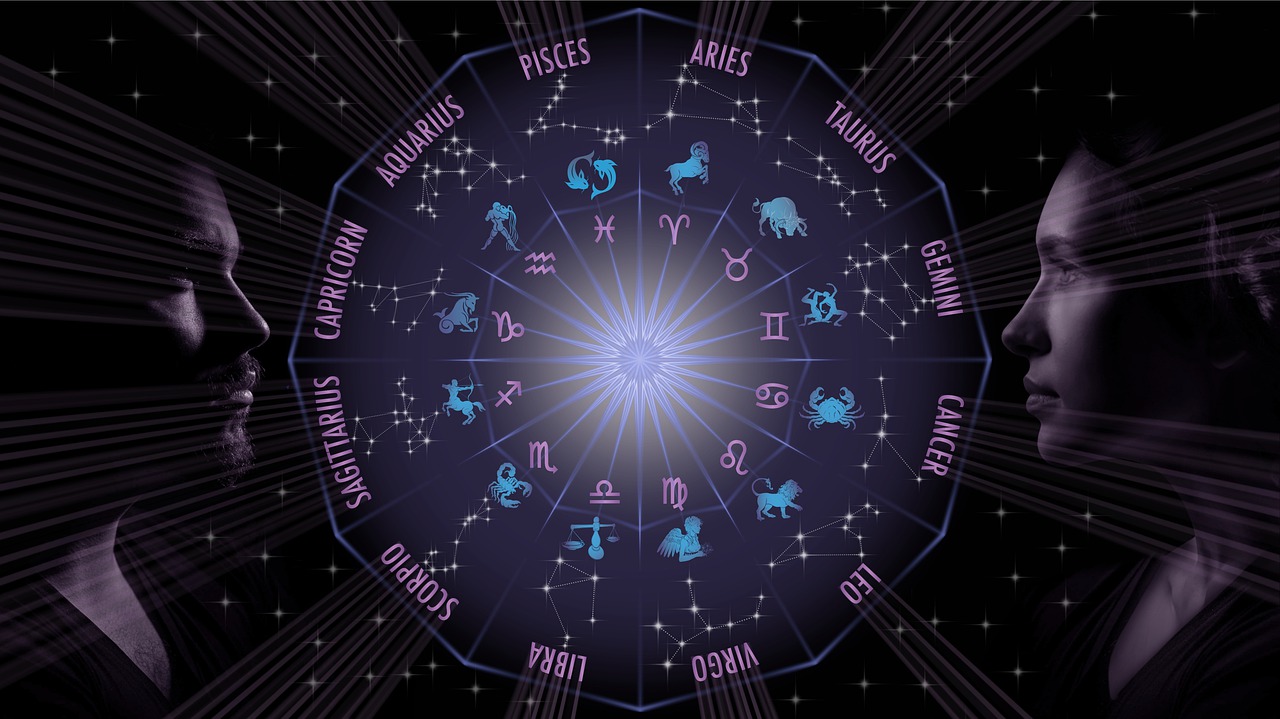
Zodiac compatibility has gone from magazine back pages to a multi-billion-dollar digital industry—and in 2026, artificial intelligence is at the center of the transformation. The global astrology app market reached [$5.69 billion in 2026](https://www.thebusinessresearchcompany.com/report/astrology-app-global-market-report), growing at a staggering 20.2% CAGR and projected to hit $11.71 billion by 2030. Tinder has rolled out a dedicated Astrology Mode that lets users display Sun, Moon, and Rising signs—and early testing showed noticeably higher engagement from women on astrology-enabled profiles. Meanwhile, 42% of astrology users now regularly consult AI astrologers, up from 34% just one quarter earlier, with compatibility analysis ranking among the most popular premium features driving a steady increase in user spending.
The appetite for AI-powered zodiac compatibility isn't a niche curiosity—it's a mainstream behavior reshaping how millions approach relationships, dating, and self-understanding. But most tools on the market offer little more than Sun sign matching, ignoring the synastry, composite charts, and planetary aspect analysis that real astrological compatibility requires.
This is where Jenova's Personal Astrologer changes the equation: full natal chart interpretation, detailed synastry analysis, composite chart readings, and transit-based relationship timing—delivered with the depth of a professional consultation and the availability of an always-on AI partner.
Quick Answer: What Is AI Zodiac Compatibility?
AI zodiac compatibility uses specialized artificial intelligence to analyze the birth charts of two individuals—comparing planetary placements, house overlays, and aspect patterns—to assess romantic, emotional, and communicative harmony at a depth far beyond basic Sun sign matching.
- Synastry analysis — evaluate how one partner's planets interact with the other's chart positions using the Personal Astrologer
- Composite chart interpretation — understand the unique energy and purpose of the relationship as its own entity
- Venus-Mars dynamics — assess attraction, desire, and romantic chemistry through planetary aspects
- Transit timing — identify favorable windows for deepening commitment, addressing challenges, or initiating new relationships
The Problem: Why Sun Sign Compatibility Isn't Enough
The explosion of astrology content online has democratized access to zodiac knowledge—but it has also created a flood of oversimplified compatibility assessments that leave seekers with more confusion than clarity.
Surface-Level Matching Dominates the Market
The astrology app market is valued at $5.69 billion in 2026** and projected to reach **$11.71 billion by 2030, yet the vast majority of compatibility features remain limited to Sun sign pairing—ignoring Moon signs, Venus placements, Mars aspects, and the house overlays that determine how two charts actually interact. — The Business Research Company, 2026
Most astrology apps and websites reduce compatibility to a single variable: your Sun sign versus theirs. "Aries and Leo: 9/10!" But any practicing astrologer will tell you that Sun sign compatibility barely scratches the surface. A couple might have harmonious Sun signs but a challenging Moon square that creates constant emotional friction, or a Venus-Saturn conjunction that introduces commitment anxiety despite surface-level attraction. Without full chart analysis, compatibility readings are entertainment, not insight.
General AI Tools Oversimplify the Cosmic Picture
A 26-year-old product designer from Mumbai described using ChatGPT for her chart: "It was too bright. My travels weren't easy, but the AI made the hard parts sound simple—like a motivational lecture." A 34-year-old marketing executive agreed: "It's easy to miss where AI oversimplifies if you don't already know the basics." — Times of India, September 2025
General-purpose chatbots can produce astrology-adjacent content, but they lack the depth to distinguish between a Venus trine and a Venus square to someone's Moon, explain why a Pluto conjunct Descendant transit might trigger relationship transformation, or navigate the difference between Vedic and Western zodiac systems when calculating compatibility. For seekers who want genuine astrological insight into their relationships, surface-level AI is worse than unhelpful—it creates false confidence.
Users Want Depth, Not Just Daily Horoscopes
42% of astrology users consulted AI astrologers by Q2 2025, up from 34% in Q1—and compatibility analysis ranked among the top premium features driving an 18% increase in average user spending (from ₹410 to ₹485 per user). Repeat usage rose from 27% to 42%, indicating emotional reliance on deeper analytical features. — NumroVani, Mid-Year 2025 Study
The data is unambiguous: users aren't satisfied with generic horoscopes. They're paying more, returning more often, and specifically seeking compatibility analysis, future forecasts, and long-term karmic assessments. The demand for depth is outstripping what most platforms deliver.
The Privacy Paradox in Relationship Astrology
On a 5-point Likert scale, the statement "AI astrologers protect my privacy better than human astrologers" scored 4.2, while "Using AI astrology feels like a safe, judgment-free experience" scored 4.1. — NumroVani, Mid-Year 2025 Study
Relationship compatibility questions are inherently intimate. People want to explore doubts about a partner, assess chemistry with someone new, or understand why a pattern keeps repeating—without judgment, without gossip, and without the social vulnerability of confiding in a human astrologer. AI provides the emotional safety that makes honest exploration possible, but only if the tool has the astrological depth to deliver meaningful analysis in return.
Dating Platforms Are Betting on Astrology—But Can't Go Deep Enough
Tinder's new Astrology Mode lets users add birth details and display Sun, Moon, and Rising signs. Early testing showed noticeably higher engagement from women on astrology-enabled profiles. — The Economic Times, March 2026
Dating apps are integrating zodiac features because they work—astrology-enabled profiles generate more engagement, more conversations, and more matches. But these integrations are necessarily shallow: a Sun/Moon/Rising display on a profile card. They can't perform the multi-layered chart comparison that reveals whether two people are genuinely compatible or just superficially attracted. That analytical depth requires a dedicated tool.
Why Jenova's Personal Astrologer
While Co-Star, The Pattern, and Tinder's Astrology Mode offer zodiac-flavored features, they operate within narrow parameters—Sun sign pairing, personality archetypes, or basic sign displays. None provides the full synastry analysis, composite chart interpretation, and transit-based relationship timing that professional astrologers deliver in paid consultations ranging from $100 to $300+ per session.
Jenova's Personal Astrologer bridges that gap. It's a dedicated astrological intelligence agent with deep expertise across natal chart interpretation, synastry, composite charts, transits, progressions, and relationship timing—calibrated to deliver professional-level readings in conversation, not canned reports.
| Capability | Traditional Approach | Jenova's Personal Astrologer |
|---|---|---|
| Synastry analysis | Professional consultation ($100–$300+) | On-demand full chart comparison with aspect-by-aspect interpretation |
| Composite charts | Advanced astrology software + interpretation skill | Automated composite generation with relationship purpose analysis |
| Venus-Mars chemistry | Requires chart calculation tools + deep knowledge | Instant assessment of attraction dynamics, love languages, and desire patterns |
| Moon compatibility | Often overlooked in free tools | Detailed emotional compatibility with nurturing and conflict styles |
| Transit timing | Ongoing consultations as transits approach | Real-time transit alerts with relationship impact assessment |
What Makes It Different
- Full chart depth — Goes beyond Sun signs to analyze Moon, Venus, Mars, Jupiter, Saturn, and outer planet interactions between charts, including house overlays, aspect patterns, and dignity considerations
- Multiple astrological systems — Works with Western (Tropical), Vedic (Sidereal), and Chinese astrology frameworks, allowing cross-system compatibility analysis for users who value multiple traditions
- Karmic and evolutionary analysis — Examines North/South Node connections, Chiron contacts, and Pluto aspects for insight into soul-level relationship dynamics and past-life patterns
- Persistent memory — Remembers your natal chart, your partner's chart, and previous readings across sessions, building a genuine astrological relationship over time
- Multi-model access — Switch between GPT-5.4, Claude Opus 4.6, Gemini 3.1 Pro Preview, and others for different analytical approaches—broad synthesis, precise calculation-focused reasoning, or creative interpretive exploration
Example Prompts
"My birth details are March 15, 1994, 2:30 AM, Chicago. My partner was born September 22, 1991, 11:15 PM, London. Run a full synastry analysis focusing on emotional compatibility (Moon aspects), attraction (Venus-Mars), and long-term potential (Saturn contacts)."
"We keep having the same argument about independence vs. closeness. I'm a Sagittarius Sun with Moon in Aquarius; she's a Cancer Sun with Moon in Scorpio. What's happening in our charts that creates this tension, and how do we work with it?"
"I just started dating someone and I'm curious about our chemistry. I only know his Sun sign (Gemini) and mine (Libra). What can you tell me from Sun signs alone, and what birth details should I ask for to get a deeper reading?"
Specialized AI Agents You'll Also Like
Mystic Tarot Reader
When you want to complement chart-based compatibility with intuitive guidance, the Mystic Tarot Reader offers real-time tarot draws with visual card interpretations. Ask about relationship energy, potential outcomes, or the hidden dynamics beneath a romantic situation—a different lens on the same questions astrology addresses.
- Visual tarot draws with full spread interpretation
- Relationship-focused spreads: Celtic Cross, Lovers' Path, and custom layouts
- Symbolic and archetypal analysis that deepens alongside astrological readings
Relationship Advisor
Zodiac compatibility reveals the energetic blueprint of a relationship—but navigating the day-to-day realities of romance, family, and friendships requires practical wisdom. The Relationship Advisor provides warm, evidence-based coaching for communication challenges, conflict resolution, and relationship milestones that complement the cosmic perspective.
- Communication pattern analysis and improvement strategies
- Conflict resolution frameworks for recurring relationship tensions
- Life stage guidance: dating, commitment, cohabitation, marriage, and family
Dating App Advisor
If zodiac compatibility has helped you identify what you're looking for, this agent helps you find them. From profile optimization and conversation mastery to first-date guidance, the Dating App Advisor turns astrological self-knowledge into practical dating strategy—especially valuable now that platforms like Tinder are integrating astrology features.
- Profile optimization with personality-driven messaging
- Conversation strategy calibrated to attachment styles and communication preferences
- First date planning and post-date analysis
Numerology Reader
For seekers who want to layer multiple divination systems, the Numerology Reader provides Life Path, Destiny, and Compatibility number analysis using Pythagorean, Chaldean, Vedic, and Kabbalistic frameworks—a complementary compatibility lens that adds numerical precision to astrological insight.
- Life Path compatibility analysis between partners
- Name numerology and its influence on relationship dynamics
- Pythagorean and Chaldean chart readings with relationship focus
How It Works
Getting professional-grade zodiac compatibility analysis from the Personal Astrologer takes minutes, not weeks of waiting for a consultation booking.
1. Share your birth details
Start with the essentials: date, time, and place of birth for yourself and the person you're exploring compatibility with. Exact birth time allows for precise house placements and Ascendant calculation, which dramatically improves accuracy. If you only have a Sun sign, the agent will tell you what's possible with limited data and what additional details would unlock.
"My details: July 8, 1996, 4:45 AM, Manila. His details: November 3, 1993, 9:30 PM, Seoul. What's our compatibility looking like?"
2. Receive layered compatibility analysis
The agent delivers a structured reading covering multiple dimensions: emotional compatibility (Moon-Moon and Moon-Venus aspects), romantic and physical chemistry (Venus-Mars dynamics), communication patterns (Mercury contacts), growth and challenge areas (Saturn and Pluto aspects), and soul-level connections (Nodal axis and Chiron contacts). Each dimension comes with specific aspect interpretations and practical guidance.
3. Ask follow-up questions
This is where AI astrology surpasses static reports. Push deeper into any dimension: "What does his Pluto conjunct my Descendant mean for our power dynamics?" or "We have a double whammy Moon-Venus connection—how does that manifest differently in our daily life vs. during conflict?" The agent maintains full context across the conversation, building layered understanding with each exchange.
"You mentioned our Saturn square Venus. Is there a transit coming up that might activate this tension? How should we prepare?"
4. Explore transits and timing
Ask the agent to overlay current and upcoming planetary transits against your composite chart or synastry aspects. Identify windows for important conversations, commitment decisions, or potential friction points. Relationship timing is one of the most practical applications of astrology—and one of the least accessible without professional guidance.
5. Generate relationship reports
Transform your compatibility reading into a polished document: a comprehensive synastry report for your personal records, a relationship strengths-and-challenges summary to share with your partner, or a transit forecast for the months ahead. Download as PDF or Word directly from the chat.
Results & Use Cases
💕 Pre-Commitment Compatibility Deep Dive
Scenario: A couple has been dating for eight months and is considering moving in together. Both are astrology-curious and want to understand their compatibility at a level beyond "we're both fire signs."
Traditional approach: Book a professional synastry reading—$150–$300, with a 2-4 week wait for an available astrologer. Receive a single session covering highlights but not the depth of every aspect.
With Jenova's Personal Astrologer: Submit both birth charts and receive a full synastry analysis in a single conversation—Moon compatibility, Venus-Mars chemistry, Saturn stability indicators, and Nodal connections. Follow up with specific questions: "What about living together? How do our 4th house overlays look?" Revisit as new questions arise without rebooking or paying per session. The agent remembers both charts permanently.
📊 Dating App Strategy with Astro-Intelligence
Scenario: A 28-year-old professional uses Tinder and Hinge. She's noticed that her best relationships have been with Scorpio and Pisces placements, while Gemini matches tend to fizzle. She wants to understand why—and use that knowledge strategically.
Traditional approach: Read astrology blogs about sign compatibility (surface-level), or pay for multiple individual compatibility readings as new matches arise (expensive and slow).
With Jenova's Personal Astrologer: Analyze her natal chart to identify what she needs in a partner (7th house ruler, Venus sign, Moon needs), then explain why water sign placements resonate with her chart while mutable air signs create friction. Develop a personalized "compatibility checklist" of planetary placements to look for—not just Sun signs. Pair with the Dating App Advisor to translate astrological self-knowledge into profile strategy and conversation approach.
📱 Real-Time Relationship Guidance on Mobile
Scenario: A couple is in the middle of a recurring argument. One partner remembers that their astrologer once mentioned a challenging Mars square between their charts. They want to understand the dynamic in the moment—not next week.
Traditional approach: Text the astrologer (who may not respond for hours or days), search Google for "Mars square Mars synastry" (getting generic, contradicting blog posts), or wait for the next scheduled reading.
With Jenova's Personal Astrologer: Open the mobile app, describe the situation, and receive immediate context: how the Mars square manifests in their specific charts given other mitigating or amplifying aspects, what triggers the activation, and evidence-based de-escalation approaches that work with (not against) the energetic dynamic. The agent already has both charts in memory from previous sessions.
🔮 Family Compatibility and Parenting Insights
Scenario: New parents want to understand their baby's natal chart in relation to their own—how to best nurture this child's temperament, where parent-child friction might emerge, and how each parent's chart interacts differently with the child's.
Traditional approach: Commission a family synastry reading from a specialized astrologer—rare, expensive, and typically a one-time snapshot.
With Jenova's Personal Astrologer: Analyze the child's chart, then run synastry comparisons with each parent. Identify where the child's Moon feels most nurtured (matching the mother's Cancer stellium or the father's Taurus Venus?), where discipline styles might clash (Saturn contacts to the child's Mars), and how the family dynamic evolves as the child grows through different developmental transits. Revisit as the child reaches new stages—the agent remembers all three charts.
FAQ
Is AI zodiac compatibility as accurate as a professional astrologer?
AI zodiac compatibility excels at precise chart calculation, comprehensive aspect identification, and structured interpretation—the technical foundation of any good reading. What it cannot replicate is the intuitive, psychic dimension that some professional astrologers bring to their practice. Jenova's Personal Astrologer delivers the analytical equivalent of a professional consultation, and for many seekers, the ability to ask unlimited follow-up questions across sessions makes the analysis more thorough than a single paid reading.
Do I need exact birth times for compatibility analysis?
Exact birth times produce the most accurate readings because they determine house placements, the Ascendant, and the Moon's precise degree position. Without a birth time, the agent can still analyze Sun, Venus, Mars, and outer planet aspects—which cover attraction, values, and long-term dynamics. The more data you provide, the deeper the analysis becomes.
Can AI handle Vedic (Sidereal) zodiac compatibility alongside Western?
Yes. The Personal Astrologer works across Western Tropical, Vedic Sidereal, and Chinese astrological systems. For Vedic compatibility, it can perform Ashtakoot Milan (the eight-fold matching system), Manglik Dosha assessment, and Nakshatra compatibility analysis—systems with distinct methodology from Western synastry.
How does this differ from compatibility features on Co-Star or The Pattern?
Co-Star and The Pattern provide curated personality insights and basic compatibility scores based on limited chart factors. Jenova's Personal Astrologer performs full synastry analysis—every planet-to-planet aspect, house overlays, composite chart interpretation, and transit timing. It's the difference between a compatibility score and a professional consultation.
How much does Jenova cost?
Jenova starts free with all core features—including access to the Personal Astrologer. Paid plans begin at $20/month for expanded usage, far less than a single professional astrology consultation. Unlimited chart analysis, unlimited follow-up questions, and persistent memory of your birth chart across every session.
Can I explore other divination methods alongside zodiac compatibility?
Yes. Use the @ mention feature to bring the Mystic Tarot Reader into your conversation for intuitive card-based relationship guidance, the Numerology Reader for Life Path compatibility analysis, or the Relationship Advisor for practical relationship coaching—all within the same conversation with full context preserved.
Conclusion
In a year where the astrology app market has reached $5.69 billion, 42% of users regularly consult AI astrologers, and even Tinder is betting its engagement strategy on zodiac compatibility features, the demand for deeper, more meaningful astrological relationship analysis has never been clearer. Sun sign matching was a starting point—but seekers in 2026 want the full picture: synastry aspects, composite charts, Venus-Mars chemistry, Moon compatibility, karmic connections, and transit timing that reveals when to lean in and when to step back. Jenova's Personal Astrologer delivers exactly that—professional-grade zodiac compatibility analysis with unlimited depth, persistent memory of your chart, and the ability to explore every layer of a relationship's cosmic blueprint on demand. Start your first reading free—no credit card required. Explore the full agent library at Jenova.
For a fully personalized natal chart and cosmic guidance beyond compatibility, Jenova's Personal Astrologer is built to be your dedicated celestial advisor across every area of life.