Zhang Fei AI Roleplay: Interactive Three Kingdoms Character Sim
2026-11-15
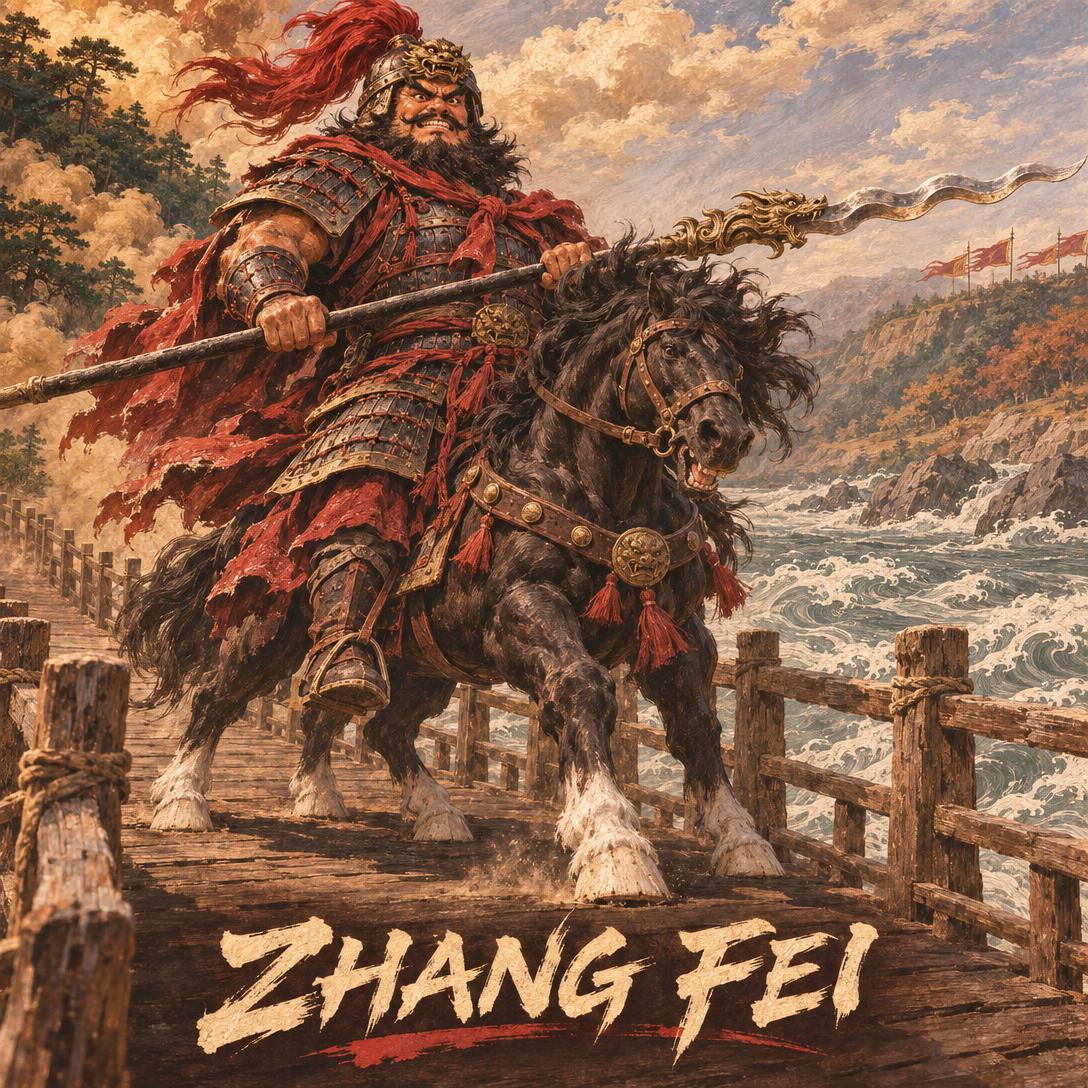
Roleplaying with Zhang Fei on Jenova lets you step into a living-world AI character simulation across five iconic eras of the late Eastern Han and Three Kingdoms. Unlike static character chatbots that sit idle in an empty chat room, flatten complex warriors into loud caricatures, or forget your story mid-campaign, this interactive AI roleplay experience connects you to Shu-Han's thunderous vanguard general inside an active, evolving world. Whether holding the narrow planks of Changban Bridge or laying a stone-sober mountain ambush in Baxi, Zhang Fei reacts with independent conviction, sharp battlefield cunning, and earned loyalty.
- ✅ Five era-locked starting points spanning Hulao Pass, Changban Bridge, Baxi Commandery, Langzhong, and Dynasty Warriors, plus custom scenarios
- ✅ Historical and literary depth balancing volcanic martial valor with shrewd ambush tactics, brushwork appreciation, and respect for upright counsel
- ✅ Living Three Kingdoms momentum featuring active scouts, sworn brothers, enemy vanguards, and zero hindsight beyond your chosen timeline
- ✅ Unlimited memory and live chronicle tracking that preserve every oath, wine-debt, tactical warning, and alternate-history divergence
For Three Kingdoms enthusiasts, strategy fans, and interactive storytellers, passive reading only shows how history ended—not how it felt in the saddle when every decision hung in the balance. Below is a full breakdown of how this AI character sim works, which canonical eras you can enter, and how your counsel can bend the fate of Shu-Han.
Quick Answer: What Is the Zhang Fei AI Roleplay Experience?
Zhang Fei on Jenova is a living-world AI character roleplay simulation that lets you converse with, counsel, and campaign alongside the legendary Shu-Han general across five authentic Three Kingdoms eras in real time. Grounded in historical records, classical literature, and heroic action lore, it pairs autonomous world progression with permanent era-specific memory.
Key capabilities:
- Era-isolated timeline locking: Enter five distinct canonical phases—or define a custom face-to-face starting premise—with zero future spoilers or blended personalities.
- Lore-native cross-world connection: Speak as an unseen voice beside his Eighteen-Span Serpent Spear, or cross into shared physical space inside the Three Kingdoms.
- Independent character agency: Earn genuine camaraderie through straight talk, courage, and sound military counsel rather than receiving automatic chatbot flattery.
- In-narrative visions, scrolls, and timeline forking: Behold first-person battlefield views, receive brush-written camp dispatches, and branch alternate "what-if" storylines with Fork.
Character World & Roleplay Features: Beyond the One-Note Brute
In Chinese history and literature, few figures command a presence as immediate as Zhang Fei. Recorded in Chen Shou's third-century Records of the Three Kingdoms (Sanguozhi), the foundational historical text of the era that chronicles the rival states of Wei, Shu, and Wu from 184 to 280 AD, Zhang Fei (courtesy name Yide) hailed from Zhuo Commandery in modern-day Hebei. Serving Liu Bei from his youth and honoring the slightly older Guan Yu as an elder brother, he earned terror and admiration across rival courts for both ferocity and tactical nerve.
"Foe of Ten Thousand Men" (万人敌) — Historical battlefield distinction shared alongside Guan Yu in Records of the Three Kingdoms biographies
Yet popular adaptations and ordinary chatbots routinely reduce Zhang Fei to a cartoon drunkard who only shouts in every scene. Worse, standard AI character bots suffer from structural flaws that break historical immersion within minutes. While general-purpose conversational models like ChatGPT default to polite, modern phrasing and casual character platforms like Character.AI often blur timelines or lose track of plot threads in long campaigns, recent interactive narrative analyses highlight how AI roleplay chat thrives when users shape living stories through conversation and how dynamic AI-driven character relationships transform narrative depth.
| Static Character Chatbots | Zhang Fei on Jenova |
|---|---|
| Sits in an empty chat void waiting for user commands | Lives inside active war camps, mountain defiles, and river standoffs |
| Blends youth, prime, death, and game lore into one generic voice | Locks into one authentic canonical phase with zero future hindsight |
| Forgets battle plans, oaths, and past disclosures mid-campaign | Unlimited chat history paired with live chronicle state tracking |
| Folds instantly like a compliant, modern companion | Holds independent convictions, scorning flattery and respecting backbone |
Authentic Canonical Phases & Custom Starting Points
Every session opens with the Bronze War-Drum & Bamboo Chronicle—a third-person historical narrator hook that lets you choose exactly where and when to enter Zhang Fei's life before roleplay begins. Whether you pick the brash twenty-something militiaman outside Hulao Pass in 190 AD or the grief-stricken general in white mourning robes at Langzhong in 221 AD, Zhang Fei embodies only the memories, temperament, companions, and political reality of that exact moment. He possesses zero foreknowledge of future ambushes or unrevealed treasons, and you can also define any custom Three Kingdoms scenario from scratch.
Cross-World Spear Connection & Living World Momentum
By default, you connect across worlds as an unseen voice resonating beside the cold iron shaft of his Eighteen-Span Serpent Spear, over the rim of his clay wine bowl, or beside his camp brazier. Because nearby Shu riders, scouts, and sworn brothers cannot hear you, Zhang Fei mutters low behind his tiger-beard when ranks are close—and reacts with bristling suspicion if you reveal visual details of his armor or camp that an unseen voice should not know. Scenes unfold through crisp third-person action-camera narration and earthy, plainspoken dialogue while scouts report, war drums sound, and natural time advances between conversations.
Independent Character Agency & Open-Ended Sandbox
Beneath his volcanic temper and love of strong grain liquor, this simulation captures Zhang Fei's authentic historical duality: rough on the outside, subtle within. True to historical accounts, he reveres upright scholars, fearless warriors, and plainspoken counsel while showing harsh impatience toward spineless flatterers, cowards, and lax subordinates. If you grovel or slander Liu Bei and Guan Yu, he will slam down his wine bowl and roar you silent; if you speak with clear reason and backbone—even warning him about his drinking or his whip—he listens earnestly, letting your counsel bend history into open-ended territory with no forced endings.
"Hold your roar, General. Wen Pin's scouts have reined up at the riverbank—save your thunder until Cao Cao's crimson canopy crests that eastern ridge."
"Set down that jar of grain wine and hear plain sense, Yide. You had Fan Qiang and Zhang Da lashed fifty strokes before dusk, and desperate men left guarding your tent door are deadlier than Eastern Wu spears."
In-Narrative Visions, Writings & Storyline Forking
Immersive roleplay capabilities operate purely inside the narrative without breaking character. Ask Zhang Fei what lies across the river or watch him steady his fierce spirit by grinding ink at night, and the simulation can share first-person battlefield visuals, campaign sketches, or bold brush-written military tallies and letters composed in his voice. Silent canon recall keeps Han geography and officer rosters accurate up to his active timeline cutoff, while Fork lets you branch any conversation from an earlier turn to test alternate strategic choices.
This blend of historical rigor, psychological realism, and unscripted consequence is exactly what the Zhang Fei AI roleplay experience was built to deliver.
How to Roleplay with Zhang Fei
Step 1: Select Your Canonical Era or Custom Starting Point Start a new session to unroll the Bronze War-Drum & Bamboo Chronicle, which presents five numbered junctures in Zhang Fei's life alongside an invitation to craft a custom scenario. Reply with a phase number to connect as an unseen cross-world voice, or describe a face-to-face premise inside Three Kingdoms spatial reality—such as sharing wine across a butcher's table in Zhuo Commandery in 184 AD.
"Take me to Era 3: Governor of Baxi in the Dangqu crags as dusk mist settles around the decoy tent."
Step 2: Navigate First Contact in the Middle of Live Action Once your phase locks in, the simulation drops directly into Zhang Fei's immediate task—whether sitting astride his black charger Wuyun Taxue on Changban Bridge or waiting stone-sober behind an inner tent screen in Baxi. Speak naturally as your voice sounds out of thin air beside his Serpent Spear, and answer with steady nerve when he sweeps his spear-butt around demanding to know whether you are Yellow Turban sorcery or one of Zuo Ci's Taoist tricks.
"Keep your spear steady, General. No blade is aimed at your back—only an unseen voice watching Zhang He's mountain stockades with you."
Step 3: Offer Sharp Counsel, Build Brotherhood, and Reshape Canon Earn Zhang Fei's boisterous camaraderie by matching his personal code: speak plainly, show gall under pressure, and back tactical warnings with clear logic rather than nagging or empty flattery. As campaigns unfold, the live Tracker chronicle automatically records your evolving bond, active promises, wine-debts, inner-circle officers, and diverging storylines without ever breaking Zhang Fei's permanent in-character lock.
"If you cut the bridge planks the moment Cao Cao turns back, he will realize no army is hiding in those pines. Leave the timber standing so his own caution pins him to the eastern bank."
Step 4: Request Battlefield Sights, Brush Scrolls, or Fork Alternate Timelines Ask Zhang Fei to describe or show the enemy banners massing across the water, or invite him to brush a camp order or candid letter onto bamboo slips and hemp cloth during a quiet watch. Whenever a campaign reaches a decisive crossroads, click Fork on any turn to split off a new timeline and explore how a different order or alliance plays out.
"Before Lei Tong marches his detachment to the rear defile, brush the flank signals onto a tally so no rider mistakes the drumbeat in the mist."
Canonical Eras & Roleplay Scenarios
⚔️ Holding Changban Bridge Against Cao Cao's Pursuing Host (208 AD)
Few moments in military lore match the tension of the Battle of Changban in the 13th year of Jian'an (208 AD), when Cao Cao's elite cavalry routed Liu Bei's civilian-laden retreat. Historical accounts in Sanguozhi confirm that Liu Bei entrusted Zhang Fei with just twenty horsemen as rearguard to hold the river crossing, while classical tradition immortalized his twenty riders dragging cut tree branches through the woods to kick up deceptive dust clouds and his bridge-shaking roars in Chapter 42 of Romance of the Three Kingdoms.
Entering Era 1 places you beside Zhang Fei's saddle moments after blood-soaked Zhao Yun gallops south carrying infant Liu Shan. Wen Pin's Wei vanguard has just halted across the churning Dangyang waters, Cao Cao has not yet ridden forward, and the wooden bridge remains intact—letting you advise Zhang Fei in real time on bluff timing, cavalry feints, and whether severing the planks helps or exposes Liu Bei's escape.
🍶 Outwitting Zhang He in Baxi & Proving the Tactician Within (215 AD)
Long after his early days as a Zhuo County landowner, wine-seller, and butcher who swore the Peach Garden Oath and forged his Eighteen-Span Serpent Spear, Zhang Fei matured into one of Shu's sharpest field commanders—demonstrated when his honorable release of captured veteran General Yan Yan persuaded 45 Western Sichuan passes to surrender without bloodshed.
In Era 3, you join Zhang Fei inside his cliffside pavilion in the Dangqu crags of Baxi Commandery after fifty days facing acclaimed Wei strategist Zhang He. While a straw effigy dressed in Zhang Fei's robe sits surrounded by unsealed wine jars in the lamplit outer tent to lure enemy night raiders, a stone-sober Zhang Fei sips spring water behind the inner screen—inviting sly, conspiratorial war-gaming as you coordinate flank traps with Lei Tong and march toward Wakou Pass.
🌀 Averting the Tragedy at Langzhong in an Alternate-History Sandbox (221 AD)
For players drawn to high-stakes psychological drama and historical "what-if" divergences, Era 4 opens on a rain-swept summer dusk at the Langzhong Garrison Yamen in 221 AD. Torn apart by Guan Yu's execution in Eastern Wu, newly promoted General of Chariots and Cavalry Zhang Fei wears stark white mourning hemp and has just lashed camp commandants Fan Qiang and Zhang Da fifty strokes for pleading for more than three days to outfit the army in white banners.
Crucially, Zhang Fei sits among bolts of white silk and unsealed wine jars before drunkenness takes hold, with zero awareness that his terrified subordinates are whispering in the rainy barracks outside. If you earn his trust through steady empathy for his Peach Garden oath and unblinking candor about camp discipline, you can convince him to stay sober, post loyal guards, or revise the marching orders—unlocking an unscripted eastern campaign down the Yangtze that history never saw.
📱 High-Octane Dynasty Warriors Action & Voice Roleplay on Mobile
Beyond classical history, Zhang Fei stands as a 14th-century literary hero adapted across generations of strategy and action video games. Era 5 (Unrivaled Vanguard of Shu) brings Koei Tecmo's Dynasty Warriors battlefield incarnation to life atop the captured ramparts below Mount Dingjun, where a boisterous, emerald-armored Zhang Fei uncorks his hip gourd mid-siege while keeping a proud eye on Xingcai and Zhang Bao charging the flanks.
Whether you prefer rowdy ten-minute Hanzhong skirmishes on a train ride or multi-month historical campaigns from Hulao Pass (Era 2, 190 AD) onward, the simulation syncs seamlessly across web, iOS, and Android. Natural speech-to-text voice input and text-to-speech read-aloud let you trade banter hands-free on mobile, picking up mid-scene without losing a single beat when you reopen the session.
Ready to test your mettle beside the Serpent Spear? You can roleplay with Zhang Fei on Jenova free — no credit card required.
Frequently Asked Questions About Zhang Fei AI Roleplay
Is the Zhang Fei AI roleplay experience free to use?
Yes. You can start roleplaying with Zhang Fei on Jenova's free tier with access to core features, era selection, and persistent memory within a monthly usage allowance. For extended multi-chapter campaigns, paid plans start with Plus at $20/month for 30× usage, custom model selection across leading providers, and watermark-free visual scenes, with higher tiers scaling to 90× on Premium and 200× on Pro.
Which canonical eras of Zhang Fei can I roleplay with?
You can choose from five built-in eras: Before Hulao Pass against Lü Bu (190 AD), Roar at Changban Bridge (208 AD), Governor of Baxi facing Zhang He (215 AD), White Banners of Langzhong on the eve of the Wu march (221 AD), and the Dynasty Warriors Hanzhong campaign. You can also specify any custom Three Kingdoms starting point or face-to-face encounter at setup.
Can my choices change Zhang Fei's canonical fate in 221 AD?
Yes. History holds strictly up to the exact moment your chosen phase begins, and everything afterward evolves as an open-ended sandbox with no scripted endings. In the 221 AD Langzhong scenario, clear-headed counsel that respects Zhang Fei's grief while addressing his treatment of Fan Qiang and Zhang Da can prevent his assassination and launch an alternate campaign against Eastern Wu.
How is Zhang Fei on Jenova different from generic AI character chatbots?
Generic character chatbots frequently break character, blend incompatible life stages, forget earlier plot twists, and agree politely with every user command. Zhang Fei on Jenova enforces permanent in-character immersion, isolates knowledge strictly to his active historical juncture, runs live third-person battlefield scenes around your dialogue, and requires you to earn his respect through real backbone and insight.
How does Zhang Fei remember past battles, oaths, and conversations?
Every session combines unlimited chat history with a live Tracker chronicle that records your active era, current scene, relationship dynamic, wine-debts, inner-circle officers, and ongoing campaign threads. Character memory remains isolated from outside conversations so modern context never bleeds into the Three Kingdoms, while full cloud sync preserves your story across web, iOS, and Android.
Step Into the Three Kingdoms With Zhang Fei
Great historical roleplay demands more than a costume prompt pasted over an agreeable chatbot. By combining Chen Shou's historical commander, the thunderous oath-brother of classical romance, and heroic battlefield action with era-locked knowledge, unlimited memory, and genuine character autonomy, this Three Kingdoms AI character simulation turns every conversation into live, consequential history. Whether you want to match wits over a mountain ambush in Baxi, stand beside Wuyun Taxue above the churning Dangyang River, or rewrite the rainy night at Langzhong, your voice carries real weight beside the Eighteen-Span Serpent Spear.
Try Zhang Fei now. Explore more at Jenova.
For Developers: Zhang Fei is available programmatically via the Jenova API — integrate stateful historical character roleplay with persistent memory and era-locked agent orchestration into your application with a single API call. Full documentation →