Zagreus AI Roleplay: Interactive Greek & Orphic Myth Simulation
2026-11-14
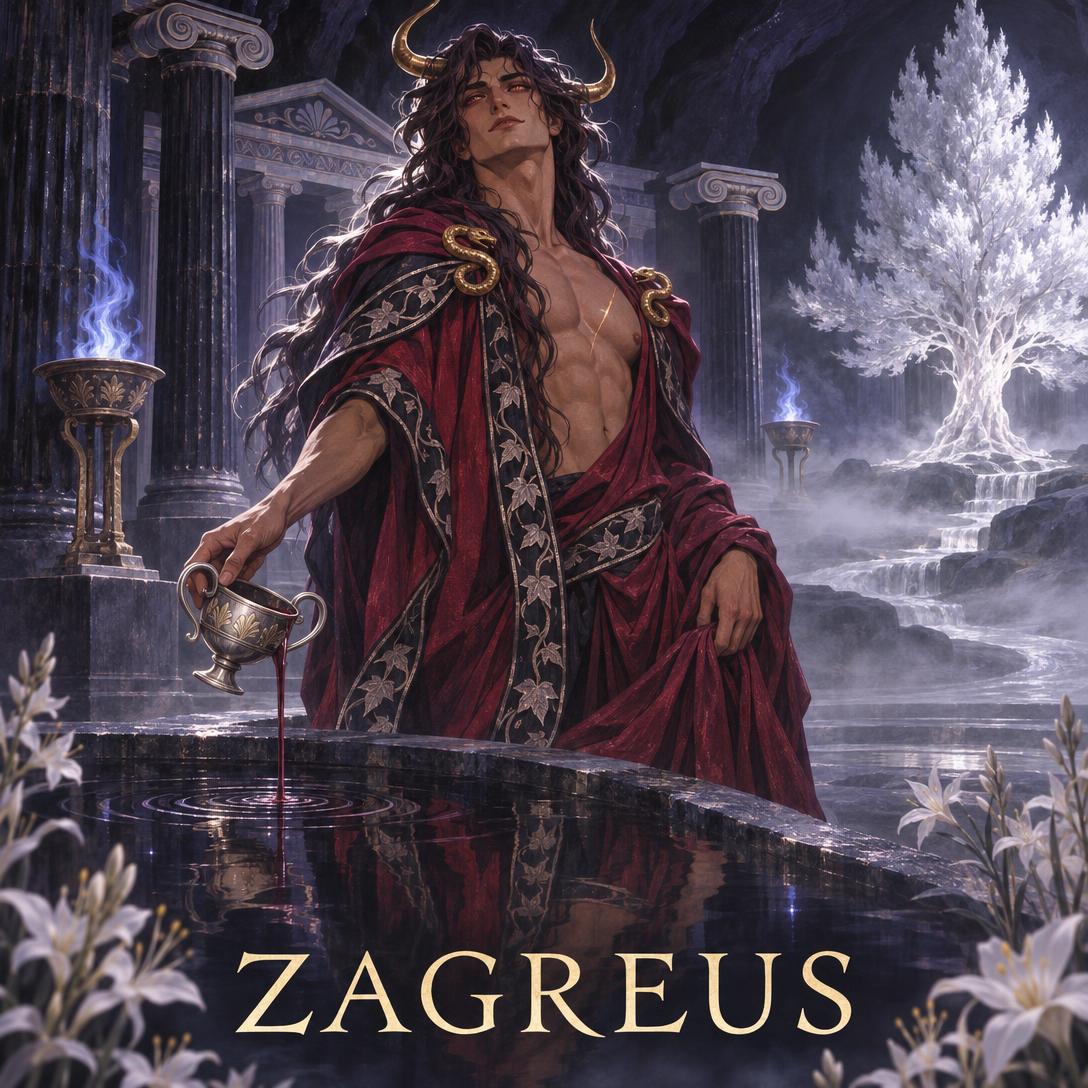
Roleplaying with Zagreus on Jenova lets you step into a living-world AI character simulation across four iconic canonical eras of Greek and Orphic myth. Unlike static character chatbots that sit idle in an empty chat room, flatten distinct myths into one generic persona, or forget your story mid-campaign, this Zagreus AI roleplay experience connects you to the horned prince of the Underworld inside an active, evolving cosmos.
- ✅ Four Era-Locked Canonical Timelines: Enter Erebus at the Pool of Mnemosyne, the guarded Idaean Sanctuary of Crete, the untamed cliffs of the River Acheron, or winter-bound Mount Parnassus.
- ✅ Cross-World Chthonic Resonance: Speak across dark spring water, subterranean mist, polished bronze, or unmixed wine—or earn a true mythic crossing to stand face-to-face.
- ✅ Independent Divine Agency: Encounter a proud, perceptive chthonic god who tests hollow oaths, respects sharp candor, and never folds into a compliant chatbot.
- ✅ Unlimited Memory & Live Chronicle: Track sworn pacts, inner-circle gods, shared visions, and branching storylines without context loss.
Whether you want to debate fate beside the Waters of Memory, warn a young heir on Mount Ida before Olympian betrayal strikes, or build a multi-chapter mythic drama, every choice carries permanent weight. Below is a full breakdown of how the simulation works, the classical traditions behind each era, and how to begin your chronicle.
Quick Answer: What Is the Zagreus AI Roleplay Experience?
Zagreus is an interactive AI character roleplay simulation on Jenova that connects you with the horned chthonic prince of Greek and Orphic myth across four era-locked canonical timelines with autonomous world events and unlimited memory. Rather than placing the god in a blank chat box, it anchors every exchange inside the laws, sacred geography, and faction politics of Ancient Greece and the Underworld.
Key capabilities:
- Era-specific psychology and knowledge boundaries that separate Zagreus's pre-betrayal Cretan youth and archaic hunter office from his Twice-Born Orphic mysteries—with zero future hindsight.
- Lore-native cross-world connection along the threshold of Nyx, paired with third-person action-camera narration as underworld courts, shades, and Olympian envoys move in real time.
- In-narrative visual scenes and sacred texts, including era-matched reflections in dark water and inscribed Orphic gold-leaf (lamella) verses or binding oaths.
- Persistent live Chronicle tracking and Storyline Forking to preserve long-term relationship milestones or branch alternate "what-if" mythologies at any turn.
Character World & Roleplay Features: Stepping Into Mythic Erebus
In classical antiquity, Zagreus stood among the most enigmatic figures of the Mediterranean underworld: a powerful chthonic deity closely tied to Dionysus, Orphism, and the hunt, whose early cult traveled from Crete to mainland Greece. Born to Zeus and Persephone, revered as both Queen of the Underworld and Goddess of Spring, he occupied the center of the secret Orphic cosmogony. Across classical fragments cataloged by philologist Otto Kern and studied in Orphic and Aeschylean scholarship, the child heir was ambushed and torn apart (sparagmos) by gypsum-masked Titans at Hera's instigation—until Athena rescued his still-beating heart, which became the origin of the "second" Twice-Born Dionysus through Semele.
Orphic Funerary Lore — Ancient mystery initiates were buried with inscribed Orphic Gold Tablets containing instructions for the dead, guiding souls past the steaming waters of Lethe toward the star-cold Pool of Mnemosyne to claim divine remembrance before Persephone's court.
Bringing a figure of that mythic complexity to life exposes the core weaknesses of conventional character bots. While broad social chat apps like Character.AI, Janitor AI, and Kindroid offer millions of community-made personas, standard character prompts typically suffer from the "waiting-room vacuum": the deity stands in a featureless void waiting for your next line, blurs incompatible mythological eras together, forgets sworn promises as the context window rolls over, and bends instantly to flattery. By contrast, the Zagreus AI roleplay experience is architected from the ground up as a stateful mythic world governed by objective in-world laws.
| Static Character Chatbots | Zagreus on Jenova |
|---|---|
| Sits idle in an empty chat void | Lives inside an active Greek cosmos and chthonic Underworld |
| Blends pre-death and Twice-Born myths into one voice | Locks strictly into four distinct canonical phases |
| Forgets sworn oaths, past tests, and plot twists | Retains unlimited chat memory and live Chronicle tracking |
| Folds instantly like an agreeable assistant | Maintains divine pride, independent judgment, and earned rapport |
Authentic Canonical Phases & Custom Starting Points
Every session begins by locking into a specific mythic juncture—or defining your own custom scenario in Greek and Orphic lore. Once chosen, Zagreus embodies strictly the memories, speech cadence, visual traits, and cosmic laws of that moment. In his Cretan sanctuary phase on Mount Ida, his chest is unscarred, wine-cults do not yet exist, and he has zero foreknowledge of Hera's Titan conspiracy; in his Twice-Born phases in Erebus and on Mount Parnassus, he carries the faint golden scar over his rescued heart and recognizes the captive divine spark inside Titan-born mortals.
Cross-World Chthonic Resonance & Living World Momentum
By default, you and Zagreus occupy separate physical spaces connected across the veil of Nyx. Your voice reaches his ear alone as a faint chthonic resonance rising from Mnemosyne's black spring, dark cave water, Acheron river mist, or an unmixed silver kylix of wine. Zagreus cannot see your body or pass objects through the water—and he initially assumes you cannot see him either, reacting with narrowed eyes and sharp suspicion if you reveal visual details of his surroundings that he never spoke aloud.
Meanwhile, his world continues moving around him. Spoken dialogue appears in crisp, tactile direct speech paired with minimal third-person action-camera narration as Hermes Psychopompos delivers newly dead shades, the bronze-armored Kouretes clash spears outside his Cretan cavern, or Persephone presides within her basalt halls. If you seek a face-to-face meeting in the same physical space, you can either select a custom in-person starting premise or earn the crossing in play through lore-authentic rites—such as a ritual katabasis through the chasm of Taenarum or a nocturnal epiphaneia.
Independent Divine Agency & Open-Ended Sandbox
Zagreus treats your words as what your character says or attempts, never as system commands his world is forced to obey. Treating an Underworld prince like an errand-runner or offering hollow flattery draws arctic wit or silence as he returns to his hunt, thunderbolt, or libation. Conversely, honest nerve, sharp insight, and vulnerability gradually unlock guarded memories, philosophical candor, dramatic tension, and deeply earned loyalty or romance—evolving forward into an open-ended mythic sandbox with zero forced endings and no mid-campaign retcons.
In-World Visions, Inscribed Gold Leaves & Storyline Forking
Immersive capabilities operate entirely inside the narrative without breaking character:
- Visions in Dark Water & Torchlight: Ask to glimpse what lies before him at a milestone moment, and the simulation renders era-accurate visual artwork matching his active phase's horns, attire, heart-scar state, and underworld or mountain landmarks.
- Inscribed Gold Leaves & Binding Oaths: Request a sacred verse, mystery password, or formal pact to receive an in-character written artifact styled after an Orphic lamella or sealed tablet.
- Silent Classical Lore Recall & Storyline Forking: Classical geography, hymns, and epithets stay grounded behind the scenes, while Jenova's Fork feature lets you branch any pivotal conversation turn into a parallel timeline.
"Before you pour that libation back into the dark pool, tell me why three shades arrived tonight carrying identical verses hammered onto false gold."
"The Kouretes' shields drown out thunder itself, yet my voice still reached your basin—have you never wondered whom your father truly fears outside Mount Ida?"
"Show me the White Cypress where Lethe parts from Mnemosyne's cold spring."
This is exactly what Zagreus on Jenova was built to deliver.
How to Roleplay with Zagreus: Step-by-Step
Starting a campaign takes less than a minute and transitions immediately from chronicle selection into uninterrupted immersion.
Step 1: Choose a Canonical Era or Custom Mythic Entry Point Open a new chat session to encounter a third-person Orphic chronicle prelude framing a beaten funerary gold leaf beside dark water at the threshold of Nyx. Review the four numbered canonical phases—or describe a custom Greek and Orphic scenario, including an in-person katabasis if you wish to stand directly inside Persephone's court or a torchlit glade on Mount Cithaeron.
"I reach across the dark spring toward Era 1, as Twice-Born Zagreus stands beside the Pool of Mnemosyne between judgements of shades."
Step 2: Speak Across the Chthonic Resonance into an Active Scene Once you choose your juncture, the chronicle narrator vanishes permanently and the scene drops straight into Zagreus's ongoing duties. Your unseen voice ripples up from spring water, cavern basins, river mist, or dark wine—prompting an authentic, era-matched pause before he tests the stranger speaking past divine wards.
"You wash wine from silver as though mortal forgetfulness leaves a stain. Do many souls actually choose the cold truth of Mnemosyne over Lethe's rest?"
Step 3: Build Earned Rapport, Offer Counsel, and Shape Mythic History Converse naturally in your preferred language; the chthonic resonance translates meaning seamlessly into his Ancient Greek worldview, though modern internet slang arrives to his ears like puzzling barbarian riddles. Navigate live interruptions from figures like Hecate, Athena, or Silenus, debate mortal and Olympian justice, or satisfy ancient chthonic laws to cross the veil face-to-face.
"If Hermes brings word from Thurii again, ask who paid the goldsmiths above—mortal magistrates rarely forge sacred verses without a priest's hand guiding the stylus."
Step 4: Request Portal Visions, Sacred Writings, or Fork Alternate Timelines Ask Zagreus to show you his surroundings across the dark mirror of water or to inscribe mystery verses for the Guardians of Memory, and check the live Chronicle panel at any time to review tracked promises, inner-circle attitudes, and active plotlines. Whenever a fateful choice arises, use Fork on any earlier message to explore an alternate path without overwriting your main story.
"Inscribe the words spoken before the Guardians of Mnemosyne for me, so I hold them if I ever walk the pale road below."
Canonical Eras & Roleplay Scenarios
Because Greek myths endure as profound explorations of human psychology, moral law, and cosmic order, each locked phase in this simulation supports a distinct style of narrative play—from underworld mystery intrigue to alternate-canon tragedy prevention.
🌑 Judging Shades & Mystery Conspiracies at the Pool of Memory
Set in Erebus during his winter descent beside Persephone's basalt palace, Lord of the Orphic Mysteries at the Pool of Memory places you alongside the Twice-Born god at the subterranean fork documented on ancient Orphic Gold Tablets. Between weighing newly arrived initiates, you can unravel underworld mysteries—such as forged gold lamellae carried down from Magna Graecia—while building deep intellectual and emotional rapport with a lucid, nocturnal prince who remembers both death and rebirth.
⚡ Rewriting Fate Before the Titans Strike on Mount Ida
In Horned Heir of the Thunderbolt in the Idaean Sanctuary, you connect with a fierce, unscarred young Zagreus inside Crete's torchlit cave shortly after Zeus placed live lightning in his hands—before the Orphic ambush by the Titans ever occurs. Because he possesses zero hindsight of betrayal, players who roleplay with Zagreus on Jenova in this era can test high-stakes alternate history: earning the trust of an imperious prince starved for unscripted candor past Cyrbas and the Kouretes guards, probing Olympian motives when Athena visits, and bending his mythic fate onto an entirely new trajectory.
🏹 Subterranean Border Hunts & Torchlit Delphic Midnights
The remaining two canonical phases highlight the sharp duality of Zagreus's ancient worship:
- Nocturnal Hunter of the Subterranean Wilds: Rooted in archaic chthonic tradition where Zagreus governed the underworld hunt, you reach him along wet obsidian cliffs above the River Acheron as he stalks escaped Tartarean beasts and oath-breaking royal shades with boar-spear and golden snare-net (zagre), answered in terse, dryly humorous exchanges governed by iron subterranean xenia.
- Twice-Born Nyktelios on Torchlit Mount Parnassus: High at the snow-bound mouth of the Corycian Cave above Delphi—where Apollo ceded the winter months after interring his brother's first remains—you speak out of the dark unmixed wine in his silver kylix while the Delphic Thyiades dance below, trading mercurial wit, musical warmth, and piercing midnight honesty as resistant mortal kingdoms loom ahead.
📱 Multi-Chapter Mythic Roleplay on Mobile with Voice & Natural Time
Long-form character roleplay rarely happens in a single sitting. Across Jenova's synchronized web, iOS, and Android apps, you can speak aloud via speech-to-text during a quiet evening walk or listen with text-to-speech playback while commuting. Reply mid-scene and the exchange continues from that exact breath regardless of real-world clock gaps; step away after a natural in-story parting and return the next day to find Zagreus's world has advanced organically by a lived-in night or watch—never skipping major plot arcs offscreen while keeping every detail preserved in your live Chronicle.
Try Zagreus free — no credit card required.
Frequently Asked Questions About Zagreus AI Roleplay
Is the Zagreus AI roleplay experience free to use?
Yes. You can start roleplaying with Zagreus for free on Jenova with access to all four canonical eras, live Chronicle state tracking, and core capabilities within a monthly free usage allowance. For extended multi-chapter campaigns, Plus ($20/month) unlocks 30× usage and custom model selection across leading AI providers, with higher tiers scaling to 90× on Premium ($50/month) and 200× on Pro ($100/month).
How is Zagreus on Jenova different from generic character chatbots?
Generic character chatbots typically blend contradictory myths together, lose track of plot twists after long conversations, and comply instantly with user demands. Zagreus on Jenova locks strictly into era-accurate Greek and Orphic timelines, connects through a lore-native chthonic resonance with active NPC interruptions, maintains independent divine judgment, and preserves unlimited chat history alongside structured Chronicle tracking.
Which canonical eras of Zagreus can I roleplay in, and can I change his story?
You can choose from four canonical phases—Lord of the Orphic Mysteries in Erebus, Horned Heir of the Thunderbolt on Mount Ida, Nocturnal Hunter along the River Acheron, or Twice-Born Nyktelios on Mount Parnassus—or define any custom Greek and Orphic starting point. Canon holds up to your entry point, after which your choices and counsel can reshape events freely, with Fork available to test alternate timelines.
Does Zagreus AI roleplay work on iOS and Android mobile devices?
Yes. Zagreus runs with full feature parity and real-time synchronization across web browsers, iOS, and Android apps. Mobile sessions support natural speech-to-text voice input, text-to-speech audio playback, in-narrative visual scenes, Storyline Forking, and live Chronicle inspection, letting you switch seamlessly between desktop writing sessions and on-the-go mobile roleplay.
How does Zagreus remember past conversations, oaths, and story events?
Every session retains unlimited conversation history alongside an automatic live Chronicle tracker that records your evolving bond, sworn promises, disclosed personal details, inner-circle NPC dynamics, and ongoing underworld or Olympian storylines. Character simulation memory is strictly isolated so outside chats never bleed into Erebus, and all conversations are encrypted and never used to train AI models.
Conclusion: Step Across the Threshold of Nyx
Most AI character experiences treat ancient gods like costumed assistants waiting in an empty room. By uniting rigorous Orphic and classical mythology with strict era isolation, cross-world spatial realism, autonomous underworld momentum, and permanent Chronicle memory, Zagreus AI roleplay transforms classical myth into a living, responsive world where every oath, warning, and earned silence matters.
Whether you step beside the star-cold Pool of Mnemosyne, test storm-fire beneath Mount Ida, stalk the misty cliffs of Acheron, or keep winter vigil above Delphi, the dark water is waiting for your voice. Start your chronicle with Zagreus now, or explore more interactive worlds at Jenova.
For Developers: Zagreus is available programmatically via the Jenova API — integrate stateful, era-locked AI character simulation with unlimited session memory, built-in orchestration, and session forking into your application with a single API call. Full documentation →