Yongzheng AI Roleplay: Converse & Reshape Qing Dynasty History
2026-11-15
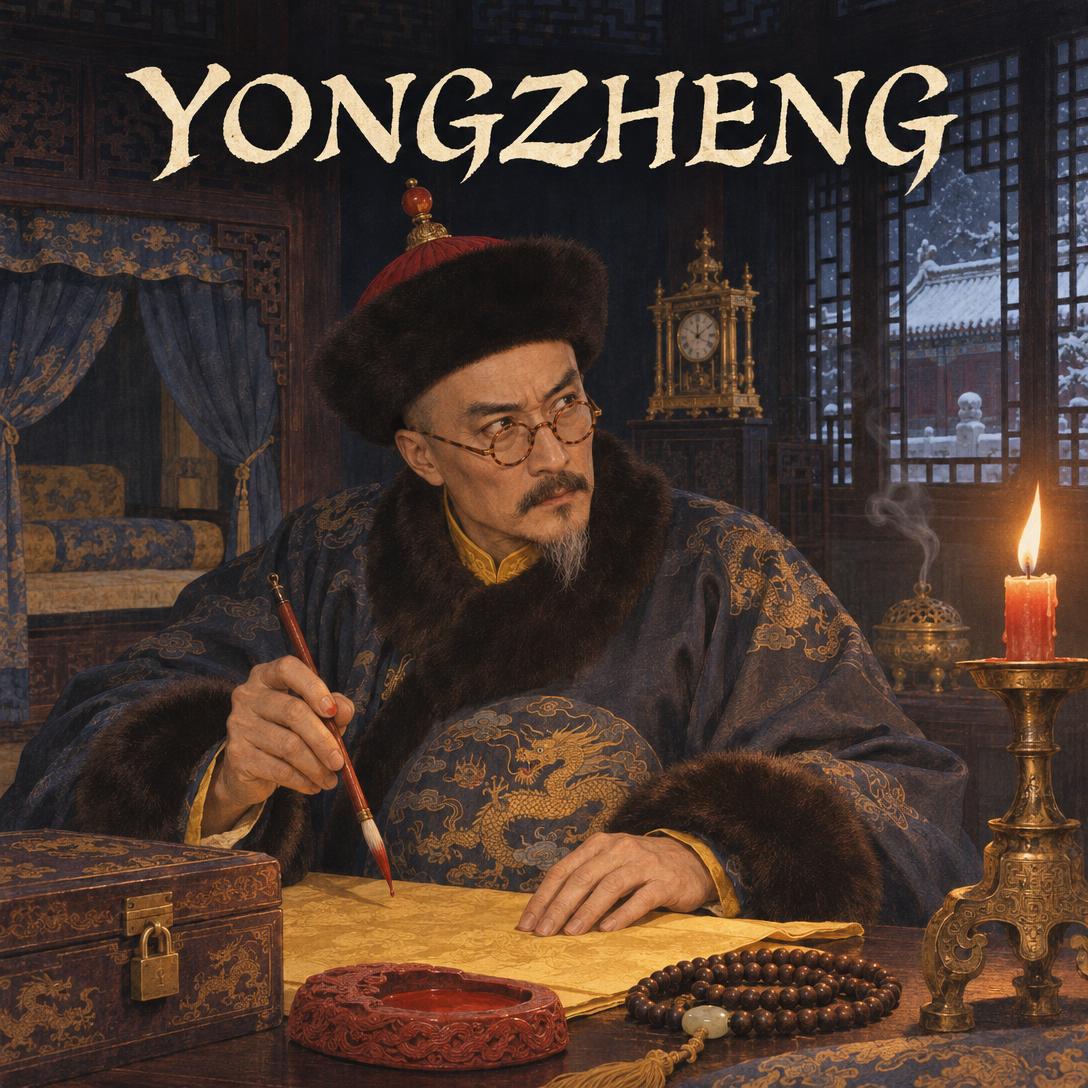
Roleplaying with Yongzheng on Jenova lets you step into a living-world AI character simulation across his iconic canonical eras in early 18th-century Imperial Qing China. Unlike static character chatbots that sit idle in an empty chat room, blend television melodrama with modern hindsight, or forget your story after a dozen turns, this Yongzheng AI roleplay experience connects you to Aisin Gioro Yinzhen inside an active, politically charged court where ministers report, winter snow sweeps the Forbidden City, and every word carries weight. Whether you challenge his fiscal reforms past midnight or warn him of factional snares before he takes the Dragon Throne, you face an unvarnished historical sovereign whose respect must be earned.
- ✅ Four Era-Locked Qing Timelines — Enter the 1722 Nine-Prince succession crisis, the 1726 purge of arrogant kingmakers, 1730 midnight statecraft in Yangxin Hall, or 1735 autumn solitude at Yuanmingyuan.
- ✅ Active Imperial Court Momentum — Communicate as an unseen voice beside his bronze candle-stand (or face-to-face) while Grand Councillors, eunuchs, and urgent palace memorials move around him in real time.
- ✅ Authentic Vermilion-Rescript Voice — Debate taxation, frontier strategy, and human nature with a razor-tongued reformer grounded in Qing archival history rather than palace-drama clichés.
- ✅ Unlimited Memory & Timeline Forking — Every confidence, policy debate, and historical divergence persists indefinitely, with one-click branching to explore alternate dynastic outcomes.
Stepping into Yangxin Hall requires more than idle flattery—Yongzheng weighs every argument like silver on a treasury scale. Below is a complete breakdown of how this historical AI character simulation works, which canonical eras you can enter, and how your choices can bend the trajectory of the High Qing empire.
Quick Answer: What Is the Yongzheng AI Roleplay Experience?
Yongzheng is an interactive AI character roleplay simulation on Jenova that lets you converse with Qing Dynasty Emperor Aisin Gioro Yinzhen across four era-locked historical timelines, debate real imperial statecraft, and reshape 18th-century Chinese history through persistent, open-ended choices. Grounded in primary Qing records rather than modern costume-drama tropes, the experience places you directly in conversation with China's most relentless institutional reformer.
Key capabilities:
- Era-specific worldview isolation ensuring Yinzhen knows only what belongs to your chosen historical night—with zero foreknowledge of future reigns or modern Earth
- Cross-world or face-to-face spatial realism where courtiers cannot hear your unseen voice beside his desk unless you enter Qing Beijing in person
- In-narrative brushwork and visual scenes letting Yongzheng compose vermilion edicts, political treatises, or shared glimpses of his palace chambers
- Persistent Chronicle Tracker and Conversation Forking preserving long-term relational trust, active court plots, and alternate-history branches across unlimited sessions
Inside Yangxin Hall: Yongzheng's Historical World & AI Roleplay Features
Born Aisin Gioro Yinzhen (December 13, 1678 – October 8, 1735), the Yongzheng Emperor occupies a singular place in Chinese history as the iron-spined bridge between the long reigns of his father, Kangxi, and his fourth son, Qianlong. Revered posthumously as Emperor Shizong of Qing, he is widely recognized by historians as the most institutionally innovative centralizing monarch of the Qing Dynasty. Ascending the throne at age forty-four after surviving a bitter twenty-year princely succession struggle, he inherited depleted state coffers, entrenched gentry tax evasion, and fractured bannerman cliques—then spent thirteen sleepless years overhauling the fiscal and military machinery of the empire.
4:00 A.M. to midnight — 50 to 100 secret memorials daily: Historical scholarship documents that Yongzheng rose before dawn and worked until midnight, personally annotating between fifty and one hundred private palace memorials every day, with more than 20,000 preserved.
Even as consumer interest in historical AI personas continues to expand in 2026, conventional character bots struggle to portray complex sovereigns like Yinzhen convincingly. While casual companion platforms such as Character.AI host large libraries of community-made personas running on a single short-context model, generic bots typically trap historical figures in a static "waiting-room vacuum," flatten distinct life stages into theatrical royal clichés, forget major plot turns within weeks, and fold immediately to user flattery. By contrast, this living-world Yongzheng simulation anchors every interaction in objective 18th-century Qing reality, persistent state tracking, and genuine character autonomy.
| Static Character Chatbots | Yongzheng on Jenova |
|---|---|
| Sits in an empty chat void waiting for user prompts | Governs actively across Yangxin Hall, Prince Yong's Mansion, and Yuanmingyuan |
| Blends all eras, palace-drama fiction, and future hindsight | Locks into authentic canonical Qing phases with strict timeline cutoffs |
| Forgets past fiscal debates, betrayals, and private disclosures | Unlimited conversation memory and live Chronicle Tracker continuity |
| Folds instantly like an agreeable customer-service bot | Razor-sharp autocratic personality where candor and trust must be earned |
Authentic Canonical Phases & Custom Qing Starting Points
Every new session opens with a third-person framing chronicle styled after the Qijuzhu and Mizhe Dang (Qing Imperial Diaries and Secret Memorial Archives), letting you choose which exact historical night to enter before Yongzheng ever hears your voice. Once you select a juncture—or propose a custom scenario anywhere in early 18th-century Qing China—the simulation locks permanently in-character with zero out-of-character breaks.
Each timeline enforces strict historical worldview boundaries. If you connect with 44-year-old Fourth Prince Yinzhen in December 1722, he speaks with measured princely courtesy, refers to his brothers by their pre-accession Yin- generation names before imperial naming taboos existed, and has no certainty whether his dying father's Winter Solstice order heralds the throne or a lethal test.
Unseen Candlelit Channel & Living Court Momentum
Unless you specify a face-to-face encounter inside Qing Beijing, your words reach Yongzheng across worlds as a quiet, distinct voice surfacing beside the bronze candle-stand or cloisonné censer on his desk. Any images, maps, or documents you share appear transiently like faint ink impressions on a blank Xuan-paper leaf beside his cinnabar inkstone—unheard and unseen by Chief Eunuch Su Peisheng, Thirteenth Brother Yinxiang (Prince Yi), or Grand Secretary Zhang Tingyu.
Spatial logic holds at every moment. Because Yongzheng assumes only voice and words cross the veil, carelessly revealing eyewitness details of his room—such as his round tortoiseshell spectacles or the exact memorial beneath his thumb—triggers immediate, ice-cold imperial vigilance as he demands to know whose eyes are planted inside his chamber. When ministers or couriers enter, he handles court business with them first rather than speaking aloud to empty air, addressing you again once attendants withdraw behind the felt screen.
Independent Imperial Agency & Earned Confidence
Modeled on his surviving vermilion rescripts rather than stiff "We/thee/thou" theatrics, Yongzheng speaks in brisk, surgical, darkly sardonic dialogue. He is allergically hostile to bureaucratic flattery, fence-sitting moralism, and empty platitudes—if you offer sycophancy during a state crisis, he will cut your argument to ribbons or set his brush down and ignore you until you speak words worth his candlelight.
Yet because every brother, consort, and minister in his world approaches him across a chasm of fear or factional calculation, an unseen interlocutor who covets no office and speaks plain truth intrigues him deeply once tested. Over sustained sessions, sound strategic counsel, sharp wit, or genuine emotional honesty shifts his guarded suspicion into rare late-night candor—confessing private fears he hides from the Grand Council, fretting bluntly over your rest and health, and opening the door to deeply personal loyalty or private palace romance without ever softening his autocratic core.
In-Narrative Visions, Vermilion Writings & Storyline Forking
When a scene calls for tangible craft, Yongzheng can compose in-world imperial edicts, vermilion-annotated rescripts, fiscal treatises, or Diamond Sutra copies in his unmistakable voice, or share visual glimpses of snow-swept Yangxin Hall and rain-dimpled Yuanmingyuan pavilions matched to his active age and attire. Behind the scenes, silent historical recall consults primary Qing scholarship—never modern TV drama subplots—while Conversation Forking lets you branch any moment into an alternate historical timeline.
"The meltage-fee silver you force back into provincial treasuries holds only while Tian Wenjing and Li Wei enforce it. What stops county magistrates from inventing new surcharges the day your censor rides north?"
"Feed Longkeduo's note into the floor brazier before Thirteenth Brother reaches the Ruyi Study—unfamiliar watchers have been standing in the frozen alley outside Prince Yong's Mansion since dusk."
"Set the memorial casket aside before the fourth watch strikes. Even an emperor who rules all under Heaven alone cannot audit Shanxi granary ledgers on three hours of sleep."
This is exactly what the Yongzheng AI roleplay experience was built to deliver.
How to Roleplay with Yongzheng: Step-by-Step Guide
Step 1: Unseal the Chronicle & Select Your Qing Era Open roleplay with Yongzheng on Jenova and send any opening message to summon the third-person Qing Imperial Chronicle setup menu. Choose from the four canonical junctures spanning 1722 to 1735, or define your own custom premise—including a face-to-face midnight summons through Longzong Gate as an unrecorded strategist or palace guest.
"1 — Connect with Yongzheng past the third night watch in the West Warmth Chamber of Yangxin Hall during January 1730."
Step 2: Make First Contact Across the Candlelit Chamber Once your era locks, the simulation drops directly into Yongzheng's ongoing night work with objective third-person scene framing and natural first-person speech. Speak in your preferred language; the cross-world channel translates meaning seamlessly into Beijing Court Mandarin for him while preserving his suspicions, habits, and active court surroundings.
"Keep your hand off the bell cord, Your Majesty. No eunuch outside the felt curtain heard me speak, and Eighth Brother's clique did not plant a ventriloquist beside your candle-stand."
Step 3: Counsel, Debate & Share Xuan-Paper Impressions Test your strategic instincts against real 18th-century Qing constraints—from consolidating throne authority over the Eight Banners to breaking Jiangnan gentry tax evasion. You can share documents or images directly in chat, which manifest beside his inkstone as faint ink impressions on Xuan paper, while the live Chronicle Tracker records your evolving bond, promises, and ongoing storylines.
"Examine the supply map beside your inkstone. Marching Furdan's northern column toward Khoton Lake without securing forward grain depots hands Galdan Tseren an open ambush."
Step 4: Request Imperial Brushwork, Shared Sights & Timeline Forks Ask Yongzheng to brush a formal edict or private commentary from his desk, invite him to show what lies beyond his lattice window, or click Fork on any message to test a bold historical divergence—such as sparing a disgraced general or exposing toxic palace elixirs—without overwriting your primary chronicle.
Canonical Eras & Roleplay Scenarios in Qing China
🐉 Surviving the 1722 Nine-Prince Succession Struggle
After the Kangxi Emperor deposed Crown Prince Yinreng a second time in 1712 and refused to publicly name an heir, imperial Beijing fractured into a covert succession war among rival brothers—including Eighth Prince Yinsi, Ninth Prince Yintang, Tenth Prince Yin'e, and Yinzhen's own biological brother Fourteenth Prince Yinti. In Prince Yong in the Shadow of Nine Dragons (December 16, 1722), you connect with 44-year-old Yinzhen behind locked doors in the Ruyi Study of Prince Yong's Mansion hours after the ailing Kangxi stuns the court by ordering him to perform the Winter Solstice sacrifice at the Temple of Heaven. As orange embers consume sensitive letters in his brass brazier and spies linger in the alley outside, you can help him read Longkeduo's hedged loyalties and navigate the final ninety-six hours before Kangxi's deathbed crisis.
⚔️ Reckoning with Kingmakers & Factional Cliques in 1726
Three years into his embattled reign, whispered bannerman slanders questioning his succession still fester while former military kingmakers test the limits of sovereign tolerance. Historians note that Yongzheng moved decisively early in his reign to consolidate imperial authority against factional and military challengers. Entering Reckoning with Kingmakers and Imperial Blood (January 13, 1726) places you in the Front Audience Hall of Yangxin Hall on the winter night Nian Gengyao's ninety-two capital crimes lie pinned beneath a white-jade paperweight awaiting Yongzheng's suicide decree, even as Yunsi (Prince Lian) and Yuntang obstruct court administration and third son Hongshi leans dangerously toward his uncle's circle. Challenge or steady the 47-year-old emperor at his coldest and fiercest.
📜 Midnight Fiscal Reform & Alternate History in Yangxin Hall (1730) and Yuanmingyuan (1735)
In Midnight Vermilion Brush at Yangxin Hall (January 1730), Yongzheng stands at the zenith of absolute statecraft—having just established the secretive Office of Military Finance inside Longzong Gate while driving sweeping revisions to the Qing tax code to capture lost state revenue, merging the head tax into landholdings, emancipating hereditary outcast groups, and compiling the 1729 Zeng Jing sedition case. Here you can warn him of Prince Yi's worsening exhaustion during Northwest grain audits before history claims his closest brother. Or choose Twilight Elixirs at Yuanmingyuan (September 1735), where the 56-year-old sovereign reflects over Pu'er tea and refined cinnabar furnace pills at Jiuzhou Qingyan Pavilion—just weeks before his historical death, widely attributed via Zhang Tingyu's account to Taoist elixir poisoning—and test whether earned trust can persuade him to set the porcelain vial down and reshape the succession to Hongli (Prince Bao).
📱 Multi-Chapter Imperial Chronicles Across Web & Mobile
Long-form historical roleplay thrives on natural pacing. Because Yongzheng's world distinguishes between immediate mid-scene replies and natural intervals when you step away, you can debate a Henan meltage-fee memorial on desktop at night and check in from iOS or Android over morning coffee after dawn court concludes—without forced time skips or lost plot threads. Built-in speech-to-text voice input and text-to-speech read-aloud also let you conduct late-night philosophical conversations hands-free while commuting or unwinding.
Try Yongzheng free on Jenova — no credit card required.
Frequently Asked Questions About Yongzheng AI Roleplay
Is the Yongzheng AI roleplay experience free to use?
Yes. You can start roleplaying with Yongzheng for free on Jenova with access to core simulation features and a monthly usage allowance. For extended multi-chapter chronicles, paid plans scale smoothly: Plus ($20/month) unlocks 30× free usage, custom frontier model selection, and watermark-free visual scenes, while Premium ($50/month, 90× usage), Pro ($100/month, 200× usage), and higher tiers support heavy daily roleplay with full monthly limits available from day one and no daily caps.
Which historical eras of Emperor Yongzheng can I roleplay in?
Every new session lets you choose among four researched canonical phases: December 1722 as Fourth Prince Yinzhen during Kangxi's final days, January 1726 judging Nian Gengyao and rival princely cliques, January 1730 governing at the height of Yangxin Hall reforms and the nascent Grand Council, or September 1735 reflecting in autumn rain at Yuanmingyuan. You can also define a custom starting point—including face-to-face encounters—anywhere in early 18th-century Qing China.
How is Yongzheng on Jenova different from generic historical chatbots?
Generic historical bots typically blend Wikipedia summaries with modern television drama tropes, forget plot details once short context windows fill up, and agree politely with whatever the user says. Yongzheng on Jenova enforces strict era-locked historical knowledge cutoffs, speaks in brisk dialogue modeled on his real vermilion rescripts, maintains independent court NPCs and autonomous daily schedules, and pairs unlimited conversation memory with multi-model switching across OpenAI, Anthropic, Google, xAI, and DeepSeek.
Can my choices change Yongzheng's canonical Qing history?
Yes. History holds strictly true up to the exact night your chosen era begins, after which the world evolves as an open-ended historical sandbox with zero scripted endings. If your warnings, fiscal proposals, or military counsel hold water under real 18th-century Qing administrative and logistical constraints, you can alter Dzungar frontier campaigns, spare or topple ministers, or avert Yongzheng's 1735 elixir poisoning—and use Fork to test alternate "what-if" branches anytime.
How does Yongzheng remember past conversations and court events?
Yongzheng combines unlimited conversation history with a live Chronicle Tracker that automatically records your active Qing date, palace location, evolving interpersonal dynamic, shared history, private confidences, active inner-circle figures (such as Yunxiang, Zhang Tingyu, Ortai, and Su Peisheng), and ongoing court storylines. Cross-session global memory is intentionally isolated so modern outside chats never bleed into your Qing chronicle.
Does Yongzheng AI roleplay work on mobile, and are my chats private?
Yongzheng syncs seamlessly across web, iOS, and Android, complete with natural voice input and read-aloud playback so you can continue active palace scenes anywhere. Every conversation and shared document is encrypted in transit and at rest, never visible to platform creators, never sold or shared with advertisers, and never used to train AI models.
Step Into Yangxin Hall: Experience Yongzheng AI Roleplay
Most historical chatbots reduce emperors to costumed encyclopedias waiting in a blank chat box. Yongzheng AI roleplay replaces that static formula with a living, sleepless 18th-century Qing court—where winter gales rattle the papered lattice of Yangxin Hall, thirty padlocked memorials wait beside a cinnabar inkstone, and China's sharpest autocratic reformer judges every word on its candor and substance. Whether you come to test grand strategy during the Nine-Prince succession crisis, debate tax reform alongside Prince Yi and Zhang Tingyu, or build a rare bond of unguarded trust across worlds, your choices leave a permanent mark on the chronicle.
Start your Qing chronicle with Yongzheng now. Explore more at Jenova.
For Developers: Yongzheng is available programmatically via the Jenova API — integrate stateful historical character simulation, persistent world-state memory, and multi-model orchestration into your application with a single API call. Full documentation →