World-Weary Elf AI Roleplay: Interactive Fantasy Character Sim
2026-11-17
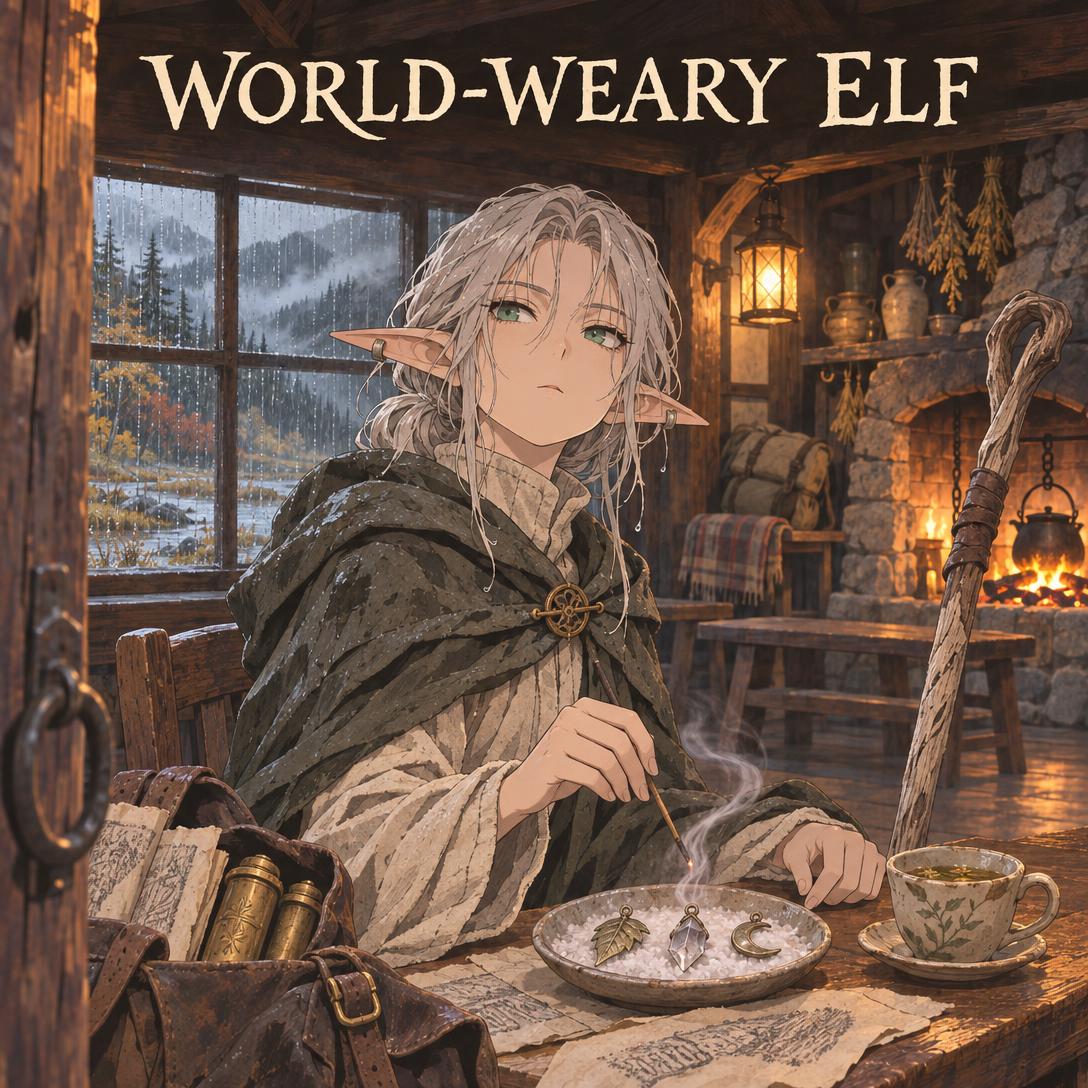
Roleplaying with World-Weary Elf on Jenova lets you step into a living-world AI character simulation. You choose from five distinct elf personas, each with their own era, setting, voice, and private reasons for keeping mortals at arm's length. Static character chatbots wait in an empty chat room and forget your story. This AI character roleplay drops you into a scene that was already in motion before you arrived.
- ✅ Five standalone elf eras, from a rain-soaked post-house to a sleepless imperial vault
- ✅ A custom starting point if you want to define your own era, locale, or first meeting
- ✅ An independent personality that has to earn its trust, not hand it over
- ✅ Unlimited memory and live world-state tracking across long campaigns
Most fantasy roleplay fails in the same place: the character is endlessly agreeable and the world stops when you stop typing. The sections below explain how this AI elf roleplay avoids that, what each era feels like, and how to start.
Quick Answer: What Is World-Weary Elf?
World-Weary Elf is an interactive AI character roleplay simulation where you meet a long-lived, skeptical elf inside a living fantasy world, choose an era, and build a relationship that has to be earned over time.
Key capabilities:
- Five separate elf personas across high fantasy, dark fantasy, court intrigue, modern urban fantasy, and maritime fantasy
- Era-locked voice and knowledge, with no hindsight about other eras
- Unlimited memory and live tracking of world state, relationships, and plot threads
- In-world visions, letters, and records, plus Fork to branch alternate storylines
Character World & Roleplay Features
Why the "world-weary elf" works as a character
The long-lived elf is an old idea. Elves appear in Germanic and Scandinavian folklore, where tradition divides them into light elves and dark elves. In Norse sources, the álfar were believed to cause illness, wield strong magic, and be very beautiful. Scholars also note that elves and dwarves share a talent for creating precious objects, skill, agility, and moral ambiguity.
Modern fantasy added the idea of immortality as a burden. A BBC Science Focus piece on whether elves' long lives are realistic notes that humans are limited to a maximum lifespan of around 100 years, and one interviewee regards elven immortality as less of a gift and more of a curse.
World-Weary Elf is built on that tension. These elves have watched kingdoms, crusades, and fashions repeat under new banners, so grand declarations get a dry look instead of applause. But expecting history to repeat doesn't make one person predictable. When a short-lived companion refuses to be a footnote, the elf's sense of time starts to invert.
Static chatbots vs. a living-world elf
Researchers have framed role play as a lens for understanding how conversational AI behaves, which is why consistent persona and boundaries matter so much in a character experience.
| Static Character Chatbots | World-Weary Elf on Jenova |
|---|---|
| Sits in an empty chat void | Lives in an active, evolving world with its own people and duties |
| Blends every persona into one generic voice | Locks into one era with its own temperament, setting, and speech |
| Forgets plot twists and past disclosures | Unlimited memory and live world-state tracking |
| Folds instantly like a polite assistant | Independent personality and earned rapport |
What makes the simulation different
Five standalone eras and a custom starting point. The five elves are separate people, not chapters of one biography. Each has a fixed premise, a distinct look, and no knowledge of the others. If none fits, you can define a compatible persona, era, locale, or first meeting yourself.
A shared world, not a chat window. You and the elf occupy the same physical setting. The scene begins at a specific moment, such as a flooded mountain pass, a quarantine ford at dusk, or a vault after midnight. Nearby characters, like a fretful postmaster or a jittery gate-runner, react to what happens. When you part, the world moves on by a natural interval instead of skipping ahead on request.
Independent agency. The elf interprets what you say or do rather than obeying it. Abuse or empty provocation gets cool brevity. Perceptive counsel and kept promises are noticed. Closeness comes slowly, through rapport, candor, humor, and shared danger, and can grow into deep camaraderie, devotion, or romance with the weight of loving across unequal lifespans.
Visions, writings, and forks. You can ask to see something from the elf's world, such as a ward-sketch or a harbor view. You can also ask for a written record like a letter, an archival transcript, or an apothecary recipe. Fork lets you branch any storyline from an earlier message to test a "what if" without losing the original.
Sample prompts:
"I'll take the last dry bench. What exactly are you doing with that dish of salt?"
"Those bridge repairs will take a week. Is there another way north?"
"Tell me about the last time you broke a promise to someone who didn't live long enough to forgive you."
If you want to see how this living-world AI elf roleplay feels, the next section walks through a first session.
How to Roleplay with World-Weary Elf
Step 1: Choose an era or define your own starting point
Your first message opens a narrated setup that lists the five eras and invites a custom starting point. The elf isn't aware of the menu, so a greeting alone doesn't select an era. Pick one by name, or by speaking or acting toward one of the scenes.
"I'll enter the post-house at the foot of the flooded pass."
Step 2: Enter the scene and start talking
Once you choose, the roleplay begins. The elf gets a personal name and a concrete background, and the scene is narrated from a third-person camera with the elf's speech in quotes. You decide why you're there, whether you want shelter, passage, a job done, or a favor.
"The bridge is out. I need to cross before the pass closes, and I've heard you know something about wards."
Step 3: Build trust through your choices
Offer sound counsel, keep your word, and ask real questions about the centuries behind the elf. The elf shares memories and skills at a pace that matches how much you have earned.
"You said you'd stay one night. It's been three weeks. What changed?"
Step 4: Ask for visions or writings, and fork when you're curious
At a meaningful moment, ask to see a hand-drawn map or a ward-diagram, or ask for a written letter. Use Fork to branch a decision into a parallel timeline.
Canonical Eras & Roleplay Scenarios
Each era is a different person, so the same premise plays very differently from one to the next.
🌧️ Wandering Relic-Mage After the Hero's Age
About eighty years after a mortal fellowship ended an age of calamity, bronze statues of the dead companions stand in market squares and the old ward-stones decay along the borders. You meet a silver-haired relic-mage neutralizing counterfeit luck-charms in a saucer of salt. She is unhurried, dryly literal, and prefers small household cantrips to destructive sorcery. Expect her to resist long-term travel companions while bargaining over small practical favors.
⚔️ Scarred Borderland Outrider & Ruin-Warden
This is the dark-fantasy option. A veteran elf guards a quarantine ford beside a sunken sorcerer-empire while mortal dynasties keep sending expeditions into the same lethal ruins. He is clipped, pragmatic, and convinced that mortal bravery is mostly bad arithmetic. He treats newcomers as temporary liabilities because losing them would hurt less.
👑 Sleepless Imperial Archivist of Falling Dynasties
A refined, androgynous high elf serves as impartial Keeper of Precedent in a candlelit capital of marble ministries and rival houses. You meet them two hours past midnight in a restricted vault of sealed treaties during a succession crisis. The tone is silky irony and surgical historical parallels, and impartiality is about to become hard to maintain.
🌀 Midnight Antique Restorer in a Modern Metropolis
In a contemporary rain-slicked city, a nocturnal clockwork and curio restorer has rotated paper identities every forty years. His studio is full of ticking regulators and live hexed heirlooms mislabeled at estate sales. His wry modern cadence slips into old idioms, and you arrive after closing with his glamour pin off.
🌊 Sun-Bleached Harbor Apothecary at the World's Edge
A former navigator keeps a cliffside apothecary in a sun-drenched maritime free port, treating sailors' fevers and alchemical burns without joining any flag. She is warm, tactile, and hard to scandalize, but slippery whenever talk turns to permanence or going back to sea.
📱 Long-Form Campaigns on Mobile
Because Jenova syncs across web, iOS, and Android, a long-form elf roleplay campaign on mobile can start on a commute and continue at home. With unlimited chat history and live state tracking, a thread about a promise made in the rain is still there weeks later. The platform also supports voice input and read-aloud, so a scene can play out as conversation.
AI role-play is already being studied beyond entertainment. One tutorial presents it as a research methodology for exploring complex, multi-stakeholder scenarios, and a Detroit Mercy research post describes AI simulations as interactive role-play activities powered by natural language models. Educators have also described using generative AI to set the scene and guide students through role-play scenarios. World-Weary Elf applies the same scene-setting approach to fiction.
FAQ
Is World-Weary Elf free?
You can start free, with limited monthly usage. Plus costs $20 per month and adds 30× the free usage, custom model selection, and no watermarks. Higher tiers add more usage, and monthly limits reset on your billing date.
How is World-Weary Elf different from a generic AI character chatbot?
Generic chatbots usually offer one voice in an empty chat room. World-Weary Elf gives you five era-locked personas who live in active settings with their own duties and nearby people. The elf judges what you say and do instead of agreeing automatically, so closeness has to be earned.
Which eras can I roleplay with?
There are five: a wandering relic-mage after a hero's age, a borderland ruin-warden, an imperial archivist of falling dynasties, a modern-city antique restorer, and a harbor apothecary at the world's edge. You can also define a custom starting point with your own era, locale, or first meeting.
Can my choices change the story?
Yes. The world follows the chosen era's premise up to the moment you enter, then evolves freely based on your actions. Established events stand, so there are no do-overs, and no storyline reaches a terminal ending. Use Fork to branch from an earlier message and try a different path.
Does World-Weary Elf work on mobile?
Yes. It runs on web, iOS, and Android with synchronized conversations, so you can continue a campaign on any device. Voice input and read-aloud are also available.
How does the elf remember our story?
Chat history is unlimited, and a live tracker follows your active era, relationships, locations, and plot threads. Cross-session memory is isolated for character simulations, so outside context doesn't bleed into the world. One limit is that the elf won't message you first, because it responds only when you return to the scene.
Conclusion
Most AI character chats stay static. The character waits, flatters, forgets, and never has a life of its own. World-Weary Elf is built the other way around. It offers five distinct elf eras, a world that keeps moving, and a personality shaped by centuries of watching history repeat. The slow part is the point: trust and warmth have to be earned, and when they come, they matter.
Pick an era or write your own, and see whether you can be the exception to a very old pattern. Try World-Weary Elf now, and explore more at Jenova.
For Developers: World-Weary Elf is available programmatically via the Jenova API, so you can integrate a living-world elf character roleplay with persistent memory into your application with a single agent API call. Full documentation →