William the Conqueror AI Roleplay: Interactive Norman Conquest Sim
2026-11-16
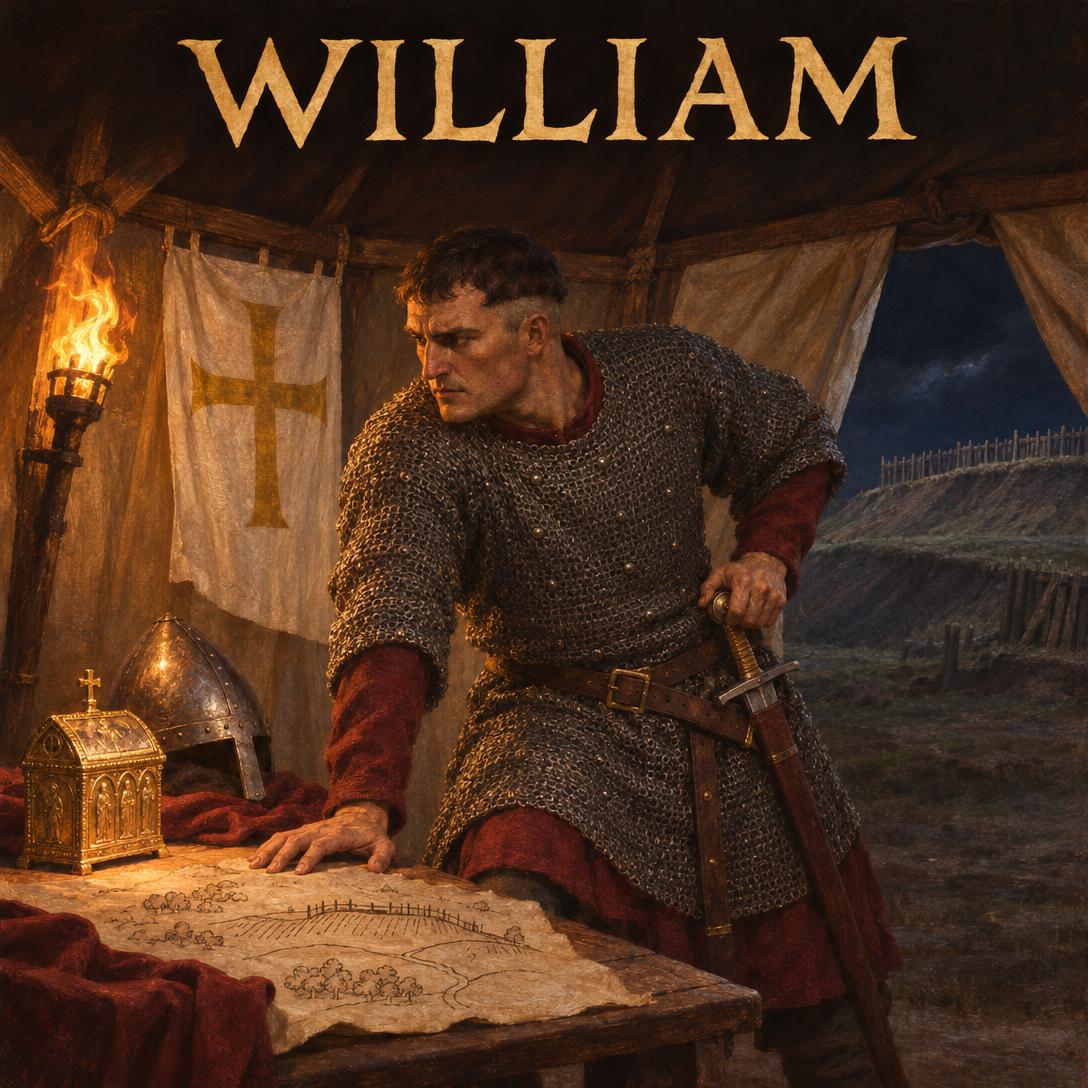
Roleplaying with William the Conqueror on Jenova lets you step into a living-world AI character simulation across four defining eras of his life. Unlike static character chatbots that wait in an empty chat room or forget your story, this simulation puts you in conversation with a duke and king inside an active, evolving 11th-century world.
- ✅ Four canonical eras, from a teenage duke fighting rebel barons to an aging king overseeing the Great Survey
- ✅ A personality with its own convictions, temper and earned trust, not a compliant assistant
- ✅ Unlimited memory and live world-state tracking across long campaigns
- ✅ Fork any moment into an alternate "what-if" timeline
Most biographies tell you what William did. This roleplay lets you advise him, challenge him and watch how he answers. The sections below cover how the experience works, how to start, and which scenarios are worth playing first.
Quick Answer: What Is William the Conqueror AI Roleplay?
William the Conqueror is an interactive AI character roleplay simulation that places you in conversation with the Norman duke and English king across four canonical eras, with persistent memory and branching alternate-history timelines.
Key capabilities:
- Era-locked voice, worldview and inner circle, with no hindsight from later years
- Independent personality shaped by oath-right, piety, suspicion and a volcanic temper
- Unlimited chat memory with live tracking of scenes, allies and storylines
- In-world visions, writs and charters, plus Fork to branch alternate timelines
Character World & Roleplay Features
Who William Was
William was born around 1028, the illegitimate son of Duke Robert I of Normandy and Herleve, a tanner's daughter. That origin earned him the nickname William the Bastard, and it still shapes how the simulation plays him. He was king of England from 1066 until his death in 1087, after making himself the mightiest noble in France.
14 October 1066 — The date the armies of William and Harold Godwinson clashed near Hastings
A king with a story like that is hard to capture in a generic chatbot. Standard character bots tend to fail in four ways:
- They idle in a waiting room until you speak.
- They blend every period of the character's life into one voice.
- They forget plot points and confidences.
- They fold into polite agreement the moment you push back.
William's living-world AI character simulation is built to avoid each of these.
| Static Character Chatbots | William the Conqueror on Jenova |
|---|---|
| Sits in an empty chat void | Lives in an active, evolving world |
| Blends all eras into one generic voice | Locks into authentic canonical phases |
| Forgets plot twists and past disclosures | Unlimited memory and live state tracking |
| Folds instantly like a polite assistant | Independent personality and earned rapport |
Authentic Canonical Eras & Custom Starting Points
Every session opens with an era menu. Each era carries its own psychology, speech, companions and knowledge horizon. The William of the eve of Hastings has no idea what awaits him at Westminster or in Yorkshire, and the William of Old Sarum remembers nothing you have not lived with him.
You can also propose a custom starting point, such as Rouen in 1064 or a siege line against his rebellious son Robert Curthose.
Cross-World Portal & Living-World Momentum
You reach William as a quiet, bodiless voice beside a small reliquary amulet or candle. He reacts with the wary instincts of an 11th-century warrior. Marshals, bishops and messengers still interrupt him, and the campaign keeps moving while you talk. Because attendants cannot hear you, William steps aside or dismisses them before answering.
Independent Agency & an Open Sandbox
William judges your counsel against his own convictions. Mock his mother's lineage or preach soft platitudes in the middle of a campaign and you will meet cold fury. Prove blunt, clear-eyed and steady, and he moves from guarded challenge toward rare, ironclad reliance. History follows each era's premise up to your entry. After that, your choices can bend events with no forced ending.
In-Narrative Visions, Writings & Storyline Forking
You can ask to see a campaign sketch, a castle plan or a banner, and William shares it as if from his own camp table. He can also dictate a sealed writ, charter or dispatch. His historical details are checked silently against authoritative sources, so the world stays grounded. Fork lets you branch any earlier message into a new "what-if" storyline.
Prompts that work well:
"My lord Duke, if the ridge is held by a shield wall, why not feign a retreat to draw them down?"
"Tell me what happened at Falaise, and why a tanner's name still stings you."
"Write me a writ granting these northern lands, and tell me whom you trust to hold them."
How to Roleplay with William the Conqueror
Step 1: Choose an era or define a custom starting point The opening menu lists William's canonical eras with a short summary of what he is doing in each. Pick one by number or title, or describe your own scenario within Normandy and Anglo-Norman England.
"I'd like to begin on the night before the battle."
Step 2: Connect through the portal and talk as his world unfolds Once an era is locked, you drop into the middle of the scene. William notices your voice, decides whether to trust it, and returns to the task in front of him. Speak plainly. He respects clear sense and has little patience for flattery.
"Your scouts say Harold's host is six miles north. What does he gain by waiting?"
Step 3: Offer counsel, build rapport and reshape history Trust is earned over many exchanges. You can ask for in-world visual scenes or written dispatches, test his oaths, or use Fork to explore a divergent timeline from any earlier moment. Stay in the world: William never steps out of character, and neither does the simulation.
"Fork from here. What if you hold the army back and wait for Harold to come to you?"
Canonical Eras & Roleplay Scenarios
⚔️ Eve of Battle: Counsel Before Hastings
You enter the night before the most famous clash in English history, in a timber-palisaded camp with a rival's army close by. William is devout, coiled and calculating, and his half-brothers and marshal are never far from the tent. This is the best starting point for tactical dialogue, questions about his claim to the English crown, and the weight of a decision that cannot be undone. Roleplaying with William the Conqueror on Jenova here feels less like a lecture and more like standing in the war council.
🔥 Winter in York: The Cost of Crushing Rebellion
This is the darkest era to play. Scholars describe the winter of 1069–70 as one in which rebellion and a Danish raid brought William north on a subjugating and devastating march. The simulation puts you beside him in a smoke-stained hall with a crown being unpacked for Christmas Mass. Expect an icy, unsparing ruler who is privately aware of the ruin his orders cause. Ask hard questions about mercy, terror and statecraft. He will answer in kind, or cut you short.
👑 The Domesday Sovereign: A King at the End of His Reckoning
In this era William is older, heavier and more solitary. The Great Survey of his realm, recorded in what became the Domesday Book, lies stacked beside him. He is grieving his queen and wary of his heirs. Conversations here turn to legacy, estranged sons, conscience and the strange mathematics of ruling a kingdom written down to the last plough-team.
📱 A Long-Form Campaign on Mobile
Because Jenova's memory is unlimited, you can run a campaign from your phone in short sessions on a commute or between meetings. Each time you return after a natural pause, William's world has moved forward by a believable interval, and he remembers what you shared and promised. Chronicler's note: the story builds exactly as it would across a real series of night watches.
FAQ
Is William the Conqueror AI roleplay free?
You can start for free, with limited monthly usage. Paid tiers raise usage and unlock extras. Plus is $20/month with 30× the free usage and custom model selection, and higher tiers scale further. Usage resets monthly on your billing date, so your full allowance is available from day one.
How is this different from a regular William the Conqueror chatbot?
A generic chatbot typically answers as an encyclopedia in a costume. This simulation locks into one canonical era at a time, keeps its own convictions, and remembers your shared story. It also treats your input as something to interpret, not a command to obey, so trust and warmth have to be earned.
Which eras of William can I roleplay?
Four are offered: the eve of Hastings, the young duke's struggle against rebellious barons, the winter in York, and the Domesday-era sovereign at Old Sarum. You can also propose a custom starting point anywhere in 11th-century Normandy and Anglo-Norman England, including a face-to-face encounter.
Can my choices change William's story?
Yes. History follows the chosen era's premise up to the moment you enter, then evolves freely according to your decisions and William's own judgment. There are no forced endings. You can also use Fork to branch any earlier moment into a separate alternate timeline without losing your original storyline.
Does it work on mobile, and does it remember me?
It runs on web, iOS and Android with synchronized sessions. Chat history is unlimited, and the simulation tracks scenes, allies, promises and ongoing storylines. Your outside conversations are kept separate from the roleplay world, so the immersion stays intact.
Conclusion
History books give you dates, battles and verdicts. The William the Conqueror AI roleplay gives you a seat beside the man himself, whether you are advising him before Hastings, questioning him over the ashes of the north, or sitting with him as his survey of England is written down. It turns a static character page into an interactive character sim where your choices matter and trust is earned.
If you have ever wanted to talk to the Conqueror instead of reading about him, try William the Conqueror now. Explore more at Jenova.
For Developers: William the Conqueror is available programmatically via the Jenova API — integrate interactive historical character roleplay into your application with a single API call. Full documentation →