AI Wedding Planner: Plan Your Dream Wedding With AI (May 2026)
2026-05-13
Planning a wedding is supposed to be one of the most exciting chapters of your life. In reality, it's become one of the most stressful. The average couple spends 528 hours planning their wedding — that's 22 full days of nonstop work spread across an 18-month engagement. And according to Zola's 2026 research, 71% of couples didn't feel prepared for the sheer number of decisions that come with it.
The result? 84% of brides report feeling stressed ahead of and during their big day, with over a quarter calling it the most stressful event of their entire lives. Meanwhile, the average wedding cost has climbed to $36,000 in 2026 — and 1 in 10 couples end up doubling their original budget.
But here's what's changing: 54% of couples are now using AI when wedding planning, nearly tripling the 20% rate from just a year prior. Couples aren't adopting AI because it's trendy — they're adopting it because the traditional approach is genuinely broken. Jenova's Wedding Planner was built for exactly this moment: a dedicated AI wedding planning partner that handles budgets, vendor research, timelines, cultural guidance, guest logistics, and every detail in between — from engagement to celebration.
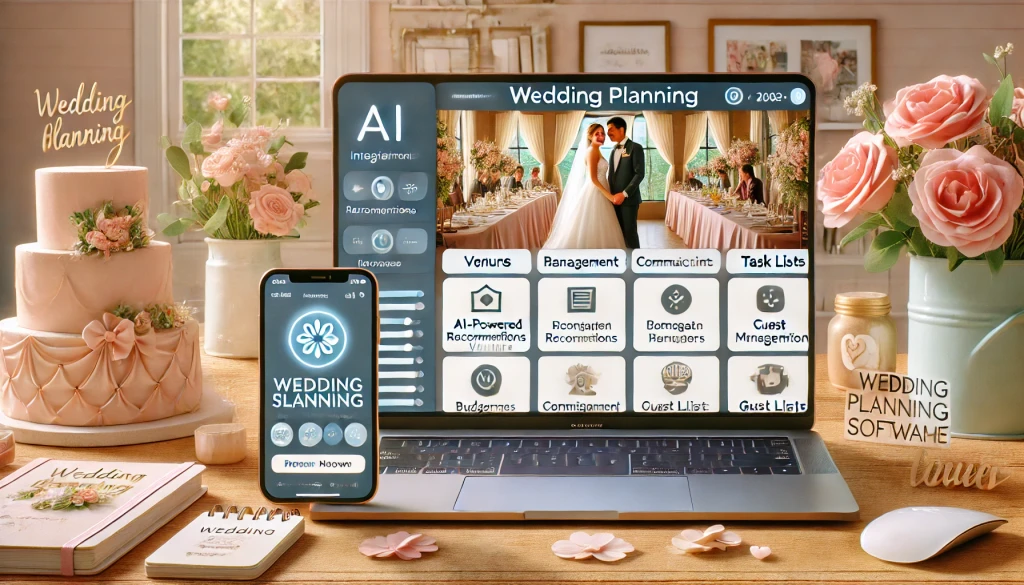
Quick Answer: What Is an AI Wedding Planner?
An AI wedding planner is a specialized artificial intelligence tool that handles wedding budgets, vendor research, timeline coordination, and cultural guidance through conversational prompts — replacing hundreds of hours of spreadsheet juggling, vendor calls, and decision overwhelm.
- Budget management — Track spending, allocate by category, and get real-time cost projections with the Wedding Planner
- Vendor coordination — Research, compare, and evaluate florists, photographers, caterers, and venues by region and budget
- Timeline planning — Month-by-month planning checklists from engagement through honeymoon
- Cultural guidance — Ceremony traditions, etiquette, and customs for any culture, religion, or blended celebration
The Problem: Why Traditional Wedding Planning Is Overwhelming
The global wedding planner market was valued at $320 billion in 2025 and continues to grow — a signal of just how much help couples need. Yet the pain points that drive that spending remain stubbornly difficult to solve.
The Budget Black Hole
Budget stress is the number one pain point in wedding planning. 48% of couples say their biggest challenge is managing the gap between what they can afford and their inspiration, and 84% believe their 2026 wedding will cost more than the exact same wedding would have two years ago. Meanwhile, 76% of couples spend more on food and drinks than planned, and more than half initially budget under $10,000 — only to watch costs spiral.
Wedding planners save couples 20-30% on expenses, yet the average full-service planner costs $4,100 — before you even start spending on vendors. — Gitnux, Wedding Planner Statistics 2026 / The Knot
The Decision Avalanche
On average, couples hire 14 different vendors for their wedding. Each vendor requires research, outreach, site visits, contract negotiation, and coordination. Multiply that by venue selection, guest list management, seating arrangements, attire shopping, registry creation, and stationery design — and the mental load becomes unsustainable. 71% of couples say they weren't prepared for the volume of decisions required.
The Family Drama Factor
Wedding planning doesn't happen in a vacuum. 42% of couples cite family drama as their biggest challenge, from disagreements over guest lists and plus-ones to conflicting cultural expectations and financial contributions. Navigating these dynamics requires diplomatic skill that most couples haven't had to exercise before.
The Professional Planner Cost Barrier
Hiring a human wedding planner solves many of these problems — but at a price most couples can't justify. Full-service planners average $5,000 to $10,000, and even day-of coordinators run $1,400 to $2,500. For couples already stretching their budget, adding 4-15% for planning services often feels impossible. Yet couples who hire planners report 92% satisfaction versus 75% for DIY — proving that structured guidance genuinely improves outcomes.
Why the Wedding Planner Agent
While generic AI chatbots can answer basic wedding questions, Jenova's Wedding Planner is a specialized agent built with deep domain expertise across every dimension of wedding planning — from cultural ceremony traditions to vendor negotiation tactics to seating chart psychology.
| Traditional Approach | AI Wedding Planner | |
|---|---|---|
| Budget tracking | Spreadsheets updated manually | Dynamic allocation with real-time adjustments |
| Vendor research | Hours on Google, WeddingWire, Yelp | Curated shortlists by budget, location, and style |
| Timeline management | Printable checklists, forgotten tasks | Adaptive month-by-month plans that evolve with you |
| Cultural guidance | Asking relatives, scattered blog posts | Comprehensive ceremony protocols for any tradition |
| Guest list logistics | Excel headaches, seating chart arguments | Capacity analysis, dietary tracking, seating strategy |
| Professional planner cost | $4,100-$10,000+ | Free to start, no credit card required |
Deep Wedding Domain Expertise
The Wedding Planner isn't recycling generic event planning advice. It understands the specific nuances that make wedding planning uniquely complex:
- Cultural and religious ceremony guidance — Hindu mandap rituals, Catholic nuptial Mass structure, Jewish chuppah traditions, Muslim nikah protocols, Chinese tea ceremonies, Filipino cord and veil sponsors, interfaith blending strategies, and dozens more
- Budget allocation intelligence — Knows that venues typically consume 27% of the budget, photography 10%, florals 8-10%, and can recommend trade-offs when one category runs over
- Vendor ecosystem awareness — Understands seasonal pricing patterns, booking lead times (photographers often book 12+ months out), contract red flags, and negotiation leverage points
- Guest experience design — Reception flow optimization, timeline buffer strategies, entertainment sequencing, and the psychology of seating arrangements
Example Prompts
"We're planning a 150-guest wedding in the Philippines for March 2027 with a budget of ₱1.5 million. Build me a full budget breakdown by category, and flag where we're likely to overspend."
"My fiancé is Indian Hindu and I'm Filipino Catholic. Help us design a ceremony that honors both traditions without running over 90 minutes."
"Create a complete 12-month wedding planning timeline. We just got engaged and the wedding is in May 2027. Include vendor booking deadlines and decision milestones."
Persistent Memory Across Sessions
Because Jenova maintains persistent memory across conversations, your Wedding Planner remembers your budget, guest count, venue preferences, cultural requirements, and every decision you've already made. Return a week later to refine your seating chart, and it already knows your guest list, dietary restrictions, and family dynamics. No re-explaining. No lost context.
Related Agents You'll Also Like
The Wedding Planner is your strategic hub, but several complementary agents handle specific wedding tasks with specialized depth:
Greeting Card Maker
Design culturally aware invitations, save-the-dates, thank-you cards, and ceremony programs — all with visual styling that matches your wedding aesthetic.
- Custom invitation designs for any cultural or religious tradition
- Coordinated stationery suites with consistent visual identity
- Multilingual text support for multicultural guest lists
Personal Financial Advisor
Before committing to a $36,000 wedding, this agent helps you assess the financial impact — evaluating savings goals, payment timelines, honeymoon budgeting, and post-wedding financial planning.
- Wedding budget within broader financial plan assessment
- Credit card reward optimization for wedding purchases
- Post-wedding financial recovery and newlywed money management
Fashion Consultant
From bridal gowns and groom's attire to bridesmaid coordination and guest dress codes, this agent handles outfit evaluation, style matching, and wardrobe planning for the entire wedding party.
- Bridal and groom's attire research by style and budget
- Bridesmaid coordination strategies (matched vs. mismatched)
- Cultural attire guidance for traditional ceremonies
Travel Planning Advisor
For destination weddings, honeymoon planning, or coordinating travel logistics for out-of-town guests — this agent handles flights, accommodations, group blocks, and itineraries.
- Destination wedding location comparison and logistics
- Honeymoon itinerary building with budget optimization
- Guest travel coordination and accommodation blocks
How It Works
Getting started with the AI wedding planner takes less than a minute. No consultant fees, no onboarding questionnaires, no waiting for callbacks.
Step 1: Open the Wedding Planner
Navigate to the Wedding Planner agent page and start a new conversation. The agent is ready immediately.
Step 2: Share Your Wedding Vision
Tell the planner whatever you know — even if it's vague. Date range, guest count estimate, budget, cultural traditions, venue preferences, or just "we got engaged last week and have no idea where to start."
"We just got engaged. We want a wedding in late 2027, probably around 120 guests, somewhere in Metro Manila. Budget is around ₱2 million. We're both Catholic but want something modern and not too traditional. Where do we even begin?"
Step 3: Get a Structured Plan
The planner builds a comprehensive framework: timeline with milestones, budget allocation by category, vendor booking sequence, and decision priorities. Everything is tailored to your specific constraints.
Step 4: Refine Through Conversation
As decisions get made — venue booked, photographer selected, guest list finalized — update the planner. It adjusts the budget, timeline, and remaining tasks accordingly.
"We just booked our venue for ₱350,000 — that's ₱50,000 over what we budgeted. Where should we cut to stay on track? We don't want to sacrifice photography quality."
Step 5: Handle the Details
Ask follow-up questions about anything: ceremony script drafts, seating chart strategies, day-of timeline with buffer zones, vendor contract questions, rain contingency plans, or speech-writing guidance. Download any response as a PDF or Word document for sharing with your wedding party or vendors.
"Draft a day-of timeline for a 2 PM ceremony with cocktail hour, reception, and an afterparty. Include buffer time for photos and realistic transition windows."
Results & Use Cases
💒 Multicultural Ceremony Design
Scenario: A couple — one Filipino Catholic, one Korean — needs to design a ceremony that honors both families' traditions without creating a three-hour marathon.
Traditional Approach: Weeks of research, awkward conversations with both sets of parents, consulting multiple religious leaders, and still feeling uncertain about protocol.
AI Wedding Planner Solution: Describe both traditions to the Wedding Planner and receive a structured ceremony outline that integrates Catholic liturgical elements with Korean pyebaek traditions. The planner explains the significance of each ritual, suggests a natural flow between segments, recommends timing for each element, and even drafts ceremony program text that educates guests from both cultures about what they're witnessing.
💼 Budget Recovery After Venue Overspend
Scenario: A couple booked their dream venue — but it consumed 35% of the budget instead of the recommended 27%. Now they need to reallocate without gutting the guest experience.
Traditional Approach: Staring at a spreadsheet at midnight, making painful cuts without understanding which trade-offs actually affect guest satisfaction.
AI Wedding Planner Solution: Share the updated budget with the Wedding Planner and receive a reallocation strategy that identifies low-impact savings (stationery, favors, transportation) versus high-impact cuts to avoid (food, photography). The planner models three scenarios — aggressive savings, moderate adjustment, and minimal change with financing options — with specific dollar amounts and vendor alternatives for each.
📱 Vendor Decision on the Go
Scenario: A bride receives a time-sensitive quote from a florist while commuting and needs to evaluate whether the pricing is fair for her market, budget, and flower preferences.
Traditional Approach: Texting three married friends, scrolling Reddit, and hoping for useful data before the quote expires.
AI Wedding Planner Solution: Open the Wedding Planner on your phone, share the quote details, and receive an assessment within minutes. The planner knows that the average couple spends 8-10% of their budget on florals and can evaluate whether the quote aligns with your total budget, flag items that seem overpriced for your region, and suggest negotiation talking points or alternative flower varieties that achieve a similar aesthetic for less.
📊 Guest List Diplomacy
Scenario: The couple wants 100 guests. Her parents insist on 40 additional family members. His parents want 20 colleagues. The venue capacity is 130.
Traditional Approach: Arguments, spreadsheet gymnastics, hurt feelings, and someone sleeping on the couch.
AI Wedding Planner Solution: The Wedding Planner helps model the guest list mathematically and diplomatically. It calculates the real cost-per-head impact of 40 additional guests, suggests tiered invitation strategies (A-list and B-list with timeline logic), helps draft diplomatic talking points for parent conversations, and evaluates whether a venue upgrade or second celebration makes financial sense. When 42% of couples cite family drama as their biggest challenge, having a neutral strategic advisor makes a measurable difference.
FAQ
How much does an AI wedding planner cost?
Jenova offers a free tier with all core features and limited usage — enough to build a complete wedding plan with the Wedding Planner. Paid plans start at $20/month for significantly expanded usage. No credit card required to start. Compare that to the [$4,100 average cost](https://saradoesseo.com/wedding-marketing/wedding-industry-statistics/) of a human full-service wedding planner.
Can an AI wedding planner replace a human wedding planner?
For most couples — especially those with budgets under $50,000 — an AI wedding planner provides the structured guidance, budget management, and decision support that previously required hiring a professional. Where human planners still excel is in hands-on vendor management, day-of coordination, and in-person crisis resolution. Many couples use the [Wedding Planner](https://www.jenova.ai/a/wedding-planner) for 90% of planning and hire a day-of coordinator ($1,400 average) for execution — combining the best of both approaches at a fraction of the cost.
How does an AI wedding planner compare to ChatGPT for wedding planning?
ChatGPT can answer general wedding questions, but it's a general-purpose assistant without wedding-specific specialization. Jenova's Wedding Planner is purpose-built for wedding planning — with deep knowledge of vendor ecosystems, cultural traditions, budget allocation patterns, and timeline management. It also maintains persistent memory across sessions, so it remembers your guest count, venue, budget, and every prior decision without re-explaining.
Does the AI wedding planner work for destination weddings?
Yes — destination weddings involve even more logistical complexity (travel, local vendor sourcing, legal requirements, guest accommodations, weather patterns), which makes a structured AI planning partner particularly valuable. Pair the Wedding Planner with Jenova's Travel Planning Advisor for a complete destination wedding workflow.
Can the AI handle non-Western or multicultural weddings?
Absolutely. The Wedding Planner includes deep knowledge of ceremony traditions across Hindu, Muslim, Jewish, Buddhist, Shinto, Korean, Filipino, Chinese, and many other cultural contexts. For blended ceremonies — which are increasingly common — the planner designs flows that honor multiple traditions respectfully and practically.
Can I use the AI wedding planner on my phone?
Yes. Jenova is fully accessible on mobile, and the Jenova app is available for iOS and Android. Many couples use the planner on their phones for quick vendor comparisons, budget checks, and real-time decision support while venue shopping or meeting with vendors.
Conclusion
Wedding planning in 2026 doesn't have to mean 528 hours of stress, budget anxiety, and family arguments. With 54% of couples already using AI to make planning faster and smarter — and 38% specifically choosing AI to handle logistics while keeping meaningful decisions human — the era of drowning in spreadsheets and vendor comparison tabs is ending.
The couples having the best planning experience in 2026 aren't the ones with the biggest budgets. They're the ones with a structured, knowledgeable planning partner who remembers every decision, manages every deadline, and provides expert guidance at 2 AM when the seating chart crisis hits — without charging $4,100 for the privilege.
Try the Wedding Planner free — no credit card required — and start turning engagement excitement into wedding day confidence. Explore the full library of specialized AI agents at Jenova.