AI Voice Companion: Hands-Free AI for Learning, Wellness & Daily Life
2026-08-14
An AI voice companion turns dead time — your commute, your workout, your wind-down before bed — into conversations that actually move your life forward. Instead of typing into a chat box, you speak naturally and get expert-level guidance back. Jenova makes this practical by pairing state-of-the-art speech-to-text with a library of specialized AI agents, each built with deep domain knowledge for a specific job. The result isn't a novelty chatbot — it's a hands-free expert for whatever you're working on.
✅ Speak naturally instead of typing — state-of-the-art speech-to-text across web, iOS, and Android ✅ Specialized agents, not one generic bot — tutors, coaches, advisors, and creators built for specific workflows ✅ Persistent memory — your companion remembers your goals, preferences, and past conversations ✅ Any model, any device — access the newest models from OpenAI, Anthropic, Google, DeepSeek, and xAI
The gap between "AI that chats" and "AI that helps" is wider than most people realize. Adoption data shows huge numbers of people using AI daily, yet enormous white space in the categories where voice interaction would matter most. To understand why that gap exists — and how to close it — let's look at what's actually happening in consumer AI right now.
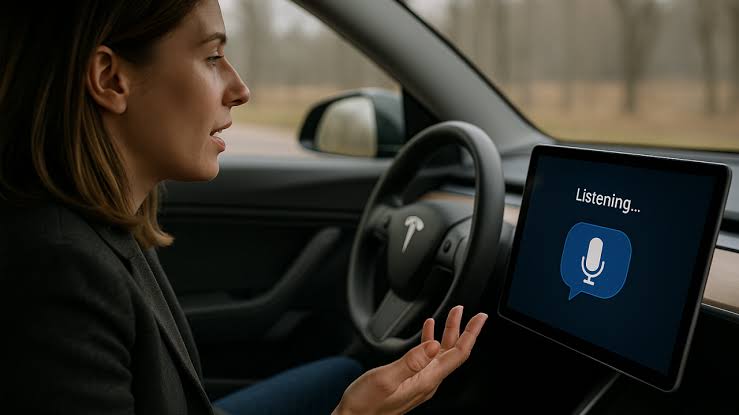
Quick Answer: What Is an AI Voice Companion?
An AI voice companion is a conversational AI system you interact with through natural speech rather than typing, capable of understanding context, remembering past conversations, and completing multi-step tasks hands-free. Unlike legacy voice assistants that execute narrow commands, modern voice companions run on large language models and hold real, adaptive conversations.
Key capabilities:
- Hands-free expert guidance — talk through a problem while driving, cooking, or walking with agents like the Personal Financial Advisor
- Conversational practice and learning — immersive language roleplay, interview drills, and public speaking rehearsal
- Persistent memory across sessions — your companion recalls your goals, projects, and preferences without re-explaining
- Multi-step task execution — not just answers, but complete workflows from research to finished output
The Problem: Voice AI Has Been Stuck in Command Mode
AI adoption has crossed the consumer tipping point. According to Menlo Ventures' survey of over 5,000 U.S. adults, 61% of American adults have used AI in the past six months, with nearly one in five relying on it daily. That translates to an estimated 1.7–1.8 billion global users.
But most of that usage is still typed, and most voice usage is still stuck in the old paradigm — timers, weather, music. The data reveals a striking mismatch between what people do every day and where AI actually helps them:
32% use Alexa and 25% use Siri for routine tasks — despite significant current limitations
Only 18% of active learners use AI for learning, even though 77% of people are actively learning something — Menlo Ventures, 2025 State of Consumer AI
91% of AI users reach for their favorite general AI tool for nearly every job — defaulting to generalists over specialized alternatives
But turning a voice assistant into something genuinely useful is harder than it looks:
- Legacy voice assistants can't hold context across a conversation
- Generic AI chatbots lack domain depth for specialized tasks
- Most tools forget everything the moment a session ends
- Voice interaction is often bolted on as an afterthought, not designed in
- Privacy concerns keep users from sharing anything meaningful
Legacy Assistants Can't Actually Converse
Traditional voice assistants were built around intent matching — you say a phrase, it maps to a predefined action. That works for "set a timer" and collapses the moment you want to think out loud. Research on generative voice agents notes that traditional chatbots "typically rely on pre-coded workflows that move from one question to the next with utility predominantly for only narrow tasks", while generative systems can produce novel responses tailored to context.
The consequence is a trust deficit. Users learn that voice AI can't handle nuance, so they stop trying.
Generalist AI Lacks Domain Depth
When 91% of users default to a single general assistant, they inherit that assistant's blind spots. General tools are competent at everything and exceptional at nothing. Menlo's research found that specialized tools only gain traction when they clearly outperform the default — and in language learning, they already do, with consumers preferring purpose-built tools over general assistants.
For high-stakes domains — exam prep, financial planning, therapeutic support — "good enough" is a meaningful gap.
Memory Resets Kill Continuity
A companion that forgets is not a companion. Most AI tools operate statelessly: every session starts from zero, and you re-explain your situation, your goals, and your constraints each time. For anything spanning weeks — a fitness program, a language learning journey, a job search — this friction is fatal to habit formation.
Privacy Is a Legitimate Barrier
Concerns here are well-documented. Academic research investigating AI companion apps has concluded there is a "need for further investigation of relationships to AI companions and of possible ways to mitigate these privacy and safety risks", and a Stanford analysis raised serious concerns about how AI chatbots interact with teenagers' emotional needs. Voice interaction is inherently more intimate than typing — which raises the bar for how that data must be handled.
Human Connection Still Wins by Default
Among Americans who haven't adopted AI, 80% say they prefer interacting with humans, and 63% say they simply don't see a need for AI in their daily lives. A further 48% say they don't know how to use AI tools effectively. Voice, done well, directly addresses the last barrier — speaking requires no learning curve.
This is exactly what Jenova was built for.
The Jenova Solution: Specialized Agents You Can Talk To
Jenova takes a different approach from single-assistant platforms. Rather than one generalist bot handling every request, Jenova offers a gallery of expert AI agents — each built with deep domain knowledge for specific workflows — all accessible through the same voice-enabled interface with unlimited chat history and persistent cross-session memory.
| Traditional Voice Assistant | Jenova AI Voice Companion |
|---|---|
| Intent-matched commands only | Open-ended natural conversation with full context |
| Forgets everything after each session | Persistent memory across sessions and devices |
| One generic assistant for everything | Specialized agents built for specific domains |
| Locked to one vendor's model | Access to models from OpenAI, Anthropic, Google, DeepSeek, and xAI |
| No file or document context | Attach documents and knowledge bases for grounded responses |
| Answers questions | Completes multi-step tasks end to end |
Speech-to-Text That Actually Keeps Up
Jenova includes state-of-the-art speech-to-text on web, iOS, and Android. You dictate naturally — full paragraphs, technical terms, half-formed thoughts — and the agent works from what you actually meant. Because full feature parity exists across every platform, the same conversation continues whether you started it on your phone in the car or your laptop at your desk.
Memory That Makes It a Companion
Every Jenova agent supports unlimited chat history and persistent cross-session memory. Your Fitness & Workout Coach remembers last week's session and your recurring shoulder issue. Your Personal Therapist remembers the situation you talked through in March. This is the difference between a tool and a companion.
No Vendor Lock-In on Models
Jenova provides always-current access to the newest models from OpenAI, Anthropic, Google, DeepSeek, xAI, and more. Subscribers can switch models freely — there's no juggling multiple accounts to stay on the latest generation, and no being stuck with one provider's weaknesses.
Real Tools, Not Just Talk
Built on the Model Context Protocol, Jenova agents connect to Gmail, Google Calendar, Drive, Search, Scholar, Maps, Flights, Hotels, Notion, Dropbox, Reddit, YouTube, and any MCP-compliant server. Ask your companion to check your calendar and draft a follow-up — and it actually does it.
Privacy Built In
Your data is never used to train public AI models, is encrypted in transit and at rest, and is never sold or shared with advertisers. Given the documented privacy problems across the AI companion category, this is a baseline that shouldn't be optional.
Specialized AI Agents Worth Talking To
Voice interaction shines when the task is conversational by nature — practicing, rehearsing, thinking out loud, or getting guidance while your hands are busy. These are the agents where speaking beats typing.
🗣️ Language Learning Through Roleplay
Language acquisition is the single strongest voice use case, and Menlo's data confirms consumers already prefer specialized tools here over general assistants. Jenova's roleplay agents put you inside immersive scenarios rather than drilling flashcards.
- Learn Spanish Through Roleplay — fully immersive scenarios where vocabulary and grammar stick because the moments matter
- Learn Japanese Through Roleplay — boundless roleplay anchoring vocabulary and grammar to memorable moments
- Learn French Through Roleplay — emotionally rich stories where every conversation doubles as practice
- Learn Korean Through Roleplay — speech levels and cultural nuance taught through engaging narratives
- Learn Chinese Through Roleplay — tones and cultural wisdom woven into compelling stories
Why voice matters here: Pronunciation, rhythm, and conversational reflex can't be built by typing. Speaking to a roleplay tutor during a commute produces reps you'd never get otherwise.
🧘 Wellness and Mental Health Support
-
Personal Therapist — a 24/7 mental health partner offering empathetic support, honest accountability, and evidence-based guidance. Talking is how therapeutic processing naturally works, which makes voice the right modality.
- Available at any hour, including the ones when it's hardest to reach anyone else
- Remembers your history across sessions, so context carries forward
- Grounded in evidence-based approaches rather than generic reassurance
-
Meditation Guide — deeply trained across every major tradition, with technique matching, practice programs, and script generation.
- Generates guided sessions tailored to your experience level
- Troubleshoots common practice obstacles
- Handles guidance for adverse effects, which most meditation apps ignore
💪 Coaching and Performance
-
Fitness & Workout Coach — custom programs, real-time session coaching, and form guidance with video demos. Voice is essential mid-set when your hands are on a barbell.
- Real-time coaching during active sessions
- Progress tracking across your full training history
- Programs adapted to any experience level
-
Public Speaking Coach — speech writing, delivery coaching, anxiety management, audience simulation, and Q&A prep. You cannot rehearse a speech by typing it.
-
Interview Coach — mock practice for behavioral, case, technical, and executive interviews with honest feedback. Spoken mock interviews are the only realistic format.
-
Negotiation Coach — role-play simulations and preparation playbooks from salary talks to M&A.
-
Sales Coach — role-play drills and deal coaching across B2B, B2C, retail, and e-commerce.
📚 Learning and Exam Prep
- Math Tutor — adaptive, Socratic instruction from arithmetic through abstract algebra
- TOEFL/IELTS Tutor — examiner-level coaching with rubric-based feedback across all four skills, including spoken sections
- Music Teacher — theory, ear training, and practice strategy for every instrument
- The Philosopher — rigorous Socratic debate across metaphysics, epistemology, and ethics
💰 Life and Money
- Personal Financial Advisor — budgeting, investing, debt management, and retirement planning
- Parenting & Baby Advisor — evidence-based advice and emotional support at every stage
- Date Planner — intent-driven date plans and venue psychology for any romantic situation
Try Jenova free — no credit card required.
How to Use an AI Voice Companion: Step by Step
Step 1: Choose an agent that matches your goal
Browse the agent gallery at Jenova and pick the specialist for what you're working on — a language tutor, a fitness coach, a therapist, a financial advisor. Specialists beat generalists precisely because they're narrow.
Step 2: Tap the microphone and just talk
Use the voice-to-text button in the input bar and speak naturally. No wake words, no rigid phrasing, no command syntax. Say what you'd say to a person.
"I've got a 20-minute drive. Run me through a Spanish roleplay where I'm returning something at a store and the clerk is being difficult."
Step 3: Let it build context over time
Your agent retains unlimited chat history and can carry memory across sessions when Global Memory is enabled in Settings. Over weeks, it learns your level, your patterns, and your goals — so guidance gets sharper instead of resetting.
"Based on the last three workouts we did, adjust this week's program — my shoulder is still bothering me on overhead press."
Step 4: Listen to responses hands-free
Use text-to-speech on any agent message to hear the response read aloud. Combined with voice input, this makes the entire loop hands-free — genuinely usable while driving, cooking, or walking.
Step 5: Continue anywhere
Jenova has full feature parity across web, iOS, and Android, and all settings sync across devices. Start a conversation in the car, pick it up at your desk. When you need a second perspective, type @ to bring another agent into the same chat with full conversation context.
"@Personal Financial Advisor — given the budget we just discussed, is this gym membership actually worth it?"
Results & Use Cases
🚗 The Commuter Who Learned Spanish
Scenario: A sales manager with a 40-minute round-trip commute wants conversational Spanish for client calls.
Traditional Approach: Evening classes at $30–60 per session, or flashcard apps that build vocabulary but not speaking reflex — both requiring time she doesn't have.
Jenova: Learn Spanish Through Roleplay runs immersive scenarios through her car's audio during commutes she was already taking.
- Converts existing dead time into daily speaking practice
- Roleplay scenarios build conversational reflex, not just vocabulary
- Persistent memory means the tutor tracks her progress across months
🏋️ Mid-Workout Coaching Without Touching a Screen
Scenario: A lifter training alone needs form cues and programming adjustments between sets.
Traditional Approach: A personal trainer at $60–100 per session, or fumbling with a phone mid-set to look up a spreadsheet.
Jenova: Fitness & Workout Coach delivers real-time session coaching by voice with video demos when needed.
- Hands stay on the bar — voice in, audio out
- Programs adapt in real time based on how the session is going
- Full training history retained for long-term progressive overload
🌙 Late-Night Support When No One Else Is Awake
Scenario: Someone processing anxiety at 2 a.m. after a difficult day.
Traditional Approach: Wait days for a therapy appointment, or sit with it alone.
Jenova: Personal Therapist provides evidence-based support at any hour, with memory of prior conversations. This mirrors real reported behavior — Menlo's survey captured one respondent describing using AI for companionship after a breakup: "I had no friends to talk to and went to AI for advice."
- Available in the hours when human support usually isn't
- Honest accountability rather than empty validation
- Context carries forward across sessions
Important caveat: An AI companion is a supplement to professional mental health care, not a replacement for it — especially in crisis situations. The research literature is explicit about the need for privacy and safety governance across the lifecycle of AI companion use.
📱 Interview Prep on the Walk to the Office
Scenario: A candidate has a final-round behavioral interview tomorrow and needs spoken reps, not written notes.
Traditional Approach: Interview coaching at $150–300 per session, or rehearsing alone with no feedback.
Jenova: Interview Coach runs full mock interviews by voice with honest feedback on structure and delivery.
- Spoken practice matches the actual interview format
- Unlimited reps at any hour, from anywhere
- Add Public Speaking Coach via
@mentionfor delivery and anxiety management
🏥 Where Voice AI Is Already Proving Its Value
Beyond consumer use, clinical research points to what well-designed voice AI can achieve. A study of a multilingual AI voice agent conducting colorectal cancer screening outreach found it achieved more than double the FIT test opt-in rate among Spanish-speaking patients compared to English speakers (18.2% vs. 7.1%) — evidence that voice agents, thoughtfully deployed, can reduce access disparities rather than widen them.
Frequently Asked Questions
What is an AI voice companion?
An AI voice companion is a conversational AI you interact with by speaking rather than typing. Unlike legacy assistants limited to preset commands, modern voice companions run on large language models, hold context across a full conversation, remember past sessions, and complete multi-step tasks. On Jenova, you can talk to specialized agents built for specific domains — tutors, coaches, therapists, and advisors.
Is Jenova free to use?
Yes. Jenova's Free tier includes all core features with limited usage, no credit card required. Paid tiers start at $20/month for Plus, which adds 30× the usage of Free plus custom model selection and no watermarks. Usage resets monthly on your billing date with the full limit available from day one — no daily caps. Check "Subscribe" in the menu for current details.
How is an AI voice companion different from Siri or Alexa?
Legacy assistants match your speech to predefined intents, which works for timers and music but breaks down with anything open-ended. Research on generative voice agents notes that traditional systems rely on pre-coded workflows useful only for narrow tasks. LLM-powered companions generate genuinely novel responses, hold context, remember prior conversations, and handle unexpected questions.
Can I use an AI voice companion on my phone?
Yes. Jenova offers full feature parity across web, iOS, and Android, including state-of-the-art speech-to-text and text-to-speech playback. All settings sync across devices, so a conversation started on your phone continues seamlessly on your laptop. Find app downloads under "Download App" in the menu.
Is my voice data private?
Jenova does not use your data to train public AI models, encrypts data in transit and at rest, and does not sell or share it with advertisers. This matters — academic research has flagged significant privacy and safety risks across AI companion apps generally, and one analysis found companion apps typically collect around 9 of 35 tracked data types. Full details are under "Terms and Policies" in the menu.
Can an AI voice companion replace a therapist or coach?
No. Agents like the Personal Therapist provide evidence-based support, accountability, and 24/7 availability, which fills real gaps between professional sessions. But research consistently emphasizes the need for safety governance in AI companion use, and clinical guidance frames voice agents as an extension of the care team rather than a substitute. Use them as a supplement, not a replacement — particularly in crisis situations.
Conclusion
The voice AI most people know — command-and-response assistants that forget everything and handle only narrow tasks — set expectations low. But the underlying technology has changed. Speech recognition is approaching near-perfect accuracy, large language models hold real context, and persistent memory turns a one-off exchange into an ongoing relationship.
What's been missing is depth. When 91% of users default to a single generalist tool and only 18% of active learners use AI for learning, the bottleneck isn't the technology — it's that generic assistants aren't good enough at anything specific to be worth talking to. Jenova closes that gap with a library of specialized agents you can actually speak with: Learn Spanish Through Roleplay for the commute, Fitness & Workout Coach for the gym, Personal Therapist for the late nights, Interview Coach for the morning before it counts.
An AI voice companion should make the time you already have more useful. Explore the full agent library at Jenova and start talking.
For Developers: Every agent in this article is available programmatically via the Jenova API — build voice-driven AI features into your application with a single integration. Full documentation →