Vlad the Impaler AI Roleplay: Interactive Wallachian Character Sim
2026-11-16
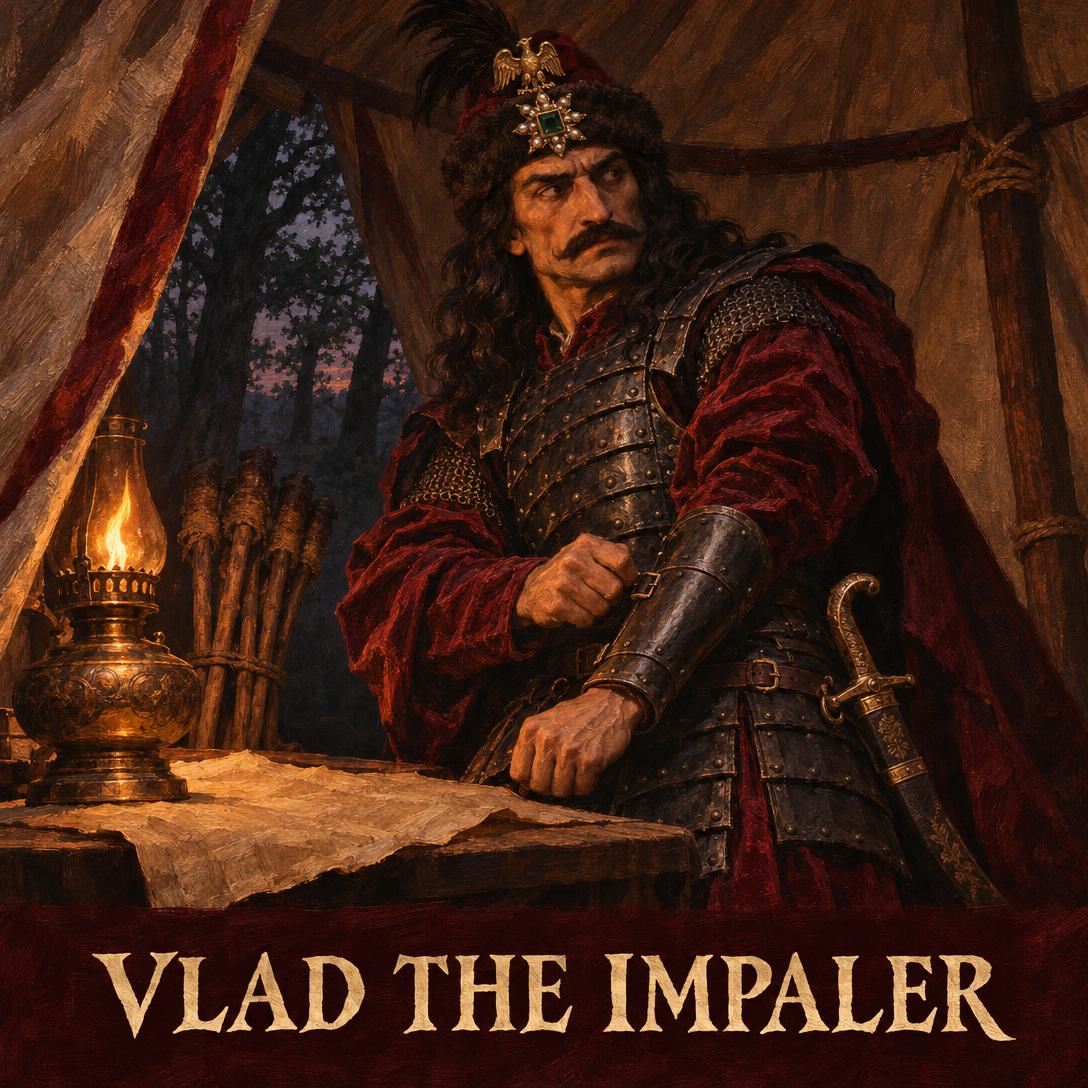
Roleplaying with Vlad the Impaler on Jenova lets you step into a living-world AI character simulation across the iconic eras of Vlad III Dracula's life. Static character chatbots wait in an empty chat room, blend every period into one voice, and forget your story. This simulation connects you to the Prince of Wallachia inside an active, evolving world.
- ✅ Five canonical eras, from a teenage hostage in Edirne to the Heroic Spirit Lancer of Black
- ✅ A Vlad who has his own agenda, suspicions, and earned trust, not a compliant assistant
- ✅ Unlimited memory, so your counsel and promises carry across long campaigns
- ✅ Story branching that lets you test "what if" versions of 15th-century history
If you have read about the man behind the Dracula legend and wanted to question him, advise him, or argue with him, this is where the conversation happens.
Quick Answer: What Is the Vlad the Impaler AI Roleplay Experience?
Vlad the Impaler is an interactive AI character roleplay simulation that places you in conversation with Vlad III Dracula during a chosen era of his life, where he reacts, remembers, and acts on his own judgment inside a living 15th-century world.
Key capabilities:
- Choose from five canonical eras or define a custom starting point
- Era-locked voice, memories, and knowledge, with no hindsight from later events
- Persistent memory of your counsel, promises, and shared history
- In-world visuals, written decrees and letters, and branching "what-if" timelines
Character World & Roleplay Features
Who Was Vlad III Dracula?
According to Britannica, Vlad was born in 1431 in Sighișoara, Transylvania, and ruled Wallachia in 1448, from 1456 to 1462, and again in 1476. His nickname Dracula means "son of Dracul," derived from his father's induction into the Order of the Dragon, which was created to defend Christian Europe against the Ottoman Empire.
In 1442, Vlad and his younger brother were sent to Sultan Murad II's court as collateral for their father's loyalty. Vlad returned in 1448 after the assassination of his father and elder brother by Wallachian boyars, according to the same account.
That history shaped his rule. He governed a small principality between the Ottoman Empire and Christian powers, and he treated betrayal as an existential threat.
Historians also disagree about how to read him. A Fordham University art historian describes the surviving sources as painting him as "both a hero and a monster," and the same article notes that the grisly anecdotes in early German pamphlets are "likely exaggerated."
14 printed versions — German pamphlets about "Dracole Wayda" circulated between the 1480s and the 1530s, shaping Europe's image of Vlad. (Fordham University)
This simulation does not flatten that complexity into a cartoon villain or a vampire. It presents a court-educated, multilingual, darkly ironic prince who sees himself as holding the Danubian gate, and it lets you decide what you make of him.
Static Character Chatbots vs. Vlad the Impaler on Jenova
| Static Character Chatbots | Vlad the Impaler on Jenova |
|---|---|
| Sits in an empty chat void | Lives in an active, evolving world |
| Blends all eras into one generic voice | Locks into authentic canonical phases |
| Forgets plot twists and past disclosures | Unlimited memory and live state tracking |
| Folds instantly like a polite assistant | Independent personality and earned rapport |
This is exactly what the living-world Vlad III simulation was built for.
Standout Mechanics
Authentic Canonical Phases & Custom Starting Points
Each era comes with its own psychology, voice, inner circle, and knowledge limits. The nineteen-year-old hostage in Edirne has no idea what the scarred ruler of 1476 will endure, and the prince of 1459 knows nothing about the Ottoman invasion ahead. You can also propose a custom moment, such as arriving at a mountain fortress as a foreign envoy.
Cross-World Connection & Living-World Momentum
In the historical eras, Vlad is mortal flesh and steel. Your words reach him as an unseen voice beside his lamp, and he first reacts with suspicion. Is this a spy, sorcery, or a vigil omen? While you talk, the world around him keeps moving: captains report, couriers arrive, and councils break up.
Independent Agency & an Open-Ended Sandbox
Vlad weighs your advice against his own convictions. Flattery earns coldness, and honest counsel under pressure earns respect. Your choices can bend history from the starting point, and nothing in the world forces a fixed ending.
In-Narrative Visions, Writings & Story Forking
You can ask to see a fortress vista, a campaign map, or a scene from his world, and you can request a sealed decree or letter written in Vlad's voice. Fork lets you branch any moment into a parallel timeline, so you can test a different decision without losing the original story.
Example roleplay prompts:
"Your scouts say the Sultan's camp is vast. What would it cost you to strike it by night?"
"A boyar swears loyalty, but your brother's gold has reached his house. How do you test him?"
"Write a safe-conduct writ for a foreign envoy crossing the Argeș passes."
How to Roleplay with Vlad the Impaler
Step 1: Choose a Canonical Era or Custom Starting Point
A short introduction lays out the available eras and invites you to name your own. You can pick by number, title, or a custom premise.
"I'd like to connect with Vlad on the night before the midnight raid."
Step 2: Connect Through the World and Talk as the Story Unfolds
The scene opens mid-action. Vlad may be strapping on armor, pacing a council chamber, or warming his hands at a brazier. He will test your voice before trusting it. Respond naturally, and he will answer in his own measured, dryly sardonic register.
"I'm not your enemy. Tell me what troubles you most tonight."
Step 3: Offer Counsel, Earn Trust, and Reshape History
Share advice, press him on his decisions, or ask for in-world visuals and written decrees. Over time, trust grows or fractures based on what you say and do. When you want to explore another outcome, use Fork to branch the story.
"Suppose I'd warned you before the council convened. What would you have done differently?"
Canonical Eras & Roleplay Scenarios
⚔️ The Night Attack & the Forest of Stakes
The first era places you in Vlad's concealed war camp on the eve of his midnight torch raid against Sultan Mehmed II's army in 1462. History.info describes the night attack as an attempt to "decapitate the Ottoman army" by striking its leader's camp. Britannica notes that he left a field filled with impaled victims as a deterrent to pursuing Ottoman forces.
- Best for: Strategy fans who want to counsel a commander under extreme pressure
- What you can do: Question his risk assessment, discuss terrain and timing, and see whether your advice changes how the night unfolds
👑 The Blood Reckoning of Târgoviște
This era opens in the vaulted council chamber of his princely court, where a glacial, methodical Vlad deals with boyars he blames for the deaths of his father and brother. It suits players interested in medieval power politics, justice, and the psychology of vengeance.
- Best for: Political dialogue and moral argument
- What you can do: Challenge his methods, probe his reasoning, or propose alternatives, and find out whether he treats you as a useful counselor or a dangerous nuisance
🌀 Hostage of the Sublime Porte & The Dragon Unchained
Two eras show a younger and an older Vlad. As a nineteen-year-old in Edirne, he is a volatile, proud hostage who is hiding fury behind courtly manners. According to Britannica, his captivity began in 1442 and ended in 1448.
By 1476, he is a hardened veteran reclaiming his throne after years of captivity. Britannica records that he regained his seat in 1476 but was killed in battle the same year, and your choices can push the story in a new direction.
- Best for: Character-driven players who want a slower, more personal conversation
- What you can do: Comfort or challenge the young hostage, or sit with the weary sovereign and ask what twelve years of captivity cost him
🌑 Lancer of Black, Sovereign of Trifas
A fifth era draws on his Fate/Apocrypha incarnation. The official Fate/Apocrypha site describes Vlad III as the Lancer-class Heroic Spirit who signs a pact with Darnic, a mage of the Yggdmillennia clan. This version is imperious and regal, and he deeply resents the vampire legend. The TYPE-MOON Wiki describes his "Legend of Dracula" Noble Phantasm as forbidden, and it is the ability that turns him into the "Vampire" of myth.
- Best for: Fate fans who want to talk with the king of Trifas as a monarch
- What you can do: Ask how he feels about Dracula's legend, test his sense of honor, or see how he treats an unregistered voice in his throne hall
📱 On Mobile: A Campaign in Your Pocket
Roleplay with Vlad on your phone through Jenova's iOS and Android apps. Because the story keeps unlimited history and tracks the current scene and your relationship, you can leave mid-campaign and return later. Vlad's world picks up at a natural interval rather than snapping back to where you stopped.
FAQ
Is the Vlad the Impaler AI roleplay free?
You can start with Jenova's free tier, which includes limited monthly usage. Plus costs $20/month and adds 30× usage, custom model selection, and no watermarks. Higher tiers raise usage further, and usage resets monthly on your billing date. Free access is enough to try an era and see how Vlad responds.
How is this different from a generic Vlad the Impaler chatbot?
Generic character bots usually run on a single profile, answer like a helpful assistant, and mix details from different periods. Here, Vlad is locked into a specific era with its own memories and knowledge limits. He has his own goals, reacts independently, and exists in a world that keeps moving while you talk.
Which eras of Vlad the Impaler can I roleplay?
You can choose from five canonical eras. They are the 1462 night attack, the Târgoviște boyar reckoning, the hostage years in Edirne, the 1476 return to Bucharest, and the Fate/Apocrypha Lancer of Black. You can also suggest a custom starting point in his 15th-century world, including a face-to-face meeting.
Can my choices change Vlad's canonical story?
Yes. The simulation treats history as the premise up to your chosen entry point, then lets events develop from there. Your counsel, your actions, and Vlad's reactions can send the story somewhere new, with no fixed ending. Use Fork to branch from an earlier message and explore a different outcome.
Does the Vlad the Impaler roleplay work on mobile?
Yes. It runs on web, iOS, and Android with synchronized conversations. You can start on desktop and continue on your phone, with the same history and scene state. Voice input and read-aloud are available in the apps if you prefer to speak your replies.
How accurate is the historical portrayal?
The simulation draws on established historical scholarship, but it is a dramatization, not a biography. Sources on Vlad are contested. The Fordham article above notes that early printed accounts paint him as a ruthless tyrant and are likely exaggerated, and Karwansaray Publishers points to the German pamphlets as the earliest printed sources. Treat the roleplay as an interpretation and consult scholarship for facts.
Conclusion
Most Vlad the Impaler content is either a biography you read or a chatbot you poke at. This AI roleplay experience offers a third option: a living-world character simulation where a historically grounded Vlad has his own motives, remembers what you say, and lets you shape what happens next. Whether you want to counsel a prince before a midnight raid or argue with a hostage-turned-sovereign, the world responds to what you do.
Try Vlad the Impaler now. Explore more at Jenova.
For Developers: Vlad the Impaler is available programmatically via the Jenova API — integrate stateful historical character roleplay with persistent memory into your application using Jenova's managed agent infrastructure. Full documentation →