AI Virtual Roommate: Practical Help for Dorms and Shared Homes
2026-09-12
Jenova gives you an AI virtual roommate that actually helps with daily living—meal plans, schedules, household decisions, and conversation that remembers how you live. As of September 2026, more people in dorms and shared homes are looking for specialized AI support instead of another generic chatbot. A human roommate can split rent. They rarely split the mental load of groceries, chore charts, and empty-fridge nights.
✅ Dedicated help for meals, fitness, chores, and daily logistics ✅ Persistent memory so preferences, routines, and house rules stick ✅ Same history on web, iOS, and Android ✅ Free to start—no credit card required
Shared living is supposed to be cheaper and less lonely. Too often it is neither. To understand why an AI virtual roommate is useful now, it helps to look at what actually breaks down in dorms, housemates, and solo apartments.
Quick Answer: What Is an AI Virtual Roommate?
An AI virtual roommate is a set of specialized AI agents that help with meals, chores, schedules, and everyday conversation so shared living feels organized instead of chaotic. It is practical household support, not a VR game or a simulated romance.
Key capabilities:
- Weekly meals, grocery lists, and cooking guidance through a Meal Planner
- Calendars, errands, and household logistics without another messy group chat
- Fitness, meditation, and nutrition support that fits a cramped schedule
- Persistent memory of dietary rules, quiet hours, budgets, and pet routines
Why Shared Living Still Feels So Hard
People move in together to save money and have company. The research on student housing and household labor shows how often that bargain fails. Loneliness is common even when someone sleeps in the next room. Chores still cluster on one person. Meals become takeout. The house runs on unread messages.
UK government research found loneliness is not a side issue for students—it ranks above money and coursework as a stated concern:
92% — Share of students who felt lonely at least once in the last academic year
Housing type makes it worse. A Guardian poll of UK halls found 43% of students feel isolated where they live and 44% find it hard to make friends there. PfP Students reported that 70% of students have felt lonely or isolated and 29% do not know the people they live with. The 2023 Student Academic Experience Survey, cited by Unite Group, found 1 in 4 students feels lonely most or all of the time.
But getting reliable help at home is frustratingly difficult:
- You can have housemates and still eat alone every night
- Chore charts collapse within two weeks
- Grocery runs, bills, and repairs live in five different apps
- Companion chatbots talk—but they do not plan dinner or fix a leaking tap
- Asking for help feels like nagging, so one person absorbs the mental load
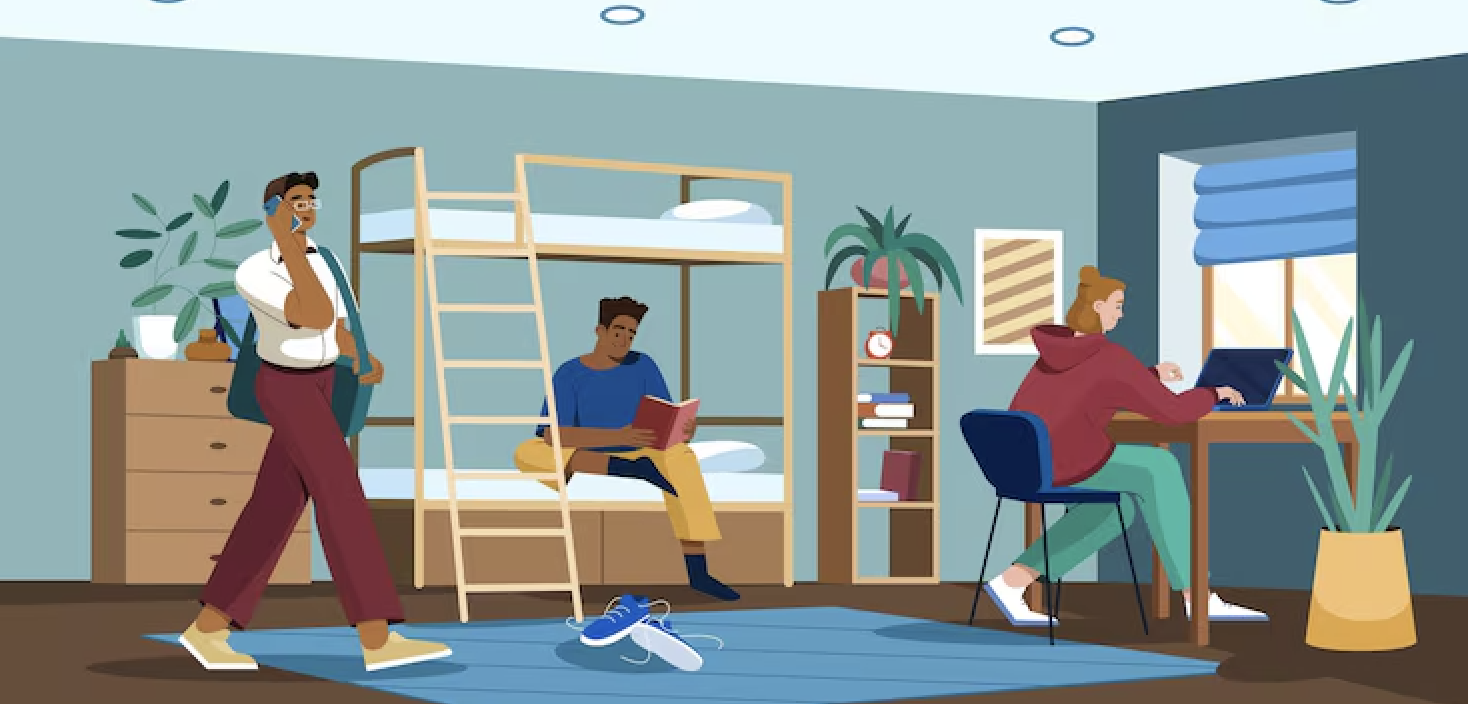
Isolation in Halls and Shared Houses
Proximity is not company. Many students and young renters share walls with people they never really meet. NIH-indexed research has found loneliness especially high among first-year students. That gap is one reason AI companionship has grown so fast. The American Psychological Association notes that AI companion apps surged 700% between 2022 and mid-2025, and that Character.AI reached 20 million monthly users—more than half under 24.
A Harvard Business School study summarized by APA found that interacting with an AI companion can reduce loneliness to a degree comparable to talking with another person, largely because people feel heard. The same research base warns that heavy, exclusive use can correlate with more isolation, not less. The useful design is support that helps you run a household and stay socially capable—not a substitute for every human relationship.
Chore Conflict and the Mental Load
Rent splits on paper. Labor does not. Gallup found women in U.S. partnered households still take primary responsibility for laundry (58%) and for cleaning and cooking (51%). That pattern shows up in student houses and friend-group flats too: one person becomes the default adult.
The fight is rarely about a single sink of dishes. It is about who tracks toilet paper, who notices the bin, and who plans food for people with three different diets. An AI virtual roommate cannot scrub the bathroom. It can hold the plan, the list, and the reminder trail so the work is visible instead of silently assigned.
Meals, Groceries, and the Empty Fridge
Shared kitchens fail in predictable ways. Nobody owns the meal. Everyone assumes someone else bought milk. Takeout fills the gap and the budget disappears. Without a standing plan, housemates default to whatever is fastest after a late class or a long shift.
Meal chaos is also a loneliness amplifier. Cooking for one in a house of four is a quiet form of isolation. A reusable weekly plan, a shared grocery list, and a simple cooking path are unglamorous. They are also the difference between a livable house and a fridge of condiments.
Too Many Apps, Not Enough Follow-Through
Most households already have tools: a notes app, a calendar, a shopping list, a group chat, maybe a chore bot that nobody opens. None of them remember that one person is vegetarian on weekdays, that the landlord only accepts requests on Tuesdays, or that the dog needs a walk before 8 a.m.
Entertainment products labeled “AI roommate”—including VR and game titles—simulate a character in a virtual house. Companion apps specialize in chat. Neither one plans your actual Tuesday. That is the gap a practical AI virtual roommate has to fill.
This is exactly what Jenova was built for.
The Jenova Solution
Jenova approaches an AI virtual roommate as a household toolkit, not a single persona you have to roleplay with. You talk in plain language. Specialized agents handle the jobs a good housemate would split: food, time, repairs, movement, and the small decisions that eat an evening.
The AI companion market is expanding quickly, with some forecasts putting growth at a 31% CAGR through 2033. Most of that attention goes to chat-first companions. The more useful version for shared living is narrower and more concrete: agents that produce lists, schedules, and next steps you can act on today.
| Traditional Approach | Jenova |
|---|---|
| Group chat that buries the chore list | Agents that keep plans, preferences, and follow-ups in one thread |
| Generic chatbot that only converses | Specialists for meals, logistics, fitness, repairs, and shopping |
| One housemate carrying the mental load | Written plans you can share instead of nagging |
| VR “roommate” games and always-on companion apps | Practical output for the home you actually live in |
| Re-explaining dietary rules every week | Persistent memory across sessions and devices |
Daily Logistics Without the Group-Chat Chaos
A Personal Secretary is the closest thing to a live-in coordinator. It helps you manage calendars, travel, errands, and the daily logistics that make a house run. Tell it your class times, shift pattern, or quiet hours and ask for a Sunday reset: what must happen this week, in what order, and what can wait.
That matters in a dorm as much as in a two-bedroom rental. Someone has to remember package deliveries, bill due dates, and whose turn it is to call the landlord. Offloading the tracking does not replace adult responsibility. It stops the tracking from living in one person’s head.
Food, Cooking, and Grocery Planning
Food is where shared living either becomes a habit or a fight. The Meal Planner builds weekly plans, grocery lists, and prep schedules around budget, diet, and how many people will actually be home. A Personal Nutritionist can keep those meals aligned with training, health goals, or a chaotic student timetable. When you want technique rather than a list, a Master Chef Coach walks through methods in real time—useful when four people share one pan and one cutting board.
"Plan 5 dinners for two students this week. One is vegetarian, budget is $60, and we only have 25 minutes on weeknights."
Movement, Sleep, and Mental Downtime
Shared walls make routines fragile. A Fitness & Workout Coach can build sessions that work in a dorm room, a crowded gym, or a 20-minute gap between classes. A Meditation Guide helps you pick a practice you will actually do when the house is loud—short, specific, and matched to the problem (pre-exam nerves, roommate irritation, or the 1 a.m. spiral).
This is not therapy, and it should not replace campus counseling or clinical care. It is a private, low-friction way to keep a routine when the people you live with do not share your schedule.
Home Fixes, Shopping, and Upkeep
Houses break. A Home Renovation Advisor helps you scope a small project, budget materials, and decide what is DIY versus landlord territory. An Appliance Repair Technician can work from error codes and photos when the washer stops mid-cycle. A Shopping Advisor compares replacements when the kettle dies during finals week and you do not have time to research 40 listings.
Those jobs are the unromantic half of having a roommate: someone who will think with you when something fails at 9 p.m.
While companion products such as Replika or Character.AI focus on simulated friendship, Jenova specializes in the operational side of living with other people—plans you can screenshot into the house chat.
Specialized AI Agents for Shared Living
An AI virtual roommate is most useful when the help matches the next 30 days of your life. The agents below map to the jobs that actually show up in dorms and shared homes.
If your week is a pile of overlapping obligations, the Personal Secretary can turn it into a sequence: classes, shifts, laundry windows, and the one administrative task you keep postponing.
- Calendar and travel coordination with personal context
- Daily logistics instead of another forgotten note
- Follow-through across sessions, not a one-off list
If food is the weekly failure point, your meal strategist can lock a plan before anyone “just grabs something.”
- Household-aware weekly menus
- Grocery lists matched to budget and diet
- Prep schedules for tiny kitchens
If the house is loud and your brain will not shut off, the Meditation Guide can give you a short practice that fits the room you are actually in.
- Technique matching instead of generic “just breathe” advice
- Programs you can repeat on weeknights
- Troubleshooting when a practice is making things worse
If you want a body routine that survives shared bathrooms and odd hours, the Fitness & Workout Coach can coach the session you will do, not the one designed for a private gym.
- Custom programs for any level
- Form guidance and session structure
- Progress tracking when motivation is uneven
Students who need academic backup can bring in a Homework Assistant for structure and drafting help matched to their level. Housemates navigating dating in a thin-walled apartment can use a Dating App Advisor for profiles and conversation prep without workshopping it at the kitchen table. If the house includes a cat or a dog, a Pet Care Advisor keeps feeding, behavior, and vet-prep guidance in one place so pet care does not become another silent chore.
Try Jenova free — no credit card required.
How an AI Virtual Roommate Works
Step 1: Describe the House You Actually Live In Say who shares the space, what the constraints are, and what keeps breaking down. Specifics produce better plans than “help me be more organized.”
"I live in a three-person dorm. We have a mini fridge, $70 for food this week, two night classes, and nobody wants to cook after 8 p.m."
Step 2: Put the Right Agent on the Job Start with logistics or meals, then add fitness, repairs, or pet care as needed. You are not required to use every agent. A virtual roommate is a rotation of specialists, not one personality you have to stay in character with.
Step 3: Ask for a Plan You Can Share Request output your housemates can follow: a grocery list, a chore split, a 20-minute workout, a message to the landlord. The point is something you can paste into a group chat without rewriting it.
"Turn this into a fair chore split for three people for 14 days, including kitchen, bathroom, and trash, with one person traveling next weekend."
Step 4: Keep the Thread Going as the Week Changes When someone gets sick, a shift moves, or the oven dies, update the same conversation. Memory is what makes this different from a disposable chatbot session. Your logistics agent already knows the constraints; you do not re-brief the household every Monday.
Step 5: Use It on the Phone Between Classes Full feature parity across web, iOS, and Android means the grocery list you built at the desk is available in the store aisle. Voice-to-text helps when your hands are full and the bus is loud.
Results & Use Cases
📊 Silent Dorm, First Semester
Scenario: A first-year student shares a room with two people who are polite and never hang out. Meals are vending-machine snacks. Evenings feel longer than they should.
Traditional Approach: Wait for a friendship to appear, join a club when energy allows, and hope the isolation fades. That wait is common; government research found nearly half of students worry they would be judged for admitting loneliness.
Jenova: The student uses meal planning for five cheap dinners, a short fitness session that does not require a gym buddy, and a Meditation Guide for a 10-minute wind-down. Homework help sits in the same toolkit for the 11 p.m. assignment panic.
- Food stops being an unsolved daily problem
- A routine exists even when the roommates do not
- Academic and household help live in one place
💼 Two Professionals, One Uneven Chore Load
Scenario: Two friends split a two-bedroom. One person always cooks, always notices supplies, and is quietly furious. The other thinks things are “basically fine.”
Traditional Approach: A tense Sunday conversation, a chore spreadsheet that lasts nine days, then resentment.
Jenova: They generate a two-week meal plan, a visible chore split, and a shopping list with budget caps. When the washer throws an error code, appliance repair guidance turns a fight about “who deals with it” into a next step.
- Labor becomes visible instead of implied
- Meals are decided before 7 p.m. hunger takes over
- Repair decisions do not default to the more conscientious person
📱 Living Alone, Checking In on Mobile
Scenario: A remote worker lives alone after housemates moved out. The apartment is quiet in a way that is not restful. They do not want a dating-style companion bot. They want someone to help run the day from a phone.
Traditional Approach: YouTube in the background, skipped workouts, grocery delivery of random items, and a calendar that only contains meetings.
Jenova: On the commute and between calls, they use the Fitness & Workout Coach for a 25-minute session, a secretary-style daily briefing, and a shopping advisor when the vacuum dies. The companion piece is practical: “What does today need?” rather than simulated affection.
- Works on iOS and Android with synced history
- Voice input when typing is inconvenient
- Structure without another human in the spare room
🎯 Housemates, a Dog, and a Tiny Kitchen
Scenario: Three people and a dog share a rental. Feeding times slip. Grocery runs duplicate. Nobody wants to be “the pet parent” by default.
Traditional Approach: Scattered notes, blamed absences, and a dog that waits too long for a walk.
Jenova: Pet-care guidance sets feeding, walk, and vet-prep defaults. Meal planning accounts for the humans. A home renovation advisor helps them price a cheap storage fix so leashes and food are not on the floor.
- Pet labor is specified, not assumed
- Groceries cover people and pet supplies in one pass
- Small home fixes get a plan instead of another argument
FAQ
What is an AI virtual roommate?
An AI virtual roommate is practical household help delivered through specialized agents—meals, schedules, chores, fitness, repairs, and conversation with memory. It is not a VR character and not a replacement for friends. On Jenova, that support is a set of domain experts you can message in one place, then carry onto your phone.
Is an AI virtual roommate free?
Jenova has a free tier with core features and limited usage, so you can test whether this workflow fits your house before paying. Paid plans increase usage if you start running weekly meal plans, logistics, and training in the same month. There is no requirement to subscribe in order to try the basic experience.
How is an AI virtual roommate different from ChatGPT or Replika?
General chatbots are strong at conversation and weak at owning a household job. Companion apps are built for emotional presence. An AI virtual roommate on this platform is built for output: a grocery list, a chore split, a workout, a repair path. You can still talk through a rough day. The difference is that the thread can end in a plan your housemates can follow.
Can an AI virtual roommate help with chores and meal planning?
Yes. Chore help looks like fair splits, reminder logic, and lists you can share—not a robot with a mop. Meal help is more direct: the Meal Planner designs the week, and cooking or nutrition agents handle the “how” and the dietary constraints. That combination is usually the highest-value starting point in a messy house.
Does an AI virtual roommate work on mobile?
Yes. Web, iOS, and Android share features and history, which matters when the decision happens in a supermarket aisle or on a bus, not at a desk. Speech-to-text is available when you cannot type. Settings sync, so the house rules you set on a laptop are still there on your phone.
Is an AI virtual roommate a replacement for a real roommate?
No, and it should not be treated as one. A human roommate splits rent, shares legal risk, and can be a friend. An AI virtual roommate splits the mental load: food, time, and the stream of small decisions. Used that way, it can make shared housing kinder and solo housing less chaotic. Used as your only social contact, it can crowd out the harder work of being with other people.
Live With Support, Not Extra Drama
Shared living fails in boring ways: nobody plans dinner, one person does the invisible work, and people feel alone in a crowded flat. An AI virtual roommate is useful when it attacks those jobs directly.
Jenova puts meal planning, household logistics, fitness, repairs, and calm-down tools in one place you can open on a phone between classes. Start with food and the week’s calendar. Add pet care, dating prep, or a repair thread when those problems show up. The goal is a house that runs with less resentment—and a day that does not have to be invented from scratch every morning.
Explore the full agent library at Jenova.
For Developers: Every agent in this article is available programmatically via the Jenova API — build AI-powered household, scheduling, and companion features into your application with a single integration. Full documentation →