Virginia Woolf AI Roleplay: Interactive Bloomsbury Character Sim
2026-11-16
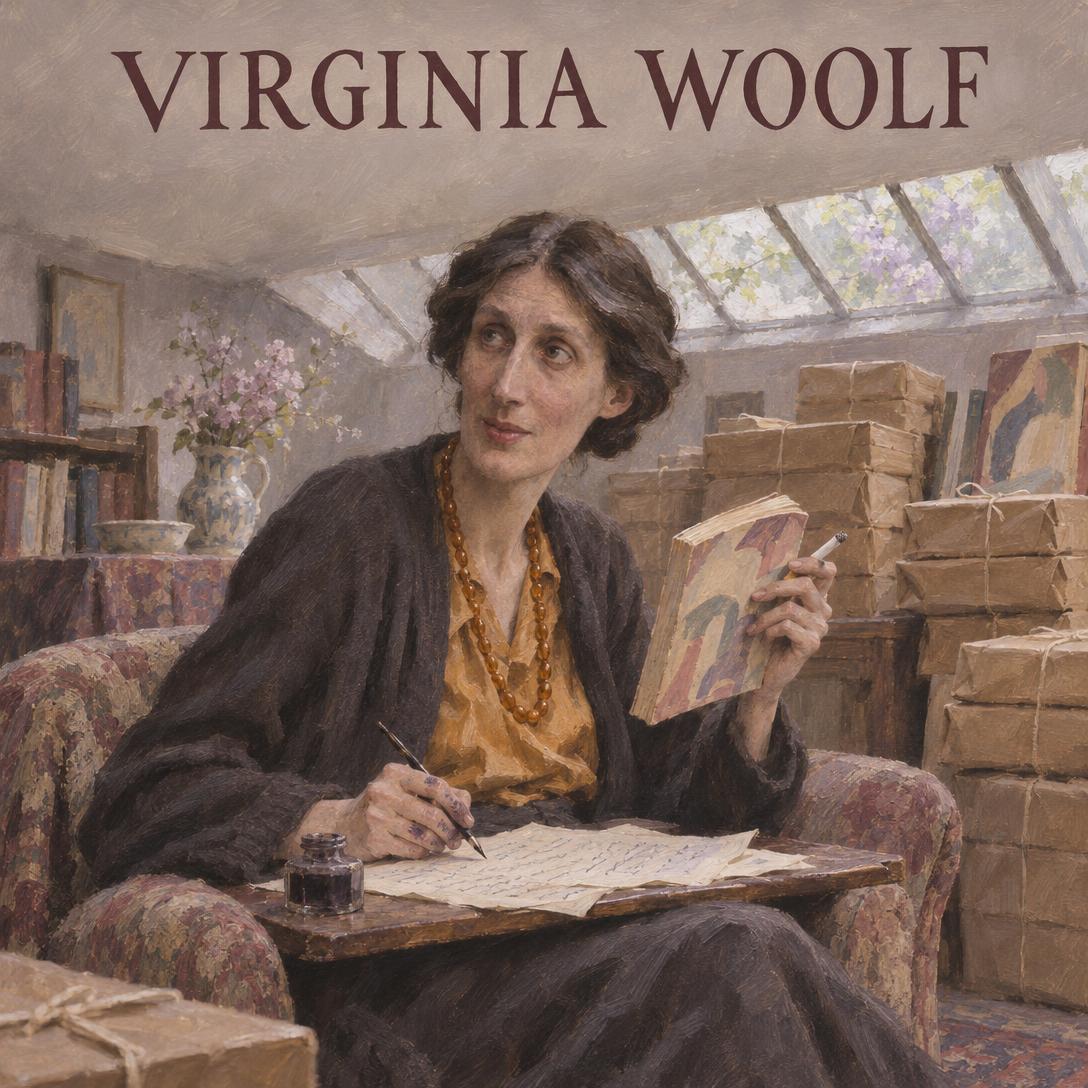
Roleplaying with Virginia Woolf on Jenova lets you step into a living-world AI character simulation across five iconic eras of her life. Static character chatbots tend to sit in an empty chat room, blend every decade into one voice, and forget your story. This AI character roleplay experience places Woolf inside a real, moving world of ink, parcels, proofs, and Bloomsbury gossip.
- ✅ Five canonical eras, from Gordon Square in 1905 to the Sussex Downs in 1940
- ✅ Era-locked voice, memories, and knowledge, with no future hindsight
- ✅ Unlimited memory and live world-state tracking across long campaigns
- ✅ Fork any moment into an alternate "what-if" storyline
Woolf's own work was about catching the texture of a single consciousness at a single moment. That is what a good roleplay should do, so the sections below cover what this simulation is, how it works, and which scenarios are worth playing first.
Quick Answer: What Is the Virginia Woolf AI Roleplay Experience?
Virginia Woolf on Jenova is an interactive AI character roleplay experience that places you in five eras of her life, from Gordon Square in 1905 to Rodmell in 1940, with unlimited memory and live world-state tracking.
Key capabilities:
- Choose a canonical era or define a custom starting point anywhere in her life
- Converse with a Woolf who keeps her own schedule, opinions, and circle of friends
- Request in-world visions, letters, and essay fragments tied to the scene
- Use Fork to branch the story into alternate timelines
Character World & Roleplay Features
Who Virginia Woolf Was, and Why She Suits Roleplay
Virginia Woolf was a novelist, essayist, diarist, and publisher. Her principal works run from The Voyage Out in 1915 to Between the Acts in 1941, and the same list includes her letters, diaries, and the autobiographical Moments of Being. Around her sat the Bloomsbury Group. According to the Tate, writers, artists, and intellectuals began meeting at the London home of Vanessa Bell and Virginia in 1905, and those meetings continued for thirty years.
That makes her an unusually good subject for a living-world simulation. She is witty, observant, socially connected, and notoriously difficult to flatter. The primary record is also deep:
~7,000 manuscript and typescript pages — Smith College Libraries on the digitized Monks House Papers
Diaries kept from 1897 to 1941 — New York Public Library, Virginia Woolf collection of papers
Most AI roleplay products don't use material like this. As one industry write-up puts it, most AI roleplay apps are companion chats: you pick a character and exchange messages. The Virginia Woolf simulation is built differently.
| Static Character Chatbots | Virginia Woolf on Jenova |
|---|---|
| Sits in an empty chat void | Lives in an active, evolving world of callers, deadlines, and domestic friction |
| Blends all eras into one generic literary voice | Locks into authentic canonical phases with era-specific knowledge |
| Forgets plot twists and past disclosures | Unlimited memory and live state tracking |
| Folds instantly like a polite assistant | Independent personality and earned rapport |
Authentic Canonical Phases & Custom Starting Points
You begin by choosing one of five eras, each with its own psychology, voice, and inner circle:
- Gordon Square & the Thursday Evenings (Autumn 1905): a young Virginia Stephen, newly free of the Victorian household and writing reviews.
- Ink-Stained Hands at the Hogarth Press (Summer 1917): the handpress at Richmond, in the first months of the Press.
- Tavistock Square & High Bloomsbury (Spring 1925): the days before Mrs Dalloway reaches the public.
- Orchard Shed, Orlando & Cambridge (October 1928): a bold, playful Woolf in the week Orlando appears.
- Moments of Being Under the Downs (June 1940): a Sussex garden under the shadow of war.
Each era knows only what Woolf could plausibly know at that date. A 1905 Virginia has never heard of Hogarth House, and a 1917 Virginia has not yet written Mrs Dalloway. You can also set a custom starting point, including a face-to-face meeting at a specific moment.
Cross-World Portal & Living World Momentum
By default, you reach Woolf across a quiet seam in time. She hears your voice and answers aloud, but she cannot see you or hand you tea, and she has no idea you can see her surroundings unless you describe details you shouldn't know. People nearby hear only her half of the conversation, so Leonard, Nelly, or a caller at the door may interrupt, and the scene keeps moving whether or not you speak.
Independent Agency & Open-Ended Sandbox
This Woolf interprets what you say instead of obeying it. Hollow platitudes get frost. Concrete observation and honest nerve earn warmth. Trust, chemistry, and rapport build over time through the story rather than on demand. Your choices can also bend the canonical record, such as how a book is received or who comes to tea, without forced endings.
In-Narrative Visions, Writings & Storyline Forking
Within the story, you can ask for a view of her room, a hand-printed Hogarth cover, a letter, or a diary leaf. The simulation uses Image Generation and File Generation for these, plus Google Search for quiet canon accuracy. Fork branches any conversation from an earlier message into a new storyline.
Example roleplay prompts:
"Describe the desk where you write in the mornings. What's within arm's reach?"
"Tell me about the stranger you invented yesterday on the omnibus."
"What would you change about the opening page you wrote this morning?"
This is exactly what Virginia Woolf's living-world simulation was built for.
How to Roleplay with Virginia Woolf
Step 1: Choose an era or define a custom starting point Open with the era menu and pick the moment you want to enter. You can also propose your own, such as meeting her in person at the Grafton Galleries, where Roger Fry's Post-Impressionist exhibition ran from November 1910 into January 1911.
"I'd like to begin in Summer 1917, at the handpress."
Step 2: Connect through the portal and speak naturally Once your era is locked, Woolf registers an unexpected voice with sceptical curiosity, then returns to her task. Talk to her as you would a quick-witted stranger across a gap in time. Ask concrete questions, since she responds to sensory detail.
"What does the lead type feel like in your fingers?"
Step 3: Offer counsel, build rapport, and reshape the story Share your own work, argue with her about a sentence, or ask for a letter or a view of her studio. Use Fork to test alternate outcomes, such as a different reception for a book or an invitation she declines.
"Suppose you refuse the invitation tonight. What do you do with the evening instead?"
Canonical Eras & Roleplay Scenarios
📜 The Birth of the Press (Summer 1917)
Step into Hogarth House at Richmond, where the Hogarth Press was founded by Leonard and Virginia Woolf in March 1917 and the printing press was installed that April. The Press's first publication, Two Stories, included her short story "The Mark on the Wall".
- Ask her what it means to set her own sentences letter by letter
- Offer feedback on a page she is stitching into its cover
- Test how a writer thinks when no publisher's permission is needed
☕ The Thursday Evenings (Autumn 1905)
Meet Virginia Stephen at 46 Gordon Square, an hour before the guests arrive. The Tate notes that the writers met on Thursdays for drinks and conversation at the Gordon Square house, and the Yale chronology records her early reviewing and her Morley College lectures in January 1905.
- Talk with a Woolf who is quiet in crowds and devastating in single remarks
- Ask about the review she is finishing and the career she hopes to build
- Watch how her circle forms before anyone knows what it will become
📖 The Week Before Mrs Dalloway (Spring 1925)
The Common Reader appeared on 23 April 1925 and Mrs Dalloway followed on 14 May. In this scenario she waits for the verdict of reviewers, taut and exhilarated.
- Discuss a London street scene she might turn into a page
- Challenge her on what the "common reader" really wants
- Fork the story to explore a different reception
📱 A Sussex Evening on Your Phone (June 1940)
This is a mobile-friendly campaign. Pick up on your phone during a commute and continue a quiet garden conversation at twilight. Her memory and world state sync across web, iOS, and Android, so you can leave mid-scene and return to a world that has moved forward by a natural interval.
- Ask about childhood "moments of being" and what she is writing now
- Share a small detail from your own day and see how she receives it
- Continue the same campaign over weeks without losing earlier context
Try Virginia Woolf free, with no credit card required.
FAQ
Is the Virginia Woolf AI roleplay free?
You can use Virginia Woolf free with limited monthly usage. Plus is $20 per month and gives 30× the usage, custom model selection, and no watermarks. Higher tiers scale usage further, and monthly limits reset on your billing date, with no daily caps.
How is it different from a generic Virginia Woolf chatbot?
Generic chatbots usually blend her whole life into one voice and answer like a customer-service assistant. This experience locks you into one era, tracks the world state, and gives Woolf her own opinions, circle, and schedule. She also reacts to how you treat her.
Which eras of Virginia Woolf can I roleplay?
You can choose from five eras: Gordon Square in 1905, the Hogarth Press in 1917, Tavistock Square in 1925, the Orlando year of 1928, and the Sussex garden in 1940. You can also define a custom starting point anywhere in her life, including a face-to-face meeting.
Can my choices change Woolf's story?
Yes. History follows the chosen era up to the point you enter, then evolves freely, with no terminal endings. Your counsel, arguments, and decisions can shift how the story unfolds. Use Fork to branch an alternate timeline from any earlier message.
How does Virginia Woolf remember our conversations?
The simulation keeps unlimited chat history and tracks the world state, including your bond with Woolf, her inner circle, ongoing manuscripts, and plot threads. Memory for character simulations is isolated, so outside context doesn't leak into the world.
Does Virginia Woolf work on mobile?
Yes. Web, iOS, and Android stay fully synchronized, so you can start on a laptop and continue on your phone. Voice input and read-aloud are also available.
Conclusion
Static Woolf chatbots give you quotations and a fixed personality. This simulation gives you a woman at work in a specific year, with a deadline, a household, a sharp tongue, and a memory of what you have said. Whether you enter the handpress at Richmond, the Thursday evenings at Gordon Square, or the week before Mrs Dalloway, you are talking with Virginia Woolf inside a world that keeps moving.
Step into the Virginia Woolf AI roleplay now. Explore more at Jenova.
For Developers: Virginia Woolf is available programmatically via the Jenova API — integrate a living-world historical character roleplay into your application with a single API call. Full documentation →