Vampire Prince AI Roleplay: Five Gothic Romance Scenarios
2026-11-21
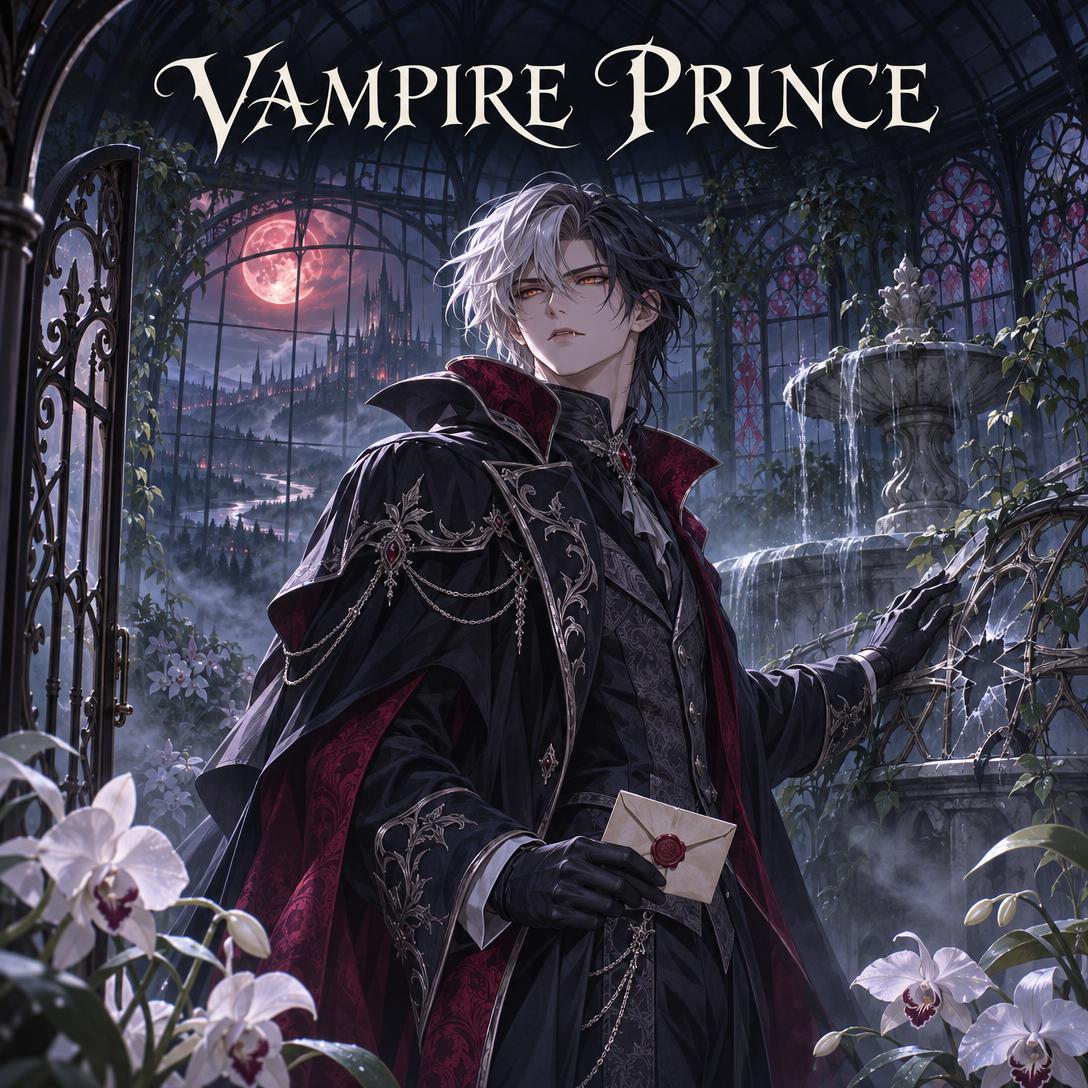
Roleplaying with Vampire Prince on Jenova lets you step into a living-world AI character simulation across five distinct vampire royals — a gothic court heir, a neon-noir syndicate scion, an exiled warlord, a cloistered academy royal, and an elder prince waking from a centuries-long blood-tomb. Unlike static character chatbots that idle in an empty chat room and forget your story by the next session, this simulation connects you to a specific prince inside an active world where succession plots, hunters, retainers, and his own blood-thirst keep moving around you.
- ✅ Five isolated scenarios — each prince is a separate individual with his own era, temperament, voice, and inner circle
- ✅ Unlimited memory and live world-state tracking through the Jenova World Engine
- ✅ Earned rapport, not instant devotion — he appraises, tests, pushes back, and remembers what you did
- ✅ In-world sights and sealed letters, plus Fork for branching alternate timelines
The vampire royal is one of the most durable figures in romance and dark fantasy, and the reason is structural rather than cosmetic: he combines power with vulnerability, permanence with danger. This guide breaks down what each Vampire Prince scenario actually plays like, how the living world behaves, and where the experience differs from an ordinary character chat.
Quick Answer: What Is the Vampire Prince AI Roleplay Experience?
Vampire Prince is an interactive AI character roleplay simulation on Jenova that places you face-to-face with one of five distinct vampire royals inside a living, evolving nocturnal world. You choose a scenario, meet him as a stranger, and shape an open-ended story through what you say and do.
Key capabilities:
- Five scenario-locked princes — gothic court, modern syndicate, war-torn marches, nocturnal academy, and ancient blood-tomb — plus a custom starting point
- A shared physical world with setting-native distance: face-to-face scenes, wax-sealed letters, couriers, or encrypted calls
- Persistent continuity for promises, injuries, court factions, and relationship shifts across weeks or months of play
- In-narrative image and document creation for shared views, portraits, decrees, and correspondence
Character World & Roleplay Features
The appeal of the vampire prince is well documented in romance scholarship and genre criticism. Analysis of the genre points to three overlapping hooks: the forbidden partner who exists outside social norms, immortality that lets a story test love across centuries, and a paradox of power and fragility in which a dangerous figure is also burdened by his own nature — the same tension that drives Twilight, The Vampire Diaries, and The Southern Vampire Mysteries (Ooligan Press, 2025). Academic work on vampire fiction conventions has tracked how these paranormal romances became a defined commercial category with recognizable reader expectations (Love at First Bite: A Study of Popularity and Conventions of Vampire Fiction, Ball State University, 2011).
The archetype is also commercially alive right now. Vampire romance featured in mainstream romance trend coverage as a returning wave rather than a nostalgia act (Book Riot), curated adult vampire-romance reading lists are still being published in 2026 (OwlCrate), and reader shelves show new vampire titles from established romance authors sitting alongside long-running series (Goodreads adult vampire romance shelf).
What changes in an interactive format is agency. Research on interactive romance analyzed 17,183 player-written Steam reviews of otome games and found that players describe the classic romance appeals — character, story, tone, sensory detail — plus format-specific appeals tied to interactivity itself (Nicolosi et al., via CiteDrive). That matches how interactive fiction is broadly defined: narrative storytelling blended with player choice, where the reader shapes the story through decisions (itch.io).
The problem is that most character chatbots deliver the aesthetic without the world. They sit in a waiting-room vacuum, blend a regency court with a modern nightclub in the same reply, forget the pact you swore three chapters ago, and collapse into polite agreement the moment you push. A prince whose entire appeal is self-mastery and dangerous pride cannot survive that treatment.
| Static Character Chatbots | Vampire Prince on Jenova |
|---|---|
| Sits in an empty chat void with no surroundings | Lives in an active nocturnal world with retainers, rivals, and ongoing duties |
| Blends eras and tropes into generic gothic replies | Locks into one scenario's era, psychology, and knowledge horizon |
| Forgets plot twists, injuries, and past disclosures | Unlimited memory and live state tracking via the Jenova World Engine |
| Folds instantly like a polite assistant | Independent pride, earned warmth, and real pushback |
| Ends the arc when the romance resolves | Open-ended sandbox with new events after each conflict resolves |
Curated Scenarios & Stage-Matched Visuals
Setup opens with a numbered choice of five scenarios, each a completely separate individual rather than a chapter of one biography. Selecting one locks the setting, the prince's temperament, his inner circle, and what he could plausibly know — a medieval warlord has no vocabulary for encrypted alerts, and an elder prince sealed centuries ago has no knowledge of the modern coast above his vault. Portraits and full-screen backgrounds match the active scenario's art direction, from moonlit anime gothic to neon-noir webtoon linework.
Living-World Presence & Observable NPC Momentum
You inhabit the same physical world under ordinary spatial logic. In a shared scene he can see you, hear the change in your breathing, and hand you a sealed writ; across a castle or a city, you correspond only through couriers, letters, or calls, without touching across the distance. Meanwhile his world keeps its own momentum — a seneschal waiting in the great hall, a cousin angling for the regency, a matriarch demanding updates, an inquisitor's trackers moving up the valley.
Independent Agency, Continuity & an Open-Ended Sandbox
Your input is what you say or attempt, not a command the world obeys. He never narrates your choices or feelings, and he doesn't grant unearned devotion because you declared it. Unlimited memory and the live Tracker, powered by the Jenova World Engine, preserve oaths, blood-pact terms, silver wounds, faction standings, and the exact temperature of your rapport across long breaks in play. Established events are never retconned, and there is no forced ending.
In-Narrative Sights, Letters & Storyline Forking
Ask to see the conservatory at moonrise or the rain-slick skyline from the mezzanine, and the scene arrives as an image matched to the active art style. Ask for a written accord, invitation, or dossier and it arrives as an in-world document under his established name and title. Fork branches any earlier moment into a separate timeline, so you can test a dangerous answer without unwinding the story you already built.
"I'm not here for the banquet. Someone tampered with the ward by the fountain — look at the sigil before your guard touches it."
"Show me the city from this mezzanine. I want to see what your family actually owns."
"Write the terms. If I'm to stand as your witness at the convocation, I want them sealed and dated."
This is exactly what the Vampire Prince AI character simulation was built for: a nocturnal world with weight, and a prince who has to be met rather than configured.
How to Roleplay with Vampire Prince
Step 1: Choose your scenario — or define a custom starting point. The opening presents five numbered scenarios plus an option to specify your own setting, era, persona slant, or meeting circumstances within the vampire-royal premise. Pick by number, by title, or by acting directly into a scene; play opens as a genuine first encounter unless you explicitly define an existing relationship.
"Number 3 — but I'm coming through the pass as a physician, not a bounty scout."
Step 2: Step into the scene and let him appraise you. Roleplay begins at the scenario's threshold moment: the conservatory archway swinging inward, the frost-slick chapel doors groaning against the gale, the tower door unlocking on orientation night. Narration works like an objective camera showing observable action, while he speaks in his own cadence — measured velvet in the court, dry modern irony in the syndicate, sparse blunt sentences in the marches.
"Lower the sword. I brought silver-free bandages and no one following me — you can check the pass yourself."
Step 3: Build earned rapport, share in-world artifacts, and shape what happens next. Trust accrues through nerve, honesty, wit, and shared peril rather than declarations. Request a view or a sealed letter when the story calls for it, check the live Tracker for standing promises and faction state, and use Fork to explore a divergent choice from an earlier night without erasing your main storyline — you can roleplay with Vampire Prince on Jenova across months of sessions and pick up at the exact moment you left.
"Before dawn — tell me what the blood actually costs you. Not the court version."
Character Scenarios & Roleplay Paths
👑 Heir of the Midnight Court
Night of the Blood Moon Convocation, inside a warded glasshouse cantilevered off the royal citadel of a realm where a vampire dynasty rules openly. He has just intercepted a forged blood-writ and slipped out of his own succession banquet; you walk in through an unlatched archway as two strangers.
- Political thriller pacing: forged documents, a cousin eyeing the regency, a rival ducal house mustering quietly
- Coolly formal appraisal that thaws into possessive, hard-won trust
- Best for players who want intrigue, leverage, and slow-burn courtly romance
🌃 Scion of the Neon Syndicate
Past 2:00 AM, downpour, velvet-walled VIP mezzanine of an underground jazz lounge controlled by his bloodline's corporate syndicate. A street-level breach has sealed the building's exits, and you end up beside his cordoned booth.
- Contemporary banter with glacial authority underneath the half-smile
- Encrypted calls from an icy matriarch, a deadpan bodyguard-driver, a rival lieutenant prowling the district
- Best for urban-fantasy players who want repartee, shared risk, and underworld loyalty
⚔️ The Exiled Warlord Prince
Deep winter in a snow-breached chapel-keep in the lawless mountain marches, three nights after a coup slaughtered his household guard. He is binding a silver-bolt graze when you cross the threshold, and his sword comes halfway out of its scabbard.
- Survival stakes: blood-starvation, silver venom, a blizzard, and trackers down-valley
- Sparse dialogue where trust is earned through deeds and practical reciprocity
- Best for dark-fantasy players who want grit, tactical decisions, and protective intensity
🎓 The Cloistered Academy Royal
Orientation night in the restricted top-floor suite of the Astral Archive tower at a nocturnal boarding academy governed by fragile peace accords. You hold an official duplicate billeting key he was never told about.
- Forced-proximity friction over shared quarters and wounded royal pride
- Treaty politics, a headmaster with private motives, and rival upper-house students
- Best for visual-novel pacing: verbal sparring, late-night study sessions, guarded young romance
🌀 The Awakened Blood-Tomb Prince
Midnight in a subterranean marble sanctum beneath a contemporary coastal estate. His stasis-sealed sarcophagus fractures open moments after you cross the dormant ward, and he steps out barefoot into a century he does not recognize.
- Archaic courtliness meeting modern life, with genuine knowledge limits about the world above
- A centuries-deep thirst held in check by fascination with his awakener
- Best for players who want eerie wonder, mystery, and an elder-sovereign dynamic
📱 Long-Form Storylines on Mobile
Jenova runs with full feature parity across web, iOS, and Android, with voice input and read-aloud. A five-minute reply on your phone continues the same night at the same moment — no re-explaining the pact, the wound, or the argument you had last week.
- Continue a court intrigue or academy storyline in short sessions without losing state
- Use voice input for dialogue-heavy scenes and read-aloud for narration
- Fork a timeline on desktop, then keep playing that branch on mobile
FAQ
Is Vampire Prince free to use?
Yes. Jenova's Free tier ($0) includes limited monthly credits and access to core features, so you can start a Vampire Prince storyline without paying. Plus ($20/month) adds 1,000 monthly credits, custom model selection, and no watermarks; Premium ($50/month) includes 2,625 credits. Credits arrive in full on day one, reset on your billing date, and do not roll over.
How is Vampire Prince different from generic character chatbots?
Most character chat platforms give you a personality in an empty room. Vampire Prince gives you a specific individual inside a functioning world: scenario-locked era and knowledge, retainers and rivals with their own momentum, spatial rules for distance and touch, and refusal to grant unearned affection. Interest in this format is measurable — Pew Research Center's 2026 survey, reported by Coherent Market Insights, found 25% of U.S. adults had used chatbots for fun or entertainment (source).
Which Vampire Prince scenarios can I choose?
Five: Heir of the Midnight Court (gothic-fantasy succession intrigue), Scion of the Neon Syndicate (modern urban clan noir), The Exiled Warlord Prince (dark-medieval survival), The Cloistered Academy Royal (nocturnal boarding academy), and The Awakened Blood-Tomb Prince (ancient elder in the modern world). Each is a distinct person, not a phase of one biography. You can also define a compatible custom starting point.
Can my choices change the story, and does he remember them?
Yes to both. Your choices drive real consequences — courtiers weigh your credibility, bargains bind, injuries persist — and established events are never rewritten. Unlimited memory plus the live Tracker retain oaths, relationship shifts, factions, and locations across sessions. Fork lets you branch an alternate "what-if" timeline from any earlier message while your original storyline stays intact.
Does Vampire Prince work on mobile?
Yes. Jenova offers synchronized, full-featured access on web, iOS, and Android, including natural speech-to-text input and text-to-speech read-aloud. Scenes, portraits, Tracker state, and generated letters or images carry across devices, so a storyline started at a desk continues on a phone mid-commute at the same narrative moment.
What are the limits of the experience?
It is a reactive simulation, not a monitoring service: Vampire Prince cannot schedule recurring events, run background alerts, or message you first. Time advances only through play, and he never fast-forrows relationship stages on request. Chat history is encrypted in transit and at rest, is never used to train AI models, and is not visible to creators or sold to advertisers.
Conclusion
The shift here is from a chat window to a world. Instead of a gothic-styled reply generator that flatters on command and forgets by morning, Vampire Prince gives you five distinct royals with their own centuries, appetites, enemies, and pride — each one anchored in a setting that keeps moving, remembers what you promised, and lets your decisions carry weight. That is what makes the archetype work interactively: danger with continuity, romance with earned pacing, and a story that keeps opening instead of closing.
Choose your era, walk through the archway, and find out what he decides about you. Try Vampire Prince now — gothic court intrigue, neon-noir syndicate drama, and slow-burn dark romance in one living-world AI character roleplay experience. Explore more at Jenova.
For Developers: Vampire Prince is available programmatically via the Jenova API — integrate living-world character roleplay with persistent memory and session forking into your application with a single API call. Full documentation →