AI Vampire Character Creator: Original Looks, Lore & Powers
2026-09-07
Comic Creator helps you design original vampires by turning a bloodline, feeding rule, and costume brief into sequential art. While a usable character bible can stall a project for weeks, this AI vampire character creator produces comic-ready undead — face, silhouette, hunger, and first-night origin — you can iterate in a single session. In September 2026, vampire stories still occupy awards lists, tabletop calendars, and gothic cinema, which means a new immortal has to be visually distinct, lore-consistent, and ready to appear in more than one pose.
✅ Original vampires with readable silhouettes, palettes, and hunger effects ✅ Bloodlines, sires, and rival covens in one visual language ✅ Origin nights shown as sequential art, not only a prose bio ✅ Style range from gothic oil to manga, noir ink, and full-color webtoon
To understand why this matters, it helps to look at what actually breaks when you try to invent a vampire with generic art tools, scattered lore notes, and no visual continuity.
Quick Answer: What Is an AI Vampire Character Creator?
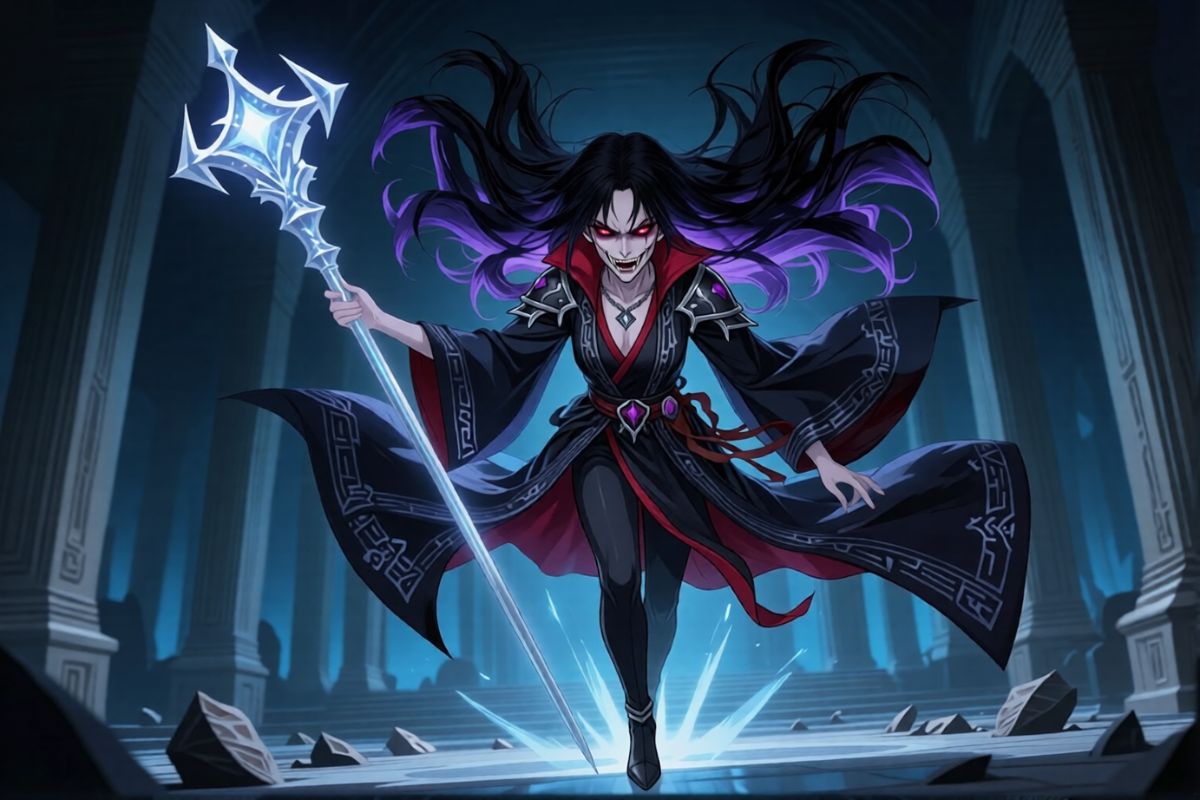
Comic Creator is an AI vampire character creator that designs original undead — looks, bloodlines, powers, and origin nights — as comic-ready sequential art in minutes. It is built for character continuity across pages, not one-off portraits.
Key capabilities:
- Hunger and power visualization — what the bite, trance, or transformation looks like in motion
- Costume, color, and silhouette design that stays readable at panel and thumbnail scale
- Sires, childer, and rival covens in matching anatomy, lighting, and era
- Style control across gothic realism, manga, noir, and full-color webtoon treatments
Why Original Vampire Characters Are Harder Than They Look
A vampire is not fangs on a fashion illustration. Readers remember an immortal through silhouette, feeding rules, social mask, and the first night that makes those rules feel earned. That is a design problem and a writing problem at the same time.
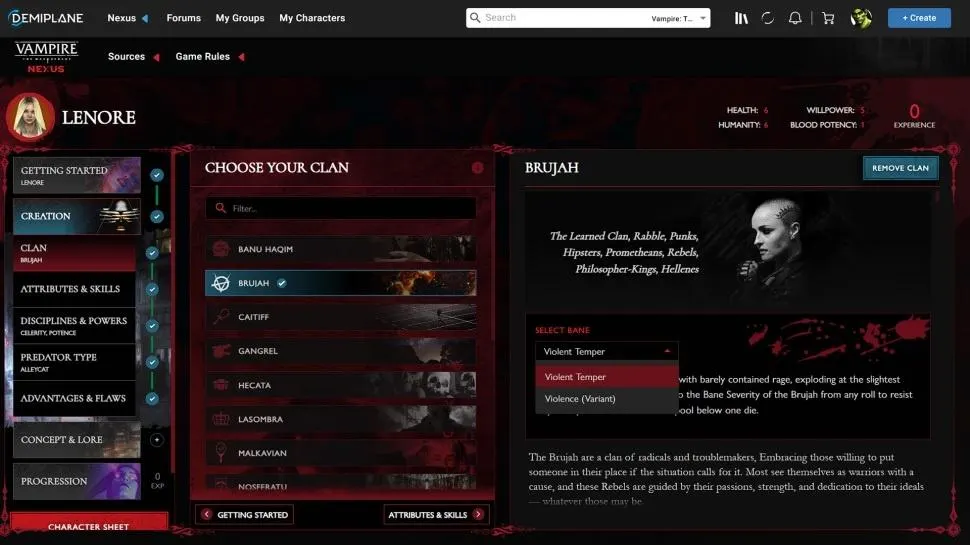
Demand for new undead figures is not theoretical. Licensed tabletop tools still invest heavily in structured vampire creation — digital sheets, ready-made characters, and cross-platform play for Vampire: The Masquerade — because a clan, a bane, and a hunger economy are what make a character playable. Adjacent hobby spending is also moving: the global tabletop and boardgame subscription box market was valued at $3.69 billion and is projected to reach $6.28 billion. On the fiction side, British Fantasy Society volunteers still put vampire novels and gothic cinema among the year's strongest impressions, from long-lived takes on the myth to new theatrical blood on screen.
**$3.69 billion** — [value of the global tabletop and boardgame subscription box market, projected to reach $6.28 billion](https://virtuemarketresearch.com/report/tabletop-and-boardgame-subscription-box-market)
Ready-made Kindred and digital character sheets — Vampire: The Masquerade tools exist specifically to get a playable immortal to the table faster
Those tools solve a published game. They do not invent your IP. Distinctive visual character designs are copyrightable as artistic works once they develop a recognizable identity, which is useful only if the face, wardrobe, and power language are actually yours. Commercial generative pipelines increasingly forbid named fictional characters, artist styles, and franchise references in prompts. Starting from an original city, original hunger, and original visual rules is the practical way to keep a vampire character creator on the right side of that line.
But getting a character to that standard is frustratingly difficult:
- Generic image tools produce a striking face, then a different jawline, eye color, and collar height on the next prompt
- Feeding, sunlight, and social-mask rules live in a notes doc while the art lives somewhere else
- Tabletop sheets lock mechanics for a licensed clan; original comics still need an equivalent visual grammar
- Existing-franchise pastiche is easy; a legally and creatively distinct immortal is not
This is exactly what this AI was built for.
Why Comic Creator for Vampire Character Design
This AI vampire character creator treats the immortal as a sequential-art problem. You do not get a single glamour shot and a shrug. You get costume logic, hunger effects, panel-ready poses, and the origin night that teaches the reader who this person is now.
That is the difference between "someone with fangs" and a character who can carry an issue, a pitch deck, or a web series.
| Traditional Approach | Comic Creator |
|---|---|
| Commission a concept artist, wait, then revise a single turnaround | Generate look, silhouette, and action poses in one conversation |
| Hunger and sunlight rules written in a wiki; art that ignores those rules | Powers designed as visible, repeatable effects across panels |
| Origin in prose, character sheet in another file | First night rendered as sequential pages while the look is still being locked |
| Accidental pastiche of Dracula, club-goth, or a licensed clan | Prompts steered toward original cities, conflicts, and visual rules |
| Style drift every time you regenerate | Directed style: gothic oil, manga speed, noir ink, or full-color webtoon |
Silhouette, mask, and hunger that survive a panel shrink
Vampire design fails in thumbnail first. If the immortal is unreadable at phone-screen or printed-panel size, the wardrobe is decoration. The AI works from silhouette and palette constraints: limited colors, a distinct head shape, a social-mask look that can pass in daylight crowds, and a hunting look that can crouch, climb, and feed without turning into a fashion plate.
You can ask for courtly historical dress, contemporary streetwear with a single anachronistic tell, or a hybrid — then immediately test the same body in candlelight, rain, and fluorescent night.
Powers as visual grammar, not a bullet list
"Drinks blood" is not a design. The design is whether hunger shows as black veins, a color drain in the room, a stillness in nearby animals, or a heat shimmer around the mouth; whether the eyes change; whether the wound closes clean or ugly. Sequential art is how you lock that grammar so later pages do not invent a new vampire.
Industry commentary on illustration tools already points toward AI that assists with intricate detailing while respecting a personal artistic style. For vampires, that "style" includes the hunger language, not only the line weight.
Sire, foil, and coven in the same visual world
A vampire without a sire or a rival is a costume. Generate the maker who already paid the price, the hunter who knows the feeding tell, the city that makes the hunger necessary. Because the work happens in comic form, those figures share lighting, anatomy, and costume era instead of looking like they walked in from four different books.
Example briefs that work well:
"Create an original river-city vampire who can only feed during flood tide. Practical charcoal coat, tarnished silver buttons, no cape, waterline stain on the hems. Show a standing turnaround, a civic-daylight mask, and two hunting poses: a quay-side approach and a submerged hold."
"Design a public-facing foil: a heritage-trust director who maps the city's old plague pits. Warm ivory and rust palette, architectural jewelry, philanthropist smile. One gala pose and one ability reveal that is the opposite of the vampire's tide-hunger."
"Six-page origin: the drowning, the first uncontrolled feed, the choice to keep the coat and the stain. Keep the face, buttons, and charcoal-silver palette consistent on every page."
Try the sequential-art studio on a single immortal first. Once the silhouette and hunger rules hold, expanding into a coven is a continuation, not a restart.
Related Agents You'll Also Find Useful
If you are building more than a one-shot character sheet, these partners cover the adjacent work a vampire launch actually needs.
Manga Creator — If your vampire character creator work is headed toward manga pacing, speed lines, and chapter-based reveals rather than American floppy structure.
- Consistent character sheets across one-shots or long serials
- Panel flow built for manga reading rhythm
- Style lock so the immortal does not drift toward Western cape-comic defaults
Webtoon Creator — If the same vampire needs to survive vertical-scroll episodes on a phone.
- Full-color consistency across episode thumbnails and long scrolls
- Episode hooks and cliffhanger staging for serialized hunger stories
- Costume readability in mobile crop, not only in widescreen splash pages
Film Screenwriter — If you're also writing the origin as a feature, a pilot, or a treatment that the comic will adapt.
- Character bibles with voice, flaws, and arc — not only fangs
- Visual storytelling beats that keep the hunger logic consistent across scenes
- Dialogue and structure so the first night earns the look instead of explaining it
Try it free — no credit card required.
How to Use an AI Vampire Character Creator
Step 1: Brief the immortal like a designer, not a fan
Name the hunger cost, the body of the wardrobe, the color limit, and the power's visible behavior. Avoid franchise shorthand ("like that famous count") and replace it with original job, city, and constraint.
"Original vampire: night-shift archivist in a landlocked city who can only feed on people who have just lied. Matte black high-collar coat, paper-white gloves, no cape, ink-stained cuffs. Hunger looks like text bleeding off nearby pages, not lightning or mist."
Step 2: Lock silhouette, mask, and palette before you chase spectacle
Ask for a standing turnaround, a head-and-shoulders crop, and one thumbnail-scale pose. If the face dies at small size, fix it now. This is also the moment to generate the daylight civic look so the dual identity is a design, not an afterthought.
Tabletop vampire games already force this kind of lock — clan, bane, attributes — because a character who changes rules mid-session is unplayable. Original comics need the same discipline without borrowing a published clan list.
Step 3: Put the body in motion
A vampire who only exists in a heroic standing pose will fall apart on page three. Request climbing, feeding, injured stillness, and crowd-passing stances in the same wardrobe. Keep calling out the same scar, collar, and color rule.
Your AI comic artist should be asked to treat poses as a kit of motions, not a random explosion each time.
"Same vampire, same black coat and white gloves: a three-point landing in a stacks aisle, a gloved hand over a lying mouth, and a kneeling pose after the hunger fades. Keep the ink-stain language identical."
Step 4: Write the origin as pages
Do not freeze the look and then go write ten thousand words in another window. Generate the first death, the first misuse of the hunger, and the first moral choice as sequential art. That is how costume, power, and personality get tested against each other.
Step 5: Add the sire, then the coven
Once the lead holds, brief the sire as an older visual system — colder palette, earlier cut of the same coat, a hunger tell the childe has not learned to hide. Only then expand to rivals or a court. Consistency is cheaper when the first character is already a finished instrument.
Results & Use Cases
📊 Indie first issue with a lead who can carry a series
Scenario: You are writing a 22-page debut about a river-city vampire and need a lead, a civic foil, and a cover-ready splash before you approach an artist or a small press.
Traditional Approach: Weeks of reference boards, a paid concept pass, and a script that still does not match the sketches.
This AI vampire character creator: A locked charcoal-and-silver coat, a heritage-trust foil, and a six-page origin you can drop into a pitch PDF the same day.
- Silhouette and hunger tell tested at cover scale and panel scale
- Power effects that repeat instead of mutating every page
- A rival who shares the city's visual world instead of looking imported
💼 Feature treatment that needs a visual bible
Scenario: You have a vampire film outline and need producers, collaborators, or a concept team to see the lead, not just read about them.
Traditional Approach: Commission scattered portraits that do not match each other or the manuscript's tone.
The sequential-art studio: Character intros in one style, then hand the deeper interiority to Film Screenwriter for the treatment, scene list, and sample pages.
- Lead and sire on a single visual plane
- Costume rules that survive translation into shot description
- A shared file of looks you can brief a human artist or cinematographer with later
📱 Mobile creator locking a vampire between classes
Scenario: You are on a phone between lectures, building a vertical-scroll vampire short for a webtoon-style feed.
Traditional Approach: Desktop-only tools, files that do not sync, and costumes that smear when cropped to a mobile thumbnail.
The AI comic artist: Full sessions on iOS or Android with the same character memory. Generate a standing immortal, a thumbnail crop, and a cliffhanger last panel on the train home, then continue the episode later. If the format is vertical-first, Webtoon Creator can take the same vampire into episode rhythm without rebuilding the coat.
- Costume readability in a phone-width crop
- Session continuity so the hunger tell does not migrate overnight
- Fast loops: revise the last panel, not the entire character
🎯 Manga-paced blood story without mixing visual languages
Scenario: You want a vampire who reads as manga — speed, chapter titles, expressive close-ups — without accidentally sliding into Western gothic defaults.
Traditional Approach: Mixing references until the lead looks like two different people by chapter four.
Manga-first path: Design the core immortal here, then move serial pages to Manga Creator so panel flow and character sheets stay in one tradition.
- One anatomy and costume rule set across chapters
- Hunger effects that match manga motion language
- Cover and chapter-title work that does not fight the interior art
Frequently Asked Questions
What is an AI vampire character creator?
An AI vampire character creator is a tool that invents original undead as designed characters — look, hunger, origin, and supporting cast — rather than as a single portrait. Comic Creator does that work in sequential art, so the same face, wardrobe, and power language can hold across poses and pages instead of resetting with every image.
Is Comic Creator free?
Yes. A free plan is available with no credit card required, with limited monthly usage of core features. Paid plans increase usage if you are generating full issues, large covens, or daily iteration. Start with one immortal brief on the free tier; that is enough to test whether silhouette, palette, and hunger effects stay consistent.
How is this different from a generic AI image generator?
Generic generators optimize for a single impressive frame. Vampire stories need the same person, in the same coat, doing different things. This AI is built for sequential art: turnarounds, hunting poses, origin pages, and foils that share a world. You brief constraints — color limits, no-cape rules, hunger grammar — and keep them in force across the conversation.
Can I create original vampires without copying existing books or games?
Yes, and you should. Brief original jobs, cities, conflicts, and visual rules instead of franchise nicknames. Commercial platforms increasingly restrict named fictional characters and "in the style of" prompts; the creative equivalent is starting from a character no publisher already owns. Keep your written briefs. Do not ask for trademarked names, logos, or look-alikes.
Does an AI vampire character creator work on mobile?
Yes. Sessions work on the web, iPhone, and Android with the same character context, which matters when you are checking a costume thumbnail on a phone. Pair that with Webtoon Creator if the end format is a vertical-scroll episode rather than a landscape splash page.
Can it design sires, covens, and hunters — not just the lead vampire?
Sires and supporting casts are part of the same job: a maker needs an older cut of the same visual system, and a hunter needs an opposite palette and moral geometry. For feature-length structure and dialogue around that cast, bring in Film Screenwriter so the origin earns the look on the page as well as in the panels.
Create Your Vampire Character and Start the Story
Vampire fiction, gothic cinema, and tabletop nights still have room for new immortals. What they do not have is patience for a lead who looks different every page, or a "new" vampire who is someone else's silhouette with the serial numbers filed off.
Comic Creator is the AI vampire character creator that treats wardrobe, hunger, origin, and foil as one piece of sequential art. Brief an original conflict, lock the look, put the body in motion, and build the first pages while the design is still honest.
Try Comic Creator now. Explore more at Jenova.
For Developers: Comic Creator is available programmatically via the Jenova API — integrate vampire character design and sequential art into your application with a single API call. Full documentation →