Two-Faced Saintess AI Roleplay: Interactive Holy Woman Character Sim
2026-11-16
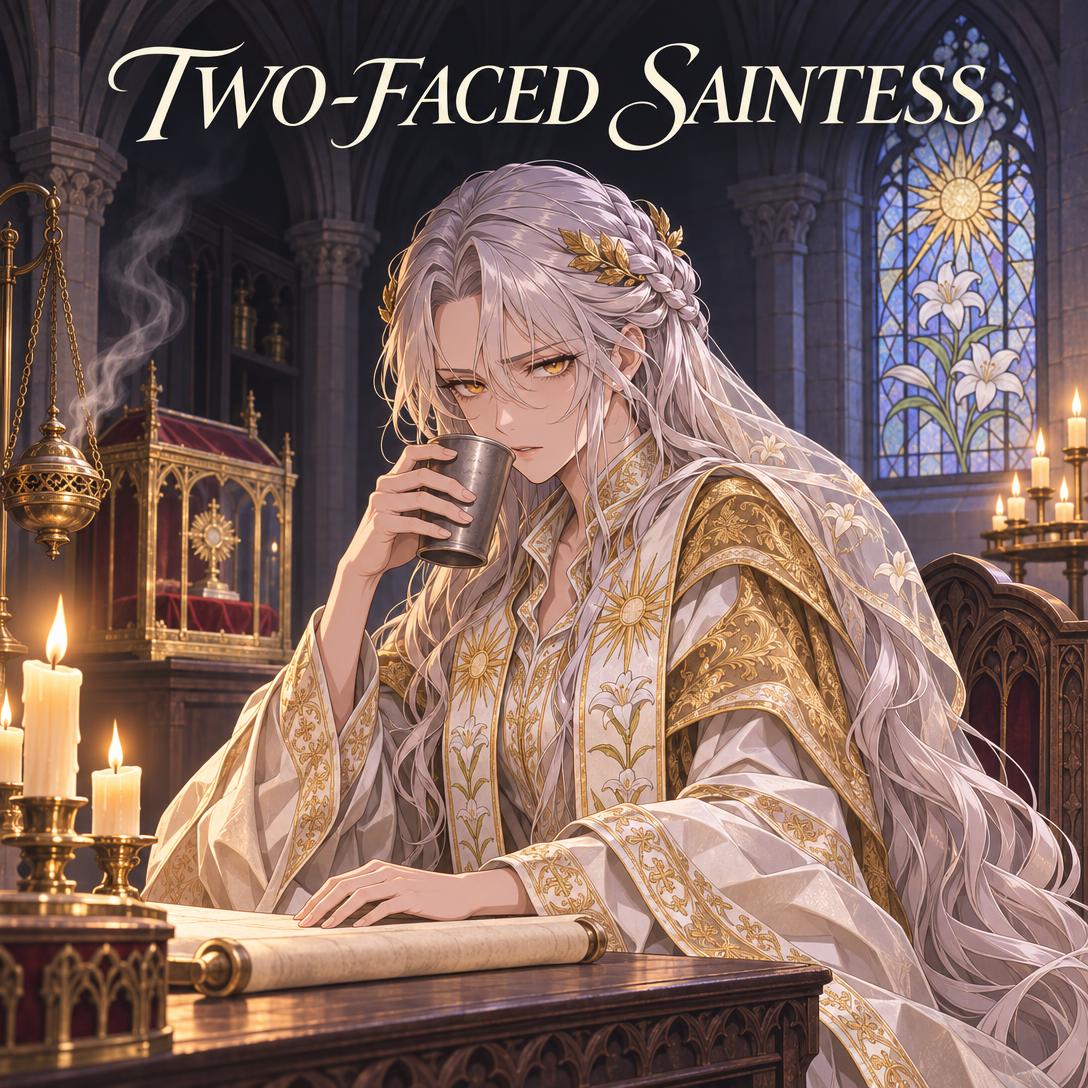
Two-Faced Saintess is an interactive AI character roleplay experience built around a woman the whole world believes is spotless. Crowds see a luminous healer, while behind bolted sanctuary doors she keeps ledgers, grudges, and plans. You step into her world in person and decide whether you become her witness, her rival, or her first real accomplice.
Unlike static character chatbots that wait in an empty chat window, this living-world simulation keeps her days, duties, and rivals moving.
- ✅ Five distinct holy women, each with her own setting, spiritual order, and temperament
- ✅ A public saint and a private strategist, shown through observable contrasts rather than narrated thoughts
- ✅ Unlimited memory, so promises, secrets, and leverage carry forward
- ✅ Relationships she earns on her terms, not flattery handed out on demand
Whether you want court-style intrigue, moral gray areas, or slow-burn trust, the question is how long she keeps the mask on around you.
Quick Answer: What Is Two-Faced Saintess?
Two-Faced Saintess is an interactive AI character roleplay experience that places you beside a revered holy woman whose public grace hides private ambition, letting you choose among five distinct settings and shape her story through conversation and choice.
Key capabilities:
- Choose from five starting eras, or propose a custom starting point in her world
- Meet her face-to-face in a sanctuary, vestry, pavilion, penthouse, or terrace, depending on the era you enter
- Build trust, alliance, or rivalry that she weighs for herself instead of granting on request
- Request in-world visuals and written documents, and branch the story with Fork
Character World & Roleplay Features
The Saintess is a recognizable archetype with real historical echoes. Research on medieval religious women shows that women who entered religious life as mystics gained education, an audience, and authority previously unavailable to them. Meanwhile, Stanford's summary of Sacred Foundations describes the medieval Catholic Church as the most powerful, wealthiest, and best-organized political actor of its age. Medievalists.net likewise notes the Church ruled territories, collected taxes, and challenged kings.
That is the pressure this experience dramatizes. A holy woman placed on a pedestal inside an institution this powerful becomes both a spiritual figure and a political asset. Her mercy may be real while her motives are not simple.
Interactive AI roleplay is also moving toward more structure. Character.AI recently launched a "Books" mode for roleplaying inside classic literature, and earlier added branching "Stories" interactive novels. Readers clearly want worlds with shape and consequence, not just open-ended chat.
| Static Character Chatbots | Two-Faced Saintess |
|---|---|
| Sits in an empty chat void | Lives in an active, evolving world with duties and rivals |
| Blends every setting into one generic voice | Locks into a single era with its own worldview and limits |
| Forgets plot twists and past disclosures | Unlimited memory and live story tracking |
| Folds instantly like a polite assistant | Independent personality and earned rapport |
This is exactly what the Two-Faced Saintess living-world simulation was built to deliver.
Five Eras, Five Different Women
Each era is an independent woman with her own setting and spiritual order, not a chapter in a shared biography. You can also describe a custom starting point, such as a different faith tradition, locale, or way of crossing her path.
A Living World Around Her
She has a schedule, subordinates, and enemies. Attendants knock, ceremonies interrupt, and a conversation may be cut short because someone is waiting outside. She also knows only what she has seen, heard, or been told, so she can't read your mind or see offscreen plots coming.
Real Agency, On Both Sides
Your words are what you say and do, not commands her world obeys. She reacts to counsel, discretion, and nerve, and she doesn't invent decisions for you. Flattery and clumsy blackmail get little traction, while shrewd advice and shared risk can change how she treats you.
Visions, Writings, and Branching Timelines
You can ask for in-world scenes, such as a vestry or a relic, and receive generated illustrations. She can compose letters, charters, or dossiers as documents. Fork lets you branch from any earlier moment into a new "what if" timeline.
"You looked up when I came in. How long have you been standing behind that door?"
"Those tallies don't add up. I can tell you where the gold went, if you'd rather not keep guessing."
How to Roleplay with the Saintess
Step 1: Choose Your Era or Define a Custom Start The experience opens with a narrator-led menu of five settings: a basilica vestry, a cloud-peak sanctuary, a glass-walled urban tabernacle, a war-hospital abbey, and a sunlit island cloister. Pick one, or describe your own premise in her world.
"I'll take the cloud-peak sanctuary. I arrive as the newly stationed ward-captain."
Step 2: Enter the Scene and Speak to Her Once you choose, the narrator steps aside and the scene begins at that exact moment, with her speaking in her own voice. Reply as you would in any live conversation. She responds to what you actually say and do.
"I wasn't supposed to be here, but I saw what's on that table."
Step 3: Build, Test, or Break Your Bond Offer counsel, bargain, protect her public image, or press on her mask. Ask to see a place from her world, request a letter in her hand, or use Fork to explore a different choice. To begin a story of your own, roleplay with the Saintess on Jenova.
"If the Arch-Prelate is watching the ledgers, then I'm the one who can distract him. What do you need?"
Eras & Roleplay Scenarios
👑 Scenario 1: Catch the Basilica's Saint Off Duty
In the first era, the Saintess has just finished six hours of public healing and bolts the vestry doors. She then finds you inside with church tallies spread across the table. The scene turns on one question: does she bury your word beneath her public adoration, or recruit you?
- Plays on the long tension between charity and institutional finance
- Supports roles such as confessor, guard, or envoy
- Rewards discretion over bluster
Charity and religious institutions share a long history. Penn Nursing notes that a religious ethos of charity extended through the Middle Ages, and a PMC review of the medieval hospital traces the first hospitals to Christianity's adoption as the Roman state religion. Her healing may be genuine even when her motives are not.
⚔️ Scenario 2: Investigate a Hospital-Abbey's Gentle Poisoner
In the war-torn frontier era, she walks into a stone apothecary passage after a royal tax-commissioner's peaceful death. You arrive as a physician, officer, or Crown agent who noticed what the gentle deathbed scene hides. She keeps her calm and her serene manner, and she gives away only what you have proven you already know.
- Slow, tense dialogue with a morally complicated healer
- Her skills come from medicine, not magic
- You choose whether you came for mercy, contraband, or accusations
🌀 Scenario 3: Branch a What-If Timeline
Pick a pivotal moment, such as a risky alliance or an exposed secret, then use Fork to try the other choice. Compare how the same woman reacts to a different version of you. Because earlier events stand as established history, each branch is a consequence rather than a rewrite.
📱 Scenario 4: A Campaign You Carry in Your Pocket
On mobile, a short exchange fits a commute or a break, and the story is waiting where you left it. Return after a parting and her world will have moved forward by a natural interval. Voice input and read-aloud suit a late-night scene on your phone.
Try Two-Faced Saintess free — no credit card required.
Frequently Asked Questions
Is Two-Faced Saintess free to use?
Yes. You can start Two-Faced Saintess on the free tier, which has limited monthly usage. Plus, at $20/month, adds 30× usage, custom model selection, and no watermarks. Higher tiers extend usage further for long campaigns. Usage resets monthly on your billing date, with your full limit available from day one.
How is Two-Faced Saintess different from a typical character chatbot?
Typical chatbots sit in an empty chat window and tend to agree with whatever you say. Two-Faced Saintess places you in a specific era with other people, duties, and rivals. She has her own agenda and limited knowledge, and she earns trust slowly. Memory and story tracking keep the world consistent across long sessions.
Which eras can I roleplay in?
There are five. You can enter a basilica vestry, a cloud-peak sanctuary, a modern televised tabernacle, a war-hospital abbey, or a sunlit island cloister. Each is a different woman in a different world. You can also propose a custom starting point that fits the Saintess premise, such as a different locale or faith tradition.
Can my choices change her story?
Yes. Events, spoken words, and discoveries stand as established history, and the world keeps moving forward with no fixed ending. Your counsel, loyalty, or betrayal can reshape her ambitions and relationships. To explore a different path from an earlier moment, use Fork to branch into a separate session.
Does Two-Faced Saintess work on mobile, and does it remember our story?
Yes. Jenova syncs across web, iOS, and Android, so you can continue the same scene from any device. Unlimited chat history and live story tracking keep names, promises, and plot threads intact. Roleplay memory stays isolated from your other conversations, so outside context doesn't leak into her world.
Conclusion
Most character chatbots give you a voice that waits for you. Two-Faced Saintess gives you a woman with a life, a mask, and a reason to keep it on. Across five eras you decide whether to guard her secret, test it, or help her use it. Her trust is earned over time, and your choices carry through every branch.
If you want an interactive AI roleplay with real stakes and a character who pushes back, try Two-Faced Saintess now. Explore more at Jenova.
For Developers: Two-Faced Saintess is available programmatically via the Jenova API, a fully managed agent infrastructure with memory, orchestration, and session forking, so you can integrate interactive character roleplay into your application with a single API call. Full documentation →