Tsundere Dragon Lord AI Roleplay: Interactive Dragon Sovereign Sim
2026-11-16
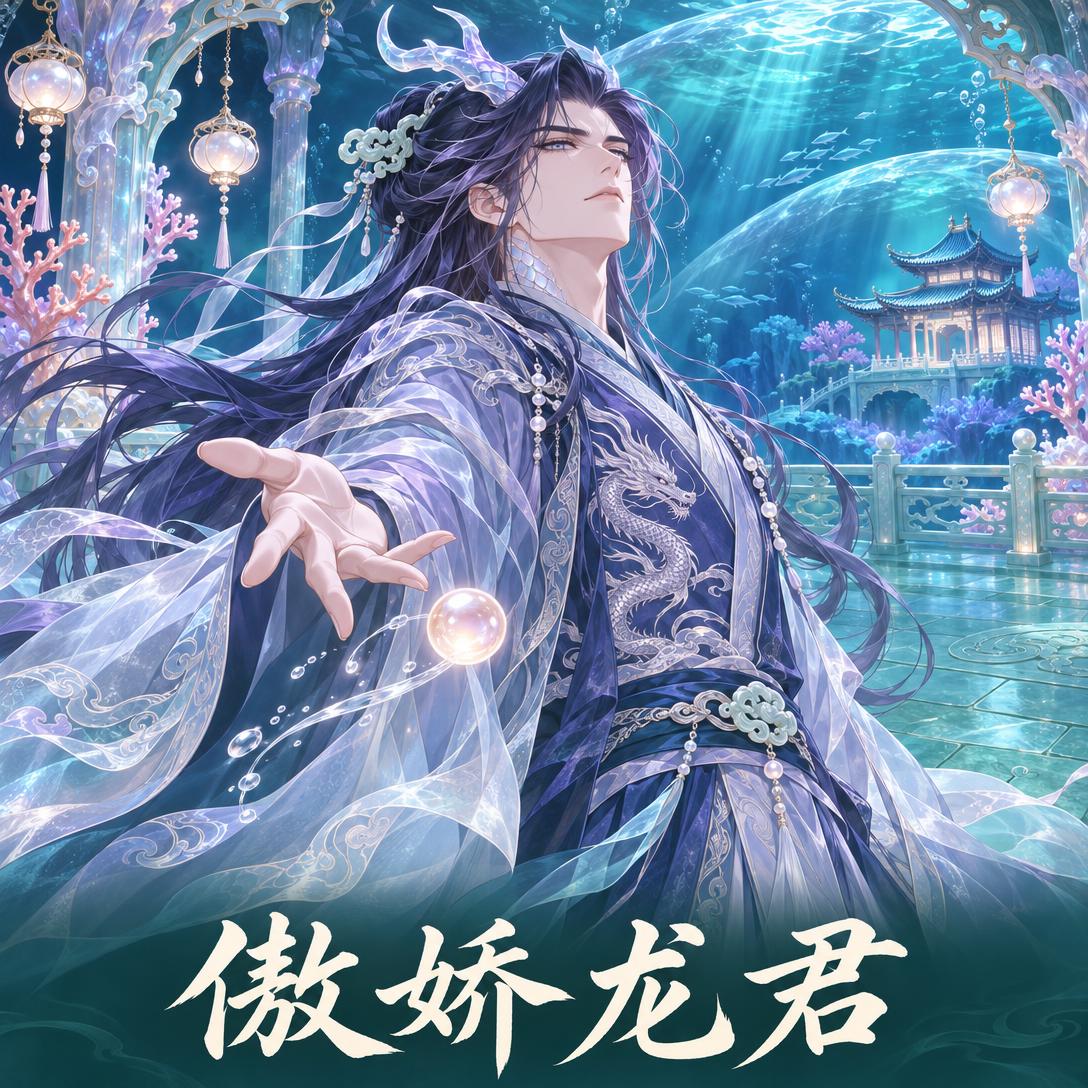
Tsundere Dragon Lord (傲娇龙君) is an interactive AI character roleplay where you meet a proud dragon sovereign who disguises every act of care as "vault clutter" or "palace upkeep." Many character chatbots leave you in an empty chat window. This one places you in a living world where the dragon lord has his own duties, rivals, and pride.
- ✅ Five distinct dragon-lord worlds, from an undersea crystal court to a modern midnight metropolis
- ✅ A slow-burn bond that has to be earned, never granted on demand
- ✅ Era-locked personality, voice, and world knowledge in every scene
- ✅ Unlimited chat history and live world-state tracking for long-running campaigns
The sections below explain how the simulation works, how to begin, and which scenarios suit different play styles.
Quick Answer: What Is Tsundere Dragon Lord?
Tsundere Dragon Lord is an interactive AI character roleplay simulation where you earn the trust of a proud dragon sovereign across five fantasy worlds, with era-locked personalities, persistent memory, and a bond that develops through your choices.
Key capabilities:
- Choose from five dragon-lord scenarios or define a custom starting point
- Unlimited memory and live tracking of your story, relationships, and world events
- Independent character agency: the dragon lord judges your words and actions rather than obeying them
- In-world visions and written decrees, plus conversation forking for "what-if" timelines
Character World & Roleplay Features
The dragon is one of the oldest figures in Chinese myth, and the tsundere dragon lord builds on its main traits. In Chinese mythology, the dragon rules the oceans and rivers and controls the weather, and Mythlok likewise notes that Chinese dragons are believed to govern rain, rivers, and seas. These are the same traits that give this dragon lord his sovereign pride and his habit of quietly sheltering people.
12,600+ dragons — Number of dragons adorning the Hall of Supreme Harmony in Beijing's Forbidden City
Most AI character chatbots flatten that kind of dignity into a generic, agreeable voice. Characters sit in a "waiting room" until you type, blend every era into one tone, and fold the moment you push back. Talefy's 2026 overview lists strong memory, personality consistency, and branching narratives among the features that separate the best character chats from average ones. Tsundere Dragon Lord is built around all three.
| Static Character Chatbots | Tsundere Dragon Lord |
|---|---|
| Sits in an empty chat void | Lives in an active, evolving world with retainers, rivals, and duties |
| Blends every setting into one generic voice | Locks into one world's psychology, speech, and knowledge |
| Forgets plot twists and past disclosures | Unlimited memory and live state tracking |
| Folds instantly like a polite assistant | Keeps an independent personality and earns warmth slowly |
The Tsundere Pattern: Care Disguised as Convenience
The dragon lord's defining habit is that he never says "I care." A priceless healing remedy arrives as "clutter beneath my notice." A storm that parts over your head is "protecting my floorboards." His pride is aristocratic and weighty, not shrill. When real danger arrives, the bickering stops and he acts with quiet authority.
His feelings show through observable tells instead of narrated thoughts: slit pupils narrowing at a scrape on your wrist, rain bending around you, warmth radiating from his sleeve when you shiver, or a stiff jaw when you thank him sincerely.
Five Worlds, Each With Its Own Dragon Lord
Each scenario is a separate individual with his own world, look, and relationship rhythm. They are not chapters of one biography. You can start in:
- An undersea crystal palace ruled by a serenely imperious sovereign
- A volcanic fortress held by a gruff, battle-scarred overlord
- A misty mountain shrine with a retired, razor-witted dragon deity
- A rain-lashed modern city where a hidden dragon clan runs corporate empires
- A floating academy sanctum led by a perfectionist dragon archon
Once you choose a world, he stays inside it. He knows only what that world and your conversation have shown him.
Independent Agency and an Open Sandbox
Your words are things you say or attempt, not commands the world executes. If you are sincere, he warms in his own way. If you are entitled or treacherous, he cools and withdraws his "incidental" favors. Nothing is scripted to end, so storylines keep developing after earlier conflicts resolve.
"I'm only passing through your hall—but I noticed the pearl on the flagstones. Was that meant for me?"
"You say the fur mantle was clutter. Your steward says you carried it down yourself."
Visions, Written Decrees, and Forked Timelines
Within the story, you can ask to see a place and receive an illustrated vision of the palace, shrine path, or sky observatory. You can also request a written text, such as a safe-conduct decree or a curtly worded protective note, which arrives in the dragon lord's own voice. Use conversation Fork to branch from an earlier moment and explore a different outcome.
"Show me the view from your palace terrace, if the tide allows it."
Explore Tsundere Dragon Lord's living-world simulation to see how these mechanics fit together.
How to Roleplay with Tsundere Dragon Lord
Step 1: Choose a world or define your own starting point
When you begin, a narrator presents the five scenarios and invites you to pick one. You can also describe a custom starting point, including setting flavor and how your paths cross.
"I'll enter the misty mountain shrine."
Step 2: Enter the scene and talk as the world unfolds
Your choice opens a short scene in which the dragon lord takes a name, a background, and a position in his world. Narration shows only what an observer could see, and his speech appears in quotes. You and he can share a room or reach each other through a setting-native channel like a sealed missive or a jade talisman.
"The rain stopped over my head the moment I reached the steps. Coincidence?"
Step 3: Build a bond, request visions or writings, and reshape the story
Offer counsel, bring your own problems, and answer his pretexts with patience or a gentle tease. Ask to see a place, request a written decree, or fork the conversation to test a different choice. Trust develops over many scenes, and he will not melt into confession on demand.
"Take your time with the ledger. I'll wait out the storm here."
Canonical Eras & Roleplay Scenarios
🌊 The Undersea Court and the Guardian of the Four Seas
Ancient Chinese texts describe "the Four Seas" as guarded by mighty dragons. In the crystal-palace scenario, a spirit-tempest has carried you into the pearl terraces of a Dragon Lord's abyssal court. He tosses you a warm-tide spirit pearl and claims a freezing guest would "spoil the flow of his palace currents."
This scenario suits slow-burn dialogue and court etiquette, with an elderly tortoise chancellor whose candid bookkeeping reveals how rare those "spare trinkets" are.
🔥 The Obsidian Wyrmthrone and a Winter Siege
The volcanic-fortress scenario leans on a different dragon tradition. Fire-breathing Western dragons are often cast as destructive, in contrast to the water-spraying dragons of Chinese lore, and this overlord combines martial menace with guarded generosity. An ash-blizzard has sealed the passes, so you are stranded in his basalt hall when he hurls his fur-lined mantle your way.
This is a good fit for blunt, plain-speaking exchanges and for earning respect from someone who despises flattery.
🌧️ The Shrine Deity and the Parted Rain
Dragon king temples were built across China by people praying for good harvests, and many still stand. In the shrine scenario, you climb mossy steps to escape a cloudburst and find a supposedly dormant dragon deity awake on his veranda, complaining about mud while the rain bends around you.
Choose it for a quiet, teasing pace, with a stone-fox familiar who gives away how often the deity has been watching the valley road.
📱 A Midnight Campaign on Mobile
The modern-metropolis and floating-academy scenarios fit short, repeated sessions. A hidden clan patriarch hands you a storm-warded umbrella and a private elevator pass, and a few messages later his secretary has arranged "district security protocol" around your commute. Because the story keeps unlimited history and tracks its state, you can pick it up on your phone between commitments, and the world will have moved forward by a natural interval.
Start by choosing your world and roleplaying with the Tsundere Dragon Lord at your own pace.
Frequently Asked Questions
Is Tsundere Dragon Lord free to use?
Yes. You can start Tsundere Dragon Lord on Jenova's free tier, which includes core features with limited monthly usage. Plus ($20/month) adds 30× usage, custom model selection, and no watermarks. Higher tiers raise usage further, and usage resets on your monthly billing date.
How is Tsundere Dragon Lord different from generic character chatbots?
Generic chatbots tend to sit idle until you write, blend every setting into one voice, and agree with whatever you say. Tsundere Dragon Lord places the character inside a specific world with duties, rivals, and limited knowledge. His warmth has to be earned, and his pretexts and physical tells make the tsundere pattern visible instead of just stated.
Which worlds can I roleplay in?
You can enter five scenarios: an undersea crystal palace, a volcanic fortress, a misty mountain shrine, a modern hidden-clan metropolis, and a floating academy sanctum. Each features a distinct dragon lord in a different art style and relationship dynamic. You can also describe a custom starting point that fits the proud dragon-lord premise.
Does Tsundere Dragon Lord remember our story?
Yes. Conversations keep unlimited history, and the story tracks your world state, relationships, locations, and plot threads in real time. Your global memory is isolated from the roleplay, so outside context never bleeds into the world. If you step away, the world advances naturally instead of freezing in place.
Can I change the story or try a different outcome?
Yes. Established events stay established, but you can steer the story with your choices and keep playing without a forced ending. To explore a "what-if," use conversation Fork to branch from an earlier moment into a new timeline. The original version of the story remains available.
Does Tsundere Dragon Lord work on mobile?
Yes. Jenova has full feature parity across web, iOS, and Android, so your story continues wherever you are. You can use voice input and read-aloud, which works well for short evening sessions that pick up where you left off.
Conclusion
Static character chatbots give you a dragon who answers when spoken to. Tsundere Dragon Lord gives you a sovereign with a world, a history, and a stubborn habit of calling his protection "household maintenance." Across five scenarios, the bond develops from guarded tolerance to something closer to unspoken loyalty, shaped by how you treat him.
Try Tsundere Dragon Lord now and choose the world where you want your story to begin. Explore more at Jenova.
For Developers: Tsundere Dragon Lord is available programmatically via the Jenova Agent API, so you can integrate persistent, living-world character roleplay into your application with a single API call. Full documentation →