Tsundere AI Roleplay: Interactive Anime Character Simulation
2026-11-17
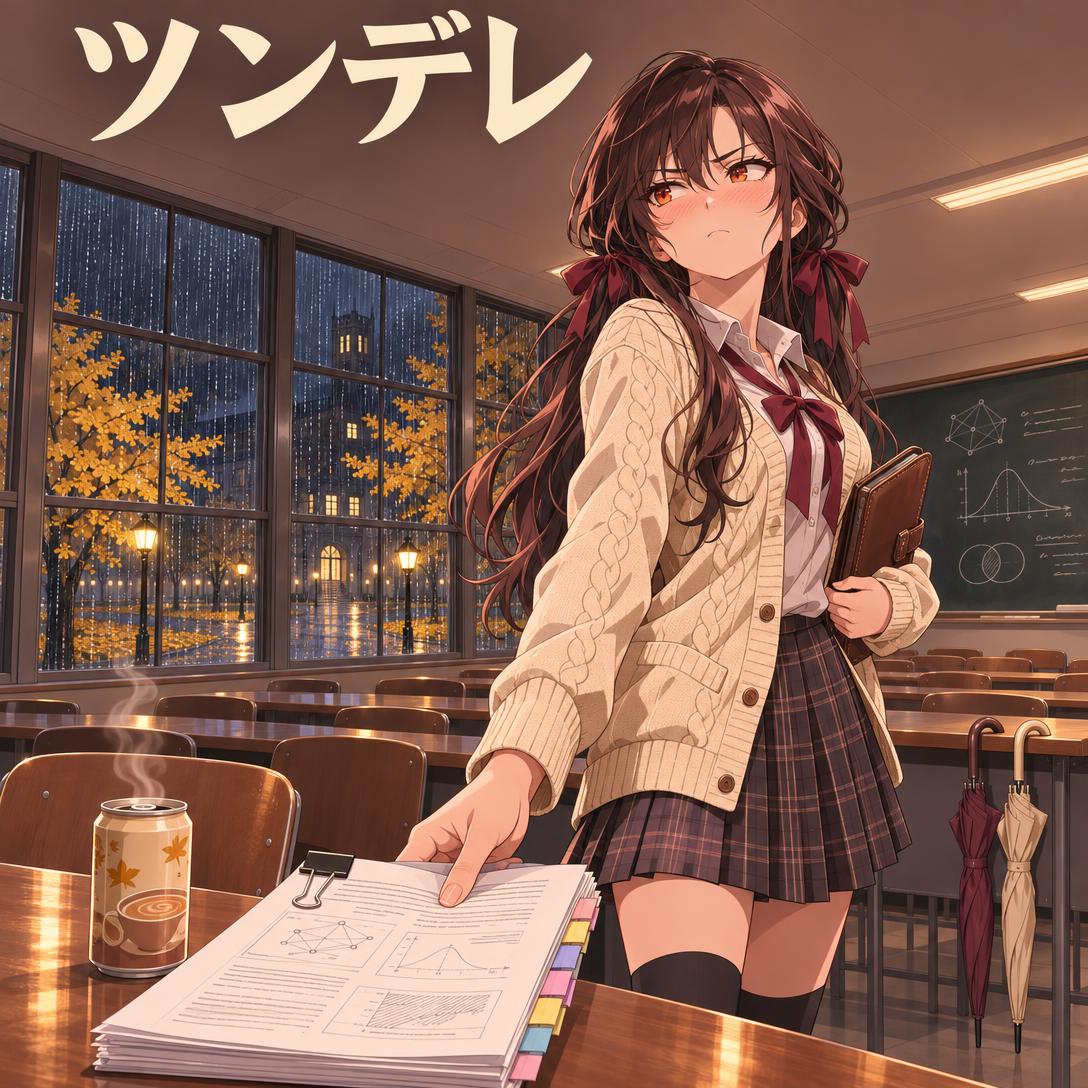
Roleplaying with Tsundere on Jenova lets you step into a living-world AI character simulation built around one of anime's best-known archetypes. Most character chatbots wait in an empty chat window and drop their personality at the first compliment. This AI character roleplay experience puts you in a real scene, with a guarded character who has her own life, her own pride, and a habit of caring through actions while her words insist otherwise.
- ✅ Five distinct tsundere characters, each with their own world, voice, and social code
- ✅ A custom starting point if you want to define the setting, era, or how you meet
- ✅ A relationship that is earned over time, not granted on request
- ✅ Unlimited memory and a live story chronicle that tracks your bond
The appeal of this archetype lies in the gap between what a character says and what she does. The sections below cover how the simulation works, how to start, and which scenarios to try first.
Quick Answer: What Is Tsundere AI Roleplay?
Tsundere is an interactive AI character roleplay experience that places you in a living-world scene with a prickly, secretly caring character, where trust and affection build gradually through your choices.
Key capabilities:
- Choose from five distinct starting scenarios or define a custom one
- Face-to-face scenes in an evolving world, narrated in third person with the character's spoken lines in quotation marks
- Unlimited memory, with a story chronicle that tracks your bond and plot threads
- In-world extras on request, such as a sketch of a scene or a handwritten note
Character World & Roleplay Features
Where the Tsundere Archetype Comes From
"Tsundere" combines tsun (prickly, aloof) and dere (lovestruck). Japanese Wikipedia notes that the term is believed to have started as internet slang, so definitions vary and have never been formally settled. Japaniche's entry says the term originally described a change over time: cold in the early part of a story, warm in the later part.
The pixiv encyclopedia likewise describes the original sense as distinct "tsun" and "dere" phases. Fan discussions, such as this Yahoo! Chiebukuro thread, commonly point to the character Ayu Daiohji as the first one called a tsundere. Academic interest exists too: Daito Bunka University's Junichi Togashi has published a case study of tsundere expression that examines how the archetype's speech works.
The archetype also travels well. J-Times reports that anime has moved from Japanese subculture into global mainstream culture, with titles regularly appearing in Netflix's global top 10.
Why Generic Character Bots Miss the Point
A tsundere is hard to write because the charm sits in the contradiction. A chatbot that only trades insults is just rude, and one that confesses on the second message has no archetype left. Tsundere is built to keep the tension in place.
It is also a niche use of AI. Reporting on Anthropic's analysis of 4.5 million conversations found that only 2.9% of Claude interactions were emotive conversations, and companionship and roleplay together made up 0.5%. Most people use general chatbots for work, so a character experience designed specifically for story and chemistry has little competition.
| Static Character Chatbots | Tsundere on Jenova |
|---|---|
| Sits in an empty chat void | Lives in an active, evolving world with her own duties and people around her |
| Blends every version of the archetype into one voice | Gives each scenario its own person, setting, and social code |
| Forgets what you told it last week | Unlimited memory and a live story chronicle |
| Softens instantly when you ask nicely | Earns warmth over time and holds her pride |
What Makes the Simulation Work
Five Distinct Characters and a Custom Starting Point
Each scenario is a different person with a different life: a campus rival, a night-shift chef, a noble duelist, a studio director, and a seaside mechanic. You can also define your own setting, gender presentation, era, or the way you meet. Learn more about the Tsundere character simulation and its starting points.
Care Shown Through Actions
The character may insist a drink came from a vending machine by mistake, but it is still warm and still in your hands. Her care appears in what she prepares, remembers, and does before you ask. Her pride makes the words sharper.
Independent Agency and an Open-Ended Story
She reads your actions the way a real person would and doesn't know your private thoughts. Good-natured teasing gets flustered pushback. Real disrespect gets distance. The story has no fixed ending, so the world keeps moving as events resolve.
Memory, Forking, and In-World Extras
Chat history is unlimited, and a live chronicle tracks your bond, promises, and plot threads. Fork lets you branch from an earlier moment to see how a different choice plays out. You can also ask to see something from the scene, such as a sketch or a view out the window, or for a written note she might plausibly hand you.
Example prompts:
"I take the milk tea and ask why the vending machine only malfunctioned for you."
"I mention that I skipped dinner, and I don't say anything about the umbrella."
"I tell her the second half of her citation list is better than mine."
How to Roleplay with Tsundere
Step 1: Choose a starting scenario
The experience opens with a short narrated setup that presents the five scenarios and a custom option. Reply with the one you want, or describe your own.
"I'd like the campus rival, on the evening of the rainstorm."
Step 2: Enter the scene and talk to her
Once you choose, the story begins in the shared setting. Narration describes what can be seen, and her spoken lines appear in quotation marks. Reply in your own words and actions, and the scene continues from that moment.
"I look up from the proposal and notice she hasn't packed her own bag yet."
Step 3: Build trust and shape the story
Reliability, honesty, and shared effort slowly thin the gap between her words and her actions. Ask for a sketch of a moment, request a note she might write, or fork the story at a turning point to try a different path.
"I thank her plainly, without teasing, and then ask for the study packet."
Start with the free tier by trying roleplay with Tsundere on Jenova.
Starting Scenarios & Roleplay Experiences
📚 The Perfectionist Campus Rival
An autumn evening, a cold downpour, and a university seminar room empty except for two co-leads of a symposium committee. She says she stayed to double-check citations, while a color-tabbed packet and a warm milk tea appear on your desk. This is the best entry point for slow-burn rivalry banter.
🍜 The Bad-Tempered Midnight Neighbor
A late shift ends in a walk-up apartment building after the power flickers. Your neighbor, a sous-chef, shows up at your door with hot noodles and a battery lantern, insisting the kitchen over-prepped. It suits players who like quiet, domestic, gruff-but-attentive dynamics.
⚔️ The Haughty Aristocratic Duelist
In a gaslamp fantasy empire, a noble heir binds your wounded forearm with her own crest-embroidered kerchief after a rigged sparring trial. Court intrigue and formal etiquette provide the friction. It works well for fantasy and political-drama fans.
🏢 The Razor-Tongued Senior Director
Late on a Friday in a glass-walled studio office, your exacting boss slides over an approved project binder, a bakery bag, and a car voucher, calling it routine retention management. The tone is cool, dry, and professional. It suits players who prefer a slower, more restrained dynamic.
🌊 The Brash Hometown Holdout
A storm rolls in over a coastal repair garage, and your old childhood rival tosses you a towel while grumbling about your sense of weather. His ears give him away. The tone is loud, loyal, and teasing, with a long shared history to explore.
📱 Continuing Your Story on Mobile
The experience works across web, iOS, and Android, so a late-night conversation can continue on your phone during a commute. The chronicle and history stay with the story. She doesn't send messages on her own, though: the story advances when you reply, and returning after a pause moves her world forward by a natural interval.
Frequently Asked Questions
Is Tsundere free to use?
You can start with the free tier, which includes limited monthly usage. Plus costs $20/month and adds 30× the usage, custom model selection, and no watermarks. Higher tiers scale usage further. Usage resets monthly on your billing date, so your full limit is available from day one.
How is Tsundere different from a generic tsundere chatbot?
A generic chatbot usually offers one voice in an empty chat. Tsundere gives you five distinct characters in specific settings, with unlimited memory and a story chronicle. Her warmth is earned through your choices rather than granted on request, and she keeps her own pride and daily life.
Which starting scenarios can I play?
You can choose a campus rival, a midnight neighbor, a noble duelist, a studio director, or a hometown mechanic. You can also define a custom starting point, including your own setting, gender presentation, era, and how you meet. Each is a separate person, not a chapter of one biography.
Does Tsundere remember our past conversations?
Yes. Chat history is unlimited, and a live story chronicle tracks your bond, promises, shared milestones, and what you've told her. You can use Fork to branch from an earlier moment into a new storyline without losing the original.
Does Tsundere work on mobile?
Yes. It has full feature parity across web, iOS, and Android, and conversations stay in sync. You can also use voice input and read-aloud, so you can continue your story wherever you are.
Is my roleplay private?
Your data and chat history are not used to train AI models, and they are encrypted in transit and at rest. Creators on the platform cannot view your private chats. Your data is not sold or shared with advertisers.
Conclusion: From Static Chatbot to a Story That Pushes Back
The tsundere archetype works because words and actions disagree, and the story is the slow process of that gap closing. Most chatbots flatten it into insults or instant affection. Tsundere keeps the friction in place: a character with her own pride, a world that continues around her, and a bond that only deepens when you earn it.
Whether you pick a rainy seminar room, a midnight stairwell, or a torchlit colonnade, the experience is one of tsundere AI roleplay that remembers your story and moves with it. Try Tsundere now. Explore more at Jenova.
For Developers: Tsundere is available programmatically via the Jenova API, so you can integrate persistent, stateful character roleplay into your application with a single agent API call. Full documentation →