AI Treasure Hunt Game: Generate Clues, Riddles & Real-World Routes
2026-10-17
An AI treasure hunt game turns a stack of half-finished riddles into a complete, playable adventure, with the story, clue chain, route, props, and hints all included. Jenova brings that workflow into one place. Specialized AI agents write themed clues, design treasure maps, plot real-world stops with Google Maps, and can act as a live game master. As of October 2026, location-based and augmented reality hunts appear everywhere from classrooms to brand activations, yet most organizers still build them by hand. Whether you're running a birthday party, a field trip, a team offsite, or an AR marketing campaign, this AI handles the creative and logistical work so you can focus on the experience.
- ✅ Specialized agents for storytelling, visual design, education, training, and marketing
- ✅ Real-world route planning through built-in Google Maps integration
- ✅ Persistent memory that tracks themes, answer keys, and past hunts across sessions
- ✅ Full feature parity on web, iOS, and Android, so you can plan at your desk and run the hunt from your phone
A good treasure hunt looks effortless from the player's side. Behind the scenes, though, it depends on careful puzzle design, a coherent narrative, safe routing, and difficulty tuned to the audience, and each of those is a skill in its own right. To understand why AI makes such a difference here, let's look at the challenges organizers face today.
Quick Answer: What Is an AI Treasure Hunt Game?
An AI treasure hunt game is a scavenger-style adventure in which artificial intelligence generates the story, clues, riddles, routes, and hints, and can act as a live game master that adjusts difficulty as players progress. It can run entirely in chat, on paper, or alongside GPS and augmented reality tools.
Key capabilities:
- Themed clue chains, riddles, ciphers, and narrative arcs written for any age group
- Visual assets such as treasure maps, clue cards, and prop concepts
- Real-world route planning with walking distances between stops
- Adaptive, tiered hints delivered by a custom AI game master
Why Designing a Great Treasure Hunt Is Harder Than It Looks
Players already carry the hardware for location-based play in their pockets. Mobile gaming is now a mainstream activity, and the audience for phone-driven adventures keeps growing:
US$116.85 billion: projected worldwide mobile games revenue in 2026, according to Statista's market outlook
2.27 billion users: expected number of mobile game players worldwide by 2031 (Statista)
34%: share of people who say a mobile phone is their main gaming device (Uswitch)
4.6 billion kilometers: distance walked by players of one landmark location-based mobile game, which also passed 500 million downloads (ResearchGate)
That last figure shows how strongly real-world exploration motivates players. Research published in the Journal of Research in Interactive Marketing found that players' sense of spatial presence was shaped by their engagement, perceived mobility, and the contextual value of the experience. Getting those elements right is still frustratingly difficult:
- Clues end up too easy, too obscure, or wildly inconsistent in difficulty
- Storylines fall apart after the third or fourth stop
- Routes require repeated site visits to check distances, safety, and access
- Every audience needs its own version of the hunt
- Custom AR builds demand developers, budgets, and testing time
Clue Difficulty Is Hard to Calibrate
The most common reason a treasure hunt fails is pacing. One impossible riddle stalls the whole group, and three trivial ones in a row kill the momentum. Most organizers have no way to test difficulty before game day, so they guess. That leads to frantic hint-giving or bored players finishing in half the planned time.
Stories Fall Apart Without a Throughline
Players care more when clues connect to a narrative, such as a missing pirate captain, a stolen artifact, or a mansion with secrets. Keeping that story consistent across eight or ten clues takes real writing craft. Without it, a hunt feels like a disconnected list of tasks.
Routes, Safety, and Logistics Take Up Planning Time
Outdoor hunts mean checking walking distances, avoiding busy roads, confirming that stops are publicly accessible, and estimating total play time. All of this usually happens through manual map research and in-person scouting before a single clue gets written.
Every Audience Needs a Different Hunt
A hunt for seven-year-olds needs different vocabulary, safety rules, and puzzle types than one for a corporate sales team or a university orientation group. Educators face an extra requirement: the activity has to tie to learning objectives. Researchers have built mobile AR education tools around serious treasure hunt games for this purpose, and others have explored mobile augmented reality in outdoor primary school education.
Custom AR Builds Are Expensive
Augmented reality adds a lot to a hunt, but a review of virtual and augmented reality in adventure tourism lists high costs and accessibility issues among the main challenges. No-code WebAR tools have lowered the technical barrier. Onirix, for example, supports GPS-based and image-tracking treasure hunts that run in a browser without an app. However, those tools still need content: clues, challenges, narrative, and copy for every location.
This is exactly what Jenova was built for.
The Jenova Solution for AI Treasure Hunt Games
Jenova treats a treasure hunt as a multi-step creative project rather than a single prompt. Specialized agents handle the narrative, visuals, logistics, and live play. Persistent memory keeps the theme, answer key, and player details consistent from the first brainstorm to game day.
| Traditional Approach | Jenova |
|---|---|
| Hours spent drafting riddles and guessing at difficulty | Full clue chains calibrated to age and skill level, revised instantly |
| Hand-drawn maps or paid illustrators | Concept art for treasure maps, clue cards, and props |
| Scouting the route in person to check distances | Stops and walking distances plotted through Google Maps integration |
| Custom AR development requiring engineers | AI-written content ready to drop into no-code WebAR tools, or a hunt run entirely in chat |
| One version for every audience | Variants for kids, students, corporate teams, and multilingual players |
| A game master who must be physically present | A custom AI game master that gives tiered hints at any hour |
Story-Driven Clues, Riddles, and Ciphers
Creative Fiction Writer builds the narrative backbone of your hunt. It researches authentic details for your chosen setting and keeps the plot coherent from the opening clue to the final reveal. It also writes riddles, rhyming couplets, acrostics, and simple ciphers that point to the next location.
"Write a 7-clue pirate-themed treasure hunt for 9-year-olds in a suburban backyard. Each clue should rhyme, hint at a specific hiding spot, and advance a story about a lost parrot."
Treasure Maps, Clue Cards, and Props
Concept Art Creator designs the visual world your players move through. It can produce aged parchment treasure maps, character portraits for the story's villain, and illustrated clue cards. Shared visual details like these help a homemade hunt feel like a finished game.
Real-World Routes With Google Maps
Jenova's built-in Google Maps integration lets you plan stops around real places, such as parks, landmarks, cafés, and museum entrances. You can ask for walking distances between stops and an estimated total route time. This makes it practical to design outdoor hunts without scouting every block in advance.
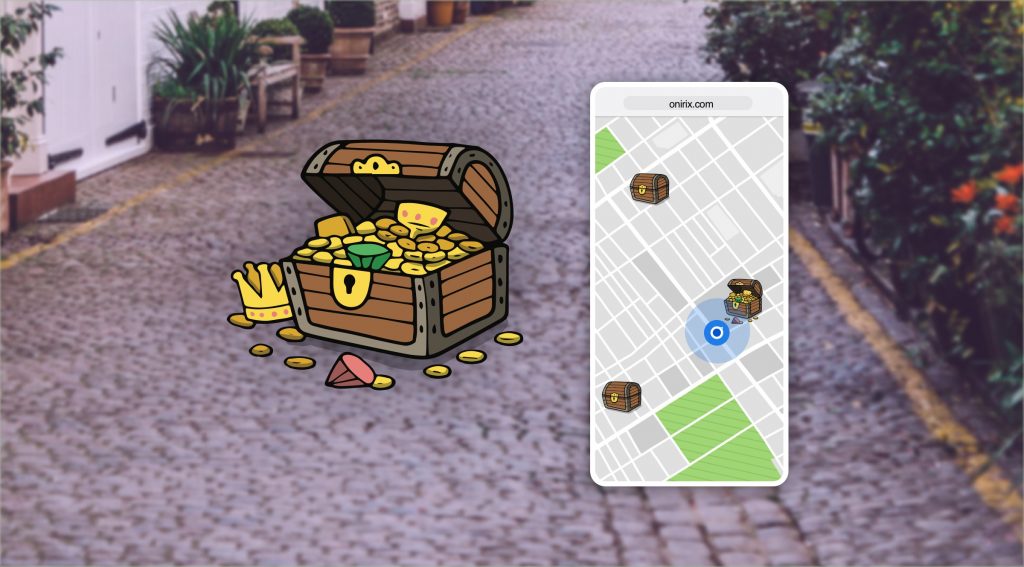
For organizers who want true augmented reality, Jenova handles the content layer while a dedicated AR platform handles rendering and geolocation. Studios such as Groove Jones build AR treasure hunts to increase engagement, dwell time, and foot traffic at venues and events. Providers like Hololink apply the format to tourism, retail, and training. Every one of those experiences still needs well-written challenges at each pin on the map, and AI can draft them quickly.
Playable AI Adventures Right in the Chat
Sometimes the AI is the game itself. The Mansion drops you into a house with no memory of how you arrived, where every room hides secrets. It works as a solo, exploration-driven mystery that runs entirely in conversation. It suits rainy days, long commutes, or as warm-up inspiration before you design your own hunt.
Build Your Own AI Game Master
You can also create a custom agent in minutes. Write its instructions ("You are Captain Redbeard; give hints in three tiers, never reveal the final answer directly"), choose your preferred model, and attach a private knowledge base containing your answer key. Persistent memory lets the agent track which clues a team has solved. Multi-model access to models from OpenAI, Anthropic, Google, DeepSeek, and xAI means you can pick the model whose voice fits your theme.
One honest caveat: determined players may try to coax answers out of any chatbot. For hunts with valuable prizes, keep the final solution or prize location offline and use the AI for hints and storytelling.
Specialized AI Agents for Treasure Hunt Organizers
Different organizers have different goals, so the right agent depends on your context. These three are a good starting point for structured settings.
For Teachers: Lesson Plan Generator
Lesson Plan Generator turns a treasure hunt into a standards-aware classroom activity. It builds the hunt into a complete lesson with pacing, differentiation, and assessment, so the activity counts toward instructional time rather than replacing it.
- Detailed pacing for each station or clue
- Differentiation for mixed-ability groups
- Built-in assessment to check learning after the hunt
For HR and L&D Teams: Corporate Training Designer
Corporate Training Designer approaches team-building hunts as training designed around behavior change. It starts with what you want participants to do differently afterward and works backward to challenges that reinforce it.
- Needs analysis to define the hunt's real objective
- Challenges mapped to collaboration or communication goals
- Facilitator-ready materials and debrief guides
For Brands and Event Marketers: Marketing Strategist
Marketing Strategist helps you decide whether a branded treasure hunt is the right campaign mechanic, and how to promote it once it is. It offers CMO-level guidance on channel mix and budget allocation.
- Campaign planning around a hunt or AR activation
- Channel strategy for driving participation
- Budget allocation across production and promotion
Try Jenova free, no credit card required.
How to Build an AI Treasure Hunt Game Step by Step
Step 1: Define Your Brief
Start by telling Jenova who is playing, where, for how long, and in what theme. A clear brief keeps every downstream output consistent, and persistent memory carries it forward automatically.
"I'm planning a 90-minute treasure hunt for 12 adults at a lakeside cabin. Theme: 1920s heist. Mix of indoor and outdoor clues, moderate difficulty."
Step 2: Generate the Story and Clue Chain
Open Creative Fiction Writer and ask for a narrative arc with a clue for each stop. Request two difficulty versions of each clue so you can swap them on game day if a team is struggling or racing ahead.
"Write 8 heist-themed clues, each with an easy and hard version, plus a three-tier hint for each one."
Step 3: Plot the Route
For outdoor hunts, use the Google Maps integration to sequence the stops, check walking distances, and estimate total play time. Ask the AI to flag stops near busy roads or private property.
"Plan a walking route between these 6 landmarks in my town center that takes under 45 minutes total, starting and ending at the public library."
Step 4: Design the Props
Ask Concept Art Creator for a treasure map, character art, or illustrated clue cards that match your theme. Then print them, display them on screens, or upload them into an AR platform as overlay assets.
"Design an aged parchment treasure map of a lakeside cabin property with six marked X locations and a 1920s art deco border."
Step 5: Playtest and Launch
Set up a custom game master agent with your answer key in its knowledge base, then run through the hunt yourself on your phone. Adjust any clue that feels off, share the agent with players for hints, and you're ready to play.
Results & Use Cases
💼 Corporate Offsite Team Challenge
Scenario: An HR manager needs a two-hour team-building hunt for 40 employees across a hotel campus. The hunt should reinforce cross-department collaboration.
Traditional Approach: Hire an events company or spend several evenings writing challenges, often with no clear link to the offsite's goals.
Corporate Training Designer: The agent produces a hunt in which each station requires skills from two different departments, plus a facilitator debrief guide.
- Challenges tied to measurable collaboration goals
- Facilitator materials ready for print
- Debrief questions that connect the game to day-to-day work
📊 Elementary Science Field Trip
Scenario: A fourth-grade teacher is taking students to a botanical garden and wants a hunt that reinforces a plant life-cycle unit.
Traditional Approach: Write worksheets by hand, then build a separate grading rubric afterward.
Assignment Generator: The agent creates a station-based hunt with scaffolded questions and an aligned rubric, designed so students have to observe real specimens rather than look up answers. Educational researchers have documented similar AR-based place learning activities for city exploration.
- Scaffolded clues for different reading levels
- A rubric aligned to the unit's objectives
- Questions that require on-site observation
📱 Language-Learning Hunt While Traveling in Rome
Scenario: A traveler wants to practice Italian while exploring Trastevere and plans everything on her phone the night before.
Traditional Approach: Use a generic phrasebook and a separate walking tour, with no link between vocabulary and place.
Learn Italian Through Roleplay: From her phone, she runs a roleplay in which a fictional art thief leaves clues in Italian at each piazza. Each clue requires her to use new vocabulary to find the next stop.
- Vocabulary anchored to real places she visits
- Clues that become harder as her confidence grows
- Fully mobile, from planning to play
🎯 Branded AR Hunt for a Retail Launch
Scenario: A boutique wants a neighborhood-wide AR hunt to drive foot traffic during a store opening. Retail and e-commerce teams often use AR scavenger hunts for gamification, engagement, and viral content.
Traditional Approach: Commission an agency for both the AR build and the creative assets.
Digital Ad Designer: The agent produces promotional creatives for each social platform, while AI-written clue copy goes straight into a no-code WebAR tool.
- Campaign creatives ready for each platform
- Clue copy for every GPS pin
- Lower production costs than a full agency build
FAQ: AI Treasure Hunt Games
Is there a free AI treasure hunt generator?
Yes. Jenova's free tier includes all core features with limited usage, which is enough to generate a complete clue chain, story, and route for a small hunt. Organizers who run hunts often, such as teachers, event planners, and marketers, typically upgrade to Plus at $20 per month. Plus includes 30 times the free usage and custom model selection. Usage resets monthly with no daily caps.
Can I play an AI treasure hunt game solo?
Yes. Some AI adventures are built for one player. The Mansion is an exploration mystery in which you search room by room for secrets and a way out, all through conversation. You can also build a custom AI game master that guides you through a hunt you design yourself, with tiered hints when you get stuck.
How is an AI treasure hunt different from an AR treasure hunt?
AI and AR handle different layers of the experience. An AR treasure hunt uses a phone camera and GPS to overlay virtual objects on the real world, as Onirix explains in its overview of AR treasure hunts. An AI treasure hunt uses artificial intelligence to generate the story, clues, and hints, and to adjust difficulty. The best experiences combine both, with AI writing the content and AR delivering it.
Can AI plan a treasure hunt route on my phone?
Yes. Jenova includes Google Maps integration, so you can ask for a walking route between specific landmarks, estimated distances, and total play time. The platform works the same on web, iOS, and Android. You can build a hunt on your laptop and adjust clues on your phone while walking the route.
Can I start a treasure hunt business with AI?
AI can handle much of the creative production that makes custom hunts time-consuming, such as themed clues, props, and route variants. For the business side, Business Co-Pilot helps with business planning, financial modeling, operations, and marketing. Successful operators still need local permits, insurance, and on-the-ground testing.
Is an AI game master reliable, and can players cheat?
An AI game master is reliable for hints, storytelling, and pacing, especially when your answer key is attached as a private knowledge base. However, determined players may try to prompt any chatbot into revealing answers. For competitive hunts or valuable prizes, keep the final solution offline and use the AI for tiered hints only. Always playtest the full hunt before launch.
Conclusion: Design Better Treasure Hunts With AI
Building a memorable treasure hunt used to require a writer, an illustrator, a route planner, and a patient game master. An AI treasure hunt game workflow combines all four roles. Creative Fiction Writer shapes the story and clues, Concept Art Creator produces maps and props, Google Maps handles real-world routing, and a custom AI game master keeps play moving. When you want to play rather than plan, The Mansion offers a ready-made mystery.
Whether you're designing a backyard birthday quest, a classroom scavenger hunt, a corporate challenge, or a GPS-based AR campaign, the work that once took days can now be done in a single focused session. Explore the full agent library at Jenova.
For Developers: Every agent in this article is available programmatically via the Jenova API. You can build AI-generated clues, narratives, and game-master features into your treasure hunt or AR application with a single integration. Full documentation →