AI Transfer Admissions Consultant: Credit-Safe Transfer Planning
2026-08-20
The College Admissions Consultant works as an AI transfer admissions consultant that helps you choose target schools, audit which credits will actually carry over, and build a transfer application that explains your move convincingly. Transferring is the single most information-starved decision in higher education — most students guess at credit policies and discover the damage after they've already enrolled. This AI advisor gives you strategy on demand, tailored to your transcript, your major, and your timeline.
✅ Personalized school targeting based on your GPA, credits, and intended major ✅ Credit transfer risk analysis before you commit to a school ✅ Transfer essay development that answers "why leave, why us" convincingly ✅ Available 24/7 at a fraction of private consulting rates
To understand why this matters so much for transfer applicants specifically, it helps to look at what the data actually says about credit loss, information gaps, and the odds facing students who move between institutions. The problem is bigger — and more expensive — than most applicants realize.
Quick Answer: What Is an AI Transfer Admissions Consultant?
An AI transfer admissions consultant is an AI advisor that helps college transfer applicants select target schools, evaluate credit transfer risk, structure their application timeline, and write transfer essays — delivering personalized admissions strategy on demand instead of by appointment.
Key capabilities:
- School targeting matched to your GPA, completed credits, and major pathway
- Credit transfer analysis — identifying which coursework is at risk and what to verify with admissions
- Transfer essay development covering the "why transfer" narrative admissions officers expect
- Deadline and requirement tracking across multiple applications simultaneously
- Recommendation letter strategy and résumé positioning for transfer-specific reviews
The Problem: Transferring Is a High-Stakes Guessing Game
Transfer applicants face a fundamentally different challenge than first-year applicants. They aren't just competing for a seat — they're also gambling that the credits they've already paid for will survive the move. And the evidence suggests that gamble usually loses.
43% of credits lost on average — Students who transferred between 2004 and 2009 lost, on average, an estimated 43 percent of their credits, per the U.S. Government Accountability Office
83% of aligned transfers still lost credit — In a study of nearly 29,000 community college–to–public university transfers who kept the same major, 83 percent experienced some credit loss
16% abandoned higher education entirely — Sixteen percent of adults who attempted to transfer credit reported giving up on higher education altogether because the process was too difficult
But navigating this well is genuinely difficult:
- Credit policies are opaque, inconsistent, and often undocumented publicly
- Advisors at your current school rarely know receiving-institution requirements in detail
- Transfer essays require a narrative structure that first-year application advice doesn't cover
- Deadlines, prerequisites, and articulation rules differ at every single target school
- You must commit to a preparatory pathway before knowing where you'll be accepted
Information Simply Isn't Available Where You Need It
The GAO found that while nearly all schools publish credit transfer policies, about 29 percent of school websites did not list the other institutions with which they held articulation agreements. That means roughly a third of the time, a student researching transfer partnerships online hits a dead end — and has no way to know whether the school has no agreements or simply didn't publish them.
Advising Capacity Doesn't Match Demand
NACAC's own national survey of counselors found many feel less knowledgeable about transfer policies at area four-year colleges than about other admissions topics. Transfer applicants are effectively asking specialists a question outside their specialty — and private consultants who do specialize typically charge hourly rates that put them out of reach for the community college students who need them most.
The Structural Bet You're Forced to Make
Because students cannot know where they'll be admitted, they must select a 60-credit preparatory pathway aligned to a single guess. As transfer researchers describe it, students are forced to bet their credits on a single guess while being encouraged to explore broadly. The two expectations are contradictory, and the student absorbs the cost of the contradiction.
The Odds Compound Over Time
Data from the National Student Clearinghouse Research Center shows that fewer than a third of students who began at a community college transferred to a four-year institution within six years (31.6%), and of those who did transfer, slightly less than half completed a bachelor's degree (48.7%). Notably, students who earned an award before transferring were retained at 86.9% — 9.2 percentage points higher than those who transferred without one. Strategy, sequencing, and timing measurably change outcomes.
This is exactly what the College Admissions Consultant was built for.
Why the College Admissions Consultant Works for Transfer Applicants
Transfer admissions is a strategy problem disguised as a paperwork problem. The College Admissions Consultant treats it that way — starting from your actual transcript and goals, then working backward through school selection, credit risk, essay narrative, and submission timeline.
Unlike generic AI chat, this is a purpose-built admissions advisor with real-time research capability, meaning it can pull current requirements and policies rather than relying on stale general knowledge.
| Traditional Approach | College Admissions Consultant |
|---|---|
| Booking a 30-minute advising slot weeks out | Strategy sessions available instantly, unlimited length |
| Private consultants at premium hourly rates | Free to start, no credit card required |
| Generic "why transfer" essay templates | Narrative built from your specific reasons and target school |
| Manually cross-checking each school's policies | Structured research across all your target schools at once |
| Discovering credit loss after enrollment | Credit risk flagged before you apply |
School Targeting That Accounts for Transfer Reality
Transfer acceptance rates diverge sharply from first-year rates, and the strongest transfer pathways often run through public four-year institutions — 73.1% of community college transfer students attended a public four-year school, where bachelor's completion rates reached 71.2%. The consultant builds a target list reflecting where transfer students actually succeed, not just where brand recognition is highest.
"I have 48 credits from a community college with a 3.6 GPA and want to transfer into a business program. Build me a reach/target/safety list and explain the transfer acceptance dynamics at each."
Credit Transfer Risk Analysis
Before you apply, you need to know which of your completed courses are structurally at risk. The consultant walks your transcript against target-school requirements, flags likely problem areas, and gives you a specific list of questions to send each admissions office in writing.
"Here's my transcript. For each of my five target schools, tell me which courses are most likely to be rejected or counted as elective-only, and draft the email I should send admissions to confirm."
Transfer Essay Development
The transfer essay is a distinct genre. It must explain what you're leaving, why, and what specifically at the new institution completes the picture — without sounding bitter about your current school. The consultant develops that narrative with you and pressure-tests it.
"Review my transfer essay draft. Does the 'why this school' section reference specific programs and faculty, or is it generic enough to swap in any university name?"
Timeline and Requirement Management
Every target school has its own deadline, prerequisite set, recommendation requirements, and supplemental questions. The advisor consolidates all of it into a single working timeline so nothing slips.
Related Agents You'll Also Find Useful
Transfer applications rarely exist in isolation. If you're rebuilding academic momentum, retaking standardized tests, or planning a graduate pathway after the bachelor's, these agents handle adjacent parts of the same journey.
SAT/ACT Tutor
Some four-year institutions still request test scores from transfer applicants — particularly those transferring with fewer than 30 credits, where high school performance carries more weight. If your target schools require or recommend scores, this agent builds an adaptive prep plan around your target score and timeline.
- Content mastery across all tested sections
- Adaptive teaching calibrated to your current baseline
- Accountability and progress tracking through test day
Career Advisor
Many transfers are driven by a career pivot — a major that doesn't exist at your current school, or an industry that recruits from specific programs. Getting clear on the career endpoint sharpens the "why transfer" argument enormously.
- Career exploration frameworks for undecided majors
- Real-time labor market research on target fields
- Direct guidance on how program choice maps to outcomes
Public Speaking Coach
Selective transfer programs and honors pathways frequently include an interview component. This coach handles delivery, anxiety management, and audience simulation so you walk in prepared.
- Interview and Q&A preparation
- Anxiety management techniques
- Audience simulation for realistic practice
Word Doc Generator
Transfer applications require a résumé that reads differently from a job résumé — academic-forward, activity-weighted, and cleanly formatted. This agent produces properly structured documents automatically.
- Industry-standard formatting conventions applied automatically
- Résumé, personal statement, and supplemental document generation
- Clean export ready for upload
Try the College Admissions Consultant free — no credit card required.
How It Works
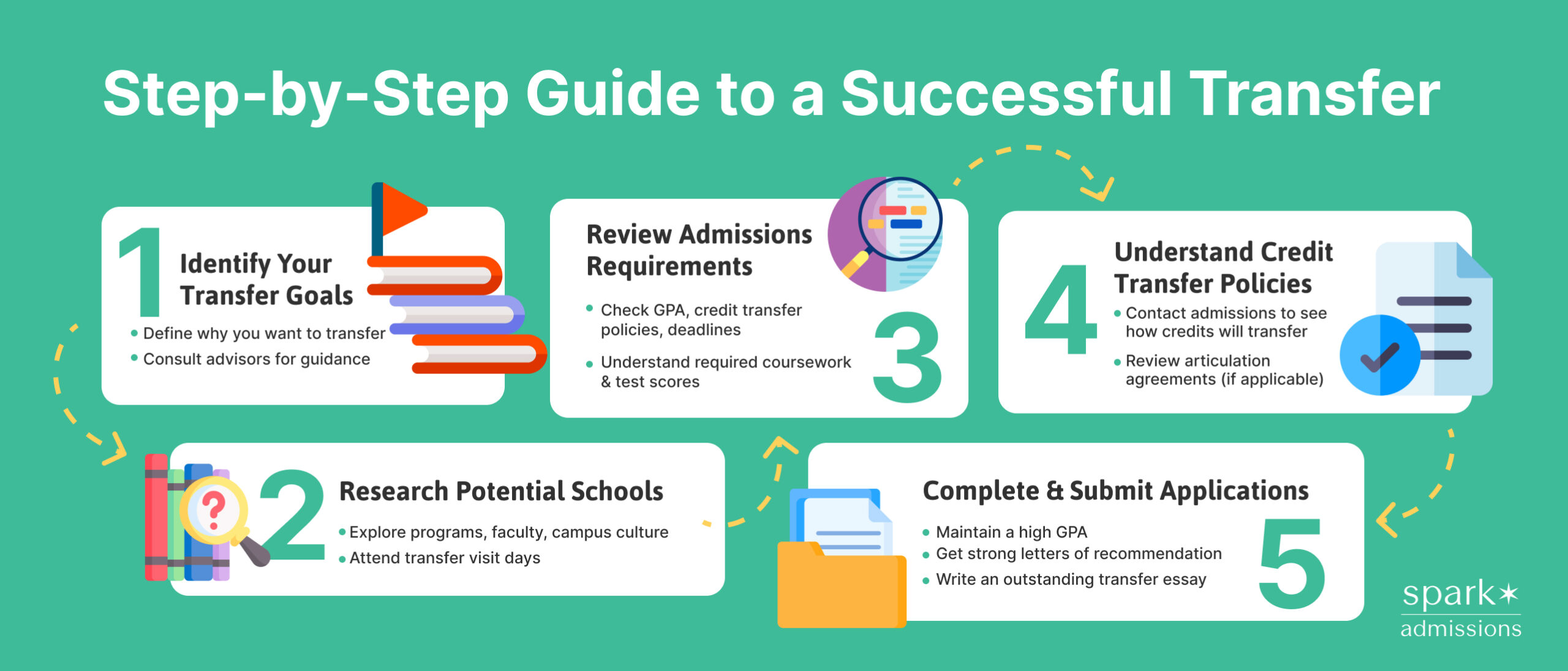
Step 1: Share Your Academic Profile
Start by giving the AI transfer admissions consultant your current institution, GPA, completed credit count, intended major, and the reason you're transferring. The more specific the reason, the stronger the strategy.
"I'm at a community college with 45 credits, 3.7 GPA, want to transfer into mechanical engineering at a public four-year in-state. My current school doesn't offer engineering beyond intro courses."
Step 2: Build Your Target School List
The consultant researches current transfer requirements, acceptance patterns, and program fit, then produces a tiered list. You'll get reasoning behind each placement, not just names.
"Give me eight schools sorted into reach, target, and likely — and for each, tell me what specifically makes me competitive or not."
Step 3: Audit Credit Transfer Risk
Before finalizing your list, run your transcript against each school. This is the step most applicants skip, and it's the one that costs the most money when skipped.
"Which of my completed courses have the highest risk of not transferring to each school on my list, and what should I ask each admissions office to confirm in writing?"
Step 4: Develop Your Transfer Essay
Work through the narrative structure: what's missing where you are, what specifically exists at the target school, and how you'll use it. The consultant drafts, critiques, and revises with you.
"Help me structure a transfer essay that explains leaving my current program without sounding negative, and connects my goals to three specific things at my top-choice school."
Step 5: Track Deadlines and Submit
Consolidate every deadline, supplemental requirement, and recommendation request into one timeline. The consultant flags conflicts and sequences the work so submissions never bunch up.
"Build me a week-by-week submission calendar across all five applications, working backward from the earliest deadline."
Results & Use Cases
📊 Community College to Four-Year Engineering Program
Scenario: A student with 45 credits wants to move into a public university engineering program where sequenced prerequisites make credit loss especially costly.
Traditional Approach: Two advising appointments, several unanswered emails to admissions, and a best-guess course schedule for the final semester.
College Admissions Consultant: A prerequisite map for each target program, a flagged list of at-risk courses, and drafted verification emails — completed in one working session with the admissions advisor.
- Identifies which final-semester courses maximize transferability across multiple targets, not one
- Surfaces articulation agreement questions to ask in writing
- Sequences the last term to preserve on-time graduation
💼 Career Pivot Transfer
Scenario: A sophomore realizes their current major doesn't lead to the field they want and needs to transfer into a program that does.
Traditional Approach: Months of uncertainty, generic online advice, and an essay that struggles to explain the shift persuasively.
College Admissions Consultant: A clear career-to-program mapping developed alongside the Career Advisor, plus a transfer essay that frames the pivot as directional rather than reactive.
- Turns "I changed my mind" into a documented, forward-looking rationale
- Matches target programs to actual industry entry pathways
- Positions existing coursework as relevant foundation rather than wasted time
📱 Managing Five Applications From Your Phone
Scenario: A working student juggling classes and a job needs to manage multiple transfer applications without dedicated desk time.
Traditional Approach: Scattered notes, missed supplemental essays, and a deadline discovered two days late.
College Admissions Consultant: A single running conversation accessible on web, iOS, and Android — with persistent memory, so the advisor remembers every school, deadline, and draft across sessions.
- Full feature parity across mobile and desktop
- Persistent context means no re-explaining your situation each time
- Deadline conflicts surfaced before they become emergencies
🎯 Maximizing Post-Transfer Retention
Scenario: A student wants to transfer but isn't sure whether to complete their associate degree first.
Traditional Approach: An intuition-based decision with no data behind it.
College Admissions Consultant: A structured tradeoff analysis grounded in retention evidence — students who earned an award before transferring were retained at 86.9%, versus 77.7% for those who didn't.
- Weighs the extra semester against retention and completion advantages
- Factors in financial aid implications of timing
- Produces a defensible decision rather than a coin flip
Frequently Asked Questions
Is the AI transfer admissions consultant free?
Yes. You can start using the College Admissions Consultant on the free tier with no credit card required. Paid tiers on Jenova unlock substantially higher usage limits and custom model selection for students running many applications simultaneously.
How is this different from a human transfer counselor?
A human counselor brings relationship and institutional knowledge; the AI advisor brings availability and breadth. NACAC's survey found many counselors feel less knowledgeable about transfer policies at nearby four-year colleges. The AI can research current requirements across all your target schools in one session — useful as a complement to, not a replacement for, official advising.
Can it tell me exactly which credits will transfer?
No — and any tool claiming otherwise is overpromising. Only the receiving institution makes binding credit determinations. What the consultant does is identify high-risk coursework, explain why it's at risk, and draft the specific questions you should send to each admissions office to get answers in writing.
Does it help with the transfer essay specifically?
Yes. Transfer essays are structurally different from first-year personal statements — they must address departure, destination, and fit. The advisor develops that narrative with you and pressure-tests whether your "why this school" section is genuinely specific or interchangeable.
Does it work on mobile?
Yes. Jenova has full feature parity across web, iOS, and Android, with settings and conversation history syncing across devices. You can continue the same advising conversation from your phone between classes.
Can I use it if I'm an international transfer student?
Yes. International students represent a meaningful share of transfer applicants — more than 95,000 international students were enrolled at US community colleges in one recent year, many aiming to transfer to four-year schools. The consultant can address visa-adjacent timing considerations alongside academic strategy, and pairs well with the Immigration & Visa Consultant for status questions.
Conclusion
Transferring shouldn't require betting thousands of dollars of completed coursework on an unverified guess. But that's the system as it currently operates — opaque credit policies, incomplete public information, and advising capacity that doesn't match the complexity of the decision. The data is unambiguous: most transfer students lose credits, and a meaningful share abandon their degrees entirely because the process defeated them.
An AI transfer admissions consultant closes the information gap. It gives you school targeting grounded in where transfer students actually succeed, credit risk analysis before you commit rather than after, a transfer essay that answers the question admissions officers are really asking, and a timeline that keeps five applications from collapsing into one panicked week.
Start building your transfer strategy with the College Admissions Consultant — free, available now, and ready to work from your actual transcript. Explore more specialized agents at Jenova.
For Developers: College Admissions Consultant is available programmatically via the Jenova API — integrate personalized admissions advising into your edtech application with a single API call. Full documentation →