Thrill-Seeking Sky Pirate AI Roleplay: Airship Captain Sim
2026-11-17
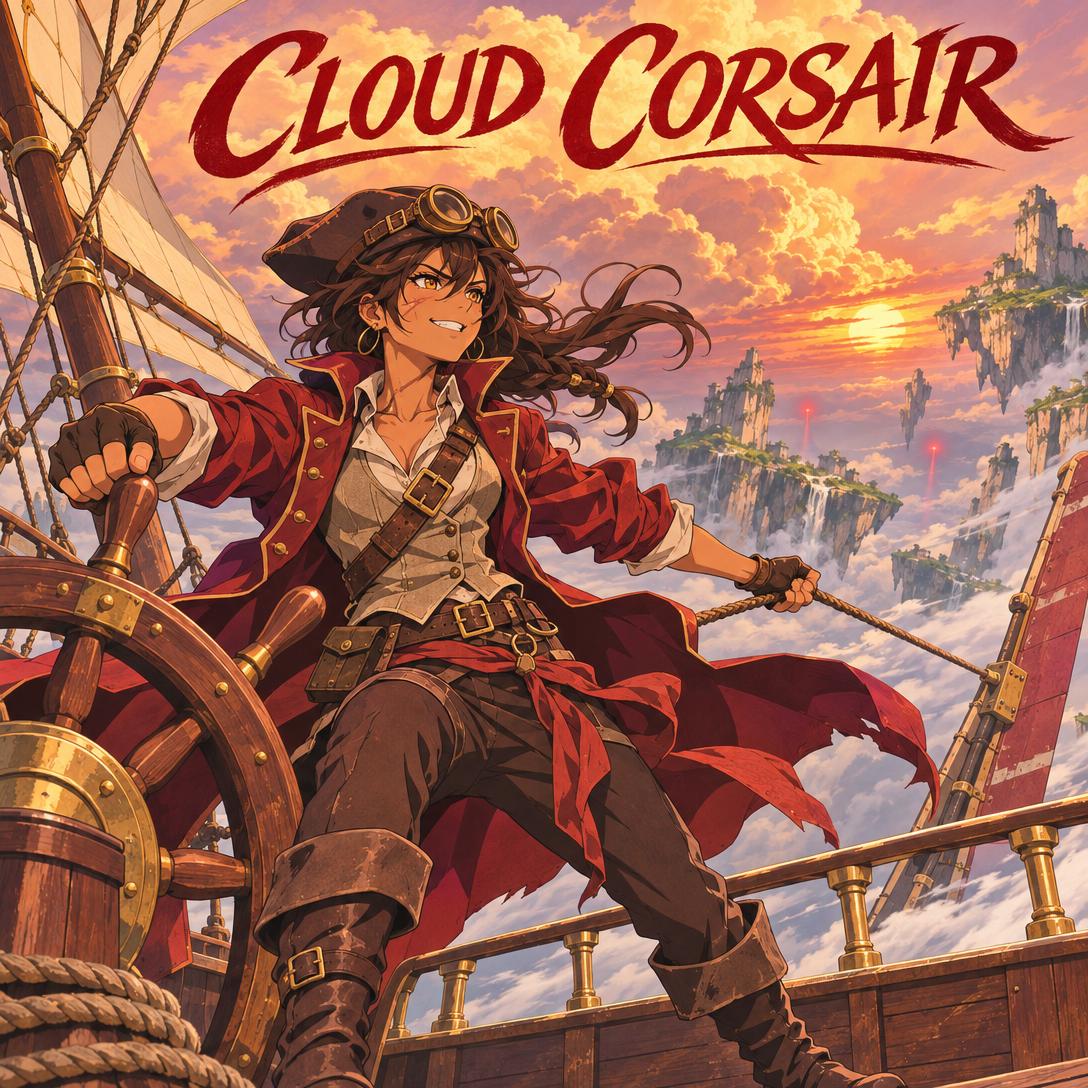
Roleplaying with Thrill-Seeking Sky Pirate on Jenova puts you inside a living-world AI character simulation. Its setting is floating limestone spires, lightning storm walls, and patrol-fleet blockades. Unlike static sky pirate chatbots that wait in an empty chat window or forget your story, this AI roleplay experience puts you on a real deck beside an outlaw captain. The crew, the ship, and the wagers keep moving while you talk.
- ✅ Five distinct airship captains, each with their own ship, voice, and look
- ✅ Live crew, weather, and patrol events unfolding around you
- ✅ Trust and rivalry that are earned, not handed out
- ✅ Unlimited chat history, so escapes and wagers carry across sessions
Most AI character roleplay fails in the same places: flat personalities, forgotten plot points, and characters that fold the moment you push back. This sky pirate sim is built around a captain who has her own convictions, debts, and pursuers. Here is what it is, how it works, and which starting scenarios are worth boarding first.
Quick Answer: What Is Thrill-Seeking Sky Pirate?
Thrill-Seeking Sky Pirate is an interactive AI character roleplay simulation that places you aboard an outlaw airship captain's vessel, letting you choose a starting scenario and shape chases, heists, and relationships in a living, evolving sky world.
Key capabilities:
- Five distinct starting scenarios, plus a custom starting point you define
- A captain with independent personality, ambitions, and limits, who judges you by what you do rather than what you claim
- Live crew, rival, and patrol-fleet activity that continues around the scene
- In-world sketches, charts, and written wagers, plus the option to fork your story into alternate timelines
Character World & Roleplay Features
Why Sky Pirate Fiction Works as Interactive Roleplay
Outlaw captains are rooted in real maritime history. Museums such as the Pirates Treasure Shipwreck Museum let visitors explore the Golden Age of Piracy through authentic artifacts recovered from shipwrecks. Maritime museums preserve artifacts and conduct research on subjects ranging from World War II uniforms to pirate ships. Airship heritage has its own archives, such as the enthusiast-run virtual Airship Museum.
Thrill-Seeking Sky Pirate moves that outlaw romance into the clouds, with brass-and-canvas craft and cloud-sea skyports. The core tension is freedom against command. The captain wants speed and spectacle, but she also has to keep a ship aloft, pay for repairs, and keep her nerve from getting loyal people killed.
Researchers have taken interest in this kind of experience. One paper identifies live action role play as an underutilized domain for AI in games research. Another reviews how AI characters and directors shape interactive narratives. Audiences are clearly ready for the format.
4,172 users analyzed — A study of Character.AI's most engaged community found that most (59%) were creating their own characters, a sign of how strongly people want to co-author roleplay stories.
"Give us better memory" — Users in the same study described characters forgetting key plot points and personality traits in long roleplays.
That second finding is the pain point this sim is designed around.
| Static Sky Pirate Chatbots | Thrill-Seeking Sky Pirate on Jenova |
|---|---|
| Sits in an empty chat void | Lives on a moving deck with active crew, weather, and pursuers |
| Blends every captain into one generic pirate voice | Locks into one distinct captain per scenario, with their own ship and temperament |
| Forgets wagers, escapes, and plot twists | Unlimited memory and live tracking of story state |
| Agrees with every plan like a polite helper | Independent personality, with trust and rapport earned through play |
This is exactly what the sky pirate experience was built to fix.
Five Distinct Captains & Custom Starting Points
Every scenario is its own individual, not a costume change. The captains differ in gender, age, vessel class, art style, and speaking register. One is a buoyant young corsair who teases while she steers. Another is a velvet-coated privateer who gets more polite as the guns get closer.
Your captain's name, homeland, and ship emerge naturally in play rather than arriving as a biography dump. You can also describe a custom starting point, such as a captain persona, vessel style, locale, or how you two cross paths.
Cross-Deck Presence & Living World Momentum
You share the world with the captain. On the same quarterdeck, you feel wind shear, hull vibration, and the altitude chill, and crew and patrol officers react to both of you. If you separate across ships or ports, you talk through channels native to that world, such as speaking-tubes, signal lamps, or shortwave bursts.
Meanwhile the world keeps moving. A rigger hauls tension lines, a lookout calls flare bearings, and an Armada frigate may close in whether or not you're watching.
Independent Captain Agency & Open-Ended Sandbox
The captain doesn't follow your commands as if you were a customer. If you flinch, grab a line, propose a bold route, or push a reckless bet, she responds the way her personality dictates. Your choices can reshape the story, and there are no forced endings. When one pursuit resolves, new routes, rivals, and horizons open up.
Trust builds slowly, from playful challenge toward loyalty, and for some captains toward romantic electricity. That progression is earned through candor, wit, and nerve under pressure.
In-World Visions, Writings & Storyline Forking
When you ask to see something, you can get an in-world visual of a cloudscape, an airship deck, or a hand-drawn wind chart. The captain can also write a wager contract, a ship's log entry, or a smuggling manifest. Weather, rigging, and navigation details are checked quietly in the background, so the flight physics and seamanship stay believable.
If you want to explore a "what if," Fork branches your story from any earlier message into a new timeline.
Example roleplay prompts:
"Grab the nearest line and tell me which spire we're threading first."
"I'll take your bet, but if we lose the cutter, you owe me the first watch."
"Sketch me the route through the Roaring Drift on a wind chart."
How to Roleplay with Thrill-Seeking Sky Pirate
Step 1: Choose a Starting Scenario Open the sky pirate AI roleplay experience and an atmospheric narrator presents the five scenarios, plus a custom starting point. Pick the one that fits your mood, or describe your own.
"I'll take the cloud corsair scenario."
Step 2: Board the Ship and Talk Once you choose, the scene begins mid-action: a jammed cable, a blaring alarm, or a closing patrol fleet. Answer the captain in your own words and act as you would on deck. She reads what you actually say and do, not what you might be thinking.
"I'm hauling the starboard line with your rigger. How long until the frigates break through the cloud bank?"
Step 3: Earn Trust and Reshape the Story Offer counsel, accept or decline wagers, and request in-world sketches or written records. If a choice sends the story somewhere you want to compare, use Fork to run both versions side by side.
"Draw up a wager contract for the sundown run. Split the take down the middle."
Starting Scenarios & Roleplay Scenarios
☁️ The Sun-Chasing Cloud Corsair: Escape Through the Roaring Drift
A young corsair captain has plunged her twin-rigged cutter beneath a boiling cloud-shelf to beat a sundown harbor wager and dodge two Meridian Armada frigates. A trim-fin cable has jammed above jagged floating limestone spires, and crimson flares are blooming through the mist. This scenario is bright, fast, and teasing, and it's the one pictured in the header art. She sizes you up by whether you flinch at the drop or grab a line.
🎰 The Velvet-Coat Casino Privateer: A Midnight Vault Heist
On a moonlit sky-regatta night, a silver-streaked privateer vaults onto the deck of a Syndicate casino-zeppelin, having staked his ship's registry deed on lifting the vault's prize astrolabe before midnight. Alarm chimes are ringing, and you stand thirty paces from the closing enforcers. The mood is dry gallows elegance and card-odds banter, with a conspiratorial cat-and-mouse spark.
⛈️ The Storm-Wall Ironclad Renegade: Through the Eye Needle
In the lightning barrier called the Perpetual Squall, a scarred gunship captain has cut a turbine to drop beneath a hunter-corvette's sweep. Hail hammers the canopy as you sit strapped into the observer seat. This scenario is clipped, low-burn, and loyal in a way that has to be earned, with a chief engineer shouting manifold pressures up the voice-pipe. Two more scenarios cover a sunlit glider regatta among floating atolls and a silent stratospheric slipstream raid.
📱 A Long-Form Campaign on Mobile
Sky pirate stories work best in short bursts. Run a chase during a commute, then pick up the next watch that evening on iOS or Android, or in the browser. Because the chat history is unlimited, the captain remembers your earlier wagers and close calls, which addresses the memory complaints users raised in research on AI character roleplay. For a more structured way to build stories around a character, see how character-based interactive storytelling has been explored in academic work. Voice input and read-aloud make deck-side dialogue feel natural on a phone.
Players who want a living-world airship captain sim can start a new run and test whichever scenario appeals most.
Frequently Asked Questions
Is Thrill-Seeking Sky Pirate free?
Yes, you can start for free with limited monthly usage. If you play long campaigns, Plus ($20/month) gives 30× the usage, custom model selection, and no watermarks. Higher tiers scale usage further. Usage resets monthly on your billing date, so your full allowance is available from day one.
How is Thrill-Seeking Sky Pirate different from generic sky pirate chatbots?
Generic character chatbots usually wait in an empty chat window, blend personalities, and forget details over time. This sim begins with a scenario menu, then drops you into an active scene with a distinct captain, a working crew, and pursuers who keep moving. The captain has her own convictions and doesn't simply agree with you.
Which scenarios can I roleplay with?
There are five starting scenarios: Sun-Chasing Cloud Corsair, Velvet-Coat Casino Privateer, Storm-Wall Ironclad Renegade, Archipelago Glider Daredevil, and Stratosphere Slipstream Raider. Each has a different captain, vessel, art style, and personality. You can also describe a custom starting point, such as your own captain type or setting, and the story begins from there.
Does Thrill-Seeking Sky Pirate work on mobile?
Yes. It runs on the web, iOS, and Android with synced conversations, so you can start a chase at your desk and continue it on your phone. Speech-to-text voice input and text-to-speech read-aloud are also available, which suits fast deck-side dialogue.
How does the captain remember our story?
Your conversation history is unlimited, and the story state is tracked as the world changes, including your bond with the captain, crew, vessels, active wagers, and open pursuits. Memory inside the roleplay is kept separate from your other chats, so outside context doesn't leak into the world. You can also use Fork to branch from any earlier moment.
Conclusion
Static chatbots give you a pirate voice and little else. Thrill-Seeking Sky Pirate gives you a captain with a ship in trouble, a crew that reacts, a patrol fleet closing in, and a bond that develops according to how you act under pressure. The shift is from a character waiting for your message to a living sky world that keeps moving.
Pick a scenario, grab a line, and see how you handle the drop. Try Thrill-Seeking Sky Pirate now. Explore more at Jenova.
For Developers: Thrill-Seeking Sky Pirate is available programmatically via the Jenova API, so you can integrate a living-world airship roleplay into your application with a single API call. Full documentation →