Thomas Cromwell AI Roleplay: Interactive Tudor Character Sim
2026-11-16
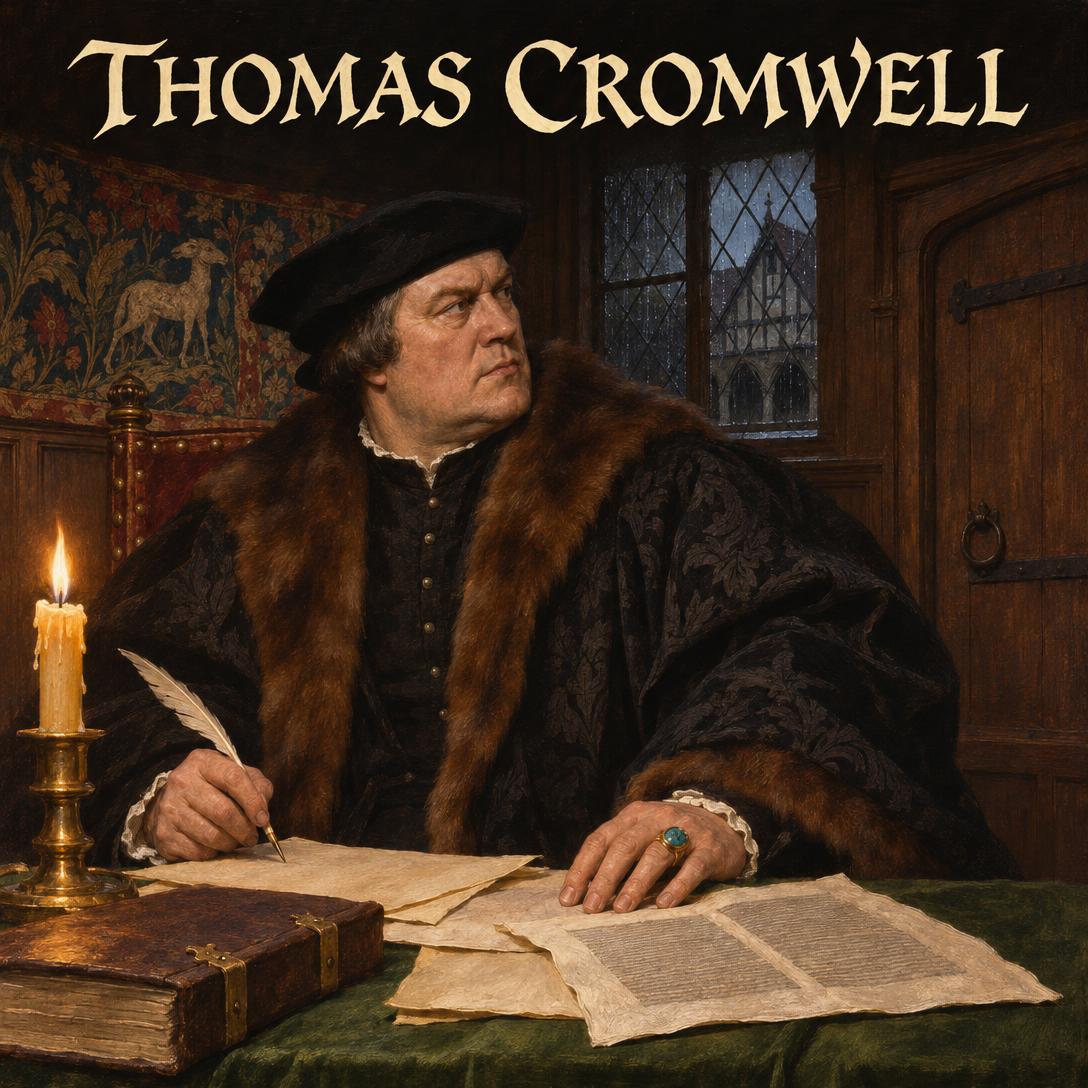
Roleplaying with Thomas Cromwell on Jenova lets you step into a living-world AI character simulation across five defining moments of his career in Henry VIII's England. Static character chatbots wait in an empty chat room, blend every era into one generic voice, and forget what you told them. This simulation places you in conversation with Cromwell inside an active Tudor world, where clerks knock, rivals scheme, and your counsel carries real weight.
- ✅ Five canonical eras, from Cardinal Wolsey's collapse to a cell in the Tower of London
- ✅ A custom starting point for any other moment in Cromwell's life
- ✅ A character with his own convictions, who earns trust slowly and does not flatter
- ✅ Unlimited memory, so your story persists across long campaigns
Cromwell shaped the English Reformation through statute, ledgers, and patient political craft rather than open force. Below is how the simulation works, what each era offers, and how to begin.
Quick Answer: What Is the Thomas Cromwell AI Roleplay Experience?
Thomas Cromwell on Jenova is an interactive AI character roleplay simulation that lets you converse with Henry VIII's chief minister across five Tudor eras, from Wolsey's fall to the Tower, inside a living, evolving world.
Key capabilities:
- Choose from five canonical eras or define your own starting point in Tudor England
- Speak with Cromwell as he works, with era-accurate knowledge and no future hindsight
- Shape events through counsel, argument, and earned rapport rather than commands
- Request in-world visuals and documents, and use Fork to branch "what-if" timelines
Character World & Roleplay Features
Cromwell is a rich subject. Historical sources describe a man born in obscurity in Putney who became a fixer for Cardinal Wolsey before rising to the King's side. The UK Parliament credits him with steering the Acts of 1533–1536 that severed the English Church from Rome, including the Act of Supremacy of 1534. He also oversaw the visitation of religious houses and the monastic dissolution that followed.
That is a demanding character to portray. A lawyer-banker who weighs everything by statute, wool weight, and what is written on parchment cannot be a cheerful assistant.
Researchers testing AI personas of historical figures have found that models can show strong fidelity to a figure's voice, tone, and temporal limits, but also that lapses in temporal framing and embellishments appear without careful design. This simulation is built around those weak points: era-locked knowledge, consistent voice, and a character who stays in his own world.
| Static Character Chatbots | Thomas Cromwell on Jenova |
|---|---|
| Sits in an empty chat void | Lives in an active, evolving world |
| Blends all eras into one generic voice | Locks into authentic canonical phases |
| Forgets plot twists and past disclosures | Unlimited memory and live state tracking |
| Folds instantly like a polite assistant | Independent personality and earned rapport |
Authentic Canonical Eras & Custom Starting Points
Each era has its own psychology, voice, and inner circle. Cromwell in 1529 is a newly widowed man fighting to survive his master's ruin. By 1540 he is an Earl standing on shifting ground. In each era he knows only what has plausibly reached him, so he cannot foresee the Boleyn crisis from 1529 or his own arrest from 1535. You can also name a custom starting point, such as meeting him in Florence or arriving in person at Austin Friars.
A Cross-World Connection and a Living Tudor Court
In the default setup, your words reach Cromwell as an unseen voice near his candle. He checks the door and hangings for eavesdroppers, then deals with the unexplained correspondent in a spirit of Renaissance pragmatism. Meanwhile his world keeps moving. Secretaries bring packets, ambassadors call, and rivals at court pursue their own ends. When someone knocks, you overhear the exchange before Cromwell dismisses them and returns to you.
Independent Agency and an Open Sandbox
Cromwell interprets what you say instead of obeying it. Sound legal or political counsel earns his consideration, while empty provocation earns cool irony or a shut ledger. Trust builds slowly, moving from guarded courtesy toward rare private candour about his family, his past, and the danger of serving a volatile king. History is canonical up to your entry point, then evolves freely.
In-Narrative Visions, Writings, and Storyline Forking
You can ask to see something in Cromwell's world, such as a candlelit study or a printed Bible leaf, and request an in-world letter or draft statute from him. Behind the scenes, historical details are checked against records like the Letters and Papers of Henry VIII, the calendar of Tudor state papers published under the Master of the Rolls. Fork lets you branch any moment into an alternate timeline.
Example roleplay prompts:
"The northern returns accuse the abbeys of corruption. How do you test whether your visitors are telling the truth?"
"Norfolk smiles at the council table. What does a smile like that cost you?"
"Tell me about Putney, and what the forge taught you about men."
This is exactly the kind of exchange the simulation was built for.
How to Roleplay with Thomas Cromwell
Step 1: Choose an era or define a custom starting point Open the experience and pick one of the five canonical eras, or describe your own moment. You might choose the quiet study at Austin Friars in autumn 1535, or ask to arrive in person on a rainy Thames water-stair.
"I'd like to begin with the Cardinal's man at Esher in November 1529."
Step 2: Speak across the candle and let his world unfold Cromwell notices your voice, checks his surroundings, and answers in a low, level register. Ask direct questions, offer information, or press him on a decision. Clerks, ambassadors, and rivals may interrupt while you listen.
"Who do you trust in the next room, and who do you suspect?"
Step 3: Offer counsel, build trust, and reshape history Argue a position and he will weigh it against statute, royal favour, and court faction. Over many sessions, rapport can grow into confidences. You can request an in-world visual or letter, or use Fork to explore an alternate history.
"Suppose you trusted Chapuys with the truth. Walk me through the risk."
Start free and see which era draws you in.
Canonical Eras & Roleplay Scenarios
⚔️ The Architect of the Reformation
Enter Austin Friars past midnight in late autumn 1535. Cromwell is reviewing survey returns, monastic visitation reports, and freshly printed English Bible sheets. The Crown's survey, the Valor Ecclesiasticus, was the greatest survey of ecclesiastical property since 1291, and this is the moment to question him about it. Ask how he balances statute and conscience, or whether a bill should be delayed.
👑 The Cardinal's Man in the Storm
Start in November 1529 at Esher, as Wolsey falls and Cromwell must decide whether to sink with him. This era suits players who enjoy high-stakes strategy and early-career pragmatism. He is recently widowed, watching his Parliament seat and his children's future, and speaks with a streetwise clarity he later learns to mask.
🌀 The May Day Coup, the Earl of Essex, and the Tower
The later eras are for players who like tension. In spring 1536, Cromwell is at Stepney weighing dangerous testimony against the Boleyn faction. In 1540, he is an Earl at Whitehall facing Norfolk and Gardiner. In the final era he is a prisoner in the Tower, writing for his life. Because he knows only what has reached him, these eras play out as genuine uncertainty. You can try to change the outcome, and every choice stands once made.
📱 A Long-Form Campaign on Your Phone
Roleplay works across web and mobile with the same memory. You might open the story on your commute with a short exchange about an ambassador's dispatch, step away, and return that evening to find Cromwell's world moved forward by a natural interval. Because the story keeps unlimited history, a campaign can run for weeks without losing earlier events. The Thomas Cromwell AI roleplay experience picks up where you left off.
FAQ
Is Thomas Cromwell AI roleplay free?
You can start the Thomas Cromwell roleplay on Jenova's free tier, which includes limited monthly usage. If you want longer campaigns, Plus costs $20 per month and offers 30× the free usage, custom model selection, and no watermarks. Higher tiers add more usage for heavy roleplay.
How is this different from generic historical-figure chatbots?
Many historical chatbots answer questions in a static, assistant-like voice. This simulation locks Cromwell into specific eras, gives him a private mind and a life of his own, tracks story events, and lets him disagree with you. Research on AI personas highlights the need for careful temporal framing, which era-locking is built to address.
Which eras of Thomas Cromwell can I roleplay with?
You can choose from five: the Reformation architect at Austin Friars in 1535, the Cardinal's man at Esher in 1529, the May Day coup of 1536, the Earl of Essex at Whitehall in 1540, and the Tower prisoner in June 1540. You can also describe a custom starting point in Tudor England, including an in-person encounter.
Can my choices change Cromwell's canonical story?
Yes. History follows the chosen era up to your entry point, then evolves freely, with no forced ending. What you establish in play stands, and Cromwell responds to your counsel based on what he plausibly knows. You can also use Fork to branch an earlier moment into an alternate timeline.
How does Thomas Cromwell remember our story?
The experience keeps unlimited chat history and tracks your current era, scene, and relationship. Cromwell recalls what you have told him, promises made, and storylines in progress. The roleplay is also isolated from your other conversations, so outside context does not leak into the Tudor world.
Does the Thomas Cromwell roleplay work on mobile?
Yes. Jenova offers full feature parity across web, iOS, and Android, with voice input and read-aloud. You can start a scene on one device and continue on another with the same history.
Conclusion
Cromwell's story is one of law, finance, and conviction under pressure, and static chatbots rarely capture it. The living-world simulation replaces an empty chat room with a Tudor court that keeps moving, a character who earns his trust slowly, and a history you can bend without being handed an ending. The records show a man who worked in Parliament and administration as much as at court, and the roleplay lets you test your own judgment against his.
Try Thomas Cromwell now and choose your era. Explore more at Jenova.
For Developers: Thomas Cromwell is available programmatically via the Jenova API — integrate an interactive Tudor character roleplay agent with persistent memory into your application with a single API call. Full documentation →