AI Therapy App: 24/7 Mental Health Support With AI (May 2026)
2026-05-13
It's 2 AM. Sleep isn't coming. The anxious thoughts aren't stopping — they're looping, gaining speed, building a case for every worst-case scenario your brain can manufacture. You know you'd benefit from talking to someone. But your therapist's next opening is eleven days away. The crisis hotline feels too extreme for what you're experiencing. Your friends are asleep. And even if they weren't, explaining this — the specific shape of your anxiety, the shame around it, the way it connects to something that happened six months ago — feels like too much to ask of anyone at this hour.
So you open your phone. And for the first time, something useful is actually there.
This scenario is playing out millions of times a day. The global AI in mental health market reached [$1.71 billion in 2025**](https://www.grandviewresearch.com/industry-analysis/ai-mental-health-market-report) and is projected to hit **$9.12 billion by 2033, growing at a 23.3% CAGR. A Bipartisan Policy Center survey found that 3 in 10 U.S. adults have used a digital tool for mental health support — rising to nearly half among adults aged 18-44. And according to Sentio University's APA-published research, ChatGPT may already be the largest mental health provider in the United States, with nearly half of AI users seeking emotional support through it.
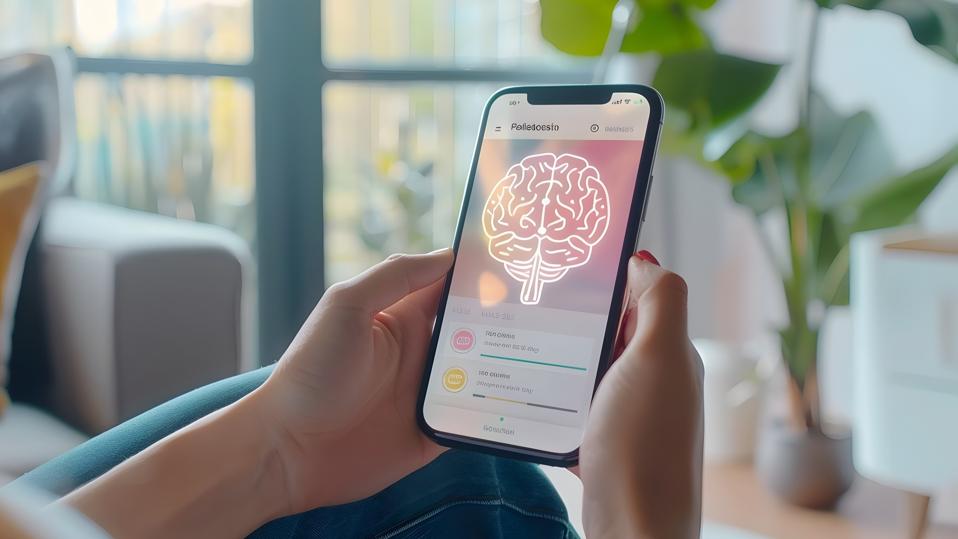
People aren't choosing AI therapy because they want to avoid human connection. They're choosing it because the human support system — overloaded, unaffordable, and unavailable at the moments they need it most — can't reach them in time. Jenova's Personal Therapist was built for this reality: a dedicated AI mental health partner that provides empathetic support, evidence-based guidance, and a safe space for emotional processing — available 24/7, judgment-free, and without the waitlist.
Quick Answer: What Is an AI Therapy App?
An AI therapy app is a specialized artificial intelligence tool that provides mental health support through conversational interaction — offering emotional processing, coping techniques, and evidence-based guidance without the cost, scheduling barriers, or judgment of traditional therapy.
- 24/7 emotional support — Process anxiety, stress, grief, and emotional overwhelm whenever it hits with the Personal Therapist
- Evidence-based techniques — CBT, DBT, ACT, and mindfulness-based approaches applied to your specific situation
- Pattern recognition — Identify recurring emotional triggers, thought patterns, and behavioral cycles over time
- Judgment-free space — Explore feelings, fears, and experiences without the vulnerability of disclosing to another person
The Problem: Why Traditional Mental Health Care Can't Keep Up
Nearly 50% of individuals who could benefit from therapy are unable to access it, according to Stanford University research. The gap between need and availability isn't narrowing — it's widening.
The Access Crisis
Mental health disorders affect one in three U.S. adults each year. Yet the behavioral health system faces chronic workforce and coverage gaps that leave millions without care. "Especially since COVID, there has been a huge demand for mental health services," explains Saeed Hassanpour, Ph.D., founding director of the Dartmouth Center for Precision Health and Artificial Intelligence. "There are not enough providers to meet the needs of people who seek therapy."
The numbers are sobering. Wait times for a first therapy appointment stretch weeks or months in many regions. Rural communities face even steeper barriers — fewer providers, limited broadband access, and higher rates of social isolation. And while rural residents who do use digital mental health tools are the most likely to report finding them helpful, they're also the least likely to have access.
Nearly 70% of digital mental health tool users said it felt more comfortable than speaking with someone directly, and half said digital tools were more affordable. — Bipartisan Policy Center, April 2026
The Cost Barrier
Individual therapy sessions average $100 to $250 per hour in the United States — and that's if your insurance covers it. Many plans limit the number of sessions, exclude certain conditions, or impose deductibles that make the first several sessions entirely out-of-pocket. For the uninsured or underinsured, weekly therapy at even $100/session represents $400-500/month — more than many families spend on groceries.
The Timing Mismatch
Mental health crises don't schedule themselves between 9 AM and 5 PM on weekdays. Anxiety spikes at night. Grief surfaces on weekends. Panic attacks happen in parking lots. The moments when emotional support would be most valuable are precisely the moments when traditional therapy is least available. As Forbes Health reports, AI therapy's round-the-clock availability fills a gap that the traditional model — built around scheduled hour-long sessions — structurally cannot.
The Stigma Barrier
Despite decades of normalization efforts, stigma remains a powerful deterrent. Adults aged 18-34 are particularly likely to say that stigma around seeking help is a major obstacle to getting treatment. The perceived privacy and anonymity of AI tools — no waiting room, no insurance claim, no explaining to an employer why you need Thursday afternoons off — removes a barrier that keeps millions from seeking help at all.
The "Between Sessions" Gap
Even people with access to regular therapy face a structural problem: they get one hour of support per week and 167 hours without it. The insights from Tuesday's session fade by Thursday. The coping technique practiced in the therapist's office feels impossible to access during a real emotional crisis on Saturday night. 22% of U.S. adults have already used AI specifically for mental health or emotional support — and 60% of mental health professionals view AI tools as "complementary" to therapy, not replacement. The most effective use case may not be AI instead of therapy, but AI between therapy sessions.
Why the Personal Therapist
The critical distinction in the AI therapy space isn't between AI and human therapists — it's between generic chatbots that happen to discuss emotions and purpose-built mental health agents designed with therapeutic frameworks, safety awareness, and genuine emotional intelligence. Jenova's Personal Therapist was built for the latter.
Stanford researcher Jared Moore's landmark study exposed alarming failures in popular therapy chatbots — including stigmatizing responses toward conditions like schizophrenia and alcohol dependence, and dangerous enabling of suicidal ideation. The problem wasn't AI itself but how those chatbots were built: generic language models without therapeutic guardrails, deployed as standalone replacements rather than supportive tools.
| Traditional Therapy | Generic AI Chatbot | Personal Therapist | |
|---|---|---|---|
| Availability | 1 hour/week, scheduled | 24/7, but generic | 24/7, purpose-built |
| Cost | $100-250+/session | Free (but unspecialized) | Free to start |
| Consistency | Therapist-dependent | No memory between chats | Persistent cross-session memory |
| Evidence-based approach | Therapist training varies | Untrained in frameworks | CBT, DBT, ACT, mindfulness |
| Safety awareness | Professional training | Often inadequate | Designed for mental health context |
| Judgment | Varies by therapist | Non-judgmental but shallow | Non-judgmental with depth |
Evidence-Based Framework, Conversational Delivery
The Personal Therapist integrates established therapeutic approaches through natural conversation rather than rigid exercises or scripted modules:
- Cognitive Behavioral Therapy (CBT) — Identifies cognitive distortions, challenges automatic negative thoughts, and builds restructuring skills. A 2025 NEJM study found AI-assisted CBT effective for major depressive disorder and generalized anxiety, with AI CBT apps demonstrating a 37% reduction in depression symptoms versus waitlist controls
- Dialectical Behavior Therapy (DBT) — Distress tolerance techniques, emotional regulation strategies, and interpersonal effectiveness skills for moments of high emotional intensity
- Acceptance and Commitment Therapy (ACT) — Values clarification, psychological flexibility exercises, and defusion techniques that change your relationship with difficult thoughts rather than trying to eliminate them
- Mindfulness-based approaches — Grounding exercises, body scans, and present-moment awareness practices integrated into the conversation when emotional arousal is high
Example Prompts
"I've been having panic attacks at work for the past two weeks. They come out of nowhere — my chest gets tight, I can't breathe, and I'm terrified my coworkers will notice. I've been avoiding meetings because of it. Help me understand what's happening and give me something I can do in the moment."
"My father died three months ago and everyone keeps telling me I should be feeling better by now. I'm not. I feel stuck. I don't know if my grief is normal or if something is wrong with me."
"I know rationally that one bad performance review doesn't mean I'm failing at my career, but I can't stop the spiral. Walk me through what's happening in my thinking and help me break out of it."
Persistent Memory That Deepens Over Time
Because Jenova maintains persistent memory across conversations, the Personal Therapist builds genuine continuity — remembering your emotional patterns, the coping strategies you've tried, the triggers you've identified, and the progress you've made. Return after a difficult week and it already knows your context. This persistent memory addresses one of the fundamental limitations of traditional therapy: the insights that fade between sessions now have a place to live and grow.
As psychologist Rufus Tony Spann, Ph.D. explains: "The accessibility of AI support helps address immediate needs and offers intervention and prevention." The Personal Therapist is designed to function in that intervention space — providing real-time support that bridges the gaps between professional sessions.
What the Personal Therapist Is — and What It Isn't
Honesty about limitations matters. Stanford's Nick Haber emphasizes that "nuance is the issue — this isn't simply 'LLMs for therapy is bad,' but it's asking us to think critically about the role of LLMs in therapy."
The Personal Therapist is:
- A 24/7 support tool for emotional processing, self-reflection, and coping skill development
- An evidence-based complement to professional therapy
- A safe space for people who aren't ready for, can't access, or can't afford traditional therapy
- A bridge that fills the 167 hours between weekly sessions
The Personal Therapist is not:
- A replacement for a licensed therapist for serious mental health conditions
- A crisis intervention tool — if you're in immediate danger, contact 988 (Suicide & Crisis Lifeline) or 911
- A diagnostic tool — it doesn't diagnose conditions, prescribe medication, or provide medical treatment
Related Agents You'll Also Like
The Personal Therapist handles your ongoing emotional support, but mental wellness extends across multiple dimensions of life. These complementary agents address specific areas where emotional health intersects with daily living:
Meditation Guide
When the Personal Therapist helps you identify that anxiety, sleep disruption, or emotional reactivity is a recurring pattern, the Meditation Guide provides structured practice — technique matching across traditions, guided scripts, breathwork protocols, and progressive programs that build a daily practice foundation.
- Anxiety-specific meditation and breathwork techniques
- Sleep preparation and insomnia management protocols
- Progressive programs from beginner to advanced practitioner
Relationship Advisor
Mental health rarely exists in isolation — it's shaped by (and shapes) our closest relationships. When therapy conversations surface relational patterns, this agent provides warm, practical coaching for communication, conflict navigation, and boundary-setting in romantic, family, and friendship contexts.
- Communication coaching for difficult relationship conversations
- Attachment pattern awareness and relational skill building
- Boundary language and conflict de-escalation strategies
Personal Nutritionist
The gut-brain connection is well-established in clinical literature, and nutritional status significantly impacts mood, energy, and cognitive function. When emotional wellness intersects with eating patterns, stress-driven dietary habits, or the desire to support mental health through nutrition, this agent provides evidence-based guidance.
- Mood-supportive nutrition strategies backed by research
- Stress eating pattern recognition and alternative approaches
- Nutritional foundations for better sleep and energy regulation
Fitness & Workout Coach
Exercise is one of the most well-evidenced interventions for depression and anxiety — yet it's often the first thing to disappear when mental health declines. This agent builds accessible, low-barrier workout programs that account for low energy, low motivation, and the reality that "just go for a run" isn't helpful advice when getting out of bed feels like an achievement.
- Low-barrier movement programs for depression and low-energy periods
- Exercise prescriptions calibrated for anxiety reduction
- Progressive programming that starts where you actually are, not where you "should" be
How It Works
Getting started with the AI therapy app takes less than a minute. No intake paperwork, no insurance verification, no two-week waitlist, no driving to an office.
Step 1: Open the Personal Therapist
Navigate to the Personal Therapist and start a new conversation. The agent is ready immediately — no onboarding questionnaire required, though sharing context about yourself helps the agent provide more relevant support.
Step 2: Start Where You Are
There's no "right" way to begin. Share whatever is on your mind — a specific event, a recurring feeling, a question about your own behavior, or simply "I don't feel right and I don't know why."
"I've been feeling disconnected from everything for the past few weeks. Not sad exactly, just… flat. Like nothing matters enough to get excited about. I'm going through the motions at work and with friends but none of it lands. Is this depression or am I just burned out?"
Step 3: Receive Empathetic, Evidence-Based Guidance
The Personal Therapist responds with genuine understanding — validating your experience without prematurely labeling it, asking clarifying questions to understand your situation more deeply, and offering perspective rooted in clinical frameworks.
Step 4: Build Coping Skills in Real Time
When you're in a moment of distress — a panic attack, an anxiety spiral, a grief wave — the therapist provides in-the-moment techniques: grounding exercises, breathing protocols, cognitive restructuring, or simply a space to narrate what you're feeling until the intensity passes.
"I'm having a panic attack right now. My heart is racing and I can't catch my breath. I know it's anxiety but knowing that doesn't help. Talk me through something."
Step 5: Track Patterns Over Time
Return across days, weeks, and months. Because the Personal Therapist maintains persistent memory, it recognizes patterns you might miss — the way your anxiety spikes on Sunday evenings, the connection between social withdrawal and depressive episodes, or the progress you've made on the thought patterns you identified three weeks ago.
"It happened again — the Sunday night dread. But this time I noticed it building around 4 PM instead of being blindsided by it at midnight. Is that progress?"
Step 6: Integrate With Professional Care
If you're also seeing a human therapist, the Personal Therapist serves as a between-sessions companion. Process insights from your last session, practice the homework your therapist assigned, or prepare for your next appointment by organizing what you want to discuss. Download conversation summaries as a PDF to share with your provider if helpful.
Results & Use Cases
🧠 Anxiety Management Between Therapy Sessions
Scenario: A graduate student seeing a therapist biweekly for generalized anxiety disorder finds that the coping techniques discussed in session feel impossible to access when anxiety actually strikes — usually at 11 PM while reviewing coursework.
Traditional Approach: Tries to remember what her therapist said about cognitive distortions. Can't. Opens a self-help book. It feels academic and disconnected from the sharp, specific anxiety she's feeling. Stays up until 3 AM spiraling.
AI Therapy App Solution: Opens the Personal Therapist on her phone and describes exactly what she's experiencing: the catastrophic thinking about an upcoming presentation, the physical symptoms, the sense that she's falling behind. The therapist walks her through a real-time cognitive restructuring exercise — identifying the specific distortion (fortune-telling), examining the evidence for and against it, and building a balanced alternative thought. Because the agent remembers her anxiety patterns from prior conversations, it also gently notes: "This is similar to the pattern we discussed before your last exam. You predicted disaster then, too — and it turned out differently. What actually happened?" The intervention takes fifteen minutes. She's asleep by midnight.
💙 Grief Processing at Your Own Pace
Scenario: A 55-year-old man whose wife died eight months ago feels pressure from family and friends to "move on." He's not ready for a grief support group. He tried therapy twice but felt uncomfortable being emotional in front of a stranger.
Traditional Approach: Bottles it up. Tells everyone he's fine. Drinks slightly more than he used to. Feels increasingly isolated by the gap between what he's performing and what he's experiencing.
AI Therapy App Solution: Opens the Personal Therapist late at night when the house is quiet and the absence is loudest. He doesn't have to "be strong" or manage anyone's discomfort. He describes what he misses — specific, small things that feel too mundane to bring up with friends but carry enormous weight. The therapist doesn't rush him through grief stages or tell him what he should be feeling by now. It holds space, normalizes the timeline (grief isn't linear and has no expiration date), and gently helps him distinguish between healthy grieving and the warning signs of complicated grief that would benefit from professional support. Over weeks, these late-night conversations become a ritual — a private space where his grief is neither minimized nor pathologized.
📱 Panic Attack Intervention in Real Time
Scenario: A marketing manager experiences a panic attack in a restaurant bathroom during a client dinner. Heart pounding, vision narrowing, convinced she's dying or about to humiliate herself.
Traditional Approach: Splashes water on her face, stares at herself in the mirror, tries to will it away, returns to the table visibly shaken, and spends the rest of the evening dissociating.
AI Therapy App Solution: Opens the Personal Therapist on her phone and types: "Panic attack. Can't breathe. Restaurant bathroom." The therapist immediately provides a grounding protocol — the 5-4-3-2-1 sensory technique, a box breathing sequence with timing cues, and a brief reality-testing reminder (this is anxiety, not a medical emergency; it will peak and pass). Within seven minutes, the acute symptoms have subsided enough that she can return to the table. After dinner, she revisits the conversation for a deeper debrief — identifying the trigger, examining the catastrophic thoughts that fueled it, and building a pre-event anxiety management plan for future client dinners.
📊 Depression Self-Monitoring for Early Intervention
Scenario: A remote worker notices she's been sleeping more, eating less, declining social invitations, and losing interest in hobbies — but isn't sure if it's "bad enough" to warrant professional help or if she's just going through a rough patch.
Traditional Approach: Googles "am I depressed?" Takes an online quiz that gives a vague result. Decides she's probably fine. Continues declining. Three months later, she's significantly worse.
AI Therapy App Solution: Describes her recent behavioral changes to the Personal Therapist over several conversations across two weeks. The therapist doesn't diagnose — but it tracks the pattern she's describing, notes the duration and escalation, gently names what these symptoms commonly indicate, and recommends she consult a healthcare professional for evaluation. Critically, it doesn't wait for a crisis. The conversation that starts as "am I overthinking this?" becomes the early intervention that prevents a deeper episode. She pairs this with the Meditation Guide for daily grounding practices that provide structure during a period when motivation is scarce.
FAQ
How much does an AI therapy app cost?
Jenova offers a free tier with all core features and limited usage — enough for meaningful conversations with the Personal Therapist. Paid plans start at $20/month for significantly expanded usage. No credit card required to start. Compare that to $100-250+ per session for in-person therapy, or $60-100/month for online therapy platforms like BetterHelp or Talkspace — which still involve scheduling constraints and limited session time.
Can an AI therapy app replace a real therapist?
No — and responsible AI therapy tools don't claim to. As Stanford's Nick Haber explains, "LLMs potentially have a really powerful future in therapy, but we need to think critically about precisely what this role should be." The Personal Therapist is designed as a complement to professional care — providing between-session support, real-time emotional processing, and an accessible entry point for people who can't yet access or afford traditional therapy. 60% of mental health professionals view AI tools as complementary to therapy, not replacement. For serious conditions, crisis situations, or medication management, a licensed professional remains essential.
Is my therapy conversation data private?
Jenova's data is encrypted in transit and at rest, never used for model training, and never sold to advertisers. This is critically important in the AI therapy space — a privacy audit found that 89% of mental health AI apps share user data with third parties. Jenova's privacy architecture means your most vulnerable disclosures stay private.
How does the Personal Therapist compare to apps like Woebot or Wysa?
Dedicated mental health apps like Woebot and Wysa offer structured CBT exercises through scripted conversation trees — effective for specific, guided interventions but limited in their ability to handle unstructured emotional processing. Jenova's Personal Therapist works through genuine conversational interaction — adapting to whatever you bring, drawing from multiple therapeutic frameworks (not just CBT), and maintaining persistent memory so your emotional work compounds over weeks and months. It's also worth noting that several AI therapy platforms have recently shut down, citing unclear FDA regulation — Jenova's broader platform architecture isn't dependent on a single mental health use case.
Is AI therapy effective? What does the research say?
Emerging evidence is cautiously encouraging. AI-assisted CBT apps have demonstrated a 37% reduction in depression symptoms versus waitlist controls, and a 42% reduction in anxiety symptoms over two weeks. A 2025 New England Journal of Medicine study found AI therapy may be effective for major depressive disorder and generalized anxiety. However, most studies are short-term with methodological limitations — and Stanford's research cautions that some chatbots introduce harmful biases. The evidence supports AI as a complement to professional care, particularly for between-session support, accessibility, and early intervention.
Can I use the AI therapy app on my phone?
Yes — and mobile access is essential for real-time emotional support. Jenova is fully accessible on mobile devices, and the Jenova app is available for iOS and Android. The Personal Therapist is there when you need it — in the restaurant bathroom during a panic attack, on the couch at 2 AM during an anxiety spiral, or on your commute when you need to process something before walking through the front door.
Conclusion
The mental health access crisis is real, well-documented, and worsening. With one in three U.S. adults experiencing mental health disorders annually, nearly 50% unable to access therapy, and a global AI mental health market growing at 23% annually toward $9 billion, the shift toward AI-supported mental health care isn't speculative — it's the pragmatic response to a system that can't meet the demand placed on it.
The people managing their mental health most effectively in 2026 aren't choosing between AI and human therapists. They're using both — professional care for the deep, structural work and AI support for the 167 hours between sessions when emotional processing doesn't pause just because the therapist's office is closed. For the millions who can't access professional care at all, an AI therapy app represents the difference between some support and none.
Try the Personal Therapist free — no credit card required — and give yourself a safe space to process, reflect, and build emotional resilience on your own schedule. Explore the full library of specialized AI agents at Jenova.