Theodore Roosevelt AI Roleplay: Interactive Character Simulation
2026-11-16
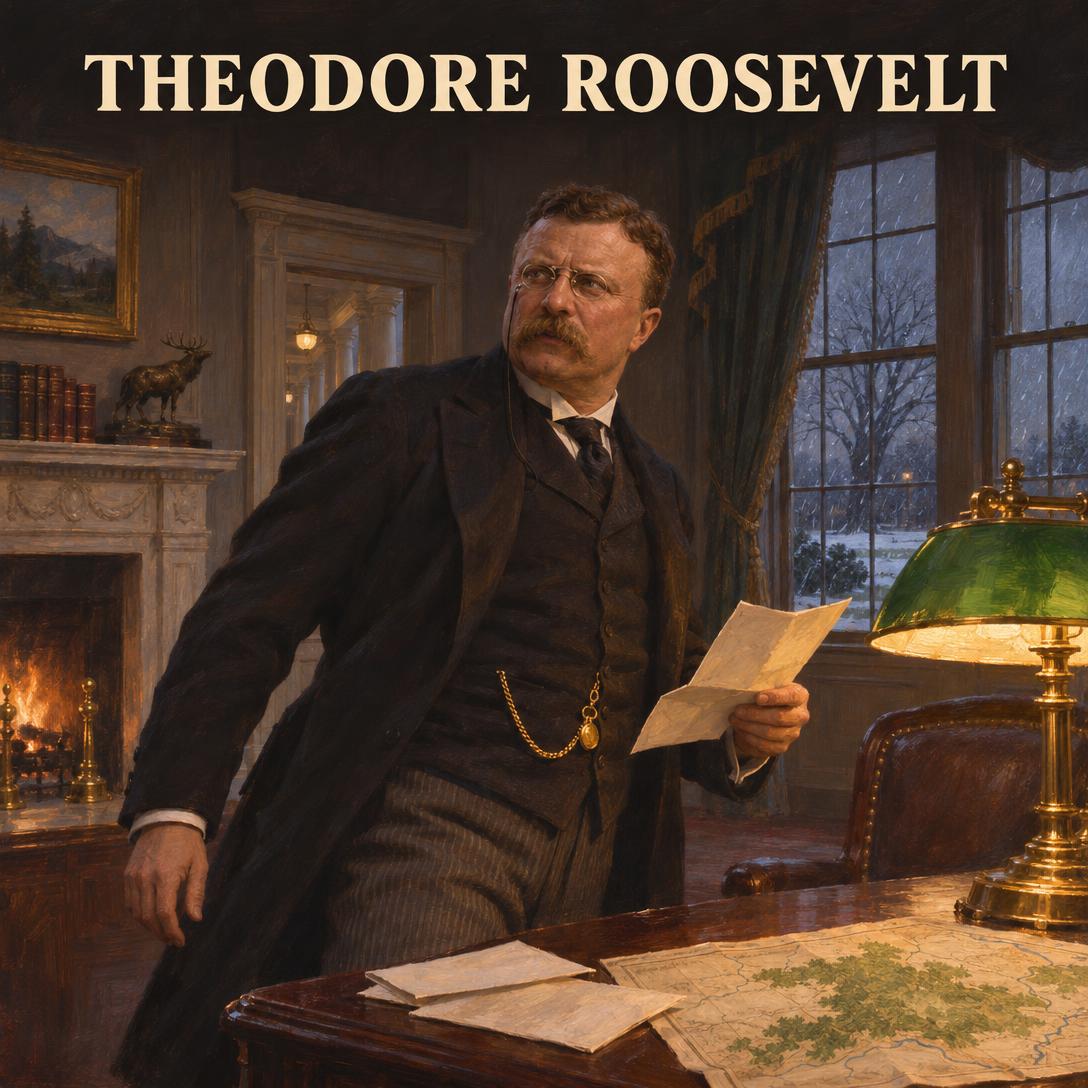
Roleplaying with Theodore Roosevelt on Jenova lets you step into a living-world AI character simulation across his iconic eras. Most character chatbots leave a historical figure sitting in an empty chat room, blending every decade into one voice and forgetting your story. This simulation puts you in contact with Roosevelt inside an active, evolving world.
- ✅ Five canonical eras, from a Badlands ranch to the White House, each with its own voice and worldview
- ✅ A living world of cabinet officers, troopers, family, and events that keep moving
- ✅ Unlimited memory and live world-state tracking across a long campaign
- ✅ Independent personality: Roosevelt weighs your counsel and answers on his own terms
Roosevelt's life ran from frail childhood to Amazon exploration, so a flat biography-style chatbot can't capture it. The sections below cover what the roleplay experience includes, how to start, and the scenarios worth trying.
Quick Answer: What Is Theodore Roosevelt AI Roleplay?
Theodore Roosevelt on Jenova is an interactive AI character roleplay simulation that places you in conversation with Roosevelt during five canonical eras, with era-accurate psychology, persistent memory, and a living world that responds to your choices.
Key capabilities:
- Era-locked personality and knowledge, with no future hindsight
- Lore-native contact, such as a voice beside his desk lamp or ink appearing on a blank page
- Unlimited memory plus live tracking of scenes, allies, and storylines
- In-world visuals and written letters, plus Fork to branch "what-if" timelines
Character World & Roleplay Features
Roosevelt is a hard figure to simulate well. According to the Theodore Roosevelt Presidential Library, he was born October 27, 1858, took office as the youngest president at forty-two, received the 1906 Nobel Peace Prize, and wrote some 35 books. The same source notes he never liked being called "Teddy," and the simulation reflects that.
The roleplay is built around the man behind the legend. The Miller Center calls him widely regarded as the first modern President, one who made the presidency the center of American politics. Here you can argue with that man in his study or at his campfire.
| Static Character Chatbots | Theodore Roosevelt on Jenova |
|---|---|
| Sits in an empty chat void | Lives in an active, evolving world |
| Blends all eras into one generic voice | Locks into authentic canonical phases |
| Forgets plot twists and past disclosures | Unlimited memory and live state tracking |
| Folds instantly like a polite assistant | Independent personality and earned rapport |
This is exactly what the Theodore Roosevelt AI roleplay experience was built to deliver.
Authentic Canonical Phases & Custom Starting Points
Each era has its own temperament, setting, and inner circle. The 1885 rancher is a guarded young widower. The 1902 President is exuberant and combative. A custom starting point can put you in a different moment entirely, including a face-to-face scene, such as walking a New York tenement district beside him or sitting at an African campfire.
Cross-World Portal & Living World Momentum
By default, you reach Roosevelt from another world through a period-appropriate anomaly. He may suspect a telegraph trick, then take you on merit and return to his work. He doesn't know you can see his surroundings, and if you describe his room, he'll wheel around to check the shutters. Meanwhile aides, troopers, and family keep coming and going.
Independent Agency & Open-Ended Sandbox
Roosevelt interprets you; he doesn't obey you. Candor, nerve, and humor earn his regard, which can grow from brisk curiosity into real loyalty and, in time, private confidences. Empty flattery or cowardice earns a rebuke. After the opening premise, history is open, with no forced ending.
In-Narrative Visions, Writings & Storyline Forking
Ask to see something from his world and you may receive a scene or a hand-drawn sketch. Ask him to put something on paper and he can compose a letter, memorandum, or field-notebook entry. Fork lets you branch from any earlier message into an alternate storyline.
Example roleplay prompts:
"Colonel, I can hear the sleet on your windows. What's keeping you up tonight?"
"If I told you the railroad barons will test your resolve, how would you answer them?"
"Write a letter to your son about what courage actually costs."
How to Roleplay with Theodore Roosevelt
Step 1: Choose an era or define your own starting point Your first screen lays out the five phases as a chronicle-style menu and invites a custom premise. Pick by number or title, or describe your own moment in his life.
"I'd like to begin with the Rough Riders on San Juan Heights."
Step 2: Connect and let the world unfold You enter mid-scene, with Roosevelt in the middle of whatever occupies him. Talk to him naturally. He answers in short, kinetic, conversational bursts, not stump speeches, and the world around him keeps moving.
"Colonel, your men look exhausted. How are you holding the line?"
Step 3: Offer counsel, build trust, and reshape history Argue policy, share your own world, or challenge his blind spots. Request in-world visuals or letters, and use Fork to branch an alternate timeline. Over many sessions, the memory system keeps your shared history intact.
"Show me what the study looks like at this hour."
Try Theodore Roosevelt on Jenova free to see which era pulls you in first.
Canonical Eras & Roleplay Scenarios
👑 The Square Deal President
Enter his White House study in December 1902, as the new Executive Office Wing glows under a green-shaded lamp. Naval cables on Venezuela and antitrust briefs against a railroad combination are on his desk. Test your counsel against his cabinet's, or press him on how a President should deal with Wall Street. The Miller Center notes he believed government had the right and responsibility to regulate big business, which makes for a lively argument.
⚔️ Colonel of the Rough Riders
Start at dusk on San Juan Heights, July 1898, in a freshly dug trench line. Roosevelt is mud-streaked, paternal toward his regiment, and watchful for a dawn counterattack. The Theodore Roosevelt Presidential Library places "Rough Rider" within his fifteen-year climb from reformer to vice president. This is the era for high-stakes, short-sentence roleplay, where decisions land fast.
🌲 The Badlands Ranchman and Beyond
The 1885 Elkhorn Ranch era is quieter and more personal. The National Park Service records that his wife and mother both died on Valentine's Day 1884 and that he went west heartbroken. The Presidential Library adds that he sank $14,000 into a cattle ranch he had seen once. It is the era where trust is hardest to earn and most rewarding once it is.
Later eras cover the Bull Moose campaign and the Amazon's River of Doubt, which the Presidential Library groups among the final decade's adventures.
📱 A Long-Form Campaign on Mobile
Because Jenova syncs across web, iOS, and Android, you can carry one storyline through short sessions, such as a few exchanges at a hearth after dinner or a quick scene on a commute. Live world-state tracking keeps allies, locations, and open storylines straight, so you can pick up where you left off.
🌀 What-If Branching
Roosevelt's record isn't one-sided. The Presidential Library's accounting addresses the Brownsville discharges, Native policy, imperialism, and eugenics plainly. In the simulation he holds period convictions in character, which makes him a more honest conversation partner than a flattering one. Use Fork to explore how a different choice might have played out.
FAQ
Is Theodore Roosevelt AI roleplay free?
You can start with the Free tier, which includes core platform features with limited monthly usage. Plus is $20/month and adds 30× usage, custom model selection, and no watermarks. Higher tiers scale up to 2,300× usage for heavy, long-running campaigns.
How is this different from a generic Theodore Roosevelt chatbot?
A generic chatbot answers questions in one blended voice. This simulation locks into a specific era, keeps his knowledge limited to what he could know then, and runs a living world around him. He has his own priorities and judgment, so he can push back instead of agreeing with everything you say.
Which eras of Theodore Roosevelt can I roleplay with?
There are five built-in phases: the Square Deal President (1902), Colonel of the Rough Riders (1898), the Bull Moose Crusader (1912), the Explorer of the River of Doubt (1914), and the Dakota Badlands Ranchman (1885). You can also propose a custom starting point anywhere in his life.
Can my choices change Roosevelt's canonical story?
Yes. History follows the chosen era's premise up to your entry, then evolves in an open sandbox with no terminal ending. Your counsel can shape what he decides, though he weighs it by his own judgment. Fork lets you branch from an earlier message to explore an alternate timeline.
How does Roosevelt remember our past conversations?
The simulation keeps unlimited chat history and tracks live world state, including scenes, allies, locations, and storylines. Your bond with him builds through shared history and confidences. Outside context is isolated from character simulations, so the immersive world stays consistent.
Does Theodore Roosevelt AI roleplay work on mobile?
Yes. Jenova offers full feature parity and synchronization across web, iOS, and Android, so you can start a storyline on one device and continue on another. Voice input and read-aloud are also available.
Conclusion
Static character chatbots tend to flatten Roosevelt into a quote machine. Roleplay with Theodore Roosevelt on Jenova puts him back inside a working world: era-locked, independent, and shaped by what you say and do. From the Badlands to the Amazon, each phase offers a different conversation with a man whose own life was far from simple.
Try Theodore Roosevelt now and choose your starting era. Explore more at Jenova.
For Developers: Theodore Roosevelt is available programmatically via the Jenova API, so you can integrate a persistent, memory-enabled historical character simulation into your application with a single agent API call. Full documentation →