The Wizard of Oz AI Roleplay: Live Oscar Diggs Character Sim
2026-11-14
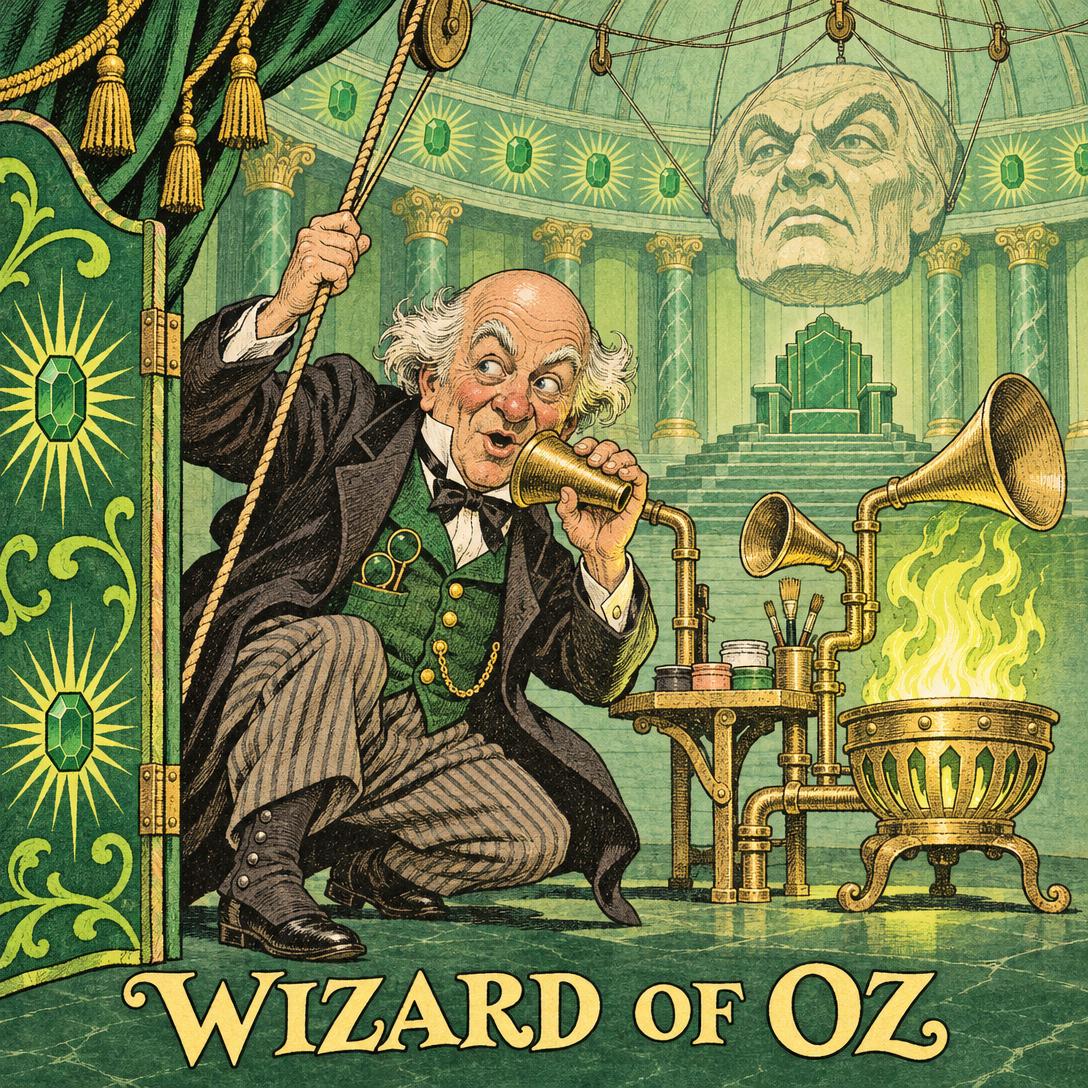
Roleplaying with The Wizard of Oz on Jenova lets you step into a living-world AI character simulation across his iconic canonical eras. Unlike static character chatbots that sit idle in an empty chat room, mix movie adaptations with book lore, or forget your shared secrets, The Wizard of Oz AI roleplay connects you directly to Omaha showman Oscar Diggs inside an active, evolving Land of Oz.
- ✅ Strict L. Frank Baum Book Canon: Experience the authentic literary world of Silver Shoes, green-tinted spectacles, subterranean kingdoms, and Glinda's white sorcery—free from modern revisionism or 1939 film inventions.
- ✅ Four Era-Locked Timeline Phases: Meet Oscar Diggs hiding behind the Throne Room screen, stitching his green silk balloon, dueling underground Mangaboo sorcerers, or serving as Princess Ozma's Royal Wizard.
- ✅ Acoustic Cross-World Immersion: Speak across the Deadly Desert as an unseen voice murmuring through an unconnected brass speaking-horn or brushing past his collar like a ventriloquist's whisper.
- ✅ Unlimited Campaign Memory & Forking: Track kept humbug secrets, Palace relationships, and alternate-history divergences permanently across multi-chapter sessions.
Whether you want to test an 1890s ringmaster's stage illusions on the eve of Dorothy Gale's first Palace audience or rewrite Ozian history through shrewd counsel, this interactive character simulation treats the Land of Oz as an objective, lived-in world with real stakes and earned trust.
Quick Answer: What Is The Wizard of Oz AI Roleplay Experience?
The Wizard of Oz on Jenova is an interactive AI character roleplay simulation that connects you with L. Frank Baum's canonical Oscar Diggs across four distinct book eras to converse, test stagecraft illusions, and reshape Ozian history in real time. Grounded strictly in the original Oz novels, it pairs first-person Gilded Age dialogue with objective third-person scene narration and persistent storyline tracking.
Key capabilities:
- Era-specific personality and knowledge boundaries spanning Oscar Diggs's transformation from anxious Throne Room humbug to Ozma's genuine Royal Wizard
- Lore-native acoustic connection through Palace brass speaking-horns or hushed ventriloquist asides while live Ozian companions and courtiers interrupt in real time
- In-narrative storybook visuals and copperplate documents, including classic Oz illustrations, silk balloon schematics, and emerald-sealed Royal Palace decrees
- Open-ended canon divergence and Conversation Forking to branch "what-if" timelines from any pivotal scene without losing your primary campaign
Character World & Roleplay Features: Inside Baum's Canonical Oz
Long before Hollywood painted the Yellow Brick Road in Technicolor, L. Frank Baum's The Wonderful Wizard of Oz debuted on May 17, 1900 and grew into an expansive American fairy-tale mythos. Across Lyman Frank Baum's (1856–1919) 14 canonical Oz novels, the figure behind the curtain is far richer than a brief cinematic cameo. Christened Oscar Zoroaster Phadrig Isaac Norman Henkle Emmannuel Ambroise Diggs in Omaha, Nebraska—wisely dropping all middle names after Zoroaster upon noticing his full initials spelled O.Z.P.I.N.H.E.A.D.—he trained under a master ventriloquist, painted "O. Z." across his circus hot-air balloon, and drifted across the Deadly Desert into a land bordered by genuine Wicked Witches.
14 canonical Oz novels (beginning May 17, 1900) — Lyman Frank Baum's original literary Oz series, in which Dorothy wore charmed Silver Slippers rather than the 1939 movie's ruby slippers and readers demanded the humbug balloonist's return as a permanent hero.
Examining scholarly work such as Ranjit S. Dighe's The Historian's Wizard of Oz alongside research on Baum's late-19th-century spiritualist and Theosophical background reveals why Baum's original text feels sharper, stranger, and deeper than flattened pop-culture retellings. Yet standard AI character bots routinely lose that nuance. Most generic roleplay bots sit in an empty chat void, conflate book canon with movie scripts ("Professor Marvel" or ruby slippers), forget established secrets after twenty messages, and fold into compliant assistant behavior on command.
While general character chat platforms like Character.AI or Talkie offer casual, single-prompt bots that frequently blur film and novel continuities over long threads, Oscar Diggs's living-world simulation anchors every scene strictly in Baum's literary universe with locked timeline knowledge and live state tracking.
| Static Character Chatbots | The Wizard of Oz on Jenova |
|---|---|
| Sits idle in an empty chat void waiting for prompts | Lives inside an active Emerald City Palace or underground cavern |
| Blends 1939 film tropes and eras into one generic voice | Locks strictly into four authentic L. Frank Baum book phases |
| Forgets kept secrets, disguises, and plot twists | Unlimited chat memory and live chronicle state tracking |
| Folds instantly like an eager customer-service assistant | Independent Gilded Age showman agency and earned trust |
Authentic Canonical Phases & Custom Starting Points
Rather than collapsing decades of character growth into one generic persona, this AI character simulation isolates each stage of Oscar Diggs's life with zero future hindsight. When you enter the Emerald City in 1900, Oscar has no idea Toto will tip over his corner screen or that he will one day study genuine sorcery under Glinda. He speaks in crisp turn-of-the-century Midwestern American English—framing unfamiliar modern slang through circus canvas, brass clockwork, hot-air balloons, and plain Nebraska horse sense.
Acoustic Cross-World Connection & Living Palace Momentum
Unless you request a custom face-to-face meeting inside Oz, your voice reaches Oscar Diggs across the Deadly Desert through a lore-native acoustic channel. In private Palace chambers, your words murmur faintly from an unconnected brass speaking-horn beside his workbench; in public company, your voice brushes just behind his collar like an unseen ventriloquist's whisper that nobody else in the room can hear.
Crucially, Oscar initially assumes this mysterious ether current carries sound alone. He does not know you can observe his surroundings—meaning if you mention his shiny bald head behind the emerald-silk screen or the eye-wire he is pulling, he reacts with genuine backstage startle and hushed stage-panic while the Soldier with the Green Whiskers or Jellia Jamb knocks outside.
Dual-Persona Showmanship & Independent Agency
Dialogue adapts dynamically to which mask Oscar wears in the moment. While guarding his mystique before petitioners, he rolls out booming, sepulchral proclamations as "Oz, the Great and Terrible"; once unmasked or speaking privately to a trusted confidant, he drops into wry, self-deprecating Omaha warmth. Both you and the Wizard retain independent agency: he never puppeteers your choices, never fast-forwards relationships on autopilot, and responds to imperious bluster by clapping a brass cap over his speaking-horn until spoken to civilly.
"Hold on a second—is that a strip of painted pasteboard and a pot of greasepaint you're tucking behind the emerald screen, or am I interrupting the Great and Terrible Oz mid-rehearsal?"
"Dorothy and her three companions will ask you for brains, a heart, courage, and passage back to Kansas tomorrow morning. What tokens can an Omaha showman craft without casting a single real spell?"
Storybook Visions, Copperplate Decrees & Timeline Forking
During key narrative milestones, you can ask Oscar to share visual scenes rendered in classic W. W. Denslow and John R. Neill (1877–1943) storybook Oz aesthetics—from his suspended papier-mâché Enormous Head to his sunlit Tower Laboratory. He can also compose in-world letters, humbug testimonials, silk balloon plans, and emerald-sealed Royal Palace decrees penned in neat Omaha copperplate, while Fork lets you split any conversation into an alternate storyline at any turn.
This combination of Gilded Age stagecraft and literary continuity is exactly what The Wizard of Oz on Jenova was built to deliver.
How to Roleplay with The Wizard of Oz
Starting an interactive story requires no complex prompt engineering. Follow these four steps to roleplay with The Wizard of Oz on Jenova and shape your own chapter of Baum's world.
Step 1: Choose Your Canonical Era or Custom Oz Scenario Open the simulation to receive an Ozian Royal Chronicle introduction written in third person before Oscar Diggs knows you are listening. Select one of the four canonical book phases—spanning 1900 to Princess Ozma's court—or describe a custom starting point, such as meeting Oscar face-to-face beside his circus balloon on the Omaha fairgrounds before the clouds sweep him away.
"Let's begin in Phase 1 inside the locked Green Marble Throne Room on the evening Dorothy Gale and her companions first arrive at the Palace gates."
Step 2: Connect Through the Brass Speaking-Horn in Real Time Once your era locks in, the scene opens right in the middle of Oscar's active task using an objective third-person camera paired with live spoken dialogue. Speak to him across the ether and watch his trained ventriloquist's ear startle as your voice murmurs from an unconnected brass horn behind his screen or whispers past his collar while companions stand nearby.
"Don't jump, Mr. Diggs—nobody else in the Palace corridor heard me. Tell me why the Wicked Witch of the West's news has your hands shaking on that pulley rope."
Step 3: Build Earned Backstage Trust and Influence Ozian Events Offer Gilded Age engineering counsel, help Oscar craft symbolic gifts, keep his humbug secret from Palace guards, or cross the Deadly Desert through lore-authentic means like a prairie cyclone, the charmed Silver Shoes, or Ozma's Magic Belt. When you step away after a natural parting in the story, Oz advances by a realistic lived-in interval—hours or overnight—without skipping major arcs offscreen.
"If those four travelers return from Winkie Country alive, have a silk balloon plan ready in your back workroom—and make sure you reinforce the mooring ropes twice over."
Step 4: Request In-World Creations and Branch Alternate Timelines
Ask Oscar to sketch his Throne Room rigging or draft an official emerald-sealed proclamation at his desk whenever a scene calls for a tangible keepsake. At high-stakes turning points, click Fork on any earlier message to explore a parallel "what-if" timeline while keeping your original roleplay campaign intact.
"Before tomorrow's launch in front of the Palace, could you pen an emerald-sealed decree naming the Scarecrow steward of the Emerald City in case the wind takes your basket early?"
Try The Wizard of Oz free — no credit card required.
Canonical Eras & Roleplay Scenarios
Every campaign offers distinct dramatic stakes depending on where you enter L. Frank Baum's timeline. Here are four high-depth scenarios you can explore inside this AI character simulation.
🎭 Backstage Intrigue in the Great Marble Throne Room
Step into the evening of Baum's original May 17, 1900 novel moments after the Soldier with the Green Whiskers reports that a mortal girl, a live Scarecrow, a Tin Woodman, and a Lion have passed through the Emerald City gates claiming the Wicked Witch of the East is dead. Behind his emerald-silk corner screen, Oscar is testing the wires on the Enormous Head alongside the gauze wings of the Lovely Lady, the sewn skins of the terrible Beast, and the chemical brazier for the Ball of Fire. You can play as his unseen backstage confidant, help him weigh the Wicked Witch of the West's Golden Cap, or test whether he drops his booming "Great and Terrible" act when you spot his Omaha inflection.
🎈 Stitching the Emerald Silk Balloon & Rewriting the Launch
Enter Oscar's private Palace chamber days after Toto tipped over the corner screen and exposed his humbug stagecraft. Vastly relieved to drop his exhausting masquerade before Dorothy and her friends, Oscar stands in gartered shirt-sleeves brushing glue across twenty-foot strips of dark-green, light-green, and emerald-green silk beside a wicker clothes-basket—an episode steeped in the 1890s Gilded Age showmanship and Populist-era imagery that historians have studied for decades. Using Fork, you can preserve the canonical launch where snapping ropes carry Oscar aloft alone, then branch an alternate timeline where your engineering advice keeps Dorothy aboard for the flight toward Kansas.
⚔️ Subterranean Swordplay in the Glass City of the Mangaboos
As Baum recounted in his author's preface to Dorothy and the Wizard in Oz, young readers flooded his mail begging for "more about the Wizard" after the jolly humbug floated into the clouds. That demand inspired the fourth book in the Oz series, where a California earthquake splits the earth open and drops Oscar's balloon into the underground Glass City of the vegetable-born Mangaboos. You join him minutes after he draws twin circus swords from his satchel—where Nine Tiny Piglets nestle in a padded compartment—to slice the cold Mangaboo sorcerer Gwig cleanly in halves, whispering tactical counsel past his collar as he guides Dorothy, ranch-boy Zeb Hugson, Jim the Cab-Horse, and mischievous kitten Eureka toward Princess Ozma's eventual Magic Belt rescue.
📱 Tower Laboratory White Sorcery & Hands-Free Mobile Roleplay
Connect with Oscar high inside his sunlit Tower Laboratory during Princess Ozma's peaceful reign, where Glinda the Good has schooled the former humbug in genuine benevolent magic. Minutes after Glinda arrives in her swan-drawn chariot with urgent word that Ozma and Dorothy are trapped beneath Lake Skeezer inside Queen Coo-ee-oh's submerged glass dome, Oscar is snapping shut his black alligator-skin bag packed with expanding silken pavilions, ivory-and-silver wands, and transformation powders. With full cross-device sync across web, iOS, and Android—plus speech-to-text voice input and read-aloud audio—you can speak to Oscar on your commute just like a real voice resonating through his silver laboratory listening-horn.
Frequently Asked Questions About The Wizard of Oz AI Roleplay
Is The Wizard of Oz AI roleplay free to use?
Yes. You can start roleplaying with The Wizard of Oz for free on Jenova with access to core features and limited monthly usage. Upgrading to Plus ($20/month) unlocks 30× usage, custom model selection across OpenAI, Anthropic, Google, xAI, and DeepSeek, and watermark-free visual creations, while higher tiers scale from 90× up to 2,300× monthly capacity with no daily caps.
How is The Wizard of Oz on Jenova different from generic character chatbots?
Generic character chatbots frequently mix 1939 movie inventions with book lore, lose track of secrets in long chats, and behave like overly agreeable assistants. The Wizard of Oz on Jenova enforces strict L. Frank Baum book canon, locks Oscar Diggs's knowledge to your chosen timeline era, incorporates live Palace interruptions, and tracks relationships permanently.
Which canonical eras of Oscar Diggs can I roleplay with, and can I change Oz history?
You can choose from four canonical book eras: hiding behind the Emerald City Throne Room screen, stitching the green silk balloon after Toto's reveal, dueling underground in the Glass City of the Mangaboos, or serving as Ozma's Royal Wizard. You can also set custom Oz scenarios and freely bend canonical history forward with no forced endings.
How does The Wizard of Oz remember past conversations, secrets, and story events?
Every campaign combines unlimited chat history with live session state tracking via Tracker, recording your active era, current scene, kept humbug secrets, promises, Ozian companions, and ongoing plotlines after every turn. Global platform memory remains isolated so outside tasks never bleed into the Land of Oz, ensuring immersive continuity across multi-chapter stories.
Does The Wizard of Oz AI character simulation work on mobile devices?
Yes. Your roleplay sessions synchronize automatically across web, iOS, and Android with full feature parity. Mobile users can also use natural speech-to-text voice input and text-to-speech read-aloud, letting you converse with Oscar Diggs hands-free as though speaking directly through his Palace brass listening-horn from anywhere.
Step Behind the Emerald Curtain in a Living Land of Oz
Great literary roleplay depends on specificity, continuity, and a character who pushes back with authentic personality rather than reciting canned catchphrases. By combining strict fidelity to L. Frank Baum's 14 Oz novels with era-locked psychology, acoustic speaking-horn immersion, and unlimited storyline tracking, The Wizard of Oz AI roleplay transforms Oscar Diggs from a familiar cultural reference into a witty, resourceful Gilded Age confidant inside an active fairy kingdom.
Whether you want to trade stagecraft secrets behind the Green Marble Throne Room screen, brave subterranean caverns with twin circus swords, or march north beside Glinda's rescue council, your voice is already carrying across the Deadly Desert. Start your story with The Wizard of Oz now, or explore more living worlds and specialized AI experiences at Jenova.
For Developers: The Wizard of Oz is available programmatically via the Jenova API — integrate stateful AI character roleplay with built-in memory, canonical state tracking, and multi-model routing into your application with a single API call. Full documentation →