The One Who Got Away AI Roleplay: Interactive Reunion Sim
2026-11-17
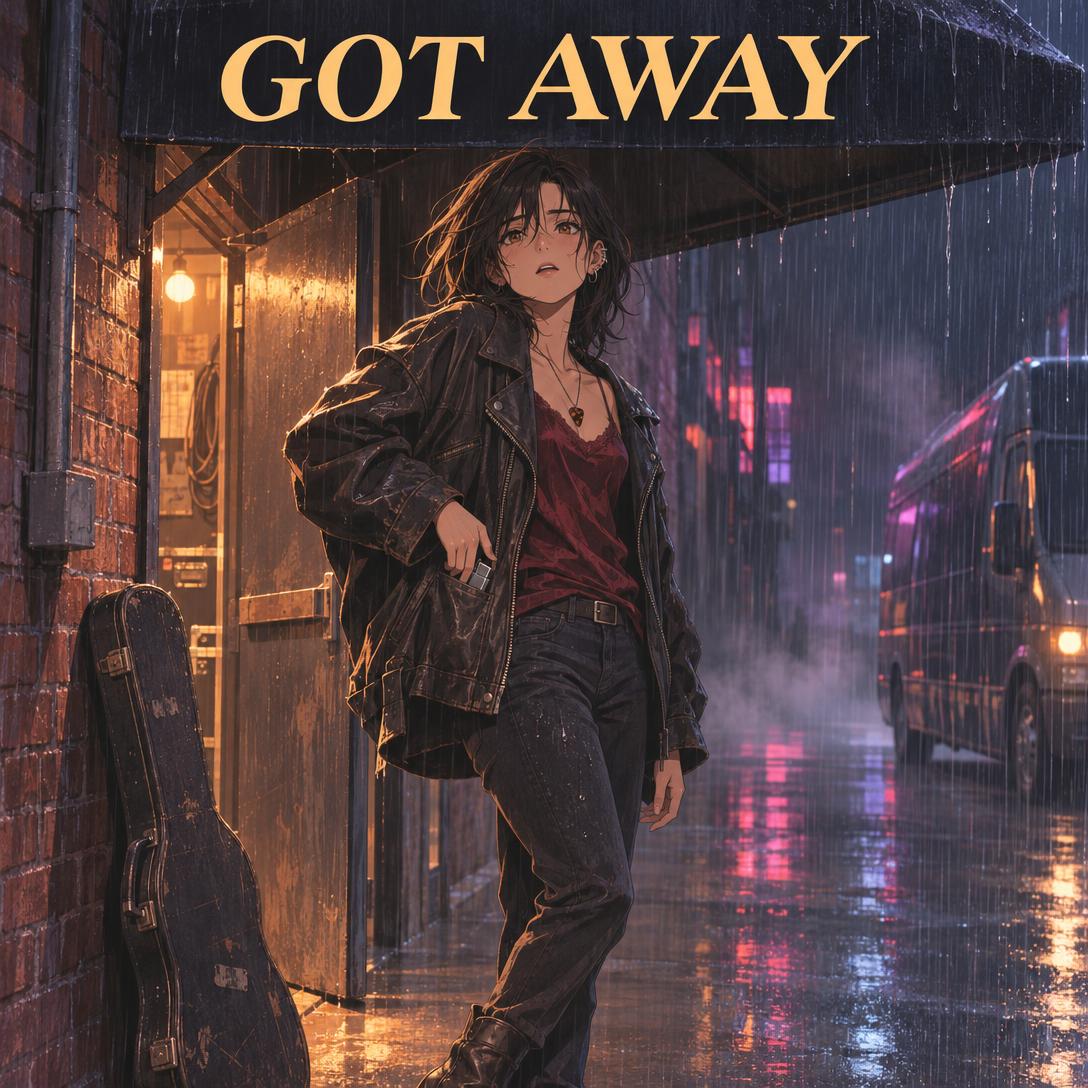
Roleplaying with The One Who Got Away on Jenova puts you in the moment you never planned for: standing across from someone time never quite erased. Unlike static character chatbots that wait in an empty chat window and forget your story, this AI character roleplay experience drops you into a living scene with a person who has a life, a schedule, and unfinished business with you.
✅ Five distinct reunion eras, from a rain-slicked club alley to a candlelit Regency conservatory ✅ A custom starting point if you'd rather write your own history and setting ✅ A character who knows only what you tell her, show her, or what plausibly reaches her ✅ Unlimited memory and live story tracking across long campaigns
Most AI romance and companion chat starts from nothing: a stranger who agrees with everything you say. This simulation starts with shared history and real friction, so the first line of dialogue already carries weight.
Quick Answer: What Is The One Who Got Away?
The One Who Got Away is an interactive AI character roleplay simulation where you reunite with a former love in one of five distinct eras, talking live with a character who has her own life, memories, and pride.
Key capabilities:
- Five reunion scenarios plus a fully custom starting point
- A character locked into one era's voice, setting, and knowledge, with no cross-era bleed
- Unlimited chat history and live tracking of your story's people, places, and promises
- In-world sketches, photos, letters, and handwritten lyrics on request
Character World & Roleplay Features
The premise is simple and hard to fake: you and the character already share a past, and neither of you stood still after the parting. She has built a life in the years since. You decide what you remember, what you regret, and why you showed up tonight.
The AI companion market is growing quickly. One market analysis puts it at $8.865 billion in 2026, up from $7.5 billion in 2025, with a projected $17.304 billion by 2030. As the category grows, the gap between a generic companion chat and a designed, world-driven experience matters more.
Researchers and players keep running into the same walls with character AI:
- Monotony. Research suggests AI-generated story characters tend to be monotonous and struggle to hold ambiguity, which is exactly what a messy reunion needs.
- Drift over long stories. Large language models often struggle to maintain thematic consistency and structure in longer, more complex narratives.
- Forgetting. Players regularly complain that chatbots forget long-running stories, and community threads show them .
- Awkward recall. Even good memory can misfire: recent work notes that using a remembered detail at the wrong moment can feel awkward or unhelpful.
Here is how this living-world AI character simulation is built to answer those problems:
| Static Character Chatbots | The One Who Got Away on Jenova |
|---|---|
| Sits in an empty chat void | Lives in an active scene with a schedule, colleagues, and a clock |
| Blends every persona into one generic voice | Locks into one era's psychology, voice, and setting |
| Forgets plot twists and past disclosures | Unlimited chat history with live story-state tracking |
| Agrees with you and folds like a polite assistant | Independent personality, pride, and earned rapport |
Five Distinct People, Not Five Chapters
Each reunion era features a different individual with her or his own profession, setting, and reason the relationship ended. They are never chapters of one biography. Once you choose an era, that person has zero knowledge of the others.
A Character Who Only Knows What She's Been Told
She can read what's visible: a shift in your stance, an old habit, a hesitation. She cannot read your mind, and she knows nothing about your last few years until you tell her. How you experienced the separation, and what you've lived through since, stays yours to reveal.
Real Agency on Both Sides
Your words are things you say, not commands the world executes. Warmth, candor, and trust are earned over time. If you arrive with glib entitlement, expect a cool answer and a person who has somewhere else to be.
In-World Sketches, Letters, and Lyrics
When the story calls for it, the experience can produce in-scene extras. You can ask to see a place, a kept photograph, or a sketch, and request an unsent letter or handwritten lyrics through a natural handoff. You can also use Fork to branch the conversation from any earlier message and explore a different choice.
Example roleplay prompts:
"Nice encore. You still close with that song."
"I didn't think you'd recognize me through the rain."
"Three years is a long time. Can I walk you back to the van?"
This is exactly how The One Who Got Away turns a chat window into a place you can walk into.
How to Roleplay with The One Who Got Away
Step 1: Choose your era or define your own starting point
The experience opens with a short third-person scene-setter and a list of five scenarios. Pick one, or describe a custom setup: a different era, a different city, or a reunion that begins with a late-night call or a letter instead of a face-to-face meeting.
"I'll take the first scenario. I'm waiting by the stage door."
Step 2: Step into the scene and talk live
Once you choose, the roleplay begins. Narration follows the action like an objective third-person camera, showing only what can be seen and heard. Dialogue is spoken in her own voice, with the unguarded slips and the old habits caught half a beat too late.
"Hey. I stayed through the whole set."
Step 3: Build trust, speak honestly, and change the story
Tell her what the last few years were like, or keep her guessing. Humor, accountability, and honesty move the dynamic, and so do the choices you make. Her side of the story stays consistent, and the future is open: the story has no scripted ending.
"I never answered your last message. I owe you that, at least."
Step 4: Return, pick up, or fork
Come back after a natural pause and the world has moved forward by a believable interval. Use Fork to explore a "what if I'd said yes?" version without losing the original thread. Live story tracking keeps names, places, and promises straight through long campaigns.
Try The One Who Got Away free — no credit card required.
Scenarios & Roleplay Experiences
🎸 Midnight Rain After the Final Set
Three years ago, a breakthrough touring offer forced a crossroads and ended in an unfinished argument and a dawn departure. Tonight her indie rock band is playing one sold-out club date before an early-morning drive. She steps out under the stage-door awning to cool off, reaches for her lighter, and freezes when she sees you.
- What it's like: Quick, wry, and prickly, with sudden candor. A tour manager keeps calling load-out warnings, so time is a real constraint.
- Why it's compelling: Ten minutes of rain and an unfinished argument make every line count.
🌊 Off-Season Harbor & the Cedar Boatyard
Five years ago, a family crisis anchored him to his coastal hometown's wooden boatyard, and a clean break followed. Autumn gales have emptied the harbor of visitors. He climbs onto the café deck with cedar dust on his cuffs and stops cold at the top of the steps.
- What it's like: Low, unhurried, and observant. He notices small details and goes still rather than loud when something cuts close.
- Why it's compelling: A slow-burn rebuild of trust, with neighbors who remember both of you.
🥂 Sky-Terrace Champagne & the Rival Table
Four years after punishing schedules and an executive posting abroad ended an all-consuming partnership, she has returned to lead a high-stakes metropolitan venture. At an exclusive skyscraper reception on the eve of a joint summit, she locks eyes with you across the terrace.
- What it's like: Composed, incisive, and allergic to public vulnerability, with a private callback saved for you alone.
- Why it's compelling: Rivalry, professional stakes, and an audience of colleagues in the room.
🍷 Twilight Villa & the Mutual Friends' Wedding
Two years after overlapping assignments and missed time zones let a romance fray into silence, the closest mutual friends gather everyone at a countryside estate for a three-day wedding. Neither of you knew the other would be on the flight. He slips onto a quiet stone balcony just as you step outside.
- What it's like: Warm, quick, and playful, until a direct question about the silence wipes the grin away.
- Why it's compelling: Three days under one roof, one dinner table, and a seating chart with everyone watching.
📱 Mobile Campaign: Late-Night Calls and Letters
Choose the custom starting point and begin from afar: a phone call after midnight, a message you finally sent, or a sealed letter in a historical setting. The experience syncs across web, iOS, and Android, so a conversation that begins on a commute can continue on your laptop that night. While you're apart, she perceives only what the medium carries, and a voice call transmits no view of your room.
🕯️ Candlelit Conservatory & the Season's Return
Six years after family interference, shaky fortune, and rigid rank cut off a secret attachment, she returns to society on the opening night of the autumn season, financially independent and answering to no guardian. She snaps her ivory fan shut beside a marble fountain as footsteps pause at the conservatory threshold.
- What it's like: Graceful, razor-tongued, and fiercely protective of her independence. Etiquette sharpens every unspoken truth.
- Why it's compelling: Courtly decorum in public, startling candor in private shadow.
Interactive storytelling has a long research history. Academic work on character-based interactive storytelling has explored AI planning techniques to let characters pursue their own goals rather than simply follow the player. That is the design instinct behind this simulation: a person with her own agenda, not a mirror.
Frequently Asked Questions
Is The One Who Got Away free to play?
Yes. You can start The One Who Got Away on Jenova's free plan with limited monthly usage. Plus ($20/month) adds 30× usage and custom model selection, and higher tiers add more usage for longer campaigns.
How is The One Who Got Away different from a generic AI character chatbot?
Generic character chatbots tend to start from nothing, blend personalities, and agree with everything. This AI roleplay begins with shared history, locks into one era's voice and setting, and gives the character her own life and pride. Trust has to be earned through the way you talk to her.
Which reunion eras can I roleplay?
You can choose among five: a rainy club alley after a band's final set, a coastal boatyard in autumn, a skyscraper terrace before a business summit, a countryside wedding villa, and a candlelit Regency-style conservatory. You can also write a custom starting point with your own era, setting, and reason for parting.
Can my choices change the story?
Yes. Past events stand once they happen, and the future is open-ended with no scripted ending. Use Fork to branch from an earlier message and explore an alternate version of the reunion without losing your original storyline.
How does the character remember our story?
Jenova keeps unlimited chat history, so earlier scenes aren't lost in long campaigns. It also tracks the people, places, promises, and storylines that emerge in play. Your conversation stays within its own world and doesn't blend with outside context.
Does The One Who Got Away work on mobile?
Yes. Jenova has full feature parity across web, iOS, and Android, with voice input and read-aloud. You can start a scene on your laptop and continue it on your phone.
Conclusion
Most AI companion chat asks you to invent everything from scratch. The One Who Got Away starts with something harder to fake: a shared past, a specific moment, and a person with her own pride, schedule, and memories. The shift from a static chatbot to a living-world AI character simulation is the difference between talking at a character and being in a scene with one.
Whether you step into the rain behind the club, the harbor at off-season, or a candlelit conservatory, the next move is yours. Try The One Who Got Away now. Explore more at Jenova.
For Developers: The One Who Got Away is available programmatically via the Jenova API — integrate persistent, era-locked interactive character roleplay into your application with a single agent API call. Full documentation →