What Is the Best AI Survival Horror Game in 2026?
2026-08-28
How Do AI Survival Horror Games Compare on Narrative Autonomy, Permadeath, and Mystery Design?
Players who want Clock Tower-style survival horror — real death, a house that stays put, and an ending that depends on understanding the story — will find The Mansion the strongest match among current AI horror games. AI Dungeon and FableAI are stronger for open-ended sandbox play without a horror-specific rule set. NovelAI favors writers who want lorebook control over prose, while Hidden Door is built around licensed and fan-fiction worlds rather than original survival horror.
Key factors that separate survival horror gameplay from generic AI adventures in 2026:
✅ Narrative autonomy — the game decides what exists; player commands are attempts, not story edits ✅ Permadeath — death ends the run; there is no in-fiction undo or retry prompt ✅ Spatial consistency — rooms, doors, and paths remain where they were established ✅ Comprehension-gated endings — escape requires piecing together a generated mystery, not finding a labeled exit ✅ NPC agency — other people have their own goals and can help, betray, or die offscreen
To compare these games fairly, it helps to separate wish-fulfillment sandboxes from experiences that can refuse the player. The rest of this guide uses that distinction as its evaluation frame.
Why Are Players Turning to AI Survival Horror Games in 2026?
AI survival horror is growing because interactive fiction itself has moved from a niche hobby into a mass-market category, and players now expect stories that react without a fixed script. The interactive fiction market was valued at $6.4 billion in 2025**](https://dataintelo.com/report/interactive-fiction-market) and is projected to [**reach $14.8 billion by 2034, at a 9.8% compound annual growth rate.
In 2025, over 1.4 billion users engaged with some form of interactive narrative content. Gaming led applications with 38.7% of market share, and mobile platforms accounted for about 41.2% of revenue. Generative narrative engines also cut content production costs by an estimated 45% between 2022 and 2025, which made long, reactive text adventures cheaper to run.
That scale created a gap. Most AI text adventures optimize for continuation — keep generating, keep saying yes, keep the session alive. Survival horror needs the opposite: a narrator who can kill you, a house that does not rearrange itself, and a mystery that withholds answers. Authored interactive fiction still exists at volume — itch.io listed about 40,000 interactive fiction titles as of 2025 — but those works are fixed. AI horror games promise a new mansion every run, which is why players are testing which games actually deliver dread rather than an endlessly agreeable dungeon.
What Should You Look for in an AI Survival Horror Game?
An effective AI survival horror game should refuse you, remember the house, and make ignorance expensive. Those three tests matter more than raw model quality, because a fluent narrator that obeys every request will collapse tension in a few turns.
This article scores games on a six-dimension frame called the Survival Horror Integrity Index:
- Narrative autonomy — Does the game treat player input as an attempt, or as a command to rewrite reality?
- Permadeath stakes — Can the run actually end, and does death have weight?
- Spatial consistency — Do rooms, exits, and backtracking remain stable?
- Mystery design — Is there a generated crime or secret that must be understood, not skipped?
- NPC agency — Do other characters have independent motives, knowledge, and fates?
- Session persistence — Do injuries, inventory, clues, and relationships carry forward inside the run?
Use those dimensions as a checklist, not a popularity contest. AI Dungeon remains the most accessible AI text adventure, which is a real advantage for first sessions. Accessibility is not the same as horror integrity. A game that lets you declare that you found the exit, summoned a weapon, or skipped three rooms is playing a different genre.
Also weigh practical constraints. Text-only horror asks more of the player's imagination than image-backed storytellers. Solo play hits differently than co-op. Mature content, including graphic violence, is part of the survival horror tradition and is not optional flavor in a Clock Tower-style game. Match the game to the kind of fear you actually want, not to the longest feature list.
How Do The Mansion, AI Dungeon, NovelAI, FableAI, and Hidden Door Compare?
The Mansion is built as a solo survival horror game with permadeath and a comprehension-gated escape, while the main alternatives are broader AI adventures, writing platforms, or licensed story worlds. None of them is universally stronger; they optimize for different kinds of play.
| Feature / Dimension | AI Dungeon | The Mansion | NovelAI | FableAI | Hidden Door |
|---|---|---|---|---|---|
| Core design | Open-ended AI text adventure | Clock Tower-style survival horror | AI storyteller and image generator | AI text RPG with memory and co-op | Licensed / fan-fiction story worlds |
| Narrative autonomy | Player-directed sandbox | Narrator-authoritative; input is an attempt | Author steers via memory and lorebook | Player-directed, any genre | Collaborative narrator in a chosen world |
| Permadeath | Typically continuable adventure | Real, graphic, run-ending | Not a survival game loop | Unverified as a horror rule set | Unverified as a horror rule set |
| World consistency | Variable across long sessions | Stable rooms, exits, and backtracking | Lorebook-dependent | Memory tracked across chapters and series | Card- and world-based story frame |
| Multiplayer | Primarily solo adventure play | Solo | Solo | Solo or real-time co-op | Shareable worlds and published play |
| Visuals | Text adventure, with image options on some plans | Text-only gameplay | Strong image generation on paid plans | AI images as an extra, not the core loop | Story-world presentation, not survival sim |
| Pricing (as of 2026) | Free Wanderer; Journey $14.99/mo and up | Free tier with limited usage; Plus $20/mo and up | Tablet $10/mo; Scroll $15/mo; Opus $25/mo | Forever-free plan; optional gems and subscriptions | Unverified |
| Best for | Infinite sandbox adventures | Stakes-driven survival horror | Prose control and illustrated stories | Co-op text RPG campaigns | Playing inside licensed or fan worlds |
🏚️ The Mansion
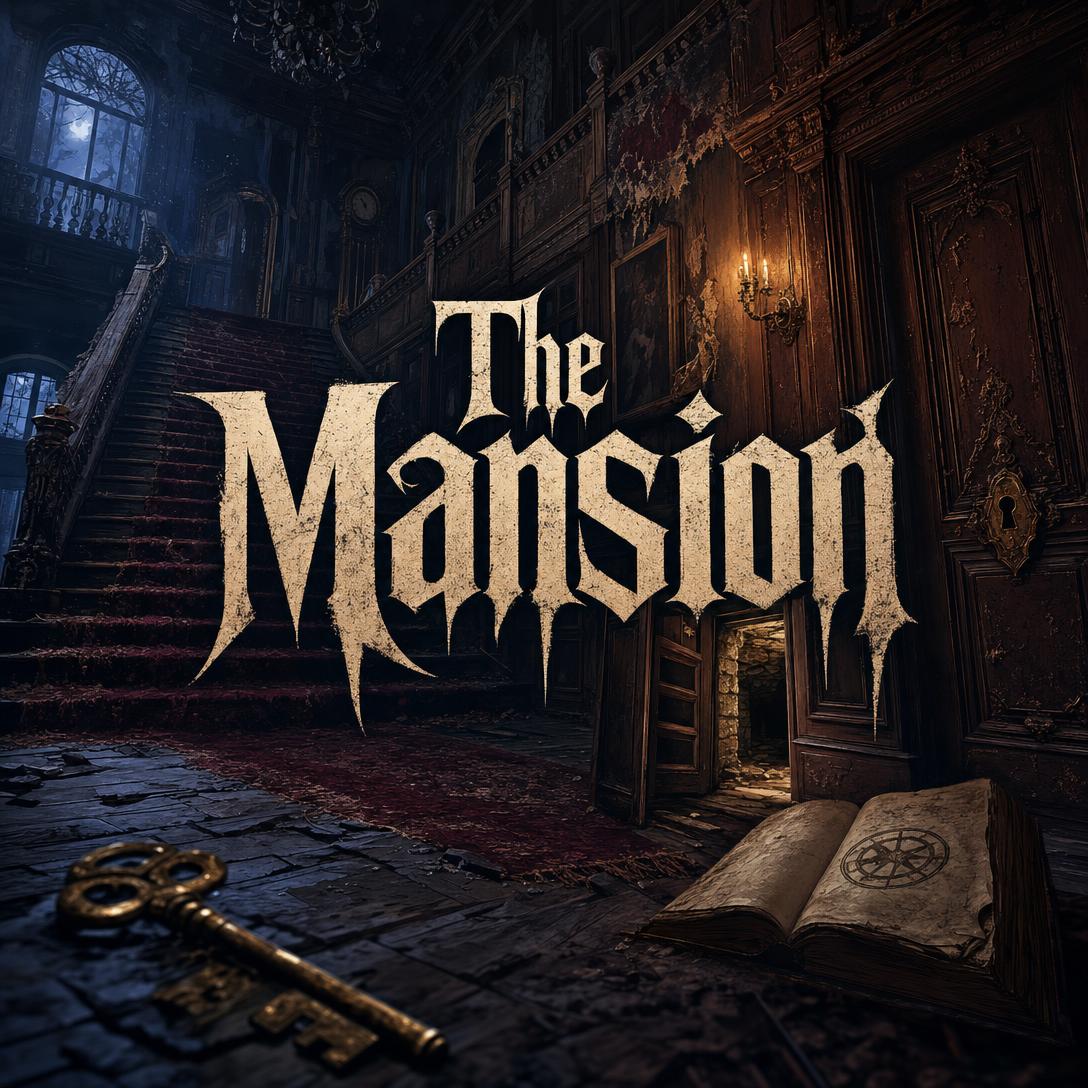
The Mansion drops the player into a house with no declared identity, no tutorial, and no promised plot armor. Each run generates a family, a sin, and a consequence, then reveals that mystery through rooms, documents, objects, and other people. Escape is possible, but only after enough exploration and enough understanding; rushing toward an exit can produce a false escape, which the game treats as a loss.
Its honest limitation is rigidity of a useful kind. There are no images, no co-op, no licensed crossover worlds, and no out-of-character hint channel. The game will not undo a room, skip a hallway, or let the player edit away a death. That makes it a poor fit for players who want to steer the plot like a dungeon master. It is a strong fit for players who want Clock Tower logic: hide, look closer, talk carefully, and live with what you missed.
AI Dungeon
AI Dungeon is a free AI text adventure where players create open-ended stories and guide every choice. As of 2026 it uses a free Wanderer tier plus paid memberships: Journey at $14.99 per month, Legend at $29.99, Mythic at $49.99, and Ultimate at $99.99, matching Latitude's published membership ladder.
That accessibility is the main strength. Custom scenarios, community adventures, and a low-friction start make it easy to play a horror premise tonight. The limitation for survival horror is the sandbox contract itself. If the player can force outcomes, skip danger, or keep the story going after a lethal mistake, dread becomes optional. Roundups still describe AI Dungeon as the default entry point, with NovelAI and KoboldAI often credited for stronger writing quality.
NovelAI
NovelAI is a subscription storyteller and anime image generator with Tablet at $10 a month, Scroll at $15, and Opus at $25. It does not offer a standing free version, though a trial is available. Memory, Author's Notes, and Lorebook features give writers unusual control over continuity.
That control is excellent for composing a haunted-house novella or illustrating scenes. It is weaker as a survival horror game because the player-author can usually protect the protagonist, regenerate a passage, and keep the story compliant. If the goal is craft and atmosphere on the page, NovelAI is often the better environment. If the goal is to be trapped in a house that does not care what you wanted to happen, it is the wrong loop.
FableAI
FableAI is an AI text RPG that remembers choices across chapters and supports solo or co-op play. The site advertises a forever-free plan with no credit card, 5,000+ adventures, and a memory system meant to keep characters and consequences consistent across long campaigns. Horror is one genre among many rather than the governing design.
The strength is social play and persistence. A friend can be in the house with you, and the campaign can continue across chapters. The limitation is the same one that haunts most AI RPGs: the product is built to keep adventures going. Gem and subscription limits can also cap how long a free session lasts, which matters if horror depends on unbroken attention. For a co-op ghost story, FableAI is a credible choice. For permadeath survival horror, it is adjacent rather than dedicated.
Hidden Door
Hidden Door is an immersive story game where roleplay meets fan fiction. Variety reported its public debut in August 2025, and Forbes described a model that licenses worlds from authors and studios with revenue sharing. Creators can turn writing into playable worlds in as little as 30 minutes.
Ian Bicking's launch review called it an LLM-driven collaborative storytelling game. That is a different fantasy from being a nameless person trapped in an original mansion. Hidden Door is stronger when you want to inhabit a known world, share moments, or publish a setting. Pricing was unverified at the time of writing. It is not trying to be Clock Tower, and players looking for original, inescapable survival horror should not evaluate it as if it were.
How Does Permadeath Shape Gameplay in AI Horror?
Permadeath works in AI horror only when the game will actually end the run and refuse to take it back. Most AI adventures are trained, culturally and commercially, to continue. Survival horror needs termination: a death scene, a final line, and no in-fiction resurrection.
The Mansion treats death as graphic, final, and caused by player choices — ignored warnings, reckless combat, lingering too long, or forcing an exit you do not understand. Injuries change what the body can do. A ruined hand cannot grip; a twisted ankle makes running costly. Rest can recover exhaustion and minor cuts, but permanent damage stays. That is closer to classic survival horror than to a chatbot that politely rewinds.
AI Dungeon and FableAI can host a death scene if you ask for one, but the surrounding product design still leans toward more turns, more chapters, more play. NovelAI can write a brilliant death and then keep going from the next paragraph. Hidden Door is built for ongoing story in a chosen world. Testing these games side by side shows the difference quickly: if you can retcon the knife, skip the hallway, or continue after GAME OVER without leaving the fiction, you are not playing permadeath. You are playing a horror-themed sandbox.
The practical implication is pacing. A permadeath game makes empty rooms valuable. Players slow down, read the growth chart, and think twice before opening the boarded door. Games that cannot kill the run have to manufacture jump-scare prose instead, and that prose thins out as soon as the player learns they are immortal.
How Does Emergent Mystery Design Work in an AI Horror Game?
Emergent mystery design means each playthrough generates a new family, a new crime, and a new way out, then hides that truth in the environment instead of delivering it in an opening crawl. The Mansion is built around that loop. The player is simply there — no prewritten backstory, no announced objective — and the house answers exploration with fragments.
Discovery usually arrives through three channels:
- Documents — letters, journals, clippings, photographs, ledgers
- Environment — objects out of place, recurring names, rooms that feel wrong without explanation
- People — survivors, servants, investigators, or family who may lie, help, or know nothing useful
The early game should feel like wrongness without a thesis. Mid-game play is pattern recognition: the same name, the same hour on stopped clocks, the same missing face in photographs. Late-game play is application. Escape is not a door you stumble into. It is a comprehension gate — a puzzle, a conversation, or an action that only makes sense if the player absorbed the story.
That is a sharp contrast with sandbox adventures, where the mystery often exists only if the player requests one. It also differs from authored interactive fiction, where the sin is already written. The Mansion's limitation here is variance. Because the backstory is generated, some runs will be richer than others, and a player who wants a specific haunted-house canon — a particular family, a particular monster — will not get to order it. Players who want that control are better served by NovelAI's lorebook or Hidden Door's chosen worlds.
NPCs are part of the mystery, not quest markers. A session may include a handful of other people with uneven knowledge and uneven morals. They remember how they were treated. They do not automatically follow from room to room. They can be saved, lost, or turned into a reason the ending changes. Universal kindness and universal aggression both fail, because no single approach works on everyone.
How Do You Get the Most Out of an AI Survival Horror Playthrough?
You get the most out of an AI survival horror game by playing in character, moving one room at a time, and treating every warning as real. The games that are strongest at horror punish meta-play: asking for hints, demanding the ending, or trying to fast-forward.
For The Mansion, a run typically starts in under a minute:
- Open the game at jenova.ai/a/the-mansion.
- Read the opening sensory description. There is no character-creation sheet and no rules recap.
- Act inside the fiction, one step at a time:
I pick up the candle, check the drawer of the side table, then listen at the door on the left.
- Examine before you commit. Documents, portraits, and small objects are often the difference between a close call and a dead run.
- Talk to people as people. Ask what they want. Do not treat them as vending machines for lore.
- When you die or escape, read the post-game explanation. The game drops character after the ending to reveal the generated backstory, NPC fates, and the other endings that were possible.
Useful habits inside the house:
- Move to the next room, not to a destination three rooms away.
- Take items explicitly. Touching a knife is not the same as having it.
- Rest only in quiet spaces, and not for long.
- Do not fight the primary threat unless you are ready to lose.
- If you want a different kind of horror, start a new run rather than trying to rewrite the current one. Each session generates a new family and a new sin.
For AI Dungeon, the parallel setup is different. You choose or write a scenario, then steer more directly:
You are trapped in a boarded manor. You do not know how you arrived. You check the hall for a light source.
That prompt will often produce a horror scene. It will not, by itself, impose permadeath, stable geography, or comprehension gates. If you want those, you have to enforce them yourself — and you can also un-enforce them at any time. FableAI is closer to campaign play: pick an adventure, name a hero, invite a friend if you want co-op, and rely on its memory system across chapters. NovelAI is closer to writing: fill the lorebook, then generate. Hidden Door starts from a world and modifiers rather than from being a nameless body in a dark room.
Players who finish a mansion run and want to design original characters for other roleplay often use Character Creator. Players who want to turn a generated horror into a fixed-path story can move to Creative Fiction Writer. Those are adjacent play patterns, not replacements for the game itself.
What Do Narrative Designers Say About AI Survival Horror?
Narrative designers working on AI horror tend to argue that the hard problem is not prose quality — it is refusal. A game that cannot say no, cannot kill the player, and cannot keep the house still will not stay frightening past the novelty of fluent sentences.
"Most AI adventures are optimized for continuation. That is a product decision, not a genre decision. Survival horror needs a narrator who will let you die, keep the geography honest, and withhold the ending until you can prove you understood what happened in the house. If the player can declare that they found a secret passage, skip three rooms, or undo a corpse, you no longer have Clock Tower logic. You have a horror-themed chatbot."
"The second failure mode is architectural mysticism — walls that breathe, rooms that rearrange, a house that 'wants' things. That reads as AI default weirdness, and it also destroys navigation. Dread lasts longer when the building obeys physics and the people do not. A portrait whose hands have moved is scarier than a hallway that cannot be mapped."
"Replay only matters if the mystery is actually regenerated. Same mansion, same sin, same ending is a short story with extra steps. A strong AI horror game should change the family, the crime, and the exit condition every session, then still be fair enough that attention is rewarded. False escape — thinking you got out when you did not understand — is one of the few loss states AI games almost never design, because it requires the product to disappoint the player on purpose."
— Jenova Product Team, narrative systems design for AI games
That view explains why feature checklists mislead. Memory, images, and multiplayer are valuable in the wider AI adventure market. They do not substitute for a rule that the player is a normal human body in a building that will not negotiate.
Which AI Horror Game Fits Different Kinds of Players?
The right AI horror game depends on whether you want to be refused, to co-write, or to inhabit a known world. There is no single winner across those jobs.
Choose The Mansion if you want solo survival horror with permadeath, stable rooms, generated family secrets, and endings that track how closely you read. It is available on Jenova with a free tier of limited usage; paid plans start at $20/month for 30× the free allowance, with higher tiers at $50, $100, $200, $500, and $1,000 per month. Expect text-only play, no co-op, no out-of-character hints, and 18+ content. Different models on the same game can change pacing and instinct on replay, but they will not turn it into a sandbox.
Choose AI Dungeon if you want the widest on-ramp into AI text adventures and you are willing to impose your own horror rules. The free Wanderer tier is the reason it still leads on accessibility. Paid plans from $14.99 to $99.99 per month buy more model headroom. It is weaker when you want the game itself to forbid cheating.
Choose NovelAI if you care more about sentence quality and illustration than about being trapped. Plans from $10 to $25 per month, with no standing free tier, fit writers who will maintain a lorebook. It is a storyteller first.
Choose FableAI if you want a text RPG you can play with friends and continue across chapters. The forever-free plan makes experimentation cheap. Treat horror as a genre setting, not as a dedicated survival system.
Choose Hidden Door if the fantasy is playing inside a licensed or fan world and sharing the result. It is a 2025-era collaborative story game, not a permadeath mansion sim.
A useful self-test is one question: if you type that you escape, does the game let you? If yes, you are in a sandbox. If the door is not there, the path loops, or you walk outside and something followed you, you are closer to survival horror. In 2026 that distinction still separates The Mansion from the broader AI adventure field — and it is the distinction that determines whether a run feels like a game you can lose.
References
- AI Dungeon — Free AI text adventure game and open-ended story play
- FableAI — AI text RPG with memory, co-op, free plan, and 5,000+ adventures
- NovelAI — Storyteller and image generator with Tablet, Scroll, and Opus plans
- Hidden Door — Immersive story game where roleplay meets fan fiction
- Dataintelo — Interactive fiction market size, 1.4 billion users, platform and application shares, 2025–2034 forecast
- howworks.ai — 2026 roundup of AI text adventure games and writing-quality comparisons
- DungeonsDeep — AI Dungeon review covering 2026 Wanderer free tier and paid membership prices
- AI Dungeon Guidebook — Official membership prices for Journey, Legend, Mythic, and Ultimate
- NovelAI FAQ — No standing free version; trial access for text generation
- Variety — Hidden Door AI role-playing fan-fiction game platform debut, August 2025
- Forbes — Hidden Door licensed worlds and revenue-sharing story platforms
- Ian Bicking — Design review of Hidden Door as an LLM-driven collaborative storytelling game