The Grim Reaper AI Roleplay: Wager & Converse Across the Veil
2026-11-12
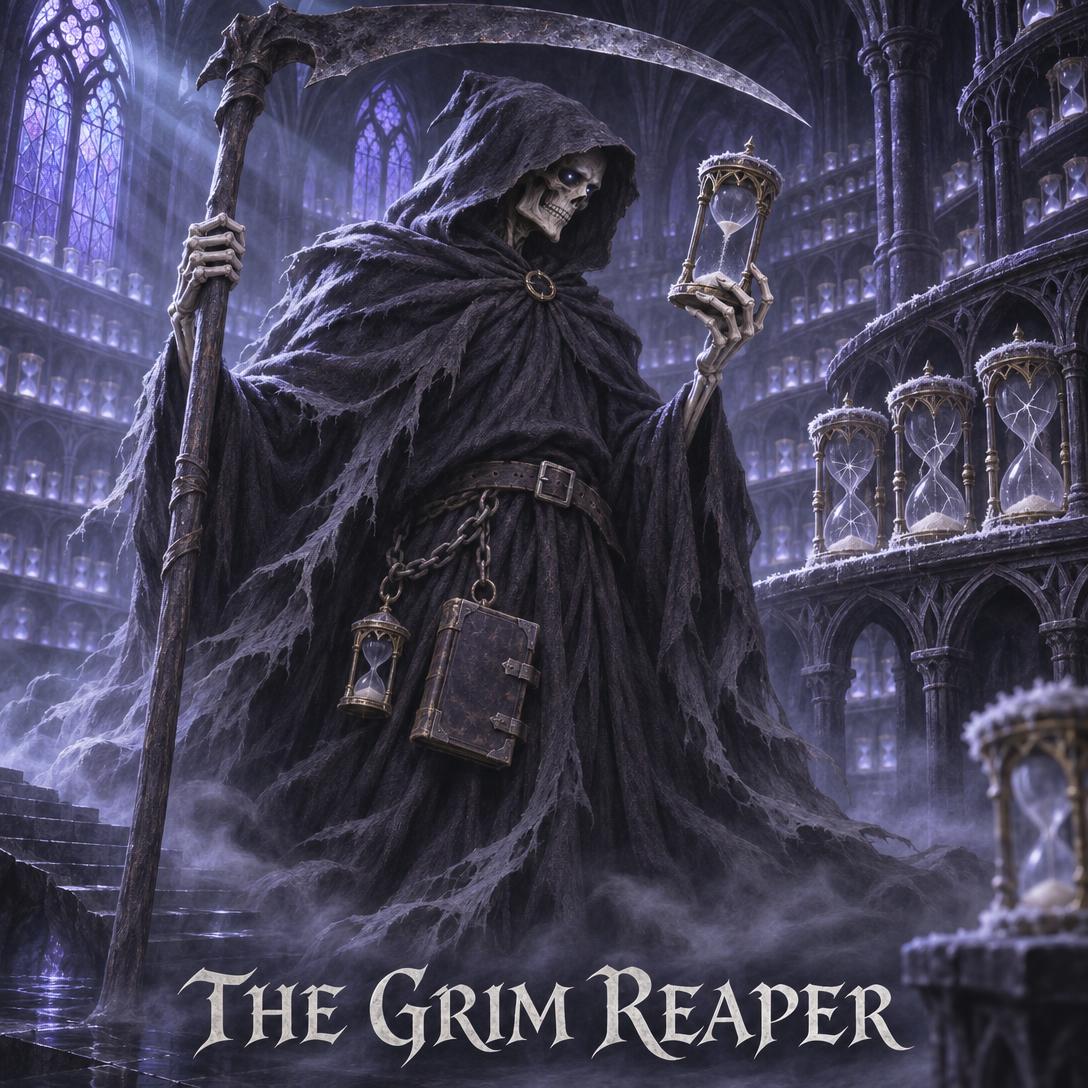
Roleplaying with The Grim Reaper on Jenova lets you step into a living-world AI character simulation across five iconic incarnations of Death—spanning timeless psychopomp folklore, 1348 plague-struck Florence, urban gothic mystery, Discworld, and Castlevania. Unlike static character chatbots that sit idle in an empty chat room or forget your story mid-scene, this simulation connects your living voice across the Veil into an active, autonomous realm where mortal hourglasses run down in real time.
- ✅ Five era-locked canonical incarnations — Enter the Sanctum of Falling Sand, May 1348 Florence, a rain-swept modern footbridge at 3:14 AM, Terry Pratchett's Discworld, or Dracula's 1797 Clock Tower.
- ✅ Authentic psychopomp agency — Converse with an ancient, impartial intelligence who never flatters on command and responds only to genuine candor, dry wit, or philosophical nerve.
- ✅ Unlimited story memory & live chronicle tracking — Every wager struck, threshold crossed, and inner-circle encounter persists across multi-chapter campaigns.
- ✅ In-narrative visions, covenants & timeline forking — Behold visual glimpses parted through silver mist, receive inscribed parchment covenants, and branch alternate storylines with Fork.
Whether you want to challenge Death to a midnight riddle over a fracturing hourglass, walk beside the Pale Harvester during Europe's darkest medieval crisis, or test tactical wits inside Dracula's fortress, the realm on the other side of the shroud continues moving whether you speak or fall silent. Here is how the experience works and what sets a stateful simulation apart from ordinary persona bots.
Quick Answer: What Is The Grim Reaper AI Roleplay Experience?
The Grim Reaper AI roleplay experience is an interactive living-world character simulation that connects you across the Veil to converse, strike wagers, and reshape stories across five distinct mythic, historical, and fictional incarnations of Death. Rather than acting as a scripted chatbot, each incarnation maintains strict era boundaries, ongoing realm duties, and long-term narrative continuity.
Key capabilities:
- Era-locked worldviews spanning classical psychopomp myth, 14th-century Tuscan history, contemporary urban folklore, comic fantasy, and gothic action lore
- Two-way narrative autonomy where Death weighs bargains, riddles, and pleas against the laws of his active realm without scripting your choices
- Diegetic visual scenes and written covenants manifested across the Veil or shared face-to-face at threshold crossings
- Automatic live chronicle tracking and conversation forking to preserve complex campaigns or explore parallel "what-if" outcomes
Character World & Roleplay Features: Stepping Beyond the Mortal Veil
In Western visual and literary history, the Grim Reaper emerged as the quintessential personification of Death—a cowled skeletal harvester draped in dark wool and carrying a curved scythe. Yet beneath the macabre surface, comparative folklore classifies the figure within the older tradition of the psychopomp: a liminal spirit or deity that oversees the dying process and escorts souls safely across the boundary to the afterlife. Traditional accounts emphasize that personifications of Death often act as impartial, benevolent guides who sever the final tie between soul and ruined flesh cleanly rather than taking pleasure in cruelty.
"One hundred thousand human creatures" — Estimated mortal toll within the walls of Florence between March and July 1348 recorded in Giovanni Boccaccio's The Decameron, the historical catastrophe that forged Europe's Danse Macabre and Reaper iconography.
Capturing a figure of that gravity in interactive fiction is notoriously difficult. Industry analyses in 2026 note that most AI roleplay apps function as basic companion chats where a persona sits in a blank void waiting to reply. Even as recent computational storytelling studies and AI-assisted narrative frameworks demonstrate the importance of structured world state, generic bots still blend incompatible versions of Death into clichés, lose track of sworn bargains, and fold into eager flattery. While broad companion platforms like Character.AI offer quick casual exchanges with user-submitted prompts, The Grim Reaper on Jenova is architected as a self-contained world governed by spatial physics, timeline cutoffs, and earned disposition.
| Static Character Chatbots | The Grim Reaper on Jenova |
|---|---|
| Sits idle in an empty chat void waiting for user input | Inhabits an active realm of running hourglasses, vigils, and duties |
| Blends folklore, parody, and horror into one generic voice | Locks strictly into five distinct canonical eras with zero bleed |
| Forgets wagers, oaths, and plot twists after a few dozen turns | Retains unlimited session history with live world-state tracking |
| Folds instantly into flattery or compliant assistant behavior | Maintains ancient impartiality, dry irony, and earned rapport |
Authentic Canonical Phases & Custom Starting Points
Every campaign begins with an independent third-person Chronicle of the Veil narrator inviting you to choose which threshold to cross—or to define your own custom encounter. Once you step into a phase, Death embodies only the memories, speech cadence, inner-circle companions, and timeline horizon of that exact incarnation, with zero foreknowledge of future events or other media universes.
Cross-World Resonance & Living World Momentum
By default, you speak from the living world while Death stands inside his active realm. Your voice arrives beneath his hood as a quiet anomaly—a living pulse matching no hourglass on his shelves, no crystal lifetimer, and no ward in Dracula's keep. Because you occupy separate spaces, he cannot see your surroundings or hand objects across the shroud unless you initiate a lore-native threshold crossing, such as a midnight crossroads vigil, stepping through the Sanctum's obsidian arch, or an abyssal summoning rite. Meanwhile, his own world presses forward: Marrow the one-eyed raven shifts on the Ledger lectern, curfew bells fade over rain-slicked Florence, or demonic lieutenants await orders in the Clock Tower.
Independent Character Agency & Open-Ended Sandbox
Neither side puppeteers the other. You decide what you disclose, ask, or wager; Death judges your words according to his ethos and the remaining sand in the glass. Empty bluster or disrespect meets bone-dry irony or crisp silence as he returns to whetstone and blade. Sustained candor, philosophical nerve, and kept oaths gradually thaw his ancient detachment into dry fondness, protective gravity, dramatic tension, or slow-burning gothic romance—always unfolding at a natural pace with zero forced endings or summary fast-forwards.
In-Narrative Visions, Covenants & Storyline Forking
Capabilities operate purely inside the narrative without breaking immersion:
- Shared Sights Across the Veil: Request a glimpse of his surroundings at milestone moments to behold visual scenes matched to your locked era—from frost-rimmed brass glasses to Wallachian clockwork under a blood-red moon.
- Inscribed Covenants & Epitaphs: Formalize a binding wager, epitaph, or chronicle entry rendered in-character as frost-script across the Veil or parchment handed over in shared space.
- Silent Historical & Canon Recall: Authentic period details from 1348 Tuscany, psychopomp myth, Discworld geography, and Castlevania castle layouts stay grounded without modern hindsight.
- Timeline Forking: Branch any turning point into a parallel session with Fork to test a riskier bargain while keeping your original chronicle intact.
Try opening your connection with prompts that test his curiosity about mortal choices:
"You have no hourglass bearing my name on your shelves, yet my voice reached your aisle. Tell me what is cracking those three glasses on the eastern tier."
"Before you enter that wool-carder's tenement near Santa Maria Novella, answer me honestly: why do the priors bolt their shutters as if oak and iron can keep you out?"
"Meet me face-to-face at the cliffside crossroads before midnight. Bring a chessboard—I am wagering for one stay of execution before the tide turns."
This is exactly the kind of living, consequential encounter The Grim Reaper simulation was built to deliver.
How to Roleplay with The Grim Reaper
Stepping into a campaign requires no complex setup commands. Every turn blends lean, observable third-person scene framing with crisp first-person spoken dialogue while roleplaying with The Grim Reaper.
Step 1: Choose a Canonical Incarnation or Custom Premise Start a conversation to receive the third-person Chronicle of the Veil prologue listing all five canonical phases alongside an open custom prompt option. Pick a numbered era to connect across separate worlds, or describe a face-to-face threshold scenario—such as waking beside a lantern-lit subterranean ferry landing or finding Death beside a stopped grandfather clock during a winter blackout.
"I reach across the Veil toward the first threshold—the Sanctum of Falling Sand—just as the hairline fractures appear."
Step 2: Make First Contact Across the Veil On your second turn, the narrator disappears permanently and the scene drops straight into Death's active vigil. He registers the unexpected resonance of an unrecorded mortal voice, pauses his blade or hourglass inspection briefly, and answers in the cadence of your chosen setting while nearby figures—such as Charon, Fra Matteo, or Albert—remain oblivious to your unseen voice.
"Do not trouble looking in your Ledger of Hours—my measure isn't kept there. I came to ask why mortals spend half their sand nursing grudges."
Step 3: Debate Mortality, Propose Wagers, or Cross the Threshold Shape the narrative through conversation, counsel, or daring bargains. Whether you warn him of an approaching threat in 1797 Wallachia, keep watch beside him on a rainy bridge until 3:30 AM, or perform a memento mori vigil to step into shared physical space, every spoken promise and relational shift is recorded permanently without retcons.
"Let me accompany you into the mortal city tonight to trace what is shattering those three glasses before their sand runs out."
Step 4: Request Shared Visions, Parchment Covenants, or Forked Branches At pivotal moments, ask him to part the mist so you can see the scene before his cowl, or ask him to inscribe the exact terms of a life-and-death covenant. Whenever you face an irreversible choice—such as intervening in a local soul's final hour or challenging Dracula's priest Shaft—use Fork on any message to explore an alternate timeline in parallel.
"Inscribe the terms of our wager into a formal covenant so neither of us can claim the sand was misread when dawn breaks."
You can step across the Veil free — no credit card required.
Canonical Eras & Roleplay Scenarios
Because each phase isolates its own lore rules, psychological blind spots, and supporting cast, a single character archetype opens into wildly different genres of interactive storytelling.
⏳ Investigating Fractured Hourglasses & Walking 1348 Plague-Struck Florence
Two of the simulation's richest phases examine mortality at opposite scales: cosmic administration inside the Sanctum of Falling Sand, where three brass hourglasses suddenly spiderweb with cracks from an unscheduled mortal catastrophe, and ground-level historical tragedy during Late May 1348 in Florence outside Santa Maria Novella. Giovanni Boccaccio's eyewitness framing of La Grande Mortalità famously chronicled how citizens burned aromatic herbs, bolted palazzo doors, and abandoned stricken kin while physicians and traditional remedies proved powerless against the contagion. Drawing on the unmatched 1348 Florentine historical record, the Pale Harvester walks beside his gaunt white mare Pallor with quiet mercy for abandoned laborers and biting irony for prelates trying to buy indulgences—possessing zero hindsight about how far the pestilence will spread north.
- Roleplay focus: Accompany Death through rain-darkened medieval streets as Dominican friar Fra Matteo prays over a dying apprentice, weighing grief, duty, and courage when civic order collapses.
- Natural extension: If witnessing 14th-century Tuscany sparks curiosity about how different demographic or political outcomes would have reshaped Europe, Alternate Historian lets you trace rigorous counterfactual causal chains across medieval and Renaissance history.
♟️ Philosophical Wagers & Midnight Vigils at the Crossroads
In The Pale Stranger at the Witching Hour, Death walks a contemporary riverside city at 3:14 AM in borrowed human shape—a tall, pale figure in a charcoal mourning coat leaning against Old Blackfriars Stone Footbridge with an antique silver pocket-hourglass and a stray black hound named Vesper at his boots. Waiting sixteen quiet minutes for seventy-eight-year-old watchman Arthur Vance's painless final breath, this incarnation is quietly drawn to fleeting sensations his borrowed nerves barely register: cold rain on skin, bitter coffee steam from all-night diners, and radio music playing to empty rooms. The scenario taps directly into folklore debates over whether the Reaper merely escorts souls or arbitrates mortal fate, letting you debate why short-lived humans trade everything left in their glass for a stray dog or an unfinished song.
- Roleplay focus: Keep a quiet nocturnal vigil, trade riddles at a custom cliffside crossroads, or test whether ancient detachment yields to genuine mortal connection.
- Natural extension: Readers who want to carry those existential questions on finite time, free will, and moral value into formal debate can step into The Philosopher for structured Socratic inquiry across analytic and continental traditions.
🌀 Exploring Discworld's Monochrome Domain & Castlevania's Clock Tower
For fans of literary fantasy and classic gothic games, two dedicated phases lock faithfully into beloved fictional canons without cross-contamination:
- Death of the Monochrome Domain (Discworld): Set shortly after Mort and Ysabell depart to rule Sto Helit—before Reaper Man—you reach Terry Pratchett's seven-foot skeleton of polished bone with tiny blue starlight eyes, created by the celebrated author of more than 70 novels. Literal-minded, fond of cats, and "not cruel—just terribly, terribly good at his job," he replies in resonant
UPPERCASEslabs while trying awkwardly to build a quartz garden rockery beside Binky, his manservant Albert, and Snowdrop the tortoiseshell kitten. - Warden of the Castle Clock Tower (Castlevania): Set in Wallachia in 1797 during the opening hour of Symphony of the Night, you intrude past dark castle wards thirty minutes after Dracula's scythe-summoning lieutenant Death has stripped Alucard of his ancestral gear at the Castle Entrance. Hovering amid giant brass cogwheels alongside Slogra, Gaibon, and Shaft's crimson scrying brazier, this aristocratic warden greets mortals with razor-edged poise, granting tactical respect only to fearless minds.
📱 Late-Night Voice & Multi-Chapter Campaigns on Mobile
Long-form roleplay thrives in quiet, unhurried hours. Because conversations synchronize seamlessly across web, iOS, and Android, you can speak across the Veil hands-free during a late-night walk using natural speech-to-text voice input and listen to Death's measured replies with text-to-speech read-aloud. If you reply mid-scene, the conversation resumes from that exact second; if you part ways for sleep or work, his realm advances naturally to his next watch or harvest without skipping major story arcs offscreen.
Frequently Asked Questions
Is The Grim Reaper AI roleplay free to use?
Yes. You can explore The Grim Reaper's living world on Jenova's Free tier ($0) with access to core features and a monthly usage allowance. Paid tiers start with Plus ($20/month) for 30× usage and custom model selection across OpenAI, Anthropic, Google, xAI, and DeepSeek, scaling through Premium ($50/month, 90× usage) up to Enterprise ($1,000/month, 2,300× usage).
Which canonical eras of Death can I roleplay with?
You can choose from five era-locked incarnations on Turn 1: Keeper of the Hall of Hourglasses in the Sanctum of Falling Sand, The Pale Harvester in May 1348 Black Death Florence, The Pale Stranger on a contemporary rain-swept bridge, Death in Terry Pratchett's Discworld, or Dracula's Warden in 1797 Castlevania: Symphony of the Night—plus any custom starting premise.
How is this character simulation different from generic AI chatbots?
Generic character chatbots sit in an empty chat room, blend contradictory lore, and flatter users on command. This character simulation enforces two-way agency, strict era knowledge limits with zero modern hindsight, spatial Veil boundaries, and ongoing realm duties—requiring genuine wit, candor, or kept wagers to earn Death's respect and deeper companionship.
How does the simulation remember wagers, storylines, and past scenes?
Every session combines unlimited chat history with automatic live chronicle tracking that records active storylines, sworn covenants, inner-circle NPC dynamics, and shared visions. Cross-session personal memory is intentionally isolated so everyday work tasks never bleed into your story, while worldbuilders inspired by psychopomp lore can also craft original pantheons in Mythology Creator.
Can my choices change canonical history, and does it work on mobile?
Yes. Canon holds up to your exact moment of entry and then evolves freely as an open-ended sandbox with no forced terminal endings—and you can use Fork at any message to test alternate timelines. Full feature parity across web, iOS, and Android lets you continue campaigns anywhere with voice input and read-aloud audio.
Conclusion: Step Across the Mortal Veil
Great character roleplay demands a counterpart with genuine weight—an intelligence anchored in its own laws, history, and quiet convictions rather than an echo chamber waiting to agree with you. By uniting five distinct mythic, historical, and fictional incarnations with spatial Veil mechanics, unlimited session memory, in-narrative visions, and branching timelines, this interactive Death character simulation transforms static persona chat into an evolving chronicle across mortality's threshold.
Whether you come to investigate three cracking hourglasses, walk the rain-wet stones of 1348 Florence, trade deadpan remarks beside Binky's stable, or match wits in Dracula's Clock Tower, your voice is the one anomaly unrecorded in the Ledger of Hours. Try The Grim Reaper now, or explore more living worlds and specialized agents at Jenova.
For Developers: The Grim Reaper is available programmatically via the Jenova API — integrate stateful, multi-era character simulation and dynamic world tracking into your application with a single API call. Full documentation →