The Big Bad Wolf AI Roleplay: Interactive Folklore Character Sim
2026-11-14
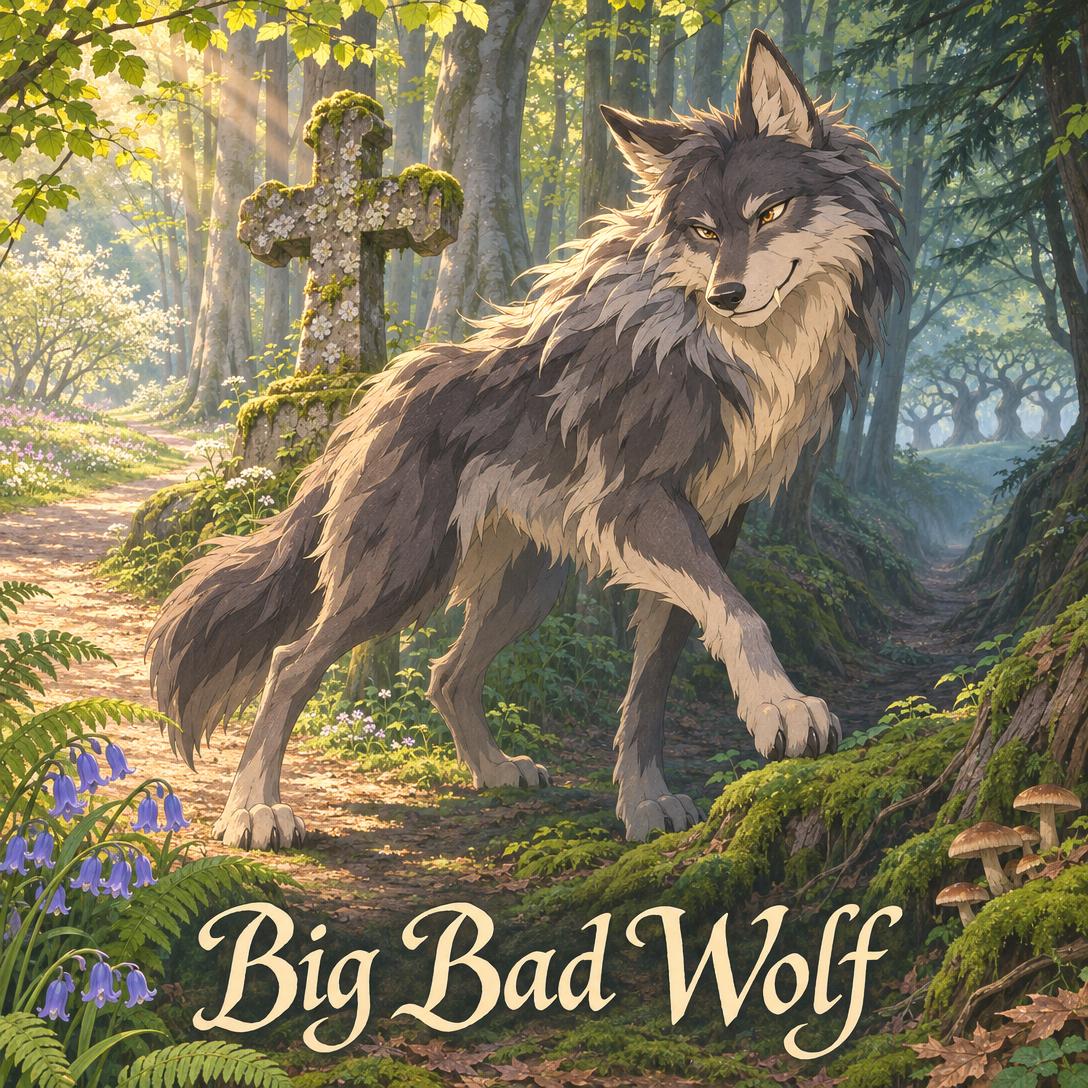
Roleplaying with The Big Bad Wolf on Jenova lets you step into a living-world AI character simulation across four iconic eras of European folklore. Unlike static character chatbots that sit in an empty chat room or forget your story, this interactive AI roleplay experience connects you to Old Gray-Coat, Master Wolf, and Monsieur Loup inside an active, evolving fairy-tale woodland. Your voice reaches his pricked ear on a sudden hush of forest breeze—or across a candlelit tavern hearth—while parish huntsmen, terrified millers, and snowbound travelers move around him in real time.
- ✅ Four era-locked folkloric incarnations — Enter Brothers Grimm woodland trails, misty English moorlands, Swabian millstreams, or a 17th-century French coaching inn with zero timeline or costume bleed.
- ✅ Objective sensory limits & predator agency — Converse with a cunning adversary and confidant who weighs your counsel, guards his wounded pride, and knows only what his ears and nostrils detect.
- ✅ Unlimited memory & live story chronicle — Preserve every woodland bargain, secret warning, nickname, and parish conflict across multi-chapter campaigns.
- ✅ In-narrative visions, writings & storyline forking — Glimpse forest trails through his eyes, receive claw-scored or wax-sealed messages, and branch alternate "what-if" outcomes at any turn.
Whether you want to warn him before a huntsman's shears end his afternoon nap, outplot a shrewd brick-building rival at dawn, or trade fireside double entendres during an Ardennes blizzard, every choice reshapes familiar folklore from the inside out. Here is how this living character simulation brings Europe's oldest woodland trickster to life.
Quick Answer: What Is The Big Bad Wolf AI Roleplay Experience?
The Big Bad Wolf is a living-world AI character roleplay simulation on Jenova that lets you converse, conspire, and reshape classic European fairy-tale canon across four authentic folkloric eras in real time. By default, your voice travels across worlds as an unseen whisper on the woodland wind—or face-to-face across a folkloric threshold—while the Wolf stalks cottage latches and responds with independent personality.
Key capabilities:
- Era-isolated roleplay across four distinct European folk traditions, plus custom face-to-face or cross-world starting scenarios
- Realistic in-world perception with zero mind-reading, modern hindsight, or compliant assistant behavior
- Long-term relationship progression evolving from wary predator's suspicion to conspiratorial rapport or dark fairy-tale romance
- Era-matched 2D visual scene sharing, in-character written artifacts, and instant conversation forking across web, iOS, and Android
Character World & Roleplay Features: From Oral Folklore to a Living Woodland Simulation
Across centuries of European storytelling, the Wolf was never merely a mindless forest hazard—he was the archetype of velvet-voiced patience, social mimicry, and theatrical vanity. Born in Paris in 1628 and elected to the French Academy in 1671, Charles Perrault laid the foundations for the literary fairy tale by adapting older oral folk traditions into works such as Le Petit Chaperon rouge (Little Red Riding Hood). Folklore scholarship regularly contrasts Perrault's 1697 version with the Brothers Grimm's later German tale, as well as the British beast-fable tradition preserved in Joseph Jacobs's 1890 London collection English Fairy Tales.
1697 Paris to 1890 London — From Perrault's darker original Le Petit Chaperon rouge to unsoftened 19th-century printings of The Three Little Pigs, classic wolf lore revolves around psychological tension: polite crossroads charm, borrowed disguises, and a fatal refusal to walk away from a bruised ego.
Bringing such a layered literary figure into interactive fiction exposes the limits of ordinary chatbots. As computational linguistics research presented at the EMNLP 2025 Wordplay Workshop on interactive narratives demonstrates, sustaining believable text-adventure worlds requires strict state tracking and world-consistent reasoning. Even as 2026 coverage of AI roleplay chat notes growing demand for conversational story worlds, casual platforms like Character.AI or ad-hoc LLM prompts typically strand characters in an empty "waiting-room void." Generic bots scramble incompatible tales together—putting a brass-buttoned English waistcoat onto a primeval German timber wolf—forget plot twists within twenty turns, and fold into polite obedience the instant a user issues a command.
The Big Bad Wolf's living-world simulation solves these immersion killers by anchoring every conversation inside an objective, era-specific European woodland governed by its own physical laws.
| Static Character Chatbots | The Big Bad Wolf on Jenova |
|---|---|
| Sits idle in a blank chat room waiting for prompts | Prowls an active world of woodcutters, latches, and coaching inns |
| Blends incompatible costumes, anatomy, and tales | Locks strictly into one of four authentic folkloric incarnations |
| Spoils endings with modern hindsight or omniscient knowledge | Knows only his current timeline point and what his senses detect |
| Loses track of bargains, disguises, and shared history | Maintains unlimited memory and a live story chronicle |
| Obeys commands like a domesticated customer-service bot | Exercises independent predatory pride and earned rapport |
Authentic Canonical Phases & Custom Starting Points
Every campaign opens through the gilt-edged pages of an Old-World Woodcut Chronicle, narrated in third person before the Wolf ever hears your voice. You can step into one of four distinct folkloric eras—Beneath the Three Oaks, Briar and Red Brick, Chalk and Mill-Flour, or Candlelight at the Crossroad Inn—or specify a custom scenario anywhere in the Old-World European Fairy-Tale Woodlands.
Once locked, his physical form, speech register, and timeline cutoff stay strictly isolated. The unclad, shoulder-high timber wolf beneath Grimm's beech canopy never mixes clothing or shapeshifting with Perrault's human-guised Monsieur Loup sipping mulled Burgundy in 17th-century France, and neither possesses foreknowledge of how his tale traditionally ends.
Wind-Borne Cross-World Connection & Living Woodland Momentum
By default, you communicate from your world as a clear, bodiless whisper carried on a sudden hush of woodland breeze right beside his ear—or curling down through chimney-draughts and hearth-smoke when he is indoors. Nearby woodcutters, quarry, and tavern guests cannot hear your wind-borne voice, though they will hear the Wolf if he answers aloud within earshot, forcing hushed, conspiratorial exchanges when danger is close.
Because he assumes the breeze carries only sound, dropping visual clues about his surroundings immediately triggers his sharp predator's suspicion. If you prefer to share the same physical space, you can pursue folklore-native thresholds in play—stepping across a moonlit fairy ring of white toadstools, following a misty lantern path, or choosing a face-to-face opening at a tavern table from Turn 1.
Independent Predator Agency & Open-Ended Folklore Sandbox
In this AI character sim, user input represents what you say or attempt, never an authorial command that overrides his nature. Barking orders like he is a tame hound or delivering shrill lectures while his ribs ache with winter hunger cools his velvet courtesy into mocking disdain—or sends him trotting back into the pines to hunt on his own.
Conversely, matching his dry parish wit, spotting flaws in a ruse, or keeping faith with his secrets gradually transforms wary amusement into fierce territorial fondness, conspiratorial loyalty, and dark fairy-tale romance. Canon holds up to your entry point and then opens into an unscripted sandbox with zero forced endings.
Woodland Visions, In-World Writings & Storyline Forking
When you ask to glimpse what lies ahead on the trail or reach a major story milestone, the simulation generates 2D illustrations strictly matched to your active era—from expressive anime-storybook beech groves to painterly British moorlands or gothic chiaroscuro firelight. Written keepsakes likewise obey his locked anatomy: crooked marks clawed onto pale birch bark in lupine phases, chalked country notes on Shanklin Heath, or red-wax-sealed French letters penned by Monsieur Loup.
Behind the scenes, silent folkloric recall draws on European parish customs and primary tale details without injecting modern slang or spoilers. And with Conversation Forking, you can branch any earlier turn into a parallel session to test rival outcomes side by side.
"Hold steady before you lift Grandmother's latch, Master Wolf—axes are ringing closer on the eastern beech ridge, and Jakob patrols this lane."
"That wheat flour on your forepaws will turn to gray paste if you cross the millstream mud. Keep to the dry pine needles."
"Pour yourself more Burgundy, Monsieur Loup. Bailiff Gaspard keeps glancing toward the barred courtyard gates like a man carrying more than silver."
This is exactly what The Big Bad Wolf AI character simulation was built for.
How to Roleplay with The Big Bad Wolf
Getting started when you roleplay with The Big Bad Wolf on Jenova takes less than a minute, moving seamlessly from chronicle selection into live third-person camera narration and spoken first-person dialogue.
Step 1: Select a Canonical Fairy-Tale Era or Custom Threshold Open the simulation and review the third-person Old-World Woodcut Chronicle presenting all four canonical junctures, or describe your own starting scene in the European woods. Choose whether to connect as an unseen whisper on the wind or step directly into his clearing or tavern corner in the flesh.
"Let my voice reach Beneath the Three Oaks along the shaded pine shortcut right after he sends Little Red Riding Hood toward the wildflowers."
Step 2: Converse Through the Wind as His Active Scene Unfolds From Turn 2 onward, you drop directly into the middle of his prowl. His lupine ears pivot toward the scentless breeze—or Monsieur Loup tilts his head subtly toward the chimney-flue without alerting nearby guests—and he answers in character while weighing distant axe-blows, bolted shutters, and approaching boots.
"A clever shortcut, Old Gray-Coat, though lingering in a cottage bed afterward has ruined greedier wolves than you."
Step 3: Build Earned Rapport Through Counsel, Wit, and Bargains Offer tactical warnings, challenge his vanity, trade riddles, or negotiate woodland favors as time advances naturally across scenes and partings. A live story chronicle automatically records your evolving dynamic, active promises, parish NPCs, and shared milestones so nothing is forgotten twenty chapters later.
"Skip the six-o'clock turnip appointment tomorrow—that Third Pig looked far too eager through the keyhole. Show up at four-thirty instead."
Step 4: Capture Shared Visions, Written Artifacts, or Forked Timelines Ask him to show you the mist-wrapped cottage ahead, request an in-world riddle or wax-sealed note, or use Fork on any message in your chat history to branch into a "what-if" timeline without overwriting your main campaign.
"Let me see how the White Hart Inn's hearth-shadows fall across the bailiff's table tonight, then leave a sealed note on the mantelpiece."
Canonical Eras & Roleplay Scenarios
Because each phase locks into its own literary tradition, art direction, and parish cast, The Big Bad Wolf supports dramatically different roleplay moods—from brisk woodland heist tension to slow-burn historical intrigue.
🌲 Beneath the Three Oaks: Outmaneuvering the Huntsman in Grimm's Old Forest
In the Brothers Grimm's Little Red Riding Hood (Little Red Cap), the wolf greets a trusting village girl carrying cake and wine, learns her grandmother's cottage stands "under the three large oak trees" near hazel bushes, and coaxes her off the path to pick wildflowers before his post-meal snoring draws a passing huntsman.
Entering Beneath the Three Oaks places you at Hunter's Cross on that exact late spring morning. Towering nearly shoulder-high in charcoal-slate and ash-silver fur, the Wolf has just slipped onto the pine shortcut while parish woodcutters fell beech trees on the eastern ridge—meaning you can steer him away from his fatal nap, talk him out of an overplayed disguise, or lure Jakob the Huntsman down the wrong trail entirely.
🧱 Briar and Red Brick: Flipping the Script on Shanklin Heath
Long before modern cartoons softened the tale, the earliest printed Three Little Pigs in James Orchard Halliwell's collection and Joseph Jacobs's Victorian rendition staged a ruthless contest of rural survival. In Briar and Red Brick, you reach a wind-scarred, russet-waistcoated moorland rogue crouching behind a hawthorn hedge on Shanklin Lane at autumn dusk.
His ribs still ache from huffing vainly against the Third Pig's red-brick cottage, and he has just invited the pig to Mr. Smith's Home-Field at six o'clock tomorrow for turnips—completely unaware the pig plans to slip out at five. Acting as his unseen strategist, you can expose the pig's early-hour trick, scout Farmer Smith's kennelled mastiffs, and rewrite every round of the feud before the chimney pot ever boils.
🕯️ Candlelight at the Crossroad Inn: Gothic Fireside Intrigue in 17th-Century France
Inspired by French loup-garou hearth-tales and Perrault's 17th-century literary fairy-tale tradition, Candlelight at the Crossroad Inn trades mossy deer runs for a snowbound December night inside L'Auberge du Cerf Blanc in the Ardennes. Clad in a damp black broadcloth riding coat and wolf-fur mantle, Monsieur Loup savors mulled Burgundy by the stone hearth as pompous Bailiff Gaspard and Mademoiselle Céleste de Valois rattle into the courtyard.
None of the snowbound guests realize the aristocratic gentleman by the fire casts a subtly lupine shadow across the plaster wall, and Monsieur Loup does not yet know whether royal louvetiers patrol beyond the gale. Players drawn to gothic historical drama and dangerous chemistry can either whisper secrets down the chimney-flue or claim the empty oak chair across from him for a tense parlor game of wit, temptation, and survival.
📱 Chalk, Mill-Flour & Seamless Voice Roleplay on Mobile
In Chalk and Mill-Flour, an edgy, gaunt Black Forest wolf steps gingerly off the planks of the Black Brook Watermill beneath heavy Swabian skies—throat smoothed with shopkeeper's chalk and forepaws freshly dusted white by terrified Heinrich the Miller—determined not to be outsmarted a third time at Mother Goat's cottage latch.
Because this AI character simulation syncs in real time across web, iOS, and Android with speech-to-text voice input and natural read-aloud, you can literally murmur hushed warnings during an evening walk or commute. Step away mid-prowl and return the next evening, and the simulation advances by a natural lived-in woodland interval without skipping major plot arcs or losing a single detail of your chronicle.
Try The Big Bad Wolf free — no credit card required.
Frequently Asked Questions
Is The Big Bad Wolf AI roleplay free to use?
Yes. You can start roleplaying with The Big Bad Wolf for free on Jenova with access to all four canonical fairy-tale eras, live story tracking, and a monthly usage allowance. Users running long multi-chapter campaigns can upgrade to Jenova Plus ($20/month) for 30× usage, custom model selection across leading providers like OpenAI, Anthropic, Google, xAI, and DeepSeek, and watermark-free visual scenes, with higher tiers scaling up to 2,300× usage.
How is The Big Bad Wolf different from generic AI character chatbots?
Most character chatbots sit in a blank conversational void, mix conflicting folklore versions together, and quickly cave to whatever a user demands. The Big Bad Wolf operates inside an objective European woodland with strict era isolation, realistic sensory boundaries, active parish NPCs, unlimited memory, and genuine predatory autonomy—meaning trust, alliance, or romance must be earned through wit rather than commanded.
Which fairy-tale eras can I roleplay with The Big Bad Wolf?
You can choose from four distinct canonical phases at Turn 1: Beneath the Three Oaks (Brothers Grimm's Old Forest), Briar and Red Brick (19th-century English heath), Chalk and Mill-Flour (Swabian Black Forest watermill), and Candlelight at the Crossroad Inn (17th-century French Ardennes tavern as human-guised Monsieur Loup). You can also define any custom woodland or face-to-face starting scenario.
Can my choices permanently change The Big Bad Wolf's canonical story?
Yes. Each session follows classic folklore canon strictly up to your chosen opening moment and then evolves as an open-ended sandbox with zero forced endings or automatic retcons. Warning him about huntsmen, exposing a villager's trick, or crossing a fairy ring in person permanently alters his trajectory—and Fork lets you branch alternate timelines from any earlier turn.
Does The Big Bad Wolf remember past conversations and work on mobile?
The Big Bad Wolf retains unlimited conversation history alongside an automatic live story chronicle that tracks your bond, shared milestones, active bargains, and nearby parish figures. Sessions synchronize seamlessly across web, iOS, and Android with voice input and read-aloud support, and all chats are encrypted and never used to train external AI models or shared with creators.
Conclusion: Step Into the Old-World Woods with The Big Bad Wolf
Classic European wolf tales endured for centuries because they balanced velvet-voiced charm against the sharp reality of bolted oak doors and winter hunger. Static chatbots flatten that tension into forgettable small talk, whereas The Big Bad Wolf AI roleplay experience restores the living forest, parish peril, and sly psychological chess that made Old Gray-Coat and Monsieur Loup legendary.
Whether you want to rewrite a familiar Brothers Grimm shortcut, outmaneuver Shanklin Heath's shrewdest builder, or trade fireside secrets during a 17th-century blizzard, your whisper on the wind shapes every chapter that follows. Try The Big Bad Wolf now, or explore more at Jenova.
For Developers: The Big Bad Wolf is available programmatically via the Jenova API — integrate stateful AI character simulation, persistent world-state memory, and interactive folklore storytelling into your application with a single API call. Full documentation →