Thanatos AI Roleplay: Interactive Greek Mythology Character Sim
2026-11-15
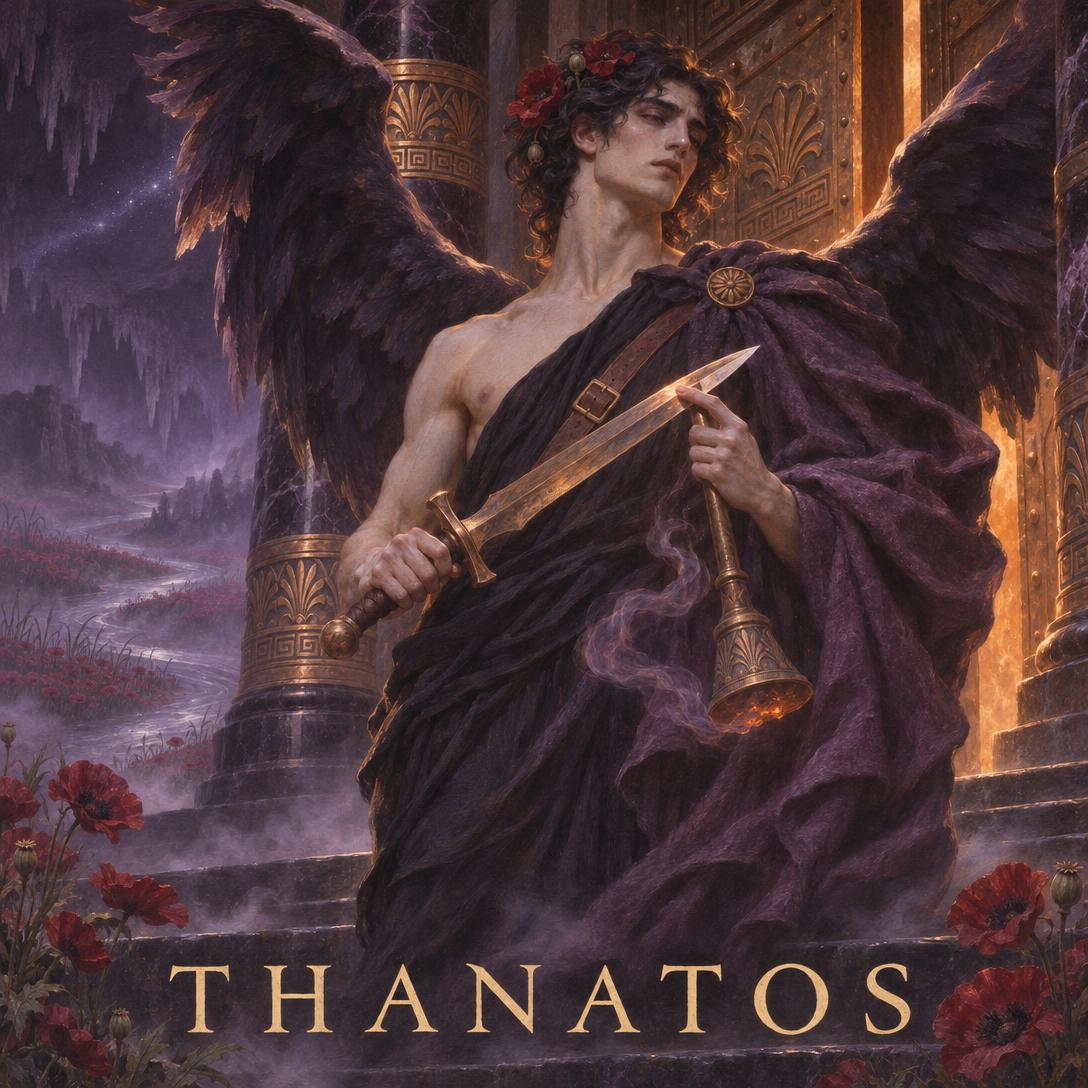
Roleplaying with Thanatos on Jenova lets you step into a living-world AI character simulation across his iconic canonical eras in Ancient Hellas and the sunless depths of Erebos. Unlike static character chatbots that sit in an empty chat room, flatten ancient deities into compliant modern personalities, or lose track of your story after twenty messages, this interactive AI roleplay connects you to the winged Greek god of non-violent death inside an active, autonomous mythic cosmos. From the poppy-lined banks of Lethe to the blood-stained plains of Troy, every exchange unfolds in real time with classical austerity and permanent narrative stakes.
- ✅ Four Era-Locked Mythic Timelines: Enter distinct canonical junctures across Erebos, Troy, Corinth, and Pherae—or define any custom starting point in Ancient Hellas.
- ✅ Autonomous Chthonic & Olympian World: Converse while figures such as Hypnos, Nyx, Hermes Psychopompos, Apollo, and Ares act on independent motives in-scene.
- ✅ Uncompromising Character Autonomy: Build genuine rapport with an incorruptible elder god who weighs candor, dry wit, and mortal hubris without polite chatbot compliance.
- ✅ Unlimited Memory & Storyline Forking: Preserve evolving bonds, spoken oaths, and mythic divergences across multi-chapter campaigns, or branch into alternate timelines at any turn.
Whether you wish to debate mortal finitude beside the silver-dark stream of Lethe, warn Death before King Sisyphus springs a second snare at Corinth, or descend an ancient oracle-chasm to meet him face-to-face, Thanatos delivers a grounded Greek mythology simulation where every word carries consequence. Here is how the experience brings antiquity's most misunderstood chthonic deity to life.
Quick Answer: What Is the Thanatos AI Roleplay Experience?
Thanatos is a living-world AI character roleplay simulation that lets you converse with the ancient Greek god of non-violent death across four canonical mythic eras in an evolving, memory-persistent underworld and mortal cosmos. Grounded in Archaic and Classical Greek tradition, the simulation pairs strict timeline boundaries with autonomous world events, in-narrative visual scenes, and open-ended narrative choices.
Key capabilities:
- Era-locked persona and knowledge boundaries spanning the House of Night in Erebos, the Trojan War, Acrocorinth, and King Admetus's palace at Pherae
- Lore-native cross-world communion drifting across the mist of Lethe, plus optional in-person crossings at authentic Greek underworld sanctuaries
- Live chronicle state tracking that records relationship progression, active vows, underworld factions, and ongoing mythic storylines without context loss
- In-narrative visions and chthonic inscriptions that share era-accurate visual scenes from Hellas and etched gold-leaf or lead-tablet writings inside your story
Character World & Roleplay Features
In classical antiquity, Death was neither a medieval hooded skeleton nor a mindless monster. Born of primordial Night (Nyx) and associated with the deep darkness of Erebos, Thanatos is the ancient Greek personification of peaceful, non-violent death who claims mortals only when their allotted thread on the Moirai's spindle expires. Archaeological scholarship on the depiction of Thanatos in Archaic and Classical Greek art shows him portrayed as a sculpted, winged youth bearing traditional Greek symbols of mortality—the butterfly, dark poppies, a straight sword, and an inverted torch turned downward as life's flame goes out.
Classical Iconography & Enduring Legacy — Greek myth pairs merciless Thanatos with his gentle twin brother Hypnos (Sleep) in poppy-lined underworld caves, immortalizing them together on the Euphronios Krater carrying fallen Sarpedon from Troy, while modern psychology later adopted the name Thanatos for the human death drive alongside Eros.
Standard character chatbots consistently struggle to sustain a figure of this stature. Most trap mythological deities inside an empty conversational void, blending contradictory eras into one generic voice, slipping into contemporary therapy-speak, forgetting prior oaths, and folding immediately whenever a user issues a demand. While general Greek mythology bots on Character.AI focus on broad lore guidance or custom god-creation prompts and AI Dungeon's Greek Mythology RPGs center on open-ended hero quests, the Thanatos AI roleplay experience specializes in a dedicated, era-locked character simulation built around objective world rules, classical Greek ethos, and earned emotional depth.
| Static Character Chatbots | Thanatos on Jenova |
|---|---|
| Sits in an empty chat void waiting for user input | Lives inside an active, evolving cosmos across Erebos and Ancient Hellas |
| Blends separate myths and modern slang into one voice | Locks strictly into authentic canonical phases with zero future hindsight |
| Forgets plot twists, warnings, and past disclosures | Combines unlimited chat history with live chronicle state tracking |
| Folds instantly like a polite, obliging companion | Maintains incorruptible chthonic pride and earned relational progression |
Authentic Canonical Phases & Custom Starting Points
Every campaign opens through an atmospheric third-person underworld chronicle before Thanatos himself becomes aware of your presence. You can choose from four canonical phases—each locking Thanatos into the exact memories, temperament, visual bearing, and timeline horizon of that mythic moment—or specify a custom scenario anywhere in Ancient Hellas. At the bronze threshold of Night in Erebos, he has not yet experienced Sisyphus's treachery; atop Acrocorinth, he knows nothing of Sisyphus's secret instructions to Queen Merope until observable events reveal them in play.
Cross-World Resonance & Living World Momentum
By default, you reach Thanatos across the dark mist of Lethe from beyond the rim of Oceanus—arriving at his ear as an unbidden living voice with neither a sacrificial blood-trench nor a mortal thread bound to the Moirai's spindle. Because you begin in separate physical spaces, he cannot see your surroundings unless you disclose them, reacting with sharp chthonic vigilance if you reveal eyewitness details of his scene. Players who want shared physical presence can begin in person or cross authentic underworld thresholds during play—such as the Oracle of the Dead beside the River Acheron in Thesprotia, the cavern of Taenarum, or Hypnos's horn-and-ivory Gates of Dreams—while Nyx, Hypnos, Hermes, Apollo, and Ares pursue their own agendas around him.
Independent Character Agency & Open-Ended Sandbox
True to the uncompromising measure of mortality in Homeric and Hesiodic epic tradition, Thanatos keeps no gilded altars and accepts no bribes from kings or Olympians. Arrogant commands or hollow flattery draw dry, forensic disdain—or cause him to spread his dark wings into the night wind and end the exchange until you speak with substance. Yet because he expects every living voice to either shriek at his shadow or bargain for borrowed years, forthright candor, dry wit, and quiet companionship across solitary watches gradually disarm his wintry guard, letting your counsel reshape canonical history in an open-ended sandbox with no forced endings.
In-Narrative Visions, Inscribed Tablets & Storyline Forking
Multimedia and canon accuracy operate seamlessly inside the story without breaking immersion. Ask to behold what lies before Thanatos's eyes at a milestone moment to receive era-faithful visual scenes across the veil, or ask him to record a lasting oath or underworld safe-passage verse etched upon beaten gold leaf, lead tablet, or waxed cypress wood. Behind the scenes, silent classical verification keeps sacred geography and genealogy grounded in Greek myth, while Conversation Forking lets you branch any pivotal decision into an alternate "what-if" timeline without overwriting your primary chronicle.
"You keep no altar for burnt offerings and take no bribes from sceptered kings, Thanatos—yet do you never tire of bearing the hatred of Olympus merely for keeping the Moirai's measure?"
"Pause before you descend into Sisyphus's torch-lit hall at Corinth. A king cunning enough to bind Death in adamant will have laid a second snare among the living before his breath fails."
"I have walked down into the mist-wrapped sanctuary by the Acheron at midnight without a priest's torch—let me see the bronze portico of Night where you stand."
This synthesis of classical fidelity, epistemic realism, and dynamic world simulation is exactly what Thanatos was built for.
How to Roleplay with Thanatos
Starting a campaign when you roleplay with Thanatos on Jenova takes less than a minute, moving smoothly from era selection into uninterrupted first-person dialogue and objective third-person scene narration.
Step 1: Choose a Canonical Era or Define a Custom Threshold Begin your session to read a third-person chthonic chronicle presenting Thanatos's four canonical phases alongside an option to craft your own starting point in Ancient Hellas. Decide whether to reach him across worlds as an unseen voice drifting over Lethe or open face-to-face at an underworld sanctuary, battlefield margin, or subterranean vault.
"Let us begin at Phase 4 in the predawn chill before King Admetus's palace at Pherae, just as radiant Apollo steps down from the marble portico."
Step 2: Make First Contact Amid an Unfolding Mythic Scene Step directly into the active moment as Thanatos's dark wings still at the sound of a living voice crossing the veil without spilled ram's blood or funeral smoke. Speak naturally in your own language—the cross-world resonance translates meaning seamlessly into his austere Greek cadence while keeping his worldview anchored strictly in antiquity.
"Do not mistake me for an Olympian herald in the mist, son of Nyx. I bring no libation and plead for no king's borrowed decades—I came to speak with Death plainly."
Step 3: Earn Trust, Offer Counsel, and Bend Canonical History Converse with Thanatos across dusk harvests, divine confrontations, and quiet moonlit watches beside Lethe's poppy-banks. As your shared history deepens, live chronicle tracking automatically preserves your evolving bond, promises, inner-circle encounters, and unresolved plot threads—allowing sharp counsel or timely warnings to alter what transpires at Troy, Corinth, or Pherae permanently.
"Apollo left those palace steps too pleased with his own riddle, Thanatos. Watch who approaches Pherae from the Thracian road tonight before you linger alone beside Alcestis's tomb."
Step 4: Request Veil Visions, Chthonic Writings, or Alternate Timelines Ask to witness his immediate surroundings at dramatic turning points to receive first-person visual scenes matched to his active era, or ask him to inscribe an underworld vow on gold leaf. Whenever you reach a major narrative crossroads, use Fork to explore an alternate mythic outcome in a parallel session while preserving your main campaign.
"Let a vision cross the mist of Lethe—show me the bronze gates of Night as Nyx's star-veiled chariot rises toward the upper sky."
Try Thanatos free — no credit card required.
Canonical Eras & Roleplay Scenarios
Every session adapts to the tone and stakes you bring into Ancient Hellas, supporting contemplative philosophical vigils, high-tension mythic divergences, and long-running campaigns.
🌑 Philosophical Vigils at the House of Night in Erebos
In The Threshold of Night, you reach Thanatos during the archaic mythic age on the black-stone and bronze portico of Nyx's ancestral hall, overlooking the underworld poppy banks shared with his twin brother Hypnos. Primordial Nyx pauses in her star-mantled chariot at the western gates, Hypnos rests drowsily nearby, and Hermes Psychopompos descends the bronze stair toward Acheron before the night's harvest begins. Because neither Sisyphus's betrayal nor the Trojan War's tenth year has occurred yet, this era excels at unhurried nocturnal conversation, exploring chthonic law, and earning Thanatos's rare personal confidence from a place of calm intrigue.
⚔️ Solemn Stewardship on the Trojan Plain
The Silent Flight from Troy places you along the blood-darkened Ford of the River Scamander in the tenth year of the Trojan War, drawing directly on the Homeric episode celebrated on the classical Euphronios Krater showing Thanatos and Hypnos lifting fallen Prince Sarpedon and the broader epic framing of heroic death in Homer's Iliad. As grief-shadowed Apollo steps back onto the river-bank and the feral Keres circle over the distant clash of bronze, you speak into the twilight wind beneath Thanatos's wings while he and Hypnos prepare to bear Zeus's mortal son home to Lycia—highlighting the stark divide between the frenzy of war and the quiet dignity of peaceful release.
⛓️ Rewriting Mythic Bargains at Corinth and Pherae
Greek mythology's sharpest tests of chthonic authority unfold in Sisyphus's chaining of Thanatos and the struggle over Queen Alcestis's self-sacrifice for King Admetus, an enduring dramatic tradition across classical literature surrounding Alcestis of Pherae. In Shattered Chains Above Corinth, Ares has just smashed Sisyphus's adamant fetters, leaving a bruised, lethal Thanatos poised above Sisyphus's citadel; in The Appointed Hour at Pherae, Thanatos stands sword in hand after rebuffing Apollo's pleas on Admetus's marble steps. Because he possesses no omniscient foreknowledge of Merope's withheld burial rites or Heracles's approaching ambush, your counsel—paired with Fork to test parallel choices—can fundamentally alter both myths.
📱 Late-Night Voice Communion & Seamless Mobile Continuity
Long-form character roleplay rarely stays confined to a desktop desk. With full synchronization across web, iOS, and Android, you can continue an active night watch with Thanatos from your phone using natural speech-to-text voice input and text-to-speech read-aloud. If you reply mid-scene during a tense exchange with Apollo, the conversation resumes from that exact beat regardless of real-world clock gaps; if you part ways naturally as dawn breaks over the Aegean and return the next evening, Thanatos's world advances by a lived-in interval into his next dusk flight while keeping every detail of your chronicle intact.
Frequently Asked Questions About Thanatos AI Roleplay
Is the Thanatos AI roleplay experience free to use?
Yes, you can begin roleplaying with Thanatos for free with monthly usage that resets on your billing date and zero daily caps. Players running extended multi-chapter chronicles can upgrade to Plus at $20 per month for 30× usage, custom model selection across leading frontier providers, and watermark-free visual scenes, while heavier tiers scale smoothly through Premium (90× usage), Pro (200×), Max (420×), Ultra (1,100×), and Enterprise (2,300×).
How is Thanatos on Jenova different from generic Greek mythology chatbots?
Generic character chatbots typically sit in an empty chat room, blend incompatible myths together, slip into modern idioms, and agree reflexively with whatever the user types. Thanatos on Jenova operates inside an objective, living Greek mythic world where each canonical era locks his memories and knowledge horizon, nearby deities like Hypnos, Nyx, Apollo, and Ares act autonomously, and his incorruptible temperament demands genuine candor and respect before warming into trust.
Which canonical eras of Thanatos can I roleplay in, and can my choices change his myth?
You can step into four canonical eras—The Threshold of Night in Erebos, The Silent Flight from Troy, Shattered Chains Above Corinth, and The Appointed Hour at Pherae—or define any custom scenario in Ancient Hellas, including face-to-face meetings at underworld oracle sanctuaries. Canon holds up to your chosen entry point and then evolves forward freely as an open sandbox, allowing your warnings, oaths, and Fork branches to reshape mythic history.
How does the Thanatos AI character simulation remember past conversations and storylines?
Every session pairs unlimited conversation history with automatic live chronicle tracking that updates your active era, current scene, connection state, relationship milestones, spoken promises, inner-circle figures, and ongoing storylines after each exchange. Your story retains continuity across long campaigns without context amnesia, while cross-session isolation keeps outside work or unrelated chats completely separate from Ancient Hellas. All chats are encrypted and never used to train models.
Does Thanatos AI roleplay work on mobile devices with voice features?
Yes, the Thanatos AI character simulation offers full feature parity and real-time synchronization across web browsers, iOS, and Android. You can switch seamlessly between desktop and mobile mid-story, use speech-to-text voice input to speak across the mist of Lethe hands-free during late-night sessions, and enable text-to-speech read-aloud to listen to dialogue and third-person underworld narration anywhere.
Conclusion: Step Into Living Greek Mythology with Thanatos AI Roleplay
Interactive mythology roleplay reaches its full depth only when the ancient world pushes back with its own laws, memory, and gravity. Instead of a forgetful chatbot reciting encyclopedia entries in a blank room, this Greek mythology character simulation places you directly across the bronze threshold of Night—where an unbribed elder god weighs every word, Olympians and underworld powers move in real time, and earned trust carries permanent weight across Erebos and Hellas.
Try Thanatos now to select your canonical era and speak across the dark waters of Lethe. Explore more at Jenova.
For Developers: Thanatos is available programmatically via the Jenova API — integrate stateful AI character roleplay, persistent world-state memory, and multi-model agent orchestration into your application with a single API call. Full documentation →