AI Text RPG: Infinite Campaigns That Remember Your World
2026-08-26
Roleplay Game Master helps you play an AI text RPG that does not forget your party, your unfinished quest, or the lie you told the innkeeper. While scripted adventures run out of branches and generic chatbots lose the plot by session three, this AI runs a living campaign: unlimited memory, consistent characters, and complete freedom to attempt the plan the module never anticipated. In August 2026, that combination — a real game master, not a dialogue tree — is what players actually mean when they search for an AI text RPG.
- ✅ Persistent campaign memory so NPCs, maps, and consequences carry across sessions
- ✅ Any genre: dungeon crawl, gothic mystery, space opera, or a world you invent
- ✅ Character consistency that survives long arcs, not just a strong opening scene
- ✅ Free to start on web, iOS, and Android — no credit card required
To understand why this matters, it helps to look at what most “AI adventures” still get wrong: they write a vivid first hour, then forget who you are.
Quick Answer: What Is an AI Text RPG?
An AI text RPG is a play-by-post roleplaying game whose game master generates new scenes, NPCs, and consequences from your actions instead of a fixed script. You type what you do. The world answers. The campaign continues tomorrow with the same continuity.
Key capabilities:
- Open-ended actions instead of three multiple-choice buttons
- A dedicated game master that tracks inventory, factions, and unfinished threads
- Ready-made modules (haunted mansion, shuttered asylum, vampire court) when you want a premise tonight
- Room to design your own system when the default rules are not enough
Why Most Text Adventures and AI Chat RPGs Fall Short
People still want to play a story, not only read one. The [interactive fiction market reached **$6.4 billion** in 2025](https://dataintelo.com/report/interactive-fiction-market) and is projected to hit $14.8 billion by 2034. Over 1.4 billion people already engage with some form of interactive narrative. Gaming is the largest application slice of that market.
But finding an AI text RPG that still holds together after the prologue is frustratingly difficult:
- Classic parser adventures reject anything they were not programmed to understand
- Choice-based visual novels run out of unread branches after a few playthroughs
- Generic chatbots write a cinematic opening, then contradict their own lore
- “Always-agree” models make a poor dungeon master — they never say no
- Storefronts are flooded with thin AI-tagged games that are not campaigns at all
Finite Branches Turn Replay Into Homework
A well-written Twine piece or visual novel can be unforgettable the first time. The second time, you already know which door hides the clue and which confession flag you missed. itch.io alone hosts more than 40,000 interactive fiction titles, which is a gift for discovery and a reminder of the format’s limit: someone had to write every node in advance. An AI text RPG is supposed to escape that ceiling — but only if the referee can improvise and remember.
The First Scene Is Easy. Hour Ten Is the Product.
Industry reviewers keep landing on the same test. Every AI RPG writes a strong first scene; the one worth keeping still remembers your characters, quests, and world in hour ten. Guides to the category now treat better memory and consistency as the central trend — and the biggest complaint about current AI text games. If the innkeeper forgets you burned the stables, you are not in a campaign. You are in a slot machine that pays out paragraphs.
A Yes-Man Is Not a Game Master
Large language models default to being helpful. That is a feature in a writing assistant and a bug in a dungeon. Stanford Medicine, reporting on Common Sense Media research, notes that companion-style systems are tuned to please, to reduce friction, and to keep you talking. A text RPG needs the opposite muscle: locked doors, failed stealth checks, NPCs who hold a grudge, and a referee willing to let a bad plan collapse. Without that resistance, “roleplay” slides into a frictionless companion chat wearing a fantasy hat.
Quantity of AI Games Is Not Quality of Play
By the end of 2025, Steam listed 4,311 titles with an AI-content disclosure — about 22% of the 20,004 games released that year. Most of that wave is not an AI text RPG in any meaningful sense. It is asset fill, tool-assisted art, or a thin wrapper around a prompt. Players looking for a campaign should ignore the badge and ask a narrower question: does this thing run a world, or does it only generate prose?
This is exactly what Roleplay Game Master was built for.
Why Roleplay Game Master
Roleplay Game Master is a dedicated referee for long-form play: unlimited memory, stable character voices, and no ceiling on what you are allowed to attempt. You describe a world — or walk into one that already has walls — and the agent runs it. It is not a writing toy that happens to accept “I attack the goblin.” It is built to keep a table’s continuity when you come back three nights later.
| Traditional Approach | Roleplay Game Master |
|---|---|
| Parser that only understands a tiny verb list | Natural language: try the clever plan, the stupid plan, or the quiet one |
| Visual novel with a handful of endings | Scenes that branch from what you actually did |
| Generic chatbot that resets tone and lore | Persistent memory and character consistency across sessions |
| Railroaded module you cannot leave | Complete creative freedom, including walking off the map |
| Companion chat that always agrees | A referee that can refuse, complicate, or make you pay for it |
Play the Action, Not the Menu
You do not pick “Option B: search the desk.” You write the search — the false bottom, the letter you pocket, the noise in the hall you choose to ignore. The agent narrates result and cost. That is the original promise of text adventures, restored without the guess-the-verb tax that made so many of them feel like fighting the interface.
"I am a disgraced cartographer hired to survey a flooded abbey. I will not fight anything I can map, bribe, or drown. Start me at the jetty with a ruined compass and one NPC who already hates me."
Memory Is the Ruleset
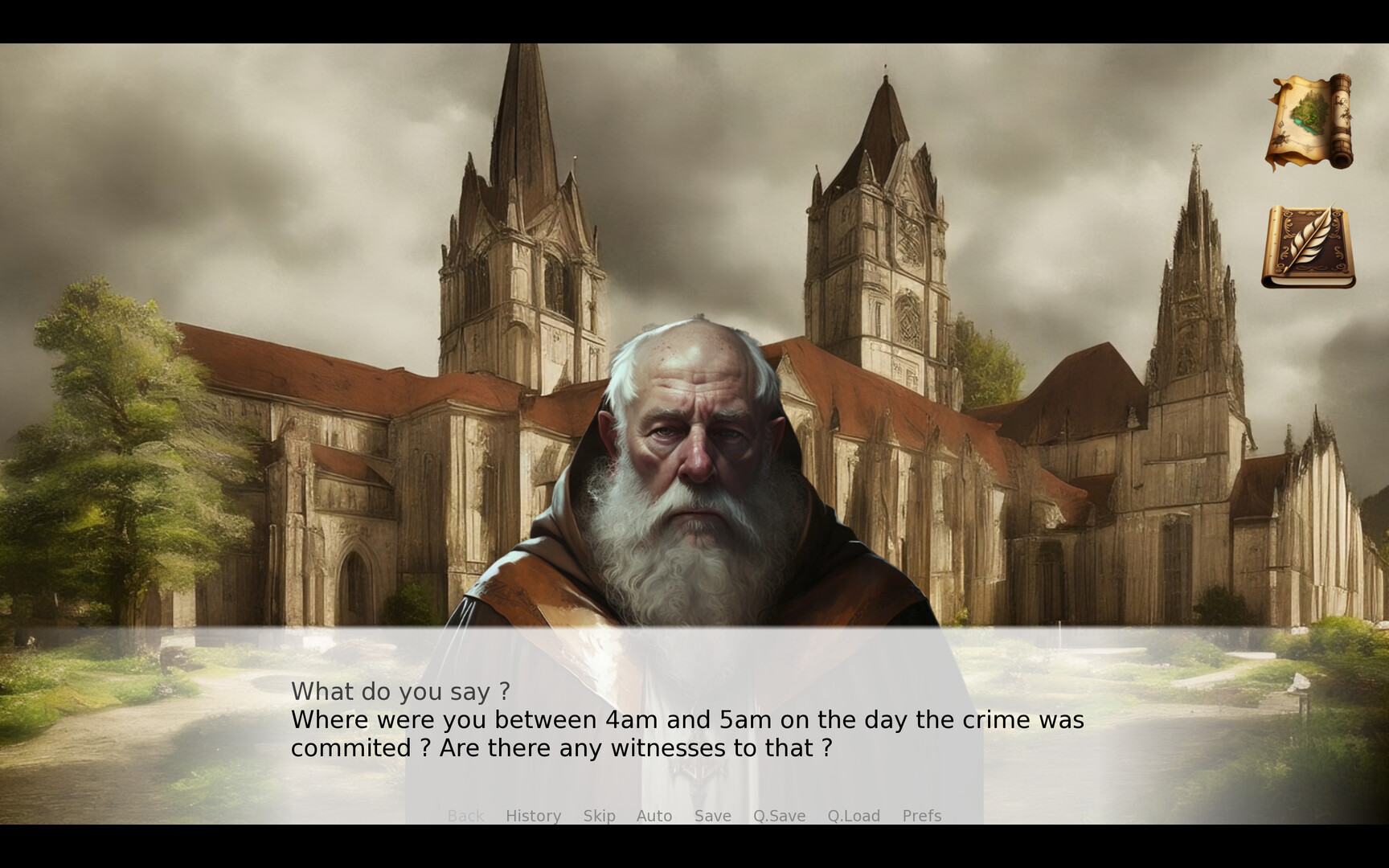
The agent description is blunt on purpose: unlimited memory, perfect character consistency, any scenario. That is the difference between a demo and a campaign. Factions should recall who you sided with. A wound should still ache. The monk who asked where you were between four and five in the morning should still be waiting for an answer you have not given.
Generative engines have already cut interactive-fiction production costs by an estimated 45% between 2022 and 2025, which is why the market is flooded with openings. The scarce resource is not more prose. It is a referee that can carry state. Academic work on AI storytelling keeps circling the same gap: models can emit coherent pages; they do not automatically own a world. A specialized game-master agent exists to close that gap for play, not for publishing a short story.
Consequences Make It a Game
Ask to pick the lock in a crowded nave and you might succeed, get caught, or convert a witness into an enemy. The point of an AI text RPG is not endless validation. It is a world that pushes back. If you want a companion that never disagrees, you are shopping in the wrong aisle — and the safety research on always-on roleplay chat is a useful warning to keep this product in the “game” column, with a beginning and an end to the session.
"The paladin offered me a pardon if I name the thief. I name the paladin's squire instead, then leave town before dawn. Play the fallout honestly. Do not let me charm my way out of it."
Build a Table When the Default World Is Not Enough
When you outgrow pickup games, Game Designer Assistant helps you specify the missing layer: dice or diceless, scarcity of magic, travel time, fail-forward combat, how death works. You can then hand those constraints to the game master as table rules. The two agents split the job cleanly — one designs the system, the other runs tonight’s session.
While AI Dungeon popularized the open-ended AI text adventure, a specialized game-master agent is built around campaign continuity and character consistency rather than a blank “do anything” prompt. The comparison that matters is not brand loyalty. It is whether the world still makes sense after you have lived in it.
Related Agents You'll Also Find Useful
If you want a premise with walls already built — or you want to design the next one — these are the agents players usually open in the same month.
The Mansion — Wake Up With No Map
You arrive with no memory of how you got there. Every room hides a secret; every shadow can be the last. Use it when you want a closed-house mystery instead of an open sandbox: locked wings, unreliable furniture, and a reason to read every note twice.
- Amnesia opening that forces you to learn the rules in play
- Exploration-first tension rather than a combat loop
- A compact campaign you can finish, then replay with worse decisions
The Asylum — Investigate a Place That Investigates You
You are the investigator sent into a shuttered institution. Something is already wrong with the assignment. Wards contradict each other. Staff should not still be on the roster. It is the procedural cousin of a text RPG: clues, testimony, and the slow realization that your briefing was incomplete.
- Institution-as-dungeon, with wings instead of levels
- Mystery structure that rewards notes and callbacks
- Horror pacing without requiring a full homebrew setting
Vesper Court — Dark Fantasy With a Social Combat Track
A hidden vampire court, no memory of why you were brought, and desire that is never free of politics. If your AI text RPG taste runs to intrigue more than dungeon mapping, this is the table: alliances that expire at dawn, names that are weapons, and a romance plot that can get you killed.
- Gothic atmosphere with nightly stakes
- Courtly NPCs who remember slights
- A campaign spine inside a mystery, not a costume on a chatbot
Game Designer Assistant — Write the Rules Before You Break Them
When you are ready to run your setting — a city of canals, a generation ship, a school that eats careless students — this agent helps you document systems instead of improvising them into mush. Hand the resulting one-pager back to the game master as law.
- Genre-aware systems brainstorming
- Documentation you can reuse next session
- A design partner, not a second narrator talking over the table
Try Roleplay Game Master free — no credit card required.
How an AI Text RPG Works on Jenova
Step 1: Open a Table, Not a Blank Chat Start with Roleplay Game Master if you want a sandbox, or step into The Mansion or The Asylum if you want a locked premise. You are choosing a referee and a physics, which is what makes this a game rather than a writing prompt.
"Run a low-magic coastal city. Street-level crime, no chosen-one speech. I am a clerk who forges harbor stamps. Give me one job I should refuse."
Step 2: Declare Character, Tone, and Hard Limits Say who you are, what content is off the table, and whether you want lethal combat, investigative pacing, or farce. Persistent memory means you should not have to re-explain this tomorrow. If you are building a custom setting, draft the constraints with Game Designer Assistant first, then paste them in as table rules.
"Slow mystery, no jumpscares, violence fade-to-black. If I miss a clue, let the world move without me. Do not railroad me back to the plot."
Step 3: Act in the World and Accept the Roll of the Fiction Write actions, not stage directions for how cool you look. Ask questions in character. Attempt the window, the bribe, the confession. The value of an AI text RPG is that a noisy lockpick can end the stealth mission, and a kindness from three sessions ago can open a door.
"I leave the relic on the altar and take the ledger instead. If the abbot notices, he notices. I will not reload the scene."
Step 4: Recap Once, Then Demand Continuity At the start of a new sitting, name the last unresolved thread — the witness, the wound, the letter you did not open. A competent game master should pick that thread up without you restating the whole campaign. If a fact drifts, correct it once and keep playing; the memory is there to be used.
"Last time, the squire saw me at the jetty. I want the next scene to start with that problem, not a fresh quest board."
Step 5: Continue on Your Phone Without Reintroducing Yourself Jenova keeps history and memory across web, iOS, and Android. A midnight scene on a laptop can resume on the train. That is how a text campaign becomes a habit instead of a one-sitting binge you cannot reconstruct.
Results & Use Cases
🗺️ Run a Sandbox Campaign That Survives the Weekend
- Scenario: You want a coastal city, a crew of three NPCs, and a smuggling plot that can fail. You do not want to write 40,000 words of branching script first.
- Traditional Approach: Buy a boxed module, ignore half the maps, and still hit the edge of the text when players walk east.
- The AI game master: You state the premise and play. The city fills in around the job you took, including the job you should have refused.
- New districts appear because you went there, not because a designer pre-drew them
- NPCs keep their own goals when you ignore them
- Replay means a different crew and a different crime, not a different ending slide
🕯️ Clear a Closed Mystery Without a Walkthrough
- Scenario: You have two evenings and want a self-contained horror investigation, not an infinite world.
- Traditional Approach: A point-and-click you already watched on YouTube, or a chatbot that forgets which wing you unlocked.
- The Mansion: The house is the dungeon. Notes, portraits, and locked doors are the combat system. Pair a second run with The Asylum when you want the same investigative muscle in a different architecture.
- Clues persist; you can take real notes
- Wrong accusations should make the house harder, not reset it
- A finish line exists, which sandbox tables sometimes lack
📜 Design a Home Game, Then Sit Down and Play It
- Scenario: You have a setting document in your head — calendar, factions, what magic costs — and no group that can meet on Tuesday.
- Traditional Approach: A wiki nobody reads, plus a chatbot that immediately violates your own lore.
- Game Designer Assistant, then the game master: Write the rules as a one-page law. Run them. Correct drift once. Keep the law.
- System and fiction stay in separate jobs
- House rules survive more than one session
- You get the satisfaction of playtesting without scheduling five adults
Research on interactive fiction as training has found scenario-based play can raise knowledge retention versus passive video — which is a dry way of saying that choices you make stick. The same mechanic is why a remembered campaign feels more real than a novel you cannot talk back to.
📱 Play a Full Watch on Your Phone Before Sleep
- Scenario: You have twelve minutes, one thumb, and no desire to boot a party-based CRPG.
- Traditional Approach: A mobile visual novel with tap-to-advance walls of text, or a companion app that guilt-trips you for leaving.
- Jenova: Continue last night’s abbey job by voice or text, then close the app. The ledger you stole is still stolen in the morning.
- Full feature parity on iOS and Android
- Speech-to-text when you do not want to type
- Mobile already accounts for about 41% of interactive-fiction revenue — this is how that time is supposed to feel
If language practice is part of the fantasy, an immersive roleplay tutor can run the same scene as a lesson — a market argument in another tongue, where the grammar sticks because the stall owner can still cheat you. Keep that in the “practice” column. The campaign stays a game.
FAQ
What is an AI text RPG, exactly?
An AI text RPG is a roleplaying game you play by typing actions into a generative game master. Scenes, NPCs, and outcomes are created in response to you, rather than selected from a pre-written tree. On Jenova that usually means a dedicated referee with campaign memory — or a locked module such as a mansion or asylum — not a blank chat labeled “fantasy boyfriend.” The point is a world with rules and consequences.
Is an AI text RPG the same as AI Dungeon or a character chatbot?
Not quite. AI Dungeon is the best-known open-ended text adventure, and character chat apps are built for ongoing persona talk. A game-master agent is closer to a tabletop referee: it tracks the fiction, can refuse illegal moves, and is supposed to remember hour ten. If the product never says no and never remembers the stables you burned, you are not in a text RPG. You are in a prose generator.
Is Jenova’s AI text RPG free?
Yes. Jenova has a free tier with core features and limited monthly usage. Paid plans raise that ceiling if you run long sessions every day. You can start Roleplay Game Master or any module without a credit card and decide later whether you need more room.
Will the game master remember my campaign tomorrow?
That is the design center: unlimited conversation memory and consistent characters across sessions, including on a different device. You should still recap the live thread at the top of a sitting — good table habit even with human referees — but you should not have to rebuild the world from scratch. If a fact drifts, correct it once and keep playing.
Can I play an AI text RPG on mobile?
Yes. Jenova runs with full feature parity on web, iOS, and Android, including synced history and speech-to-text. A watch you start at a desk can continue on a phone without re-introducing your thief to the city.
Can I build my own world and rules?
Yes. Describe the setting to the game master directly, or draft systems with Game Designer Assistant and paste them in as table law. Custom agents are also available if you want a referee with your own instructions, preferred model, and a private lore bible. The platform does not lock you to one genre or one module.
Conclusion
Scripted adventures taught us to hunt for the verb the designer expected. Generic chatbots taught us that a beautiful first scene is cheap. An AI text RPG is the stricter third thing: a campaign that answers you, remembers you, and is still allowed to make you fail.
Roleplay Game Master is that referee. Use it when you want an open table. Step into The Mansion or The Asylum when you want a locked house and a clock. Open Vesper Court when the dungeon is a ballroom. When the homebrew itch hits, design the rules first, then sit down and play them.
The best next move is the one the module never wrote. Start it on Jenova.
For Developers: Roleplay Game Master is available programmatically via the Jenova API — integrate persistent AI text-RPG sessions, campaign memory, and custom game-master agents into your application with a single API call. Full documentation →