AI Teammate Character: Adaptive Co-Op Partners for Any Campaign
2026-09-12
Roleplay Game Master helps you field a reliable AI teammate character by running persistent, in-character partners who remember your campaign and react to your decisions. While most chatbots forget last night's raid or break voice mid-firefight, this AI keeps squad tactics, rivalries, and story continuity intact across sessions.
✅ Persistent campaign memory that carries loot, grudges, and unfinished plans ✅ Character consistency across combat, downtime, and branching dialogue ✅ Any genre — military sci-fi, dungeon crawls, heist crews, or original worlds ✅ Play on web or mobile without rebuilding the teammate each session
To understand why this matters, let's examine why most "AI companions" fail as actual teammates — and what a campaign-ready partner actually requires.
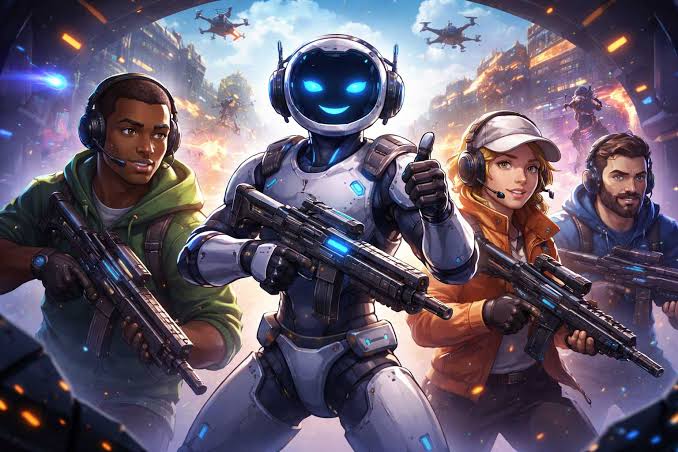
Quick Answer: What Is an AI Teammate Character?
Roleplay Game Master is an AI teammate character engine that runs persistent co-op partners who stay in character, remember your campaign, and adapt to every session. It is built for play, not one-off chat.
Key capabilities:
- Squad-ready partners who fight, plan, banter, and recover with you
- Long-session memory so gear, secrets, and relationships survive logout
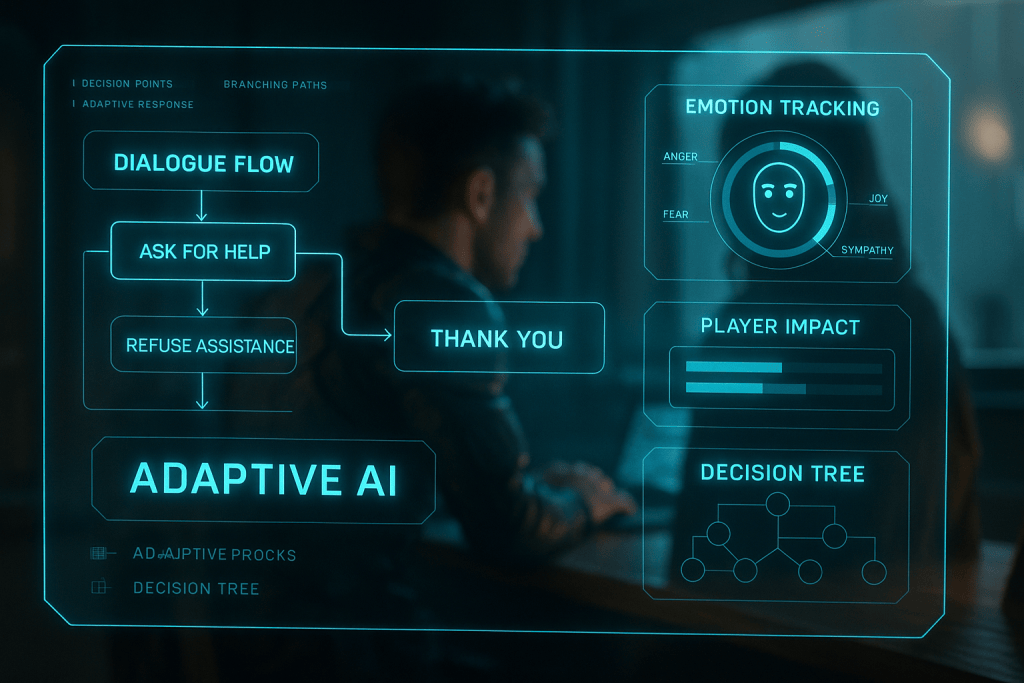
- Adaptive dialogue that branches from your choices instead of looping scripts
- Full creative control over species, class, voice, and moral code
Why Most AI Companions Fail as Teammates
Players and designers are hunting for partners, not just chat windows. The character-based AI agents market is forecast to grow from $0.55 billion in 2026 to $5.45 billion by 2032, at a 46.7% CAGR — a signal that named, persistent characters are becoming a product category of their own.
Demand is already mainstream. In a Common Sense Media survey cited by Brookings, 72% of U.S. teens had used an AI companion, and 12% specifically used these tools for role-playing. The AI companion market is separately projected to exceed $381 billion by 2032.
But turning a chatbot into a teammate is frustratingly difficult:
- Scripted NPCs repeat the same encouragement after every reload
- Companion apps remember vibes, not inventory, map state, or last night's betrayal
- Engine-side squad AI needs behavior trees, nav meshes, and designer time you may not have
- Personality drift shatters immersion the moment your "stoic sniper" starts joking like a mascot
Scripted NPCs Cannot Keep Up With a Living Campaign
Traditional companion characters are authored once and triggered by flags. That works for a linear set-piece. It collapses when you improvise a flanking route, spare an enemy, or abandon the main quest for three sessions. Players feel the seams immediately.
Chat Companions Are Not Campaign Systems
Open-ended character chat can be entertaining. It is rarely a co-op partner. Without durable memory of the fiction — who is injured, who is trusted, what the squad promised the mayor — the "teammate" resets to a stranger with a costume.
Building Adaptive Squad AI In-Engine Is Expensive
The global AI in gaming market was already estimated at $3.28 billion in 2024 and is projected to reach $51.26 billion by 2033. Studios invest because lifelike characters and adaptive storylines are now table stakes. Indie teams and tabletop groups usually cannot staff that stack.
This is exactly what Roleplay Game Master was built for.
Why Roleplay Game Master
Roleplay Game Master treats your AI teammate character as a playable partner, not a prompt you retype every night. You define the person. The AI holds the voice, the tactics, and the continuity while you play.
| Traditional Approach | Roleplay Game Master |
|---|---|
| Static companion lines and quest flags | Branching reactions to your live decisions |
| Chatbots that forget last session's raid | Persistent memory of people, loot, and unfinished plans |
| Weeks of behavior-tree and dialogue authoring | A teammate you can brief in a single conversation |
| Personality that drifts or breaks character | Consistent voice across combat, banter, and downtime |
| One-platform, one-save friction | Continue the same campaign on web or mobile |
A Partner Who Stays In Character
You set origin, voice, flaws, and loyalty rules once. The teammate argues from those rules — covering you in a firefight, refusing a war crime, or calling out a reckless plan — instead of agreeing with everything you type.
Campaign Memory That Survives Logout
The value of a teammate is shared history. This AI carries injuries, nicknames, rivalries, and the spare magazine you handed over two sessions ago, so the next scene starts in media res rather than in a recap.
Adaptive Tactics, Not Looping Banter
Ask for overwatch, a stealth entry, or a desperate extraction and the partner responds in character. That is closer to a co-op player than a hint system with a portrait.
Any World You Can Describe
Military sci-fi squads, dungeon crawlers, heist crews, starship bridge teams, or a custom setting all work. You are not locked to a licensed universe or a single combat fantasy.
Example briefs you can paste in:
"You are Vesper-9, a captured enemy synth who defected to my fireteam. Dry humor, never wastes ammo, still glitches when you hear your old command codes. We are clearing a ruined overpass at night. Call targets and keep me honest."
"Play Kael, my half-orc battlemaster. Protective, terrible at stealth, remembers every tavern debt. We just lost the cleric. Help me plan a retreat without sounding like a tutorial."
Related Agents You'll Also Find Useful
If you are building the teammate as well as playing with one, these partners cover the design work around the table.
Game Designer Assistant
If you also need systems — cooldowns, cover rules, loyalty meters, or a one-page GDD for your squad mate — Game Designer Assistant turns those ideas into playable documentation instead of leftover Discord notes.
- Genre-aware systems analysis and documentation
- Concept support across platforms and regional markets
- Fast iteration when your teammate's kit feels over- or under-tuned
Personality Analyzer
A teammate who is only "cool and loyal" will collapse under pressure. Personality Analyzer helps you specify Big Five traits, attachment style, and stress behavior so the character has a real decision grammar.
- Trait stacks you can paste into a character brief
- Conflict patterns that show up in firefights and downtime
- Growth arcs that do not require a writer's room
Film Screenwriter
If the teammate needs a backstory, a betrayal scene, or banter that sounds spoken rather than generated, Film Screenwriter develops dialogue, visual beats, and character turn structure you can drop straight into play.
- Scene-level structure and revision
- Voice that holds across action and quiet scenes
- Professional craft for origin stories and mid-campaign reveals
Try Roleplay Game Master free — no credit card required.
How to Play With an AI Teammate Character
Step 1: Brief the Teammate Like a Recruit
Name, role, voice, non-negotiables, and one flaw. Specific beats generic. "Sarcastic medic who hates hero speeches and will drag you out before you grab the loot" will outperform "helpful AI companion."
"You are Reyes, ex-corpo security. Calm under fire, no speeches, tracks ammo out loud. You distrust drones. We are a two-person team — you cover, I breach."
Step 2: Drop Both of You Into a Concrete Scene
Give location, objective, constraints, and what just happened. The AI teammate character needs a shared present, not a Wikipedia page.
"Rain, neon market, 90 seconds until the extraction skiff leaves. I am wounded in the left shoulder. Two hostiles on the roof. You have a suppressed rifle and one flash. Call the play."
Step 3: Play Decisions, Not Recaps
Speak in moves: "I toss the flash and take the alley." Let the partner answer with covering fire, a warning, or a refusal. Correct drift immediately — "Reyes would never leave a civilian" — and the next beat will tighten.
Step 4: Continue the Same Campaign Later
When you return, ask for a cold open from where you left off. Persistent memory should surface the unfinished extraction, the spent flash, and the civilian you promised to get out. That continuity is the difference between a teammate and a costume.
"Pick up at the skiff. Did Reyes keep the data chip? How bad is my shoulder? What does the client actually want?"
Results & Use Cases
🎯 Fill the Empty Chair at Your Table
Scenario: Your Friday group is down a player. You still want a healer who will argue about alignment instead of a silent token.
Traditional Approach: Run a second character yourself, or park a scripted NPC that never spends a reaction.
Roleplay Game Master: Brief the missing seat once. The AI teammate character tracks spell slots, grudges, and table in-jokes while you stay in your own PC.
- Keeps combat and roleplay in one voice
- Frees you from puppeting two character sheets
- Stays consistent when the human player returns and wants a recap
💼 Prototype a Squad Mate Before You Build It
Scenario: You are designing a co-op shooter and need to feel whether a talkative drone or a silent heavy is more fun on the objective.
Traditional Approach: Write a GDD, wait for a vertical slice, discover the personality is wrong after weeks of production.
Game Designer Assistant + playtest: Spec the kit in Game Designer Assistant, then run live missions with the teammate to hear where the voice, cooldown, or loyalty rule fails.
- Faster feel-testing than a full companion implementation
- Dialogue and systems tuned against actual decisions
- A brief you can hand to narrative or engineering
The generative AI in gaming market is projected to expand from $1.79 billion in 2025 to $2.21 billion in 2026, and AI-generated personalized storytelling games were already valued at $3.8 billion in 2025. Prototyping character feel in conversation is now a practical pre-production step, not a novelty.
📱 Continue the Campaign on a Commute
Scenario: You have twelve minutes on a train and want the next beat of a sci-fi fireteam story — not a new chatbot with amnesia.
Traditional Approach: Notes app recaps, then a generic "what do you do?" prompt that forgets who is bleeding.
Roleplay Game Master on mobile: Open the same campaign, request a cold open, and resolve one tactical scene. Full feature parity across web, iOS, and Android means the teammate's memory is not trapped on your desktop.
- Short sessions that still advance the plot
- Voice and speech-to-text when your hands are full
- No rebuild of the character sheet between devices
📚 Write a Crew That Sounds Like a Crew
Scenario: Your graphic novel or screenplay needs four distinct operators who interrupt each other under stress.
Traditional Approach: Isolated monologues that all share the author's cadence.
Personality Analyzer, then play: Lock traits, then run a heist with the AI teammate in the room so arguments, jokes, and freeze-up moments show up in action rather than in a bio paragraph.
- Dialogue stress-tested in scenes, not outlines
- Distinct decision rules per crew member
- Scenes you can lift into a script or comic
FAQ
What is an AI teammate character?
An AI teammate character is a persistent digital partner designed to fight, plan, and roleplay beside you. Unlike a hint NPC or a one-session chatbot, it keeps a stable personality and campaign memory so shared history — injuries, promises, loadouts — still matters the next time you play. Roleplay Game Master is built specifically for that kind of co-op partner.
Is Roleplay Game Master free?
Yes. You can start on the free tier with no credit card. Paid plans increase usage if you run long campaigns, multiple teammates, or daily sessions. Core play — briefing a partner, running scenes, and continuing later — is available without a purchase.
How is an AI teammate character different from Character.AI?
Character.AI is optimized for open-ended persona chat. A teammate has to remember the mission, the map, and the last tactical call, then act under those constraints. Roleplay Game Master is framed around immersive roleplay, campaign continuity, and character consistency, which is the difference between talking to a costume and running a fireteam.
Can an AI teammate character handle combat and tactics?
Yes, if you brief role, kit, and rules of engagement. Ask for overwatch, breach order, ammo counts, or a retreat plan and require the partner to stay inside those limits. It will not replace a physics engine, but it will play the squad role — calling targets, refusing suicide charges, spending the last stim — in character.
Does this work on mobile?
Yes. Play the same campaign on web, iOS, or Android with settings in sync. That matters for teammate play because the whole point is continuity: the partner who covered you at your desk should still know the extraction plan on your phone.
Can I design my own teammate from a character sheet?
Yes. Paste species, class, voice notes, moral lines, and inventory. For deeper work, use Personality Analyzer for trait logic and Film Screenwriter for origin scenes, then drop the packet into Roleplay Game Master and start in a live encounter rather than a questionnaire.
Conclusion
An AI teammate character is only useful if it remembers the raid, holds a personality under fire, and shows up again tomorrow as the same partner. Scripted NPCs and amnesiac chatbots cannot do that work.
Roleplay Game Master gives you a campaign-ready co-op partner — briefed in minutes, consistent across sessions, and flexible across genres. Design the kit, lock the voice, and play the mission instead of rebuilding the companion every night.
Try Roleplay Game Master now. Explore more at Jenova.
For Developers: Roleplay Game Master is available programmatically via the Jenova API — integrate persistent AI teammate characters into your game or narrative app with a single API call. Full documentation →