AI Tavern Generator: Fantasy Inns, NPCs & Hook-Ready Plots
2026-09-03
Game Designer Assistant helps you generate a complete fantasy tavern by turning a short campaign brief into inn layout, staff, patrons, menus, rumors, and encounter hooks. While most Game Masters still roll on a name table and improvise an empty common room, this AI tavern generator produces a place with jobs, factions, and a reason to stay. As of September 2026, that difference is a session that starts in the inn instead of skipping it.
You describe the town, the party, and the job of the scene — rest, rumor, recruitment, or a brawl — and the agent returns a runable inn: who is behind the bar, who is listening, what is on tap, and which door leads to trouble.
✅ Named inns with floor plans, rooms, and service areas ✅ Staff, regulars, and one-night patrons with motives ✅ Menus, prices, rumors, and faction presence ✅ Hooks that turn a rest stop into a scene
To understand why this matters, look at how taverns actually fail at the table — not as flavor text, but as the first room players enter when they hit a new town.
Quick Answer: What Is an AI Tavern Generator?
An AI tavern generator is a design tool that turns a brief into a complete fantasy inn — layout, NPCs, menu, and rumors — so GMs can run a living common room in minutes. Game Designer Assistant is built for that job: taverns that work as social dungeons, not wallpaper.
Key capabilities:
- Inn names, districts, and clientele matched to the settlement
- Floor plans with public rooms, kitchens, stables, and private chambers
- Staff and patrons with wants, secrets, and ties to the party
- Menus, prices, rumors, and hooks you can run the same night
The Problem GMs Face With Empty Taverns
Tabletop role-playing is not a side hobby anymore. The global TTRPG market is valued at USD 2.41 billion in 2026 and is projected to reach USD 6.59 billion by 2035. The broader tabletop gaming market is moving from USD 18.41 billion in 2025 to USD 21.43 billion in 2026. Fantasy still owns the default first scene of most campaigns: the inn.
But building a tavern players will actually use is still frustratingly difficult:
- Random name tables produce a signboard, not a place
- Stock NPCs have jobs and no motives
- Menus, prices, and room keys get invented under pressure
- Rumors ignore the campaign the party is already in
USD 2.41 billion — Global TTRPG market size in 2026
1 in 3 — Game developers already using generative AI to streamline development
A name is not a tavern
Most “tavern generators” stop at a punning sign and a one-line keeper. Advice on building a D&D tavern treats the inn as a site inside the adventure — a place to talk, buy, rest, and choose the next door. A sign that says The Gilded Lamprey does none of that. You still owe the table a floor, a crowd, and a reason the crowd is there.
Patrons without wants are furniture
GMs are told to stock keepers, servers, and “random people” so the world feels alive. That only works if those people want something. Encounter tables for fantasy inns are full of traders, veterans, spies, and labourers arguing about cheese — because a tavern is an information market, not a cafeteria. A bartender with no secret is a vending machine in a leather apron.
The common room is a social dungeon you never mapped
Players ask where they sit, who hears a whisper, whether the balcony covers the door, and how many people are between them and the kitchen. A tavern keeper in a fantasy setting has to hold their own against a party, or have friends nearby who can. If you cannot answer “who is in the corner, and what do they want,” combat and conversation both stall.
This is exactly what this AI tavern generator was built for.
Why Game Designer Assistant
Game Designer Assistant treats a tavern as game design, not clip art. You describe the settlement, the party’s level, and the job of the scene. It returns a place you can run: rooms, sight lines, staff, regulars, a menu with prices, and hooks that belong to this campaign. It does not lock you into one random table or one art pack. It gives you the design of the inn so the night has somewhere to happen.
| Traditional Approach | Game Designer Assistant |
|---|---|
| Roll a name and invent the rest at the table | Complete inn from a one-paragraph brief |
| Generic regulars with no motive | Staff and patrons with jobs, secrets, and ties |
| Empty menu, no prices, no house specialty | Food, drink, rooms, and what a night costs |
| Rumors from a 1d10 list that ignore the plot | Hooks tied to the party’s actual problem |
| The same timber common room in every town | Layout and clientele that match the district |
Layouts built for conversation and trouble
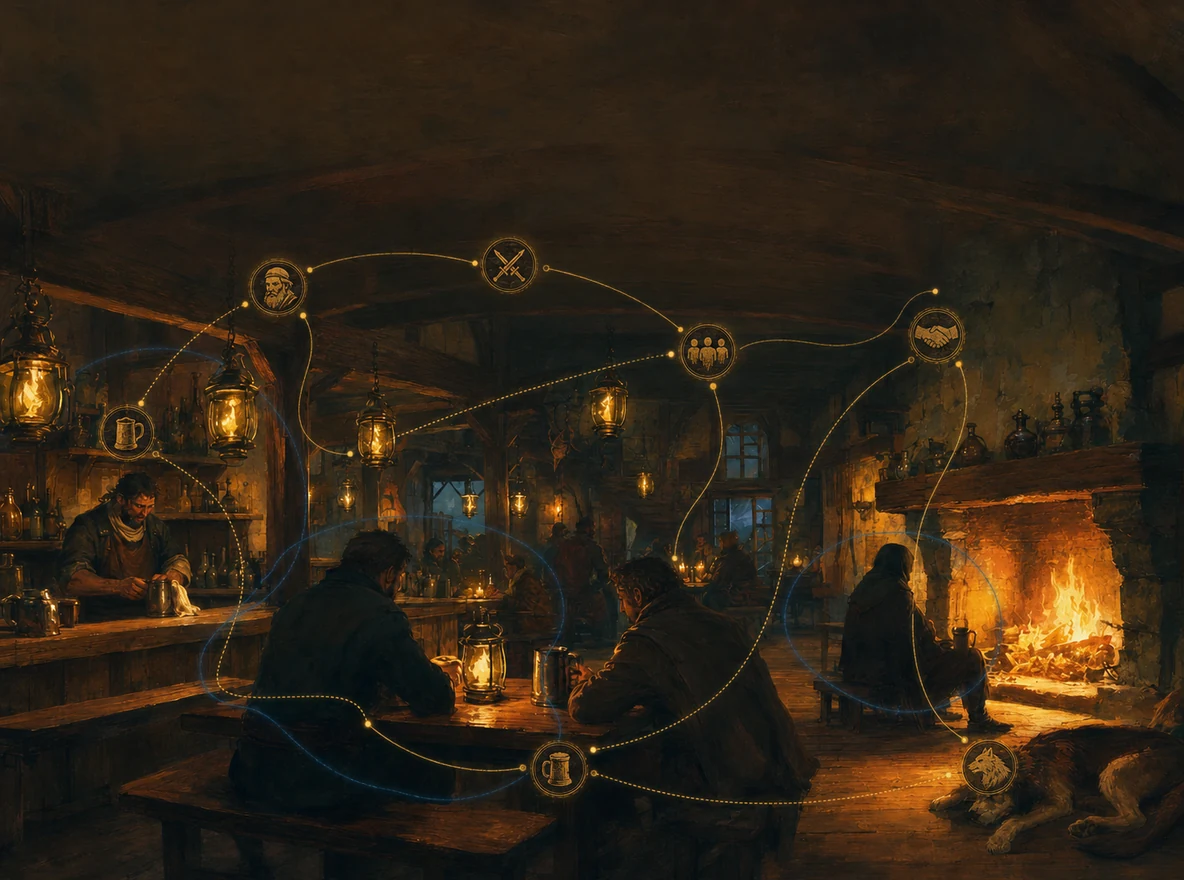
A tavern fails if players cannot picture it. This AI specifies the public floor, the bar, the kitchen hazard, the stairs, the stables, and the room that should stay locked. You get seating that creates eavesdropping, a balcony that creates a drop, and a cellar that creates a second scene. The common room becomes a map of relationships, not a rectangle with chairs.
NPCs who can survive contact with players
Ask for an innkeeper who can refuse a high-level party, a server who sells rumors, a regular who is a spy, and a musician who knows the next dungeon. The output names what each person wants tonight — coin, silence, a job, revenge — so you are not voicing a list of occupations. That is the difference between a crowd and a cast.
Menus, rumors, and hooks in the same pass
A living inn has prices in the local coin, a house ale with a story, rooms that cost more when the festival hits, and three rumors that point at your campaign instead of a generic war. You can ask for a job board, a wanted poster, or a private booth the guild always takes. The generator’s job is the packet you would have written on Sunday if Sunday had been longer.
"Generate a canal-side tavern in a half-timbered harbor city: dockhands on the ground floor, a private balcony for merchants, a locked cellar, and three rumors about missing cargo."
"Build a roadside inn for four 3rd-level D&D characters: a one-armed innkeeper, a bard who knows the next dungeon, a menu in copper pieces, and a brawl if someone insults the house ale."
"Design a Pathfinder 2e mountain lodge: twelve rooms, a shrine alcove, two faction tables that hate each other, and a job board with three hooks."
Related Agents You'll Also Find Useful
If the sign, the rooms, and the regulars need names that do not sound like a spreadsheet, Name Generator produces inn titles, keeper names, drink names, and district labels with cultural and linguistic consistency.
- Tavern, ship, and street names that fit the settlement
- NPC names players will actually say out loud
- Recurring naming patterns across a long campaign
If you want a player-facing reveal of the common room — the first glance from the door, the balcony, the fight that starts at table three — Comic Creator can storyboard the approach as sequential art you then convert into a handout or a VTT splash.
- Panel-to-panel staging for tavern reveals
- Clear silhouettes for the bar, hearth, and crowd
- Visual beats you can translate into map landmarks
When the inn has a bard, a drinking song, or a rumor that travels in verse, Lyric Writer writes something the table can hear: a house anthem, a sailor’s work song, or a ballad that is secretly a clue.
- Singable lyrics matched to the inn’s culture
- Songs that smuggle rumors without a lore dump
- Genre control from sea shanty to courtly lament
Try this AI tavern generator free — no credit card required.
How to Generate a Fantasy Tavern in Minutes
Step 1: Describe the job of the scene, not the furniture
State the system, the settlement, party level, and what the inn must do. Rest is not a job. “Get the smugglers’ rumor without starting a fight” is a job. A good brief names the district so the clientele is honest.
"D&D 5e, four 4th-level PCs, first night in a canal city. I need a working dock inn where cargo gossip is cheaper than rooms, and the keeper owes money to a warehouse guild."
Step 2: Lock layout, services, and who is listening
Ask for public rooms, private rooms, stables, cellar, and which tables can overhear which other tables. Specify coin, menu depth, and whether rooms are full. If you need a brawl map later, say so now so furniture is actually cover.
"Ground-floor common room, kitchen with a grease-fire hazard, six rooms upstairs, a locked cellar, and a balcony that looks down on the bar. Prices in silver. Two tables of warehouse toughs."
Step 3: Stock people with wants, then stock rumors that serve the plot
Name three staff, five patrons, and what each will do if the party pays, threatens, or performs. Then demand rumors that point at your actual adventure, not a random war. Iterate once if the keeper cannot survive a rude paladin.
"Innkeeper can refuse armed guests. Server sells rumors. A penniless mercenary wants work. Tie two rumors to the missing river barge and one to the temple across the bridge."
Step 4: Carry the packet to the table or the VTT
Use the layout as a sketch, a Foundry scene brief, or a read-aloud. Keep the same thread so the next inn in the same city shares dialect, coin, and guild politics instead of cloning the last common room.
Results & Use Cases
📊 First night in a harbor city that feels occupied
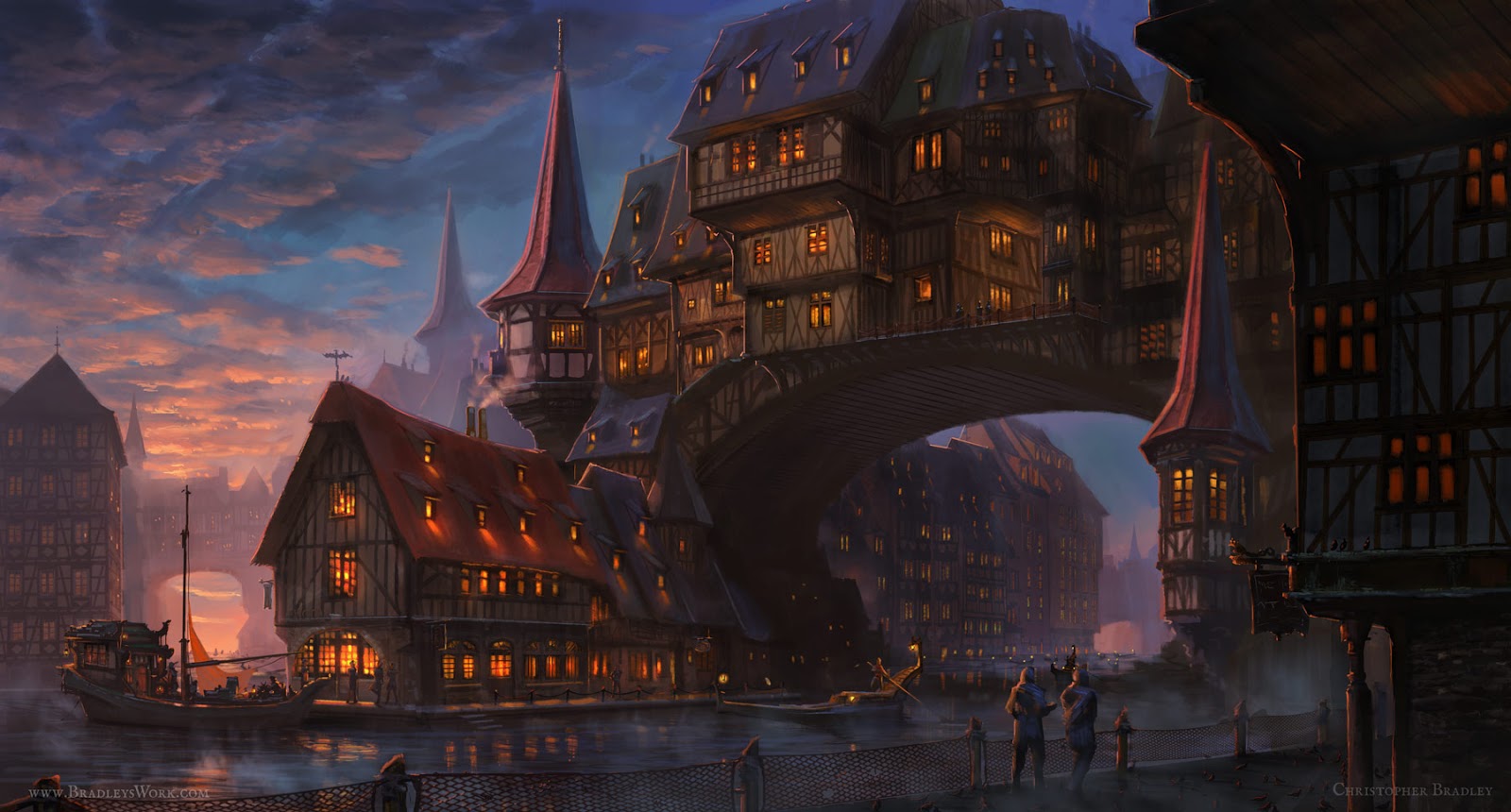
Scenario: The party arrives at dusk in a canal town of half-timbered bridges and glowing windows. You have a dungeon ready and no inn.
Traditional Approach: A nameless “tavern,” one keeper, and theater of the mind until someone asks who else is in the room.
This AI tavern generator: A dockside inn with a public floor, a merchant balcony, a cellar, three cargo rumors, and a keeper who will not be bullied — ready before the first ale is ordered.
- Clientele that matches the waterfront, not a generic village
- Room names you can finish in the same sitting with Name Generator
- A reveal shot Comic Creator can turn into a player handout
💼 Remixing a published module without a second sourcebook
Scenario: The module’s inn is a paragraph. Your table turned it into a faction clubhouse and wants names, a menu, and a private room.
Traditional Approach: Steal another inn from a different book, or stall while you invent prices.
The design partner: A revised packet that keeps the module’s plot beats and replaces the empty room with staff, seating, and hooks that still point at the printed adventure.
- Same story function, new geography
- Prices and room keys you can track
- A house song from Lyric Writer if the bard asks what the locals are singing
📱 Commute prep for tonight’s rest scene
Scenario: You are on a train with a phone, session in four hours, and the party said they are “just going to the inn.”
Traditional Approach: Open three generator tabs, none of which know your campaign’s guild war.
The same brief, on mobile: A 20-person common room, a full menu, two listening posts, and a job on the board. Sessions sync across web, iOS, and Android, so the packet is on your laptop when you sit down.
- Voice or typed brief on the phone
- Enough structure to improvise without stalling
- A sketch you can screenshot onto the table
🎯 A road inn that is not a reskin of the last one
Scenario: Four towns in a row have used the same timber box. Overland travel feels like a loading screen.
Traditional Approach: Change the sign, keep the crowd.
Game design pass: A mountain lodge or river ferry inn with different clientele, a shrine, a shortage, and a table of people who do not want the party there — the kind of atmosphere fantasy tavern encounter writing assumes you already prepared.
- A reason this building exists on this road
- NPCs who will not be reused next session
- Visual notes you can keep consistent if you illustrate the campaign
Studios already feel the same pressure. A Google Cloud survey of games developers found 90% already using AI in their workflows, with 89% reporting that AI is changing what players expect from living worlds. A tabletop inn has the same problem at a smaller scale: players can tell when the hub was not designed.
FAQ
What is an AI tavern generator?
An AI tavern generator is software that turns a text brief — system, town, party, and the job of the scene — into a runable inn: layout, staff, patrons, menu, rumors, and hooks. Game Designer Assistant focuses on taverns as social dungeons, so the output is something you can put on a VTT, a printed sketch, or a read-aloud, not just a random name.
Is Game Designer Assistant free?
Yes. You can use it on the free tier with all core features and limited usage. Paid plans start at $20 per month for Plus, with higher tiers if you generate inns, NPCs, and concept art every week. Usage resets monthly on your billing date, with no daily caps, so a Sunday prep binge is allowed.
Can this AI tavern generator make D&D 5e and Pathfinder inns?
Yes. Name the system, party level, and coin so prices, room sizes, and creature occupancy are honest. Ask for 5-foot squares if you expect a brawl, and for rumor language that matches your setting. The same brief can specify a VTT splash, a printed sketch, or theater of the mind with a seating chart.
How is this different from a random tavern name generator?
Name tables and 1d10 rumor lists produce fragments. This AI produces the design of the inn: who is here, what they want, what a night costs, and which hook belongs to your campaign. Use it instead of a blank page, or after a random result that has no ecology. It will not replace a painted battle map you already own; it replaces the empty common room.
Does an AI tavern generator work on mobile?
Yes. Sessions, settings, and history sync across web, iOS, and Android, so you can brief an inn on a phone and finish the sketch at a desk. Speech-to-text is available if you would rather talk through the common room than type it while commuting.
Can it generate tavern NPCs, menus, and rumors together?
Yes. Ask for staff, regulars, one-night guests, a priced menu, and rumors in one pass so the server who sells gossip and the dish that causes the fight belong to the same building. Pair names with Name Generator and a door-reveal handout with Comic Creator if you want the packet to match across voice, page, and table.
Conclusion
Taverns are the part of GM prep that still fails in public: no crowd, no prices, no reason to stay. An AI tavern generator will not play the innkeeper for you, but it will put a named, mapped, rumor-ready inn on the table before the first drink is poured. Game Designer Assistant turns a settlement sentence into layout, NPCs, menus, and hooks you can run in a VTT or read across a physical table.
If tonight’s common room does not exist yet, start with the brief, not another name table. Try the agent now, then explore more at Jenova.
For Developers: Game Designer Assistant is available programmatically via the Jenova API — integrate AI tavern briefs, inn layouts, and NPC packets into your VTT or campaign app with a single API call. Full documentation →