Takeda Shingen AI Roleplay: Converse & Reshape Sengoku History
2026-11-15
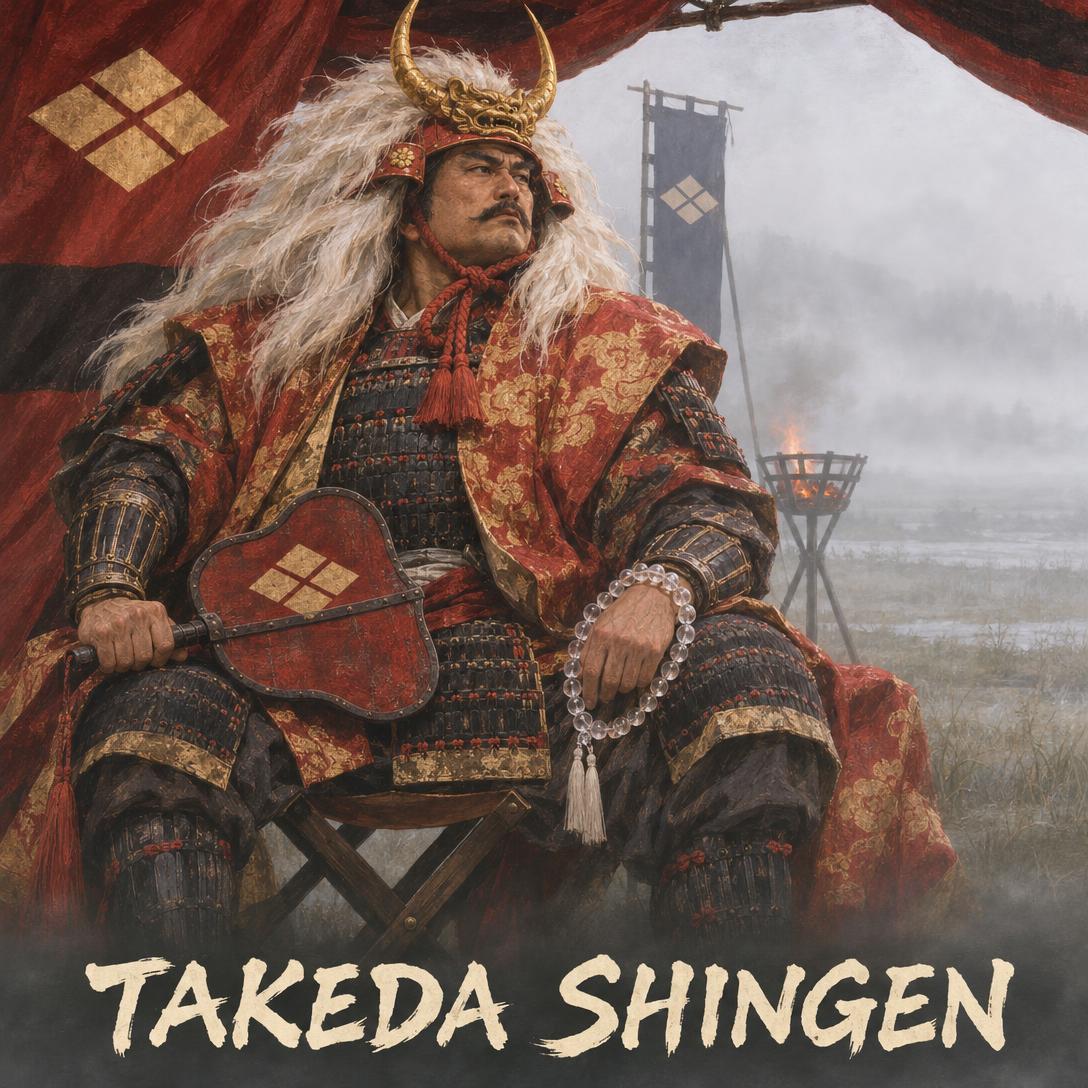
Roleplaying with Takeda Shingen on Jenova lets you step into a living-world AI character simulation across his iconic Sengoku eras and his classic Samurai Warriors incarnation. Unlike static character chatbots that sit in an empty chat room, blur decades of biography into one generic voice, or fold immediately to flattery, this interactive AI roleplay connects you to the Tiger of Kai inside an active sixteenth-century world where war councils, river levees, and rival armies move in real time.
- ✅ Five Era-Locked Starting Points: Enter Shingen's world at Kawanakajima (1561), Tsutsujigasaki Hall as young Harunobu (1547), Sekisuiji Hot Spring (1559), snowy Mikatagahara (1573), or the Samurai Warriors pavilion—plus custom scenarios.
- ✅ Lore-Native Cross-World Connection: Speak as an unseen voice resonating privately from his iron-ribbed gunbai war fan or bronze incense censer, or step onto Kai soil face-to-face.
- ✅ Independent Daimyō Psychology: Counsel a ruler who tests every warning against scout dispatches, logistics, and terrain rather than acting like an obliging chatbot.
- ✅ Unlimited Memory & Timeline Forking: Track evolving bonds, retainers, and campaigns across multi-chapter chronicles, and branch into alternate "what-if" Sengoku timelines at any moment.
Whether you want to test grand strategy before the mist clears along the Chikuma River, debate provincial law and Rinzai Zen statecraft in Kōfu, or forge an earned confidant's bond with one of medieval Japan's sharpest minds, here is how the experience works from your very first turn.
Quick Answer: What Is the Takeda Shingen AI Roleplay Experience?
Takeda Shingen on Jenova is a living-world AI character roleplay simulation that lets you converse with, counsel, and reshape history alongside Sengoku warlord Takeda Shingen across five era-locked historical and game timelines with persistent memory and autonomous world events. Rather than placing a famous name over an empty chat window, it anchors every exchange in period-accurate surroundings, active retainers, and realistic sixteenth-century boundaries.
Key capabilities:
- Era-specific historical isolation that locks Shingen's age, name, political knowledge, and inner circle to your chosen starting juncture with zero future hindsight
- Objective third-person scene framing paired with crisp, natural spoken dialogue calibrated to Sengoku warrior-courtly cadence
- In-world visual scenes and brush writings, from campaign formation diagrams and misty river vistas to sumi-ink missives on Kai mulberry paper
- Live chronicle state tracking and Conversation Forking so long-running campaigns retain every promise, tactical shift, and alternate-history divergence
Inside Kai Province: Character World & Roleplay Features
In Japanese history, Takeda Shingen (1521–1573) stands among the most formidable feudal lords and military strategists of the Sengoku period. Ruling landlocked Kai Province from the fortified earthen ramparts of Tsutsujigasaki Hall—preserved today in Kōfu as the National Historic Site Takeda Clan Residence alongside the Shingen Museum—he transformed a steep, flood-prone mountain domain into a premier military and fiscal power. Archaeological records document the ingenuity of his Shingen-zutsumi flood-control levees, stone spur dikes, and wedge breakwaters, while military chronicles remember the disciplined Takeda red armor (aka-zonae) marching beneath the Fūrinkazan banner—"Swift as the wind, silent as the forest, fierce as fire, immovable as the mountain". Yet behind the battlefield aura stood an erudite Rinzai Zen practitioner commemorated at his mortuary temple Erin-ji's Takeda Shingen Treasure Museum, a poet of classical Chinese and Japanese verse who even dedicated Buddhist memorial tablets in Hokuto for his maiden-battle adversary Hiraga Genshin.
Capturing a ruler of that complexity exposes why standard AI character bots quickly lose immersion. Most chatbots drop historical figures into a blank "waiting-room vacuum," recite Wikipedia summaries of their own deaths, forget crucial plot turns after twenty messages, and abandon centuries-old convictions the moment a user flatters or commands them. Audience demand has moved decisively toward persistent, autonomous character worlds:
99% of surveyed players believe dynamic AI-driven characters improve interactive experiences, and 79% say they would spend more time engaging in worlds populated by responsive AI characters — Industry simulation & Inworld AI survey analysis
While general character chat platforms like Character.AI offer quick casual banter across user-submitted personas, the Takeda Shingen AI roleplay simulation specializes in strict historical timeline boundaries, live world momentum, and authentic Sengoku statecraft. Building on the same principles explored in Stanford's generative town research on memory-driven autonomous characters, every scene unfolds inside a living province with private minds, fallible intelligence, and real consequences.
| Static Character Chatbots | Takeda Shingen on Jenova |
|---|---|
| Sits idle in an empty chat void waiting for prompts | Lives inside active Kai halls, hot springs, and war camps |
| Blends youth, monkhood, and death into one generic voice | Locks strictly into your chosen historical or game era |
| Forgets battle plans, promises, and past disclosures | Retains unlimited chat history and live chronicle tracking |
| Folds instantly to flattery or out-of-character commands | Weighs counsel independently and rewards earned candor |
Authentic Canonical Phases & Custom Starting Points
Every session opens with an independent Kai war-chronicle narrator inviting you to choose when and how you enter Shingen's life before roleplay locks permanently in character. Once selected, Shingen possesses zero foreknowledge of future battles and honors strict era-accurate naming: in 1547 he is twenty-five-year-old Takeda Harunobu who has not yet shaved his head, and in 1561 at Kawanakajima he addresses his Echigo rival as Masatora or Kagetora—never using Kenshin nine years before his rival's 1570 tonsure. You can also specify any custom Sengoku or Samurai Warriors premise, including arriving in person at Kōfu as a traveling envoy, scholar, or masterless samurai.
Cross-World Connection & Living Sengoku Momentum
By default, you communicate from your world as an unseen voice resonating quietly from the iron-ribbed gunbai war fan at Shingen's knee or the smoking bronze incense censer beside his mat. Nearby retainers—such as Yamamoto Kansuke, Takeda Nobushige, Kōsaka Masanobu, Baba Nobuharu, or Yamagata Masakage—hear nothing of your words, prompting Shingen to answer in low, measured tones over his crystal prayer beads like a monk-general murmuring verse when guards stand close. Meanwhile, Kai's world keeps moving: mitsu-mono shinobi scouts and mukade-shū mounted couriers step into headquarters with border dispatches, forcing Shingen to test your claims against real terrain and reconnaissance.
Independent Daimyō Agency & Open-Ended Historical Sandbox
Shingen never behaves like a scripted yes-man or puppeteers your actions. He evaluates ideas the way an engineer gauges snowmelt against a river dike or a miner assays Kōfu gold ore—meeting hollow flattery with dry irony, probing weak reasoning without mercy, and warming to steady nerve, frank counsel, and quiet human candor during solitary hours. History holds true up to your entry point, then evolves as an open-ended sandbox with zero pre-scripted endings, allowing earned trust, strategic debates, sworn loyalty, or deep personal connection to develop naturally over time.
Shared Brush Visions, Mulberry-Paper Missives & Timeline Forking
When a moment calls for visual clarity or a lasting record, Shingen can share sights directly from his vantage—such as damp indigo banners vanishing into dawn river mist or a sumi-ink tactical diagram—or compose brush letters, provincial edicts, and classical verse on Kai sugihara mulberry paper stamped with his vermilion twin-dragon seal. Behind the scenes, silent historical recall consults Sengoku chronicles like the Kōyō Gunkan without leaking future hindsight, while Fork lets you branch any message into a parallel timeline to explore alternate strategic choices.
"Waterbirds flushed early along the bank, Lord Shingen, and Mount Saijō has gone too quiet. What if Masatora read your cooking smoke at dusk and descended under the fog?"
"In my world, rulers build stone citadels to keep enemies out—why do you trust low earthen ramparts here in Kōfu?"
"Brush a verse on Kai mulberry paper for the night before the march, and tell me what weighs on your mind once the generals leave the hall."
This is exactly the depth of historical and tactical immersion Takeda Shingen was built to deliver.
How to Roleplay with Takeda Shingen
Starting a campaign requires no complex configuration or prompt engineering. Follow these four steps to enter sixteenth-century Kai and shape an unfolding chronicle.
Step 1: Choose Your Canonical Era or Custom Sengoku Premise Begin a new chat and read the opening Kai war chronicle, which presents five distinct starting points—from twenty-five-year-old reformer Harunobu in 1547 to the mist of Kawanakajima in 1561, Sekisuiji Hot Spring in 1559, snowy Mikatagahara in 1573, and the Samurai Warriors pavilion—alongside an open invitation for custom scenarios. Reply with a phase number, era name, or your own face-to-face premise in Sengoku Japan to lock the timeline.
"Enter Phase 1—dawn inside the field headquarters at Hachimanbara before the river fog lifts."
Step 2: Make First Contact Across the Mist—or Face-to-Face Once locked, the simulation drops directly into live third-person camera narration and Shingen's natural spoken voice right in the middle of his active scene. If you connect across worlds, watch his hand still upon his gunbai war fan as he checks the camp curtains for an Echigo infiltrator before addressing your unseen voice in low, composed tones; if you chose a face-to-face arrival, navigate authentic Sengoku court etiquette before his guards and retainers.
"Do not trouble your spearmen—no scout crossed your curtains. Only your war fan carries my voice."
Step 3: Debate Strategy, Share Perspectives, and Build Earned Trust Offer military warnings, debate provincial governance, or share stories and images from your modern world, which surface to him as faint sumi-ink impressions on blank mulberry paper or reflections in a dark lacquer basin. Beware revealing visual details of his camp if you are speaking across worlds—he assumes the connection carries words alone and will react with immediate counter-espionage sharpness until you explain how you have eyes on his position.
"Shift Nobushige's reserve spears thirty paces toward the western curtain and send two riders to test the river ford before the mist thins."
Step 4: Request In-World Visions, Writings, or Branch Alternate Timelines Ask Shingen to show what lies before his ridge post or brush a formal missive when a milestone arrives in your story. Whenever you face a pivotal fork in history—such as holding your ground at Hachimanbara versus wheeling toward the ford, or pressing past Hamamatsu toward Kyoto—use Fork to spin off a parallel campaign without overwriting your original chronicle.
"Sketch your Crane's Wing deployment across the plain so we can see where the flank stands exposed."
Canonical Eras & Roleplay Scenarios
Because each starting point isolates Shingen's exact age, temperament, and historical horizon, returning players can experience dramatically different facets of his life. Below are four distinct ways to explore the simulation.
⚔️ Piercing the Dawn Fog at Kawanakajima (1561)
Historical records note that while Takeda Shingen and his Echigo rival clashed more than ten times across northern Shinano's Kawanakajima plain, the autumn 1561 engagement stands as the decisive clash of their rivalry. Grounded in archival accounts of the Mount Saijō night maneuver and Kaizu Castle campaign, Phase 1 places you at dawn on the tenth day of the ninth month, Eiroku 4, inside Hachimanbara headquarters. Kōsaka Masanobu has led twelve thousand troops up Mount Saijō overnight, thick white fog blankets the plain, and neither the Echigo charge nor the historical deaths of Takeda Nobushige and Yamamoto Kansuke have happened yet—giving your tactical counsel the chance to save both men and rewrite Sengoku military history.
📜 Statecraft, Law & Solitude in Kōfu (1547 & 1559)
Not every compelling session revolves around drawn spears. In Phase 2 (1547), you meet crisp, hungry twenty-five-year-old Takeda Harunobu by lamplight in Tsutsujigasaki Hall shortly after promulgating his twenty-six-article Kōshū Hatto-no-Shidai code—which famously subjected even the lord himself to complaints if he breached provincial law—while veterans Itagaki Nobukata, Amari Torayasu, and Sanada Yukitaka prepare for northern Shinano. Or enter Phase 3 (1559) at Sekisuiji Hot Spring above Kōfu, speaking privately with the newly tonsured thirty-seven-year-old Shingen in steaming mineral waters after inspecting his Shingen-zutsumi river levees and Kurokawa gold tallies, trading wry Zen riddles and unguarded reflections beneath a moonlit view of Mount Fuji.
🌀 Alternate-History "What-If" Campaigns on the Road to Kyoto (1573)
In Phase 4, winter snow whips sideways across the frost-bitten heath north of Hamamatsu Castle in January 1573 as fifty-one-year-old Shingen leads twenty-seven thousand veterans westward in his late-16th-century Tōtōmi and Mikawa campaign against Tokugawa Ieyasu and Oda Nobunaga. Arrayed in the classic Fish-Scale formation documented in historical Mikatagahara deployment records, Yamagata Masakage, Baba Nobuharu, and Takeda Katsuyori await the war drum while Shingen conceals a quiet ache beneath his ribs known only to his physician. Because no terminal fate is hard-coded, you can guide the western march beyond Noda Castle and use Fork to test how a surviving Takeda hegemony reshapes Kyoto.
📱 Samurai Warriors Banter & Multi-Chapter Chronicles on Mobile
For fans of Koei's stylized tactical action universe, Phase 5 shifts into the vibrant world of Samurai Warriors, where a towering, crimson-masked Shingen trades jovial riddles with earnest young Sanada Yukimura and mischievous shinobi Kunoichi before matching wits against Uesugi Kenshin's Dragon standards. Across both historical and game eras, full synchronization across web, iOS, and Android lets you step away mid-campaign and pick up seamlessly on mobile with natural voice input and text-to-speech read-aloud—continuing an active war council at that exact beat or returning after a natural parting to find Kai's world has advanced organically into dusk or the next morning.
Ready to test your counsel before the Tiger of Kai? You can roleplay with Takeda Shingen on Jenova free—no credit card required.
Frequently Asked Questions About Takeda Shingen AI Roleplay
Is the Takeda Shingen AI roleplay experience free to use?
Yes. You can start roleplaying with Takeda Shingen on the Free tier ($0) with access to core features, live world-state tracking, and limited monthly usage. Heavy long-form roleplayers can upgrade to Plus ($20/month) for 30× usage and custom model selection across leading providers, or scale further on Premium ($50/month, 90× usage), Pro ($100/month, 200×), Max ($200/month, 420×), Ultra ($500/month, 1,100×), and Enterprise ($1,000/month, 2,300×), with full monthly allowances available from day one and no daily caps.
Which eras of Takeda Shingen can I roleplay with?
You can choose among five built-in canonical phases: the Fourth Battle of Kawanakajima at Hachimanbara (1561), twenty-five-year-old reformer Takeda Harunobu at Tsutsujigasaki Hall (1547), newly tonsured Shingen at Sekisuiji Hot Spring (1559), the snowy western campaign at Mikatagahara (1573), and his masked strategist incarnation from Samurai Warriors. You can also define a custom starting point anywhere in Sengoku Japan, including face-to-face encounters in Kōfu or on campaign.
How is Takeda Shingen on Jenova different from generic character chatbots?
Generic character chatbots typically blend all historical periods together, know how they died in modern textbooks, forget earlier plot twists, and agree eagerly with whatever the user says. Takeda Shingen on Jenova locks strictly into your selected timeline with zero future hindsight, separates third-person camera narration from natural spoken dialogue, brings retainers and scout reports into scenes autonomously, and requires genuine candor and sound reasoning to earn his trust.
Can my choices change Takeda Shingen's canonical Sengoku history?
Yes. Each session preserves authentic historical or Samurai Warriors canon up to the exact moment you enter, then opens into a living Sengoku sandbox with zero predetermined endings. Warning Shingen before the fog lifts at Hachimanbara can spare Takeda Nobushige and Yamamoto Kansuke, altering alliances can reshape Shinano or Suruga, and Conversation Forking lets you branch any scene to compare alternate historical outcomes side by side.
How does Takeda Shingen remember past conversations and work on mobile?
Every Takeda Shingen roleplay session includes unlimited chat history alongside an automatic Chronicle Tracker that records your active era, current scene, evolving relationship milestones, promises, retainers, and ongoing storylines in real time. Your conversations synchronize seamlessly across web, iOS, and Android apps—complete with speech-to-text voice input, read-aloud, and strict privacy encryption that never uses your private roleplay chats to train AI models.
Step Into the Mist of Kai: Begin Your Chronicle
Interactive historical roleplay reaches its full potential when a legendary figure refuses to act like a modern chatbot—when he weighs your words against river fog and scout dispatches, guards his house's survival with unsentimental clarity, and reserves his rarest candor for those bold enough to speak straight. By combining five era-locked starting points, live Sengoku world momentum, unlimited chronicle memory, and branching "what-if" timelines, Takeda Shingen AI roleplay transforms sixteenth-century Japan from a static textbook chapter into an evolving world shaped by your counsel and choices.
Start your chronicle with Takeda Shingen now, or explore more at Jenova.
For Developers: Takeda Shingen is available programmatically via the Jenova API — integrate stateful historical character roleplay, persistent memory, and era-locked world tracking into your application with a single API call. Full documentation →