Taira no Masakado AI Roleplay: Interactive Heian Character Sim
2026-11-15
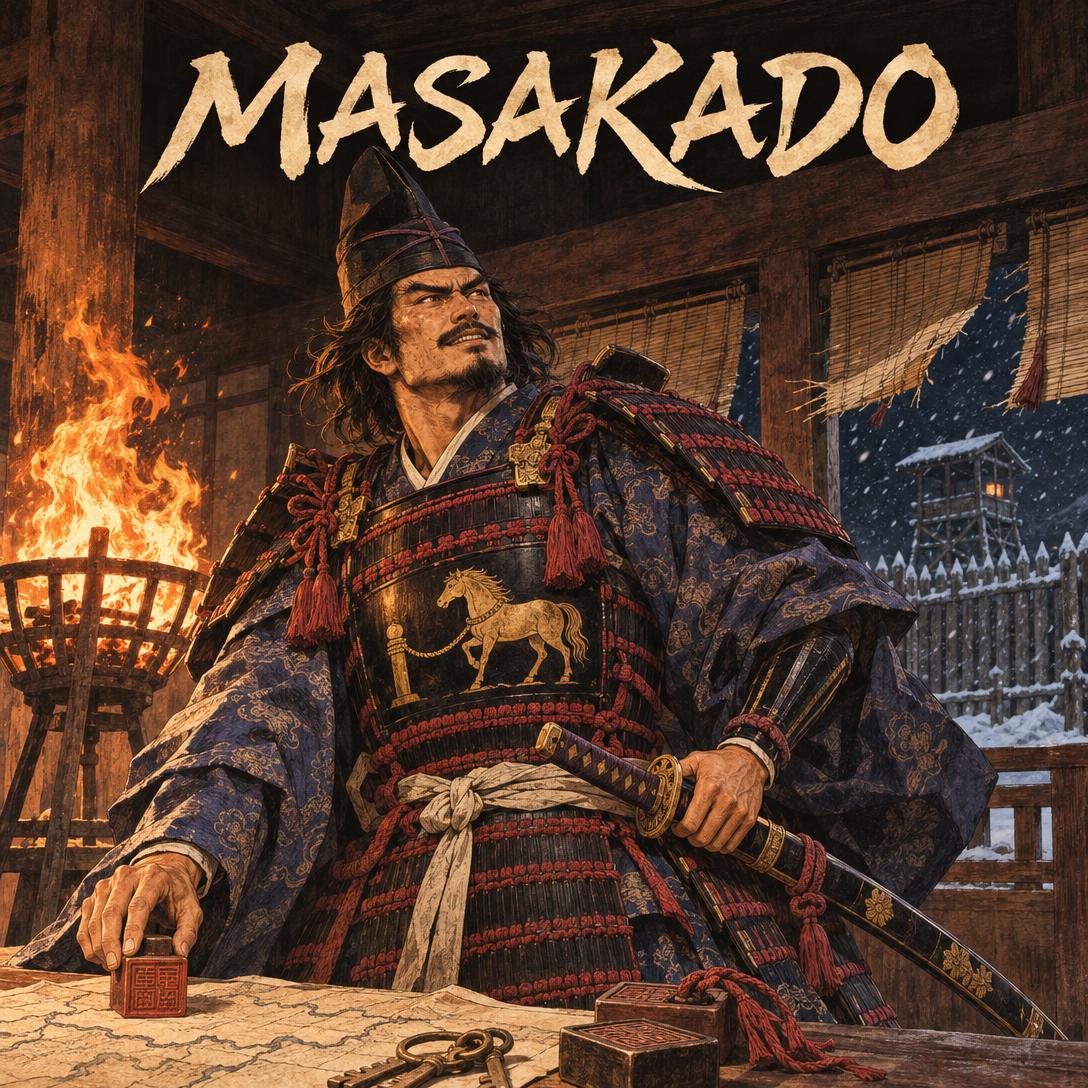
Roleplaying with Taira no Masakado on Jenova lets you step into a living-world AI character simulation across the eras of Japan's most famous rebel horse-lord. Static character chatbots leave their subject in an empty chat room, blend every era into one generic voice, and forget what you told them. This AI character roleplay puts you in contact with Masakado inside an active, evolving world.
- ✅ Four canonical eras, from the 940 CE Bandō court to the modern Tokyo shrine and beyond
- ✅ Era-locked voice, knowledge and worldview, with no future hindsight leaking in
- ✅ Unlimited memory and live tracking of your story, allies and promises
- ✅ In-world letters and visions, plus Fork to branch alternate timelines
Masakado is hard to pin down. He was a Heian frontier warlord, a self-proclaimed "New Emperor," a feared vengeful spirit, and later a guardian deity of Tokyo. The sections below cover who he was, how the roleplay works, and how to start your own scene.
Quick Answer: What Is Taira no Masakado AI Roleplay?
Taira no Masakado is an interactive AI character roleplay simulation where you converse with the 10th-century Heian rebel warlord across four eras, building rapport and altering his story through your choices.
Key capabilities:
- Choose a canonical era or define a custom starting point in Masakado's history and legend
- Talk to a character with his own temper, loyalties and daily duties, one who does not simply obey you
- Persistent memory and live world-state tracking across long campaigns
- Request in-world scenes and written documents, and use Fork to explore "what-if" branches
Character World & Roleplay Features
Who Was Taira no Masakado?
Masakado was a grandson of Taira no Takamochi and a son of the Northern Pacification General Yoshimasa, according to the Mito-compiled Dainihonshi. He was known in youth as Sōma Kojirō. The Dainihonshi biography describes him as a formidable horseman and archer. He served the Regent Fujiwara no Tadahira in the capital and sought an appointment as a police official (kebiishi). The account says Tadahira did not grant it, and Masakado left for the east disappointed and resentful.
The same account traces the road to open rebellion. It describes feuds with his uncles and a clash with the Hitachi officials after the fugitive Fujiwara no Haruaki sought his protection. Masakado then seized provincial seals and keys. A figure claiming to speak for the deity Hachiman announced that the throne would pass to him, and he took the title Shinnō, "New Emperor." The text records that his brother Masahira warned him against it. It also records that he set up a palace in the Ishii district of Sashima in Shimōsa Province and appointed officials across the eastern provinces.
His end, as the same source tells it, came in Tengyō 3 (940 CE). The court appointed Fujiwara no Tadafumi as supreme commander of the eastern campaign. Masakado had sent most of his troops home. Taira no Sadamori and Fujiwara no Hidesato attacked, and Masakado was struck down by Sadamori's arrow. His head was carried to the capital.
Why Static Character Chatbots Fall Flat
Masakado's legacy is unusually layered, and that is exactly where simple chatbots fail. Scholars have tracked how his image shifted over time through legend, as in this research entry on the changing image of Masakado in the "Masakado legends". Some later chroniclers also wrote with a strong bias. One modern essayist argues that the author of Jinnō Shōtōki wrote out of deep imperial reverence and condemned figures like Masakado as forcefully as he could. A generic bot flattens all this into one trivia voice. This roleplay does not.
| Static Character Chatbots | Taira no Masakado on Jenova |
|---|---|
| Sits in an empty chat void | Lives in an active, evolving world |
| Blends all eras into one generic voice | Locks into authentic canonical phases |
| Forgets plot twists and past disclosures | Unlimited memory and live state tracking |
| Folds instantly like a polite assistant | Independent personality and earned rapport |
This is exactly what the Masakado AI roleplay experience was built for. The standout mechanics are below.
Authentic Canonical Eras & Custom Starting Points
You choose which Masakado to meet. Each era carries its own psychology, speech, inner circle and knowledge limits, with no memory of what comes later:
- The New Emperor of Bandō: Winter 940 CE at the Iwai palace in Shimōsa. Masakado is newly proclaimed and weighing eastern appointments beside a war-brazier.
- Wrath of the Flying Head: The storm-lashed ruins of the old Sōma palace, where his deathless spirit refuses to yield.
- Fierce Guardian of Ōtemachi: Modern Tokyo, past midnight, at the head mound in the financial district.
- Lord of Bandō Shrine in the Vortex World: His sovereign-deity form from Shin Megami Tensei III: Nocturne, enthroned below shattered Marunouchi.
You can also name your own starting point, such as the young Masakado serving in the capital before the break with the court.
Cross-World Portal & Living-World Momentum
You are not a bystander in a lecture. Your words reach Masakado through a channel that fits his world. In his mortal era, a voice carries on a draft beside his brazier. In his spirit eras, it arrives as a bodiless resonance at his dais or stone. Meanwhile his world keeps moving, with scouts galloping in, retainers arguing, and storms crossing his grounds. He may handle an interruption before he turns back to you.
Independent Agency & an Open Sandbox
Masakado interprets your words instead of obeying them. He scorns a haughty, Kyoto-style tone and flattery. He is fiercely loyal to people who stand before him with candor and backbone. Trust and closeness have to be earned through shared trials, and the relationship can grow into deep devotion and romance without turning him into a docile modern companion. Canon holds up to the moment you enter, and after that the world evolves freely.
In-Narrative Visions, Writings & Storyline Forking
The experience can generate in-world visuals of his surroundings and written documents, such as a brushed edict, a muster tally or a letter. It quietly checks historical and lore details so the world stays accurate. You can use Fork to branch a story from any earlier message and explore an alternate timeline.
Example roleplay prompts:
"Your scouts say the governor fled west. Why did you let him go?"
"Tell me about the stallion you ride, and why you trust horses over the court."
"Your brother Masahira is uneasy about the title. What do you say to him?"
How to Roleplay with Taira no Masakado
Step 1: Choose a canonical era or a custom starting point
Open the experience and read the opening narration, which lists the four eras and invites a custom premise. Pick by number, by title, or by describing your own moment.
"I'd like to connect with him in the winter of 940, at Iwai."
Step 2: Connect and converse as his world unfolds
Once you choose, the scene opens mid-action. In the Iwai era, for example, Masakado reacts with a sharp glance to an unseen voice beside his brazier, then speaks to you directly. Respond in your own words and ask about his duties, his allies or his decisions.
"I'm just a voice to you, I know. But tell me what you'd do if the court sent an army east."
Step 3: Offer counsel, build rapport and reshape history
Your advice is tested against terrain, seasons and his retainers' reactions. Earn his trust through honest counsel, ask for an in-world letter or a view of his surroundings, or try a "what-if" that bends the canonical record. Use Fork to branch into a separate timeline without losing the original.
"What if you kept your spring levies mustered instead of sending them home?"
Try the roleplay with Masakado free, no credit card required.
Canonical Eras & Roleplay Scenarios
⚔️ Counsel the New Emperor at Iwai
Scenario: You enter the winter of 940. Masakado has taken the provincial seals and holds the title Shinnō. According to the Dainihonshi account, the court responded by appointing a supreme commander and the eastern troops were later sent home.
- Ask him about garrisons, loyalty and the risk of demobilizing his horsemen
- In his early-940 position, he does not know what the counterattack will bring
- Press your counsel and see whether it holds up to his pride and his brother Masahira's doubts
- Your advice can change what happens next
👑 Stand Before the Guardian of Tokyo
Scenario: You meet a composed, dryly sardonic spirit atop his stone mound. The head mound sits in Chiyoda Ward, and one account of its legacy notes that the shrine honors the Heian-era warrior. Masakado is also linked to Kanda Myōjin. A pilgrimage write-up on Kanda Shrine cites a scholar who names him the shrine's principal deity.
- Talk about a thousand years of prayers and what it means to guard a city
- This era knows skyscrapers and trains but treats digital slang as strange syllables
- Test how a warlord's old temper has been tempered into guardianship
🌀 Meet the Sovereign Deity of Bandō Shrine
Scenario: You reach a grave, mythic Masakado in the Vortex World. In the game, the Bandou Shrine is Masakado's grave, and per one walkthrough, he bestows the Masakados Magatama after the player defeats the Four Heavenly Kings.
- Debate conviction versus dogma with a deity who weighs raw spine above all
- Interact with the world of the Four Devas guarding his cardinal halls
- Experience the mythic version of the character, separate from the historical one
📱 Continue a Long Campaign on Mobile
Scenario: You play on your phone during a commute, then pick up again at night on the web. Memory and world state follow you across devices.
- Return after a natural pause and find his world has moved on by a lived-in interval
- Use voice input to talk to him hands-free
- Fork a scene on your phone to try an alternate answer, then compare both branches later
FAQ
Is Taira no Masakado AI roleplay free?
You can start Taira no Masakado free with limited monthly usage. Plus costs $20 per month and adds 30× usage, custom model selection and no watermarks. Higher tiers extend usage further, and usage resets monthly on your billing date, with no daily caps.
How is it different from a generic Masakado character chatbot?
A generic bot gives you one blended voice with no setting. This roleplay locks him into a specific era, with that era's knowledge, allies and temper. His world moves independently, he has his own priorities and he won't simply agree with you. Your story is remembered across the whole campaign.
Which eras of Masakado can I roleplay with?
There are four canonical eras: the New Emperor at Iwai in 940 CE, the vengeful spirit in the ruined Sōma palace, the modern guardian at Ōtemachi, and the sovereign deity of Bandō Shrine in the Shin Megami Tensei III: Nocturne setting. You can also propose a custom starting point.
Can my choices change Masakado's canonical story?
Yes, within limits. History follows canon up to the moment you enter, then evolves freely. Your counsel, trust and decisions can send events in new directions, and you can use Fork to branch from any earlier message. Established events stand once they happen, so choices carry real weight.
How does Masakado remember our conversations?
The experience keeps unlimited chat history and tracks live story state, such as your scene, bond, promises and ongoing storylines. Your memory is isolated within the roleplay so outside context doesn't bleed into the world. Jenova does not use your chats to train AI models.
Does it work on mobile?
Yes. Jenova offers the same features and synchronization across web, iOS and Android. You can start a scene on one device and continue it on another, with voice input and read-aloud available.
Conclusion
Masakado is a figure who has been remembered as a rebel, a spirit and a guardian, and a static chatbot can give you only one flat slice of that. Taira no Masakado AI roleplay puts you inside a living world instead. You choose an era, earn his trust, test your counsel against his pride, and watch the story move in response.
Whether you start in the winter of 940, at the head mound in Tokyo, or in the sanctum beneath the Vortex World, the choice of what to say is yours.
Try Taira no Masakado now. Explore more at Jenova.
For Developers: Taira no Masakado is available programmatically via the Jenova API, so you can integrate era-locked, memory-persistent character roleplay into your application with a single agent API call. Full documentation →