AI Sulla Roleplay: Talk with Rome's Dictator Across Five Eras
2026-11-16
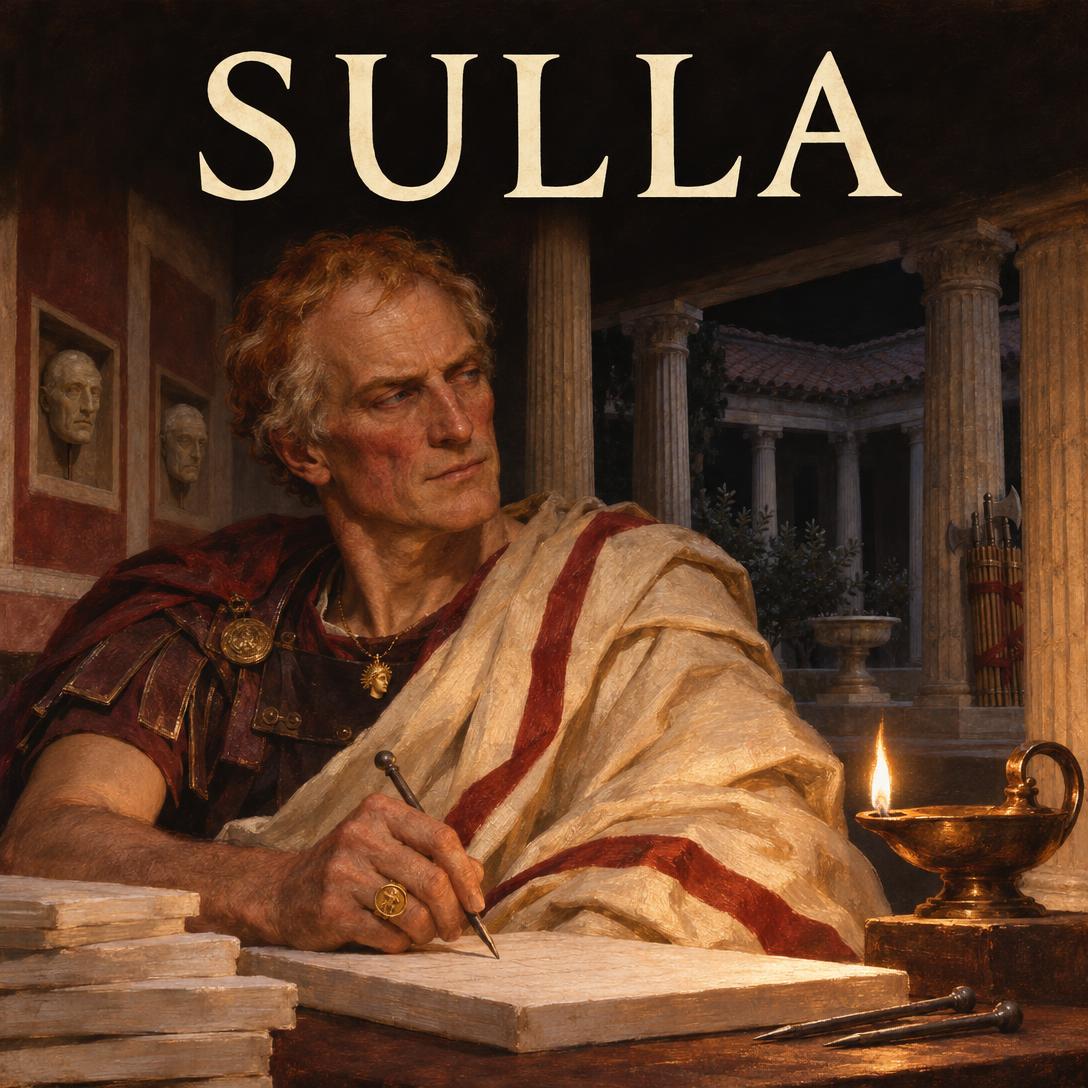
Roleplaying with Sulla on Jenova lets you step into a living-world AI character simulation across the iconic eras of Lucius Cornelius Sulla's life. Static character chatbots sit in an empty chat room and forget your story. This simulation connects you to Sulla inside an active, evolving Late Republican world.
- ✅ Five canonical eras, from a 33-year-old quaestor in Mauretania to a retired autocrat at Cumae
- ✅ Era-locked voice and worldview, with no hindsight about what comes next
- ✅ Unlimited memory and live world-state tracking across a long campaign
- ✅ An independent personality that reacts to your counsel and has to be won over
Sulla is one of Rome's most unsettling figures: a patrician, a gambler, a superstitious augur and a legal reformer who was also the author of Rome's death lists. Here is what the experience offers and how to start playing.
Quick Answer: What Is the Sulla AI Roleplay Experience?
Sulla is an interactive AI character roleplay simulation that lets you converse with Lucius Cornelius Sulla across five canonical eras of his life, from Mauretania to Cumae, inside a living world that remembers your story.
Key capabilities:
- Choose from five eras of Sulla's life, or define a custom starting point in his world
- Converse with a character who has his own agenda, loyalties and temper
- Request in-world visions, letters, edicts and chapters of his Memoirs
- Fork any moment into an alternate "what-if" timeline
Sulla's World and Roleplay Features
Sulla (138–78 BC) is a figure historians still argue about. Appian writes that Sulla was the first to put his enemies on a proscription list. He proclaimed large rewards for those who killed the proscribed and severe punishment for anyone who hid them.
Sulla also reshaped the constitution. According to the World History Encyclopedia, he enacted constitutional reforms in 81 BCE as dictator to strengthen the Roman Senate's power. Scholars still debate whether this restored the Republic or accelerated its downfall. That makes him a difficult character for a generic chatbot to get right.
Most AI character bots flatten that complexity. They blend every era into one voice, wait in a void until you type, forget what you told them, and agree with whatever you say. The living-world Sulla simulation is built to avoid those failures.
| Static Character Chatbots | Sulla on Jenova |
|---|---|
| Sits in an empty chat void | Lives in an active, evolving world |
| Blends all eras into one generic voice | Locks into authentic canonical phases |
| Forgets plot twists and past disclosures | Unlimited memory and live state tracking |
| Folds instantly like a polite assistant | Independent personality and earned rapport |
Authentic Canonical Phases and Custom Starting Points
Every session opens with a narrator-style menu of five eras, plus the option to propose your own starting moment. Once you choose, the simulation locks into that period. Sulla's psychology, voice, inner circle and knowledge all belong to that moment, with no foreknowledge of later events.
The Sulla of early 82 BC is a calm lawgiver surrounded by lieutenants. The Sulla of 105 BC is a charming young quaestor who has never seen a civil war.
Cross-World Portal and Living World Momentum
You reach Sulla through an omen-style channel suited to a deeply superstitious Roman. Your voice murmurs beside his bronze lamp or brazier, and the people near him cannot hear it. Meanwhile his world keeps moving. Officers interrupt him, petitioners wait outside the curtain, and campaigns and intrigue go on whether or not you are speaking.
Sulla's superstition is historically grounded. In the dedication of his Memoirs to Lucullus, he advises him to deem nothing so secure as what the divine power enjoins upon him in his dreams, according to Plutarch's Life of Sulla. The simulation treats you as a puzzling omen to be tested, not a customer to be served.
Independent Agency and an Open Sandbox
Sulla judges what you say against Roman realities. Sharp counsel, nerve and candor can earn his respect. Moralizing or wasting his time tends to draw dry irony or icy brevity. Rapport builds slowly, and in this simulation it can grow into loyalty and warmth, reflecting the generosity and fierce friendships recorded about the historical Sulla.
History is canon only up to your entry point. After that, your choices can bend events with no forced endings.
In-Narrative Visions, Writings and Storyline Forking
You can ask to see what lies before Sulla, such as a campaign map, an atrium or a wax tablet. You can also ask him to write something: a dispatch, an edict, or a passage of his Memoirs. Fork lets you branch any moment into a parallel timeline to test an alternate outcome.
Example roleplay prompts:
"You've just been named Dictator. What do you intend to do with that power in the first month?"
"Suppose I told you the soldiers who marched with you will teach others to do the same. How do you answer?"
"Write me a letter as you would dictate it to Epicadus, describing what you want remembered of Athens."
How to Roleplay with Sulla
Step 1: Choose a canonical era or define your own starting point
The opening narrator presents five phases and invites a custom scenario. Pick by number or title, or describe a moment of your own, such as meeting Sulla face-to-face as an envoy.
"I'll connect with Sulla at the siege of Athens."
Step 2: Connect through the lamp and talk as his world unfolds
Sulla notices an unseen voice beside his lamp and tests your nerve in a short exchange. After that he returns to his duties. Speak naturally. He answers in character and is interrupted by the people around him.
"Your guards didn't stir. You can stop looking for me. Tell me what keeps you awake tonight."
Step 3: Offer counsel, build rapport and reshape history
Advise, challenge or befriend him. Ask for in-world visions or writings. If a moment goes in a direction you want to explore differently, use Fork to branch into an alternate timeline.
"Spare the clerk. I'll tell you what I'd offer in exchange."
Canonical Eras and Roleplay Scenarios
⚔️ Dictator Felix: The Proscription Tablets (82 BC)
This is the primary era. Sulla has been invested as Dictator under the Lex Valeria. The Latin Library notes that this law vested constituent, legislative, military and judicial power in him. You reach him working past midnight on his Palatine atrium.
You can debate terror versus law, question his lieutenants' appetites, or press him on who his boards condemn. Scholars have also examined how Sulla enfranchised 10,000 ex-slaves to build political control, which gives you real material to challenge him with.
🌀 The Fox's Gambit and Other What-If Forks (105 BC)
Start with a younger Sulla negotiating by night in a Mauretanian pavilion while the king weighs betraying Jugurtha or seizing Sulla. This era shows his charm, theatrical wit and willingness to gamble. It is a good starting point for forks, such as what happens if the king chooses differently. Roleplay with Sulla on Jenova and keep each branch in its own timeline.
🏛️ Outlaw Proconsul and the First March
Two eras let you advise a man at the edge of a decision. In 88 BC he is in camp at Nola, with the order to march not yet given. In 86 BC he is under sleet outside starving Athens, declared an enemy by Rome behind him. Both reward strategic clarity and punish empty moralizing. Sulla measures every adviser by what they would actually do with the army and the clock.
📱 A Long-Form Campaign on Mobile at Cumae
The retirement era works well for slower, conversational sessions. Sulla is on a sunlit terrace above the Bay of Naples, reclining over wine, dictating his Memoirs and trading theatre gossip. He is looser, wittier and still capable of sudden steel.
Because Jenova keeps full history and tracks world state, you can pick the conversation up on iOS or Android days later. Your earlier exchanges, promises and confidences carry forward.
FAQ
Is the Sulla AI roleplay free?
You can use Sulla free with limited monthly usage. Plus is $20/month and adds 30× the usage, custom model selection and no watermarks. Higher tiers go up to 2,300× usage for heavier campaigns. Usage resets monthly with the full limit available from day one.
How is Sulla different from a generic historical character chatbot?
Generic bots usually answer in one blended voice, forget earlier events and agree with the user. This simulation locks Sulla to a specific era with its own knowledge limits. He has an active life in a world that moves forward without you, and his regard for you has to be earned.
Which eras of Sulla can I roleplay with?
There are five: the Mauretanian gambit (105 BC), the first march on Rome (88 BC), the siege of Athens (86 BC), the proscription dictatorship (82 BC) and the retirement at Cumae (79 BC). You can also propose a custom starting point in Late Republican Rome, including a face-to-face meeting.
Can my choices change Sulla's story?
Yes. History follows canon up to the moment you enter, then evolves from your choices. Sulla judges your counsel against Roman realities, so some advice will land and some will be dismissed. Fork lets you branch from any earlier message to test an alternate path without losing the original storyline.
Does Sulla remember our earlier conversations?
Yes. Conversations keep their full history, and the simulation tracks your bond, promises, the people and places in play, and ongoing storylines. This memory is isolated inside the roleplay so outside context doesn't leak into Sulla's world. Your chats are never used to train AI models.
Conclusion
Static character chatbots give you a polite voice and no world. The Sulla AI roleplay experience gives you a man who is patient, witty, superstitious and ruthless, in a Rome that keeps moving. You choose the era, speak through the lamp, and see whether your counsel changes the course of the Republic.
Try Sulla now and pick your moment in his life. Explore more at Jenova.
For Developers: Sulla is available programmatically via the Jenova API, so you can integrate persistent, stateful character roleplay into your application with a single agent API call. Full documentation →