What Is the Best AI Streetwear Designer for Building a Clothing Brand?
2026-10-06
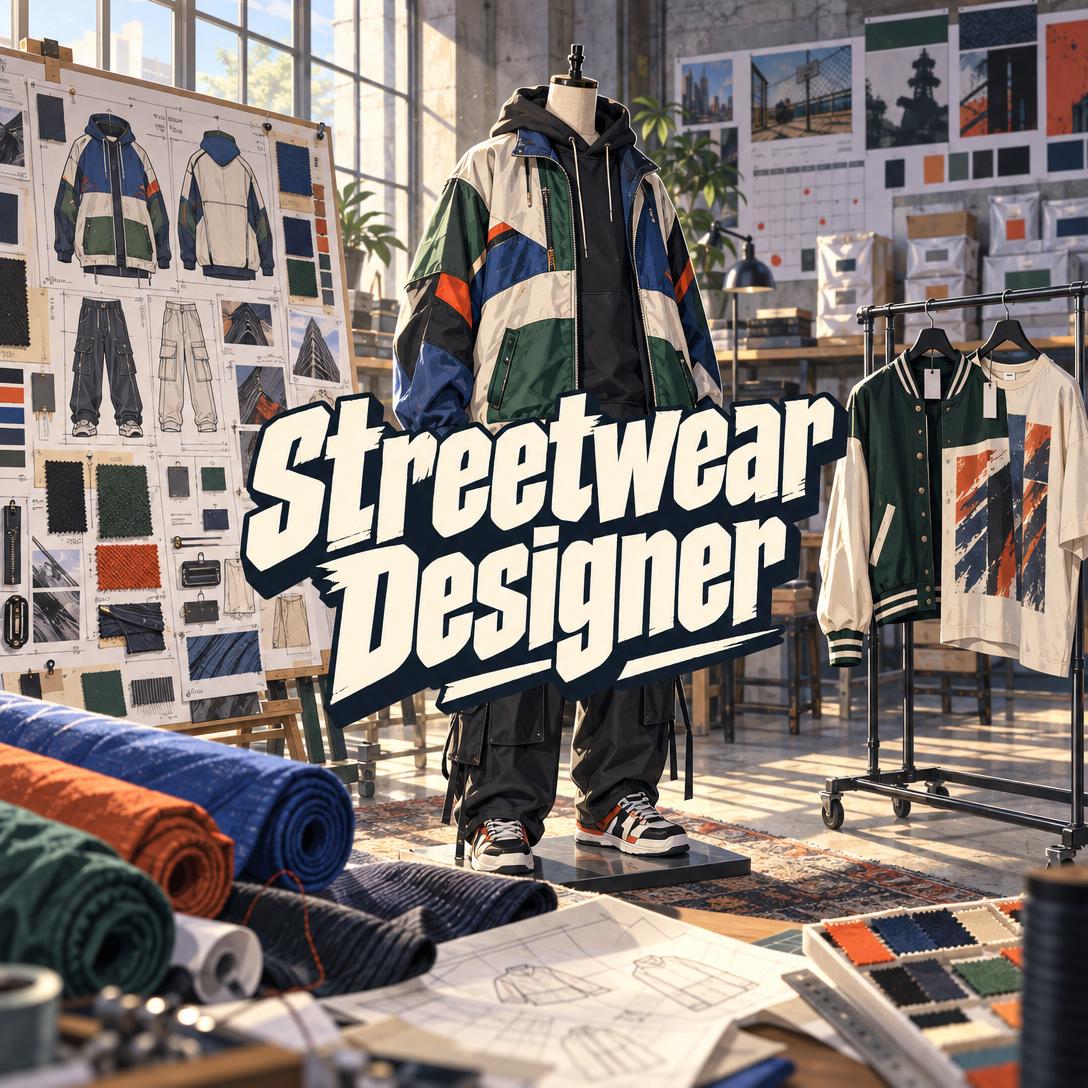
Which AI Streetwear Tools Cover the Full Path From Concept to Factory-Ready Tech Pack?
For independent founders who want one collaborator across concept, materials, production specs, and drop strategy, Jenova's Streetwear Designer covers the widest part of that path in a single conversation. The alternatives are each stronger at one stage:
- Style3D AI and CLO 3D lead on 3D garment simulation and virtual sampling.
- Techpacker is better for managing tech packs with manufacturers.
- The F* Word offers AI trend-to-tech-pack workflows at a professional price point.
As of 2026, no single tool does everything. The right choice depends on which stage between concept and factory is slowing you down.
These factors separate useful AI streetwear tools from generic image generators:
✅ Cultural fluency. The tool understands lineage, from Stüssy and Ura-Harajuku to Palace and Corteiz, and uses it to make your concept distinctive rather than derivative.
✅ Production literacy. It gives fabric weights in GSM, print-method file specs, and realistic minimum order quantities (MOQs), not just mood imagery.
✅ Documentation output. It produces tech packs with a bill of materials, points of measure, grade rules, and Pantone references, the elements Shopify's tech pack guide identifies as professional standard.
✅ Visual fidelity. Tools differ sharply: some generate 2D concept references, while others simulate 3D drape and fit.
✅ Brand and drop strategy. It advises on pricing tiers, capsule structure, and release mechanics.
To compare these tools fairly, it helps to first see why the category matters now and what a streetwear brand actually needs from AI.
Why Are Independent Streetwear Brands Turning to AI Design Tools in 2026?
Independent streetwear brands are adopting AI because the costs of slow iteration and poor documentation have grown, while consumers increasingly reward quality and durability over hype. AI tools shorten the gap between idea and approved sample, which is where most small-brand cash is lost.
The market opportunity is large. The branded apparel market was valued at $498.7 billion in 2025 and is projected to reach $812.4 billion by 2034, a 5.6% CAGR. Competition for that spend increasingly punishes execution errors.
Returns show what poor specification costs. Citing Capital One Shopping Research, Shopify reports that sizing, fit, and color issues drive 45% of all retail returns, and that 26% of US consumers send back online clothing purchases. Each of those failure points traces back to the tech pack.
Vendor-published figures point the same direction, though they should be read as marketing claims. In its own blog, Style3D cites McKinsey data stating that 30% of designs never reach production and that sampling accounts for 10–15% of total collection expenses.
📊 What's Shifting in Streetwear Demand
- Durability over drops: Market analysis describes 2025 men's streetwear as a shift toward "The New Fundamentals," emphasizing durable, versatile pieces.
- Silhouette experimentation: One trend analysis reports that non-traditional silhouettes and distressed finishes saw an 18% year-over-year jump in sell-through on luxury e-retailers like Farfetch in Q1 2025.
- Community still drives sales: Founder-focused advice continues to stress that streetwear thrives on identity, with social media, Discord, and exclusive drops as the working channels.
The post-hype environment favors brands that get fabric, fit, and finishing right. AI can make that kind of craft more accessible to small teams.
What Should You Look for in an AI Streetwear Design Tool?
Look for a tool that covers the stages where your brand is weakest: creative direction, materials, production documentation, or go-to-market strategy. Visual output alone is not enough. This guide evaluates tools on a six-part Concept-to-Factory Coverage Framework:
| Dimension | What It Measures | How to Test It |
|---|---|---|
| 1. Cultural fluency | Understanding of streetwear subcultures, references, and when a concept is derivative | Describe a concept and see whether the tool names its reference points and suggests differentiation |
| 2. Visual iteration | Speed and fidelity of design visuals (2D concept vs. 3D simulation) | Request three colorway variations of one hoodie |
| 3. Materials & print intelligence | Guidance on GSM, blanks, wash treatments, and print methods | Ask which print method suits a 6-color photographic graphic on a black tee |
| 4. Production documentation | Tech pack completeness: BOM, POM, grading, Pantone, construction callouts | Request a tech pack and check it against a manufacturer's checklist |
| 5. Brand & drop strategy | Pricing, capsule architecture, release mechanics | Ask how to price and sequence a 6-piece first drop |
| 6. Cost & accessibility | Price relative to brand stage, and learning curve | Compare monthly cost against your expected first-run budget |
Testing tools against all six dimensions shows a clear split. 3D platforms score highest on visual iteration and fit accuracy. Documentation platforms score highest on structured tech pack management. Conversational AI design partners score highest on cultural fluency, materials guidance, and strategy.
Most brands under two years old are limited by dimensions 1, 3, and 5, not 3D fidelity. That gap tends to get lost in comparisons written by 3D-software vendors.
How Do Jenova's Streetwear Designer, Style3D AI, CLO 3D, Techpacker, and The F* Word Compare?
These five tools solve different problems.
- Jenova's Streetwear Designer is a conversational creative director, technical designer, and brand strategist.
- Style3D AI and CLO 3D are 3D garment simulation platforms.
- Techpacker is a tech pack and product lifecycle documentation system.
- The F* Word is a professional-tier AI fashion workflow tool.
| Dimension | Jenova Streetwear Designer | Style3D AI | CLO 3D | Techpacker | The F* Word |
|---|---|---|---|---|---|
| Primary function | Conversational design, production, and brand strategy partner | AI + 3D garment generation and simulation | 3D virtual garment design and sampling | Tech pack creation and manufacturer collaboration | AI fashion workflow, including trend-to-tech-pack |
| Streetwear culture & brand strategy | Deep: subculture lineage, drop mechanics, pricing, collaborations | General fashion focus | General fashion focus | Not a strategy tool | Unverified |
| Visual output | 2D concept references (illustrations, flat lays, styled photos) | 3D garments with fabric physics, virtual try-on | Real-time 3D fabric, fit, and silhouette visualization | Annotated sketches and images | Unverified |
| Materials & print guidance | Detailed: GSM, blank tiers, wash treatments, print methods with file specs | 500+ simulated fabrics (vendor-reported) | Fabric and color combination previews | User-supplied material tables | Unverified |
| Tech pack output | Generated as PDF/XLSX documents | Exports DXF patterns, OBJ models | Pattern-based development | Full tech pack builder with grading, costing, line sheets | Tech packs via credit system |
| Manufacturer collaboration | Prepares documents and communications; no live portal | Cloud sharing | Remote collaboration | Manufacturer accounts, sharing, translation | Unverified |
| Pricing (as of 2026) | Free tier; paid plans from $20/month | Not published in sources reviewed | Not published in sources reviewed | Freemium with limited exports | $299/month introductory, $399/month standard |
| Best For | Founders and small brands needing creative + technical + strategic guidance | Brands replacing physical samples with virtual prototypes | Designers and pattern makers with 3D workflows | Teams managing many SKUs with factories | Funded teams wanting AI trend-to-spec automation |
🎯 Jenova Streetwear Designer
Strengths:
- Works in three modes depending on the conversation: creative director (concepts, mood, collection storytelling), technical designer (construction, fabrics, tech packs), and brand strategist (positioning, drops, pricing).
- Covers streetwear history in depth, from West Coast surf-skate origins and hip-hop's commercial engine to Ura-Harajuku and the UK scene. It uses that history to judge whether a concept is distinctive.
- Infers your experience level from how you describe your project rather than asking. Beginners get strong defaults; established brands get peer-level discussion.
- Keeps a running record of your brand, aesthetic direction, collection pieces and their status, and confirmed design decisions across sessions.
Limitations:
- No 3D draping simulation or pattern files such as DXF.
- Generated visuals are creative references, not production-ready artwork.
- It cannot set reminders for sample deadlines or monitor fabric prices.
- Production specifics ultimately depend on your manufacturer's capabilities.
Style3D AI
Style3D AI turns sketches or text prompts into full garments with patterns, stitching, and fabric physics, plus draping simulations for 500+ fabrics and virtual try-ons on customizable avatars. It exports DXF patterns, OBJ models, and MP4 videos.
It is strongest for brands that want to cut physical sampling. Its main limitation is that most of its published performance claims, such as "70% faster time-to-market," appear in Style3D's own marketing. Pricing was not disclosed in the sources reviewed. Style3D's blog also names Browzwear VStitcher, Marvelous Designer, and NewArc among the most widely used apparel development tools.
CLO 3D
CLO 3D lets designers visualize fabric, fit, and silhouette in real time, with virtual sampling and remote collaboration to shorten time-to-market. In a case study on its site, 3D specialist Jaeyong Lee reports condensing a traditional six-month sample cycle into five weeks for Paris Fashion Week production with ANREALAGE.
CLO 3D is the stronger choice for teams with pattern-making skills. Founders who start with graphic tees on blanks will likely find its pattern-centric workflow more than they need. It also offers no brand or drop strategy guidance.
Techpacker
Techpacker is documentation infrastructure. Its feature set includes measurement tables with grading, material tables, costing templates, line sheet reports, an Adobe Illustrator plugin, Zapier integration, and manufacturer sharing with tech pack translation. Style3D's roundup notes that Techpacker offers a freemium model with basic templates and limited exports.
Its limitation is scope. Techpacker organizes decisions you have already made. It does not tell you which fabric weight suits a boxy silhouette or whether discharge printing fits your aesthetic.
The F* Word
The F* Word Pro plan costs $299/month at introductory pricing ($399/month standard), with 3,600 monthly credits that power trend-to-tech-pack workflows.
That price fits funded teams producing many styles, but it is steep for pre-revenue founders. Its feature depth beyond published pricing was not independently verified for this comparison.
Can an AI Streetwear Designer Help You Choose Blanks, Fabrics, and Print Methods?
Yes. A specialized AI streetwear designer can recommend specific fabric weights, blank tiers, wash treatments, and print methods, and explain the trade-offs. This is the dimension where general-purpose image generators and 3D tools offer the least guidance.
In practice, Jenova's Streetwear Designer treats blank selection as a brand-positioning decision, not a cost line. It organizes blanks into three tiers:
- Premium (250–300+ GSM): Los Angeles Apparel, Lady White Co.
- Mid-tier (180–250 GSM): Comfort Colors, Independent Trading Co.
- Budget (140–180 GSM): Gildan, Bella+Canvas.
It advises against budget blanks for brand-building unless the graphic is the entire value proposition. A $40 tee on a thin blank undercuts its own price point.
It also matches fabric weight to silhouette. A boxy tee needs heavyweight jersey (roughly 280+ GSM), while a drapey, elongated cut works better at mid-weight. Heavier is not automatically better.
🖨️ Print Method File Requirements
The agent gives print-ready specifications that first-time founders often get wrong when sending files to printers:
| Print Method | File Format | Resolution | Color Spec |
|---|---|---|---|
| Screen printing | Vector (AI/EPS) | Vector | Pantone spot colors, separated layers |
| DTG | Raster (PSD/TIFF) | 300 DPI at print size | CMYK or RGB (printer-dependent) |
| DTF | Raster (PNG/TIFF) | 300 DPI at print size | CMYK |
| Embroidery | Vector (AI/DST) | Vector | Thread color callouts (Madeira/Isacord) |
| Sublimation | Raster (TIFF) | 300 DPI at print size | CMYK |
It also distinguishes screen-printing ink types: plastisol is opaque and sits on the fabric, water-based gives a softer, vintage hand, and discharge offers the softest hand on reactive-dyed darks. It treats wash treatments such as garment dye, pigment dye, enzyme wash, and acid wash as creative choices that change how a garment ages.
3D platforms like CLO 3D simulate how a chosen fabric drapes, which is valuable once you have chosen it. A conversational designer is more useful one step earlier, when you are still deciding.
How Does AI Help With Streetwear Tech Packs and Production Planning?
AI helps by turning creative intent into factory language. It structures the bill of materials, measurement specs, grading rules, and construction callouts that manufacturers need to quote accurately and sample correctly.
According to Shopify, a professional tech pack includes vector technical drawings, a bill of materials, a point-of-measure chart, size grade rules, colorway Pantone specifications, and artwork placement instructions. It also recommends specifying stitch types using ISO standards and never assuming a vendor will match "navy" or "olive" without a Pantone reference.
How the Approaches Differ
- Jenova's Streetwear Designer drafts tech packs, cost sheets, size specs, and line sheets as downloadable PDF or XLSX files from your design conversation. It accounts for streetwear-specific details, such as oversized grading that adds ease in larger proportions and spec tolerances of about ±0.5" for critical measurements.
- Techpacker and Lifecycle PLM are structured systems of record. Lifecycle PLM markets production-ready tech packs with live specifications, BOMs, revisions, supplier collaboration, and Adobe Illustrator integration. Tchpack's 2025 software guide compares Tchpack, Techpacker, and WFX for teams choosing a dedicated platform.
- Style3D AI and CLO 3D produce pattern-level data and 3D validation, so fit can be checked before a physical sample exists.
💰 Costing: A Worked Example
The agent shows its costing math rather than giving only a final number. It uses standard markups of 2.5–4× landed cost for direct-to-consumer sales and 2× for wholesale. For a heavyweight tee with a $14 landed cost:
- DTC range: $14 × 2.5 = $35 to $14 × 4 = $56
- Wholesale: $14 × 2 = $28
It also flags common production pitfalls: skipping pre-production samples, failing to grade graphics across the size run, and leaving shipping out of margin calculations.
How Should Streetwear Brands Plan Capsules and Drops With AI?
Brands should use AI to plan capsule structure, price tiers, and release mechanics together, because a drop's success depends on how well its pieces relate to each other. AI is useful here for pressure-testing range plans before inventory is committed.
Jenova's Streetwear Designer typically structures capsules at 6–12 pieces. It balances bread-and-butter graphic tees and hoodies with statement cut-and-sew pieces, headwear, and accessories, and it tiers prices from entry pieces to statement items.
It weighs seasonal collections against the drop model, including the inventory effects of each. On execution, it covers:
- Password pages and countdown timers
- Limited-quantity mechanics and anti-bot measures
- Email and SMS list building
- Post-drop restock strategy
It also reflects the post-hype shift toward quality, storytelling, and community. If a concept chases a trend likely to date the collection, the agent says so.
Brands selling on Shopify may pair this with Jenova's Shopify Store Advisor, which benchmarks stores against competitors using live data. Founders still defining a visual identity can use the Brand Kit Generator for logos, palettes, and brand guidelines.
None of the 3D or documentation tools in this comparison offer drop-strategy guidance. That is a real gap for brands whose revenue depends on release timing.
How Do You Get Started Designing a Streetwear Collection With AI?
Begin with your concept and constraints (references, budget, production method), then move to visuals and documentation. Most AI streetwear workflows reward specific inputs over vague ones.
Using Jenova's Streetwear Designer
- Open the agent at jenova.ai/a/streetwear-designer and describe your brand idea, reference points, and budget:
"I'm launching a skate-rooted brand with a Japanese workwear influence. First drop is 4 pieces, budget around $3,000. I want earth tones and heavyweight fabrics."
- Refine the aesthetic direction. Expect pushback if your concept closely mirrors an existing brand, with suggestions for how to make it distinctive.
- Request visuals once a piece is defined:
"Show me a boxy 300 GSM tee in washed olive with a small left-chest embroidered logo and a large back graphic, as a flat lay photograph."
- Switch image generation models if needed. Some handle fashion illustration better, others photorealistic flat lays.
- Ask for production documents:
"Create a tech pack for the tee as a PDF and a cost sheet as an XLSX."
For photorealistic on-model imagery of finished designs, Jenova's Fashion Mockup Studio specializes in studio-grade fashion photography.
Using CLO 3D or Style3D AI
For 3D workflows, the sequence is different. Style3D describes a five-step process: upload a sketch or text prompt, generate the 3D garment, apply fabrics and adjust fit on avatars, run virtual try-ons, then export patterns and assets. This works best once silhouette and fabric decisions are already made.
Using Techpacker
With Techpacker, you create a product, add sketch cards, build measurement and material tables, apply grading, and share the tech pack with manufacturer accounts. This assumes your design and specification decisions are finalized.
What Do Streetwear Product Experts Say About AI-Assisted Design?
Experts building AI design tools see AI's main value in preventing expensive production mistakes and translating creative intent into factory specifications. Generating images is the smaller part of the job.
"The most expensive mistake first-time streetwear founders make isn't a bad graphic. It's ordering hundreds of units of an untested design. Cut-and-sew minimums commonly run 50–500 units per style per color, and overseas lead times of 8–16 weeks mean a misread on demand ties up cash for a full season. Testing with a blank-plus-print run first, which domestic shops can often turn in 2–4 weeks, is almost always the smarter opening move."
"Blank selection is a positioning decision that founders consistently underweight. The same graphic on a 150 GSM budget blank and on a 280 GSM premium blank communicates two different price points. Pair the premium blank with a custom woven label and relabeled neck print, and a graphic tee starts reading like a brand."
"AI is most useful as the translation layer between a founder's vision and the factory's language: Pantone TPX codes instead of 'olive,' graded measurements instead of 'oversized,' explicit print file specs instead of 'make it pop.' AI concept images are not production artwork, though. Treat generated visuals as references for your manufacturer conversation, and approve a pre-production sample before bulk every time."
— Jenova Product Team, Streetwear & Fashion Agent Development, 8 years in AI agent design
Which AI Streetwear Tool Fits Your Brand Stage?
The best tool depends on your brand's maturity. Starting founders need guidance and strong defaults, growing brands need documentation and fit precision, and established brands need virtual sampling at scale.
🌱 Starting Brands (Pre-Launch to First Drop)
- Best fit: Jenova's Streetwear Designer, because cultural fluency, blank and print guidance, MOQ reality checks, and costing math address beginner bottlenecks directly.
- Supplement with: Techpacker's freemium tier when you are ready to manage specs with a factory.
- Avoid early: Professional-tier subscriptions like The F* Word at $299+/month before you have proven demand.
📈 Building Brands (Multi-Drop, Moving to Cut-and-Sew)
- Best fit: Jenova's Streetwear Designer for creative direction and range planning, paired with Techpacker or a PLM system for revision control across SKUs.
- Consider: CLO 3D if you have pattern-making skills and want to reduce fit-sample rounds.
🏢 Established Brands (Seasonal Collections, Overseas Production)
- Best fit: CLO 3D or Style3D AI for virtual sampling, combined with a structured tech pack platform.
- Role for conversational AI: Concept development, collaboration strategy, and pressure-testing range plans, where peer-level creative discussion adds value beyond simulation.
The most effective stacks in 2026 combine tools. A conversational designer settles what to make and why, and specialized platforms handle exactly how it gets made.
References
- Shopify — How To Create a Tech Pack To Send To Manufacturers (tech pack components; Capital One Shopping Research returns data)
- Dataintelo — Branded Apparel Market Size, Share & Forecast Report
- Style3D AI — What AI Tools Can Replace The New Black for Fashion Design (features, workflow, cited McKinsey data)
- Accio — Trending 2025 Men's Streetwear Tracksuits ("The New Fundamentals")
- LinkedIn, Sevinj A. — Trend Spotlight: The Rise of Dystopian Streetwear
- LinkedIn, Marty Borotsik — Launching a Streetwear Brand in 2025?
- Style3D AI — Best AI Tool for Apparel Design (widely used apparel development tools)
- CLO — 3D Fashion Design Software (features and ANREALAGE case study)
- Techpacker Help Center — How To Guide (features and integrations)
- Style3D AI — Best Free Tech Pack Makers for Fashion Design in 2026
- The F* Word — How Much Does a Fashion Tech Pack Cost? (Pro plan pricing)
- Lifecycle PLM — AI Tech Pack Software for Fashion Teams
- Tchpack — Best Tech Pack Software for Fashion Designers (2025 Guide)