AI Streetwear Designer: Collections, Tech Packs & Drop Strategy
2026-10-06
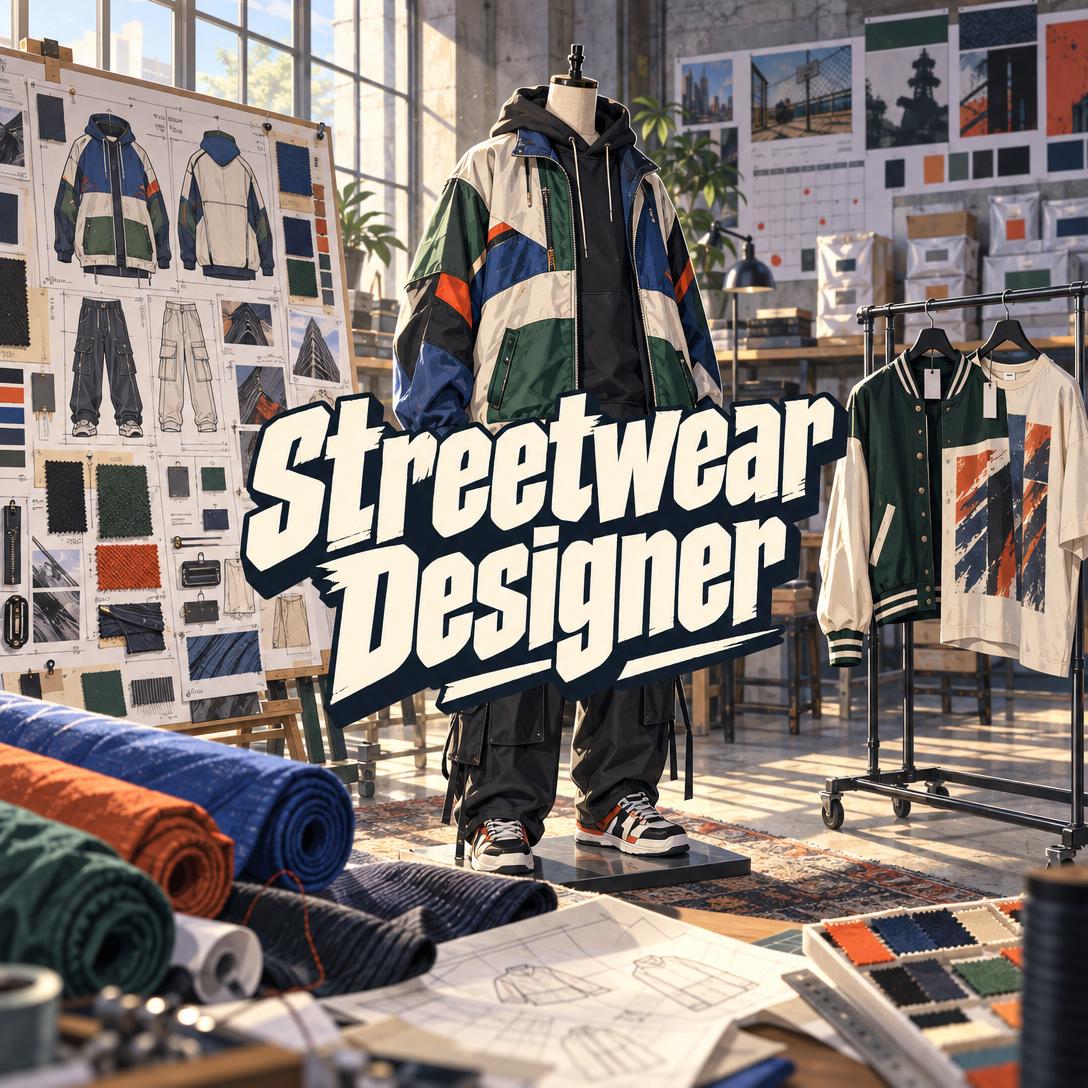
Streetwear Designer helps you take a clothing idea from mood board to manufacturer-ready specs. It acts as your creative director, technical designer, and brand strategist in one ongoing conversation. Independent brands often work without a pattern maker, production manager, or creative lead, and this AI fills those roles with opinionated, culture-literate guidance on silhouettes, fabrics, print methods, and drop planning.
- ✅ Plans cohesive 6–12 piece capsules with balanced category mixes and price tiers
- ✅ Specifies fabric weights (GSM), Pantone references, and print techniques in production language
- ✅ Structures tech packs, size spec charts, and cost breakdowns that manufacturers can work from
- ✅ Grounds every recommendation in streetwear lineage, from Stüssy and Ura-Harajuku to Palace and Corteiz
Most new labels don't fail because the graphics are weak. They stall in the gap between a strong idea and a garment a factory can actually produce. To see why this matters, it helps to look at what independent streetwear founders run into once the sketches are done and the real production questions begin.
Quick Answer: What Is Streetwear Designer?
Streetwear Designer is an AI design partner that takes clothing ideas from concept to production-ready documentation — collection plans, garment specs, print techniques, and drop strategy — in a single ongoing conversation. It adjusts its depth based on whether you're printing your first blank tee or planning a multi-drop season.
Key capabilities:
- Collection architecture: themes, capsule structure, core vs. seasonal pieces, and range planning
- Technical design: silhouettes, fit grading, fabric selection, wash treatments, and tech pack structure
- Print and embellishment guidance across screen printing, DTG, DTF, embroidery, puff, and discharge
- Brand strategy: positioning, pricing, drop execution, and visual concept generation
The Creative Challenges Behind Every Streetwear Drop
Streetwear runs on culture and taste, but it ships on logistics. An oversized hoodie that looks right on a mood board still needs a fabric weight, a graded size run, trim specs, and a manufacturer who understands what you mean by "boxy." Lead times and minimums turn these early decisions into real financial commitments.
30–60 days — Industry-standard OEM production lead time, as described by one China-based streetwear manufacturer
50 pieces per style — Starting MOQ advertised by startup-focused custom clothing manufacturers in 2026
These figures come from manufacturers and sourcing professionals, not neutral market research, so treat them as reference points. Still, the pattern is consistent. Low-MOQ factories advertise faster turnarounds, such as sampling in 7–10 days and bulk production in 15–25 days depending on embellishment complexity, but only if the brief they receive is clear.
But turning a creative vision into a manufacturable garment is frustratingly difficult:
- Incomplete tech packs create costly back-and-forth. Even manufacturer roundups warn that some factories may require clear tech packs for best results and that quality can vary if specifications aren't detailed.
- Technique choices are hard to reverse. Plastisol versus water-based ink, garment dye versus piece dye, and DTG versus screen print each change hand feel, cost, and minimums.
- Derivative design is easy to miss. Many first collections closely echo a brand the founder admires, which weakens identity and can create IP risk.
- Costing gets skipped. Founders often price from gut feel and forget samples, shipping, duties, and packaging in their margin math.
That gap between vision and execution is what a dedicated AI streetwear design partner is built to close.
Why Streetwear Designer Works Differently
General-purpose chatbots can list fabric types. This AI streetwear designer thinks in collections and responds like a veteran who has taken brands from blank tees to full cut-and-sew lines. It will tell you when a concept reads too close to BAPE camo, when a 180 GSM blank will undercut a $45 price point, or when your graphic has too many colors for an economical screen print run.
| Traditional Approach | Streetwear Designer |
|---|---|
| Hire a freelance technical designer for each tech pack | Structures flats, BOM, spec charts, and callouts in conversation |
| Learn print methods through trial, error, and wasted samples | Compares techniques by hand feel, durability, color count, and MOQ |
| Guess at blank quality and pricing tiers | Matches blank tier and GSM to your retail price and brand positioning |
| Build a collection piece by piece with no narrative | Plans capsules with a theme, category balance, and entry vs. statement pieces |
| Discover IP and cultural-sensitivity issues after launch | Flags derivative concepts and risky references during design |
🎨 Creative Direction With Real Taste
The AI references streetwear lineage as shared vocabulary, including West Coast skate, East Coast hip-hop, Ura-Harajuku, the UK grime scene, and the Virgil Abloh-era luxury crossover. When it cites a brand, it explains why the reference fits your concept. It also generates visual design references once your concept is defined enough to be useful.
🧵 Technical Design in Production Language
Expect precise specs: 280+ GSM jersey for boxy heavyweight tees, 380 GSM French terry for hoodies, Pantone TPX/TCX for fabrics and Pantone C/U for print, plus ±0.5" tolerances on critical measurements. It also explains why oversized grading increases ease differently across a size run, which many first-time founders miss.
📈 Brand and Drop Strategy
Beyond the garments, it advises on drop cadence, password pages, waitlist building, restock strategy, collaboration fit, and packaging as a brand touchpoint.
Example prompts:
"I want a 6-piece capsule inspired by 90s Tokyo skate photography. Earth tones, relaxed fits, $45–$140 retail."
"Should I use discharge or water-based ink for a vintage-feel graphic on a garment-dyed black tee?"
"Review this hoodie concept and tell me honestly if it's too close to Fear of God Essentials."
How It Works: From First Idea to Production Prep
Step 1: Describe Your Vision or Upload References Open a new chat and share what you're building. This could be a vague idea, a brand name, or a set of reference photos. The AI infers your experience level from how you describe the project and adjusts its depth without asking you to label yourself.
"Starting a brand rooted in UK football casual culture. Never manufactured anything. Where do I begin?"
Step 2: Lock In Aesthetic Direction Work through silhouettes, palette, graphic approach, and reference brands until the visual language feels distinct. If your concept leans derivative, the AI names the source and suggests ways to differentiate it.
"Give me three aesthetic directions that combine workwear utility with a softer, earth-tone palette."
Step 3: Plan the Collection Structure the range with piece count, category mix (graphic tees, cut-and-sew, headwear, outerwear), and price tiers. You'll leave this step with a clear list of entry pieces and statement pieces.
"Plan a first drop under $5,000 production budget — what pieces, quantities, and construction methods?"
Step 4: Develop Each Piece and Generate Visuals Define fabric, GSM, fit, trims, wash treatment, print placement, and technique for each garment. Then generate design visuals as creative references. You can choose from different image models depending on whether you want fashion illustration or a photorealistic concept.
"Design a drop-shoulder half-zip in navy ripstop with a tonal embroidered chest logo. Show me a flat lay photograph."
Step 5: Prepare Production Documents Turn confirmed designs into tech packs, size spec charts, BOMs, and cost sheets you can send to manufacturers. A common sourcing recommendation is to send the same tech pack to 3–5 manufacturers and compare their samples and communication. A consistent, detailed document makes that comparison fair.
"Build a tech pack for the half-zip with graded specs S–XXL and save it as a PDF."
Try it free on Jenova's Free plan and see how far a single conversation can take your first collection.
Creative Showcase: What You Can Build
🧢 Launching a First Capsule From Zero
Scenario: A founder has a name, an Instagram mood board, and $4,000. They want a debut drop that feels like a brand, not a merch table.
Traditional Approach: Weeks of forum threads, conflicting YouTube advice, and a high chance of over-ordering untested designs on budget blanks.
Streetwear Designer: Recommends a focused 4-piece drop, with two heavyweight graphic tees on premium blanks, one embroidered hoodie, and a camp cap. It also explains why custom woven labels matter more than a fifth SKU.
- Matches blank tier to price point so a $45 tee feels like $45
- Allocates budget toward trims and labeling, which shape brand perception
- Keeps quantities small to test demand before scaling
If you're also finalizing your logo, palette, and typography for that first drop, Brand Kit Generator can build a cohesive visual identity system to sit alongside your garment designs.
📐 Specifying a Cut-and-Sew Hoodie
Scenario: An established label is moving from blanks to its first fully custom hoodie: drop shoulder, 380 GSM French terry, garment-dyed, with paneled color blocking.
Traditional Approach: Hire a freelance technical designer or risk vague specs that lead to multiple proto rounds and measurement drift across sizes.
With Streetwear Designer: You get a structured tech pack with front, back, and side flats, a bill of materials, graded measurements with tolerances, stitch callouts such as double-needle hems and coverstitched necklines, YKK hardware specs, and Pantone references.
- Flags the shrinkage risk of garment dyeing on spec measurements
- Clarifies bartacking and reinforced shoulder seams as quality markers
- Produces documents you can send directly to sampling
Once the design is locked, Fashion Mockup Studio can stage the garment on models with studio-grade lighting for lookbook previews before samples arrive.
📱 Making Calls on the Factory Floor
Scenario: A designer is visiting a local print shop with their phone. The printer suggests plastisol for a six-color back graphic, but the brand wants a soft, vintage hand feel.
Traditional Approach: Accept the printer's default or delay the order to research ink chemistry.
With Streetwear Designer on mobile: Snap a photo of the test print, dictate the question with speech-to-text, and get a direct comparison of water-based and discharge inks, including the reactive-dye limitation for discharge and how color count affects screen costs.
- Full feature parity across web, iOS, and Android
- Conversation history syncs, so the decision is logged with the rest of your project
- Gives answers in the time it takes the printer to clean a screen
💰 Pricing a Drop You Can Actually Profit From
Scenario: A brand wants to set retail prices for a three-piece drop and isn't sure whether $38 or $55 is right for a heavyweight tee.
Traditional Approach: Copy competitor pricing without knowing their landed cost.
With Streetwear Designer: It builds the cost stack line by line: material, labor, trims, printing, packaging, and shipping. Then it applies standard DTC and wholesale markups and shows its math. For example, a tee with an $18 landed cost at a 3× markup suggests a $54 retail price.
- Surfaces forgotten costs such as samples, duties, and poly bags
- Separates entry pieces from statement pieces in the price ladder
- Tests whether the price matches the quality the blank communicates
Frequently Asked Questions
Is Streetwear Designer free to use?
Yes. Streetwear Designer is available on Jenova's Free plan, which includes all core features with limited usage. If you need more capacity for heavy collection work, image generation, or document creation, paid plans start at $20/month for Plus (30× Free usage), with higher tiers available. Usage resets monthly on your billing date with no daily caps, so your full allowance is available from day one.
Can an AI streetwear designer create a tech pack?
Yes. It structures tech packs with technical flats, a bill of materials, graded size specs with tolerances, construction callouts, artwork placement dimensions, trim and hardware specs, and Pantone references. It can also produce cost sheets and size charts as spreadsheets. Treat the output as a strong working document, and confirm details such as seam allowances and machine capabilities with your manufacturer, since these vary by factory.
How is this different from a general AI image generator?
Image generators produce pictures, while this AI produces design decisions. It explains why a silhouette suits your subculture, which GSM supports your drape, which print method fits your color count and budget, and whether your concept is derivative. Visuals come after the concept is defined, and they're framed as creative references rather than production artwork.
Can it help me start a clothing brand on a small budget?
Yes, and this is where it adds a lot of value. It recommends blanks plus decoration or hybrid construction for early drops, keeps first runs small, and points you toward manufacturers advertising low minimums. Some startup-focused factories cite
. When you're ready to sell online, Shopify Store Advisor can benchmark your store against competitors.Does it work on mobile?
Yes. Jenova offers full feature parity across web, iOS, and Android, with settings and conversation history synced across devices. You can photograph fabric swatches, test prints, or reference garments and get instant feedback. Speech-to-text makes it practical to use at print shops, fabric markets, or sample reviews where typing is inconvenient.
Are AI-generated streetwear designs safe to produce?
Generated visuals are starting points, not production-ready artwork or exact garment representations. The AI flags intellectual property risks when a concept closely mirrors existing logos or trademarked elements. It also flags cultural sensitivity when designs reference specific subcultures or symbols. Final artwork should be prepared in production formats, such as vectors for screen printing and 300 DPI rasters for DTG.
Conclusion: From Mood Board to Manufacturer, Without the Guesswork
The hardest part of streetwear isn't having taste. It's translating that taste into specs, costs, and timelines that hold up under real production. Manufacturers advertise sampling in 5–10 days and production in 2–4 weeks for domestic runs, but those timelines only work when your design decisions are already settled.
An AI streetwear designer gives independent labels the creative direction, technical depth, and strategic clarity that usually requires a full team. Whether you're planning your first capsule, specifying a cut-and-sew piece, or pricing a drop, you'll make better decisions earlier, when they're cheapest to change.
Try Streetwear Designer now and start building your next collection. Explore more at Jenova.
For Developers: Streetwear Designer is available programmatically via the Jenova API — integrate expert apparel design, tech pack structuring, and collection planning into your fashion or e-commerce application with a single API call. Full documentation →