AI Storytelling Companion: Co-Create Plots, Characters & Worlds
2026-09-12
Writing Assistant helps you finish stories that stay true to your voice by acting as a persistent AI storytelling companion—tracking characters, plot threads, and tone across every draft. While generic chatbots forget yesterday's twist and flatten your style into interchangeable prose, this AI provides a collaborator that remembers your world and writes with you, not over you.
As of September 2026, more writers, game players, and interactive-fiction fans are looking for narrative AI that can hold a story—not just complete a sentence.
✅ Remembers characters, lore, and continuity across sessions ✅ Adapts to your genre, audience, and personal voice ✅ Works as a brainstorm partner, developmental editor, or scene-level co-writer ✅ Available on web, iOS, and Android with the same conversation history
To understand why a dedicated AI storytelling companion matters, it helps to look at what writers actually lose when they rely on generic chat tools—and what players already expect from narrative AI in games.
Quick Answer: What Is an AI Storytelling Companion?
An AI storytelling companion is a writing partner that co-creates characters, plots, and worlds with you—remembering continuity so every scene stays consistent. It is built for long-form narrative work, not one-off chat replies.
Key capabilities:
- Persistent memory of canon, character voice, and unresolved plot threads
- Co-writing that matches your tone instead of overwriting it — try this AI writing partner
- Developmental notes on pacing, stakes, and structural holes
- Scene drafting, dialogue passes, and revision loops in one conversation
Why Writers Need a Dedicated Storytelling Partner
People already treat AI as something they return to. 27% of internet-using U.S. adults have used large language models for social, emotional, or personal conversation, according to Elon University's Imagining the Digital Future Center. Among those users, 51% say talking with AI helps them feel better when they are stressed or upset, and 47% regularly use two or more bots or personalities.
That same appetite for a persistent counterpart is reshaping story. The global AI companion market was valued at USD 37.73 billion in 2025 and is projected to reach USD 49.52 billion in 2026. Narrative games are growing in parallel: narrative game platforms were valued at $12.4 billion in 2025 and are projected to reach $28.9 billion by 2034.
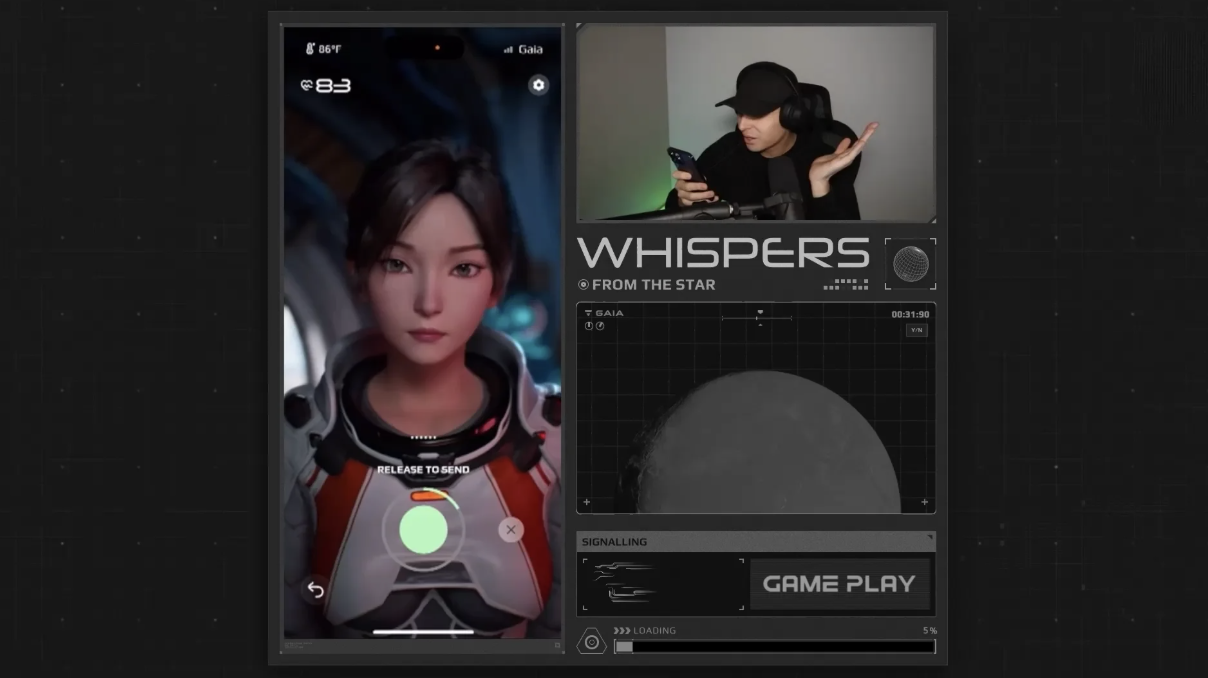
Titles like Whispers from the Star and A Thousand Nights show what audiences now expect: a character who listens, a world that reacts, and language that changes what happens next. Writers want that same continuity on the page. But getting it from a general-purpose chatbot is frustratingly difficult:
- Context evaporates between sessions, so chapter 12 contradicts chapter 3
- Output defaults to a generic "AI voice" that does not sound like you
- Plot, character, and theme are treated as separate prompts instead of one living story
- There is no reliable collaborator for the unglamorous work: outlines, continuity checks, and honest notes
Continuity Breaks the Spell
A story dies when a companion forgets. If your detective has a limp in act one and sprints uninjured in act two, readers notice. Generic models can imitate a scene; they rarely hold a bible. A true AI storytelling companion has to treat your character sheet, world rules, and prior chapters as canon—not as optional flavor.
Voice Gets Flattened
Most chat tools optimize for agreeable, average prose. That is useful for email. It is fatal for fiction. Research on companion products also shows why "always agreeable" is a design trap: the Ada Lovelace Institute notes that mixed-use platforms blending creative writing and role-play keep users returning far more often than shallow, single-purpose chat, but many companion apps still reward flattery over craft. A writing partner should push back on a weak midpoint, not applaud every paragraph.
Interactive Stories Raised the Bar
Players now expect dialogue to matter. In A Thousand Nights, language itself becomes action; in sci-fi companion games, a recorded message can change the relationship on screen. Once you have felt a narrative that talks back, a static outline tool feels incomplete. Writers need a collaborator that can improvise in-character and step out of character to discuss structure.
Collaboration Used to Be Slow and Expensive
A human critique partner, writing group, or freelance editor is still invaluable. It is also scheduled, delayed, and often costly. When you are stuck at 11 p.m. on a sagging second act, you need a partner who already knows the book—not a blank comment box.
This is exactly what a dedicated storytelling companion was built for.
Why Writing Assistant
Writing Assistant is a standalone writing partner for people who need more than autocomplete. You bring the premise, the voice, and the standards. It brings memory, range, and editorial instinct—so you can move from spark to scene without losing the thread.
It is not a parasocial stand-in. Stanford HAI research has found that leaning on chatbots primarily for companionship—especially among people with smaller real-world networks—can correlate with lower well-being. Use this tool as a craft collaborator: a reader who never loses your outline, a co-writer who can draft in your register, and an editor who will flag the hole in chapter seven.
| Traditional Approach | Writing Assistant |
|---|---|
| Blank page and no one to talk the scene through | An on-demand co-writer who already knows the cast |
| Critique partners who can only meet next week | Instant developmental notes on stakes, pacing, and voice |
| Generic chatbots that forget your lore | Persistent memory of characters, canon, and tone |
| Outliners that never write the difficult scene | Premise → outline → draft → revision in one thread |
| One "AI voice" for every genre | Adaptive style for literary, genre, kids', and script work |
A Partner That Holds the Whole Book
Paste a synopsis, a chapter, or a messy voice note of "what happens next." Ask for a scene in your protagonist's diction, then ask why the scene fails. Because the conversation is the workspace, you do not have to re-explain that your narrator is unreliable, that magic has a cost, or that the sibling is lying.
"Here is my 1,200-word chapter and my character bible. The midpoint reveal feels cheap. Tell me why, then rewrite the last three pages in my narrator's voice without spoiling the twist."
Voice First, Then Velocity
Speed is useless if the page no longer sounds like you. This companion is built to match register—clipped noir, lush fantasy, dry comedy, tender middle-grade—and to keep that register stable when you jump from outline to dialogue to copy-edit.
"Write this argument as overlapping dialogue. She never says what she wants. He jokes when he is scared. Do not resolve it in this scene."
Honest Notes, Not Empty Praise
A useful storytelling companion will tell you the love interest has no independent desire, the villain is a speech, or the ending was earned in chapter four and then given away. You can ask for encouragement when you need it. You can also ask for the note you are avoiding.
One Thread Across Devices
Draft on a laptop, recast a line on your phone, and pick up the same world later. Full feature parity across web, iOS, and Android means the companion travels with the work, which is the difference between a novelty chat and a book you actually finish.
Related Agents You'll Also Find Useful
If you are also working on a screenplay, a picture book, or a visual series, keep the same story instinct and switch the format.
Film Screenwriter
If your "companion" conversations keep turning into movies, Film Screenwriter takes the same characters into professional screenplay craft—concept, outline, draft, and revision, with structure, dialogue, and visual storytelling as the job, not an afterthought.
- Scene-level guidance from premise through polish
- Character and dialogue that play on camera, not just on the page
- Revision passes aimed at production-ready pages
Children's Book Creator
When the story is for a child on your lap, this studio builds it spread by spread—board book to chapter book—with consistent art, read-aloud rhythm, and page-turn timing.
- Age-right language and emotional pacing
- Illustration-aware spreads, not walls of text
- A complete object you can revise like a real dummy
Manga Creator
For stories that live in panels, Manga Creator is a personal mangaka for one-shots or long serials: visual storytelling, panel flow, and a style that does not drift by chapter 40.
- Sequential pacing and page-turn reveals
- Character sheets that survive a long run
- From short one-shot to serialized epic
The Mansion
Sometimes you do not want to write the story. You want to walk through it. The Mansion drops you into a house with no memory of how you arrived—every room a secret, every choice a plot turn. It is the companion experience from inside the narrative.
- Emergent mystery rather than a fixed script
- Atmosphere-first interactive fiction
- A way to study tension by living it
Try Writing Assistant free — no credit card required. Use the related agents when the same story needs a new shape.
How to Work With Your AI Storytelling Companion
Step 1: Open a Thread and State the Story Start by naming genre, audience, length, and what "done" looks like. Specifics beat vibes: "80,000-word adult fantasy, close third on a reluctant cartographer, no chosen-one arc."
"I am drafting a novella about two estranged sisters running a failing coastal motel. Tone: quiet, slightly uncanny. Help me lock theme, central dramatic question, and a one-page outline."
Step 2: Load Canon Before You Draft Give the companion the rules it must not break—names, timelines, magic costs, whose point of view is allowed. This is how you stop the tool from inventing a brother in chapter nine.
"Here is my character bible and a timeline through chapter 8. Nothing new about the mother's disappearance. Use only what is on the page."
Step 3: Co-Write the Hard Scene, Not the Easy One Ask for the argument, the failed heist, the quiet breakfast after the funeral. Then interrogate the draft: whose desire is on the line, and what changed?
"Write the kitchen scene after the funeral. Nobody cries. End on a concrete action, not a metaphor. Then tell me if the scene earns the next chapter."
Step 4: Revise Like an Editor, Then Like a Reader Run a structure pass, a continuity pass, and a line pass as separate requests. You stay the author of record; the companion does the unglamorous rereading.
" continuity audit only: list every fact about the knife, who has seen it, and where it is at the end of each chapter. Flag contradictions. Do not rewrite yet."
Step 5: Continue on the Device You Have If the best writing window is a train ride, open the same thread on your phone. Dictate a block of dialogue, then refine it later at a desk. The companion is the constant; the keyboard is not.
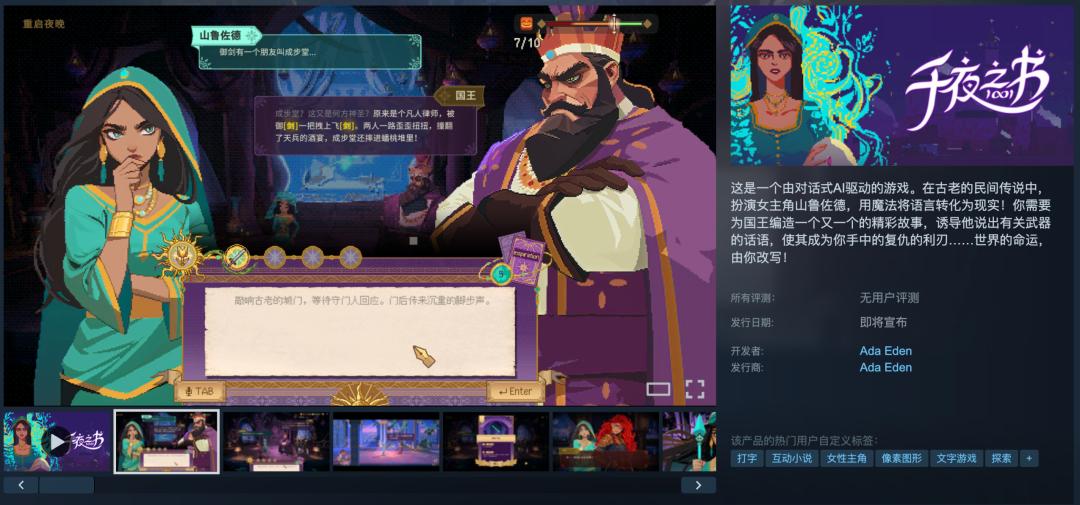
Games like A Thousand Nights make the same promise to players that a writing companion should make to authors: what you say next is the plot. The difference is who owns the finished work. Here, you do.
Results & Use Cases
📊 Unblocking a Novel at the Midpoint
Scenario: A novelist has 45,000 words of a thriller. The detective is charming. The case is mush. Every new scene restates the same suspicion.
Traditional Approach: Wait two weeks for a beta reader, or pay a developmental editor and hope the notes arrive before the draft goes cold.
Writing Assistant: You paste the outline and the last three chapters, ask why the midpoint has no irreversible choice, and leave with a revised sequence—and a scene that actually costs the protagonist something.
- Diagnoses sagging stakes instead of generating more atmosphere
- Protects established clues and character facts
- Turns a vague "it's boring" feeling into a concrete structural fix
💼 Adapting a Short Story Into a Script
Scenario: A short story works on the page because of interiority. A producer wants to know if it is a film.
Traditional Approach: Learn screenplay format from scratch, or hire a writer and lose weeks in translation.
Film Screenwriter: You keep the emotional spine and rebuild it as images, turns, and dialogue that can be shot. The prose companion stays available for the original text; the script companion handles sluglines, act structure, and what the camera sees.
- Separates novelistic thought from cinematic action
- Preserves character while changing the container
- Gives you pages you can share, not just a "movie version" in essay form
📱 Drafting Dialogue on a Commute
Scenario: You finally understand a character's lie—while standing on a crowded train, phone in hand.
Traditional Approach: A notes app full of fragments you will not recognize tonight. The spark is gone by the time you sit down.
The AI storytelling companion: You record or type the raw exchange, ask for two alternate tactics for the other character, and pin the version that feels true. Later, at a laptop, you drop the passage into the chapter.
- Same thread on iOS and Android, no re-briefing
- Voice-to-text for capturing rhythm before you overthink it
- A scene that exists before the evening excuse not to write
🎯 Turning a Bedtime Idea Into a Real Book
Scenario: Your kid asks for "the fox who is bad at sharing, but in space." You have ten minutes and no illustrator.
Traditional Approach: A rambling oral story that vanishes, or a generic picture-book generator that ignores age and page turns.
Children's Book Creator: You lock the moral without preaching, spread the beats across pages, and keep the fox's face consistent. If you later want a comics-paced version of a different tale, Manga Creator is the adjacent studio.
- Read-aloud sentences with a page-turn engine
- Art direction that does not drift from spread to spread
- A finished dummy instead of a cute paragraph
When you want to inhabit a story rather than author one, step into The Mansion and notice how rooms, withholding, and choice create plot—then bring that lesson back to the page.
FAQ
What is an AI storytelling companion?
An AI storytelling companion is a persistent writing partner that co-creates narrative with you—holding character, plot, and voice so the work stays consistent. Unlike a one-shot chatbot, it is meant to live with a project over days or months. Writing Assistant is built for that job: brainstorming, drafting, and revising in your register.
Is Writing Assistant free?
Yes. You can use it on the free plan with core features and limited monthly usage. Paid tiers increase usage and unlock custom model selection, starting at $20/month for Plus. Usage resets on your billing date with no daily caps, so you can spend it on a weekend draft if that is when you write.
How is an AI storytelling companion different from ChatGPT?
General chat tools are strong at isolated answers. They are weak at being a second brain for a novel: they drift in voice, invent facts, and lose the bible. A dedicated companion is framed as a long-running collaborator—continuity, editorial pushback, and format-specific craft—rather than a generic Q&A window. That is the gap this writing partner is designed to fill.
Can it write a full novel or screenplay?
It can co-write at novel and script length if you stay in charge of canon and taste. The reliable pattern is chapter by chapter (or scene by scene), with continuity audits between passes—not a single "write my book" prompt. For screenplays specifically, Film Screenwriter is the better format specialist.
Does it work on mobile?
Yes. Web, iOS, and Android share the same conversations, settings, and history. That matters for a storytelling companion: the character you defined at a desk is the character you can query on a phone when a line of dialogue arrives at the worst possible moment.
Is the writing accurate and reliable?
It is as reliable as the canon you give it and the notes you demand. It will not replace a human fact-checker, sensitivity reader, or legal review. It will remember the rules you load, flag contradictions when asked, and keep your voice more stable than a fresh chat window. Treat it as a rigorous junior partner, not an unquestioned narrator.
Write the Next Scene With a Companion That Remembers
Generic AI can produce a pretty paragraph. It cannot, by default, be the person who knows your book. An AI storytelling companion earns the name only when it holds character, cost, and continuity—and when it helps you finish.
Writing Assistant is that partner: a co-writer for the blank page, an editor for the sagging middle, and a memory for the world you are building. When the same story needs a script, a picture book, a manga, or a house you can walk through, the related tools are ready.
Try Writing Assistant now. Explore more at Jenova.
For Developers: Writing Assistant is available programmatically via the Jenova API — integrate a persistent AI storytelling companion into your writing or narrative product with a single API call. Full documentation →