AI Stock Screener: Find, Analyze, and Track Better Stocks
2026-08-18
An AI stock screener helps you surface investable ideas by scoring thousands of securities against fundamental, technical, and macro criteria — then explaining why each name passed the filter. Traditional screeners return a list of tickers and stop there. Jenova's specialized AI agents take the next step: they interpret the results, stress-test the thesis, and monitor positions as conditions change.
✅ Screen on fundamentals, technicals, valuation, and momentum in plain English ✅ Get analyst-grade reasoning, not just a filtered spreadsheet ✅ Hand results directly to portfolio, options, and macro agents for follow-through ✅ Available free on web, iOS, and Android with persistent memory across sessions
To understand why this matters in 2026, it helps to look at what individual investors are actually up against — an information environment that has gotten faster and denser, while the research tooling most people use has barely changed in a decade.
Quick Answer: What Is an AI Stock Screener?
An AI stock screener is a research tool that filters and ranks securities using machine learning and language models, interpreting financial data, filings, and price action to surface candidates that match an investor's stated criteria. Unlike rule-based screeners, it explains its reasoning and adapts to plain-language queries.
Key capabilities:
- Natural-language screening — describe your criteria instead of configuring dozens of filter fields
- Fundamental analysis across SEC filings, earnings transcripts, and analyst estimates via the Fundamental Stock Analyst
- Technical and momentum screening on price structure, volume, and relative strength
- Portfolio-level integration — screened ideas evaluated against your existing allocation and risk profile
The Problem: Why Stock Research Still Breaks Down for Individual Investors
Retail participation in markets has surged, but the research gap between individuals and institutions has not closed. Critics have long argued that smaller investors lack the knowledge, discipline, or expertise required to properly research the companies they buy — and the structural data supports the concern.
15% increase in average market risk in retail investors' portfolios from 2019 to 2021, remaining elevated through 2023 — JPMorganChase Institute
73% of affluent and high-net-worth investors now use AI for finance and investment — the top use case, ahead of work and career (62%) — HSBC / Ipsos survey of ~10,000 investors across 10 markets
But translating market data into a defensible investment decision is still frustratingly difficult:
- Traditional screeners output tickers with no reasoning attached
- Fundamental research is buried in filings and transcripts most investors never read
- Technical, fundamental, and macro analysis live in three separate tools
- Screening produces candidates, but no path from candidate to position sizing
- Screened ideas go stale within days and nobody re-checks them
Rule-Based Screeners Return Lists, Not Insight
Configure a filter for P/E under 15, revenue growth above 20%, and debt-to-equity below 0.5, and a conventional screener will hand you forty tickers. It won't tell you that eight of them are cyclicals at peak earnings, or that three are in structural decline with optically cheap multiples. Yahoo Finance's screener library illustrates the model well — dozens of well-designed preset screens like "Undervalued Growth Stocks" and "Aggressive Small Caps," each returning a raw list that the investor must then interpret entirely on their own.
The filtering is the easy part. The interpretation is where most retail research collapses.
Primary Source Research Is Prohibitively Slow
Annual reports, 10-Ks, and earnings call transcripts contain the information that actually differentiates a good business from a cheap one. Reading them properly takes hours per company. AI-native research tools have emerged specifically because of this bottleneck — Screener AI, for example, was built around direct access to company filings precisely because general-purpose search-based tools "often miss a lot of relevant documents."
For an investor evaluating a twenty-name watchlist, primary source research at human reading speed is simply not feasible.
Analysis Lives in Disconnected Silos
A complete investment case requires fundamental valuation, technical entry timing, macro context, and portfolio fit. Most investors run these through four different platforms with no shared context — and re-explain their situation each time.
Speed Is Now a Structural Disadvantage
Industry analysis suggests AI-driven screeners can process data 100 to 1,000 times faster than manual analysis, a gap that compounds across earnings season when hundreds of reports land in a two-week window.
Confidence Without Validation Creates New Risk
AI adoption is changing investor behavior, not just investor workflow. The HSBC research found that 49% of investors say AI makes them more willing to take calculated risks — more than double the 20% who say it makes them more cautious. Meanwhile only 12% cite AI as the most influential factor in their last investment decision, versus 37% for financial professionals. Investors want AI-speed research paired with analyst-grade judgment, not a black-box signal.
This is exactly what Jenova was built for.
The Jenova Solution: Screening as the Start of the Analysis, Not the End
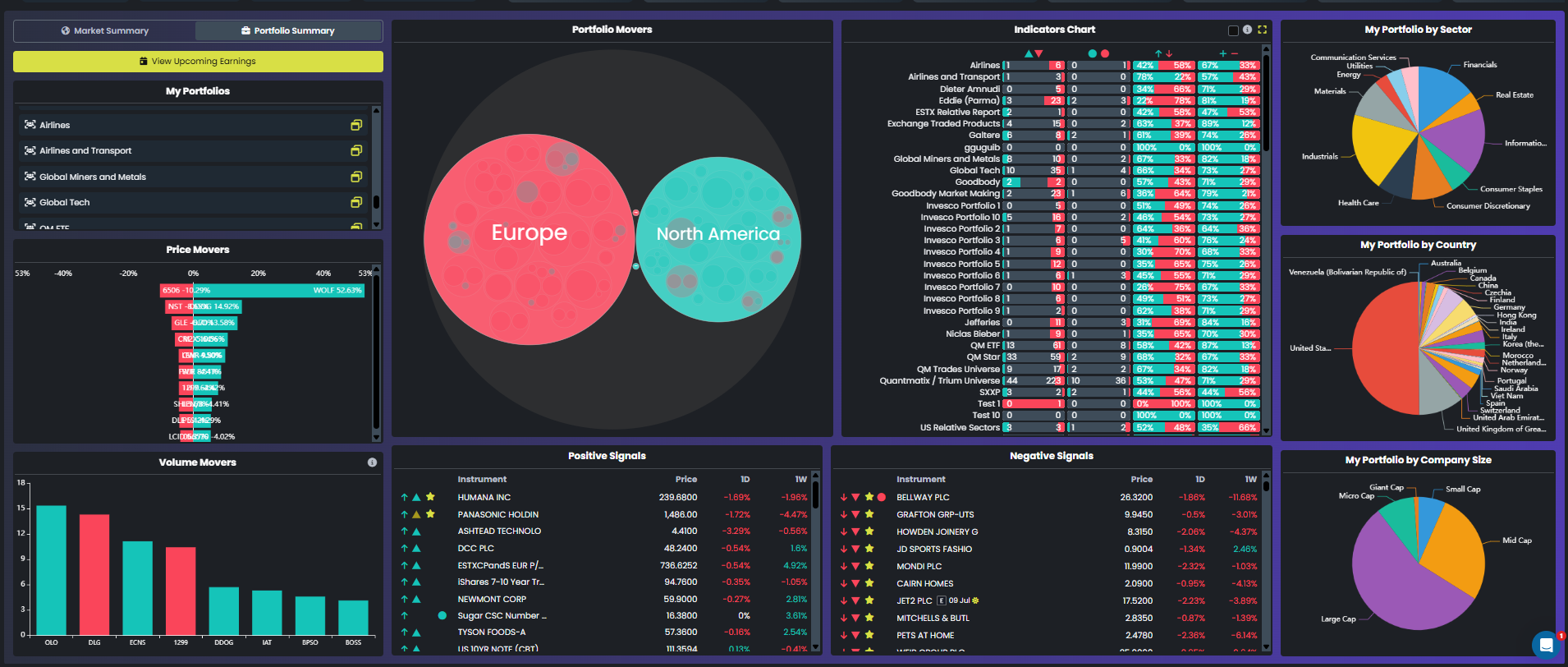
Most tools stop at the filtered list. Jenova treats screening as the first step in a chain: identify candidates, research them against primary sources, evaluate the technical setup, size the position, and monitor it against macro conditions — each stage handled by a specialist agent that carries the full context forward.
| Traditional Approach | Jenova |
|---|---|
| Configure filters, receive a list of tickers | Describe criteria in plain English, receive ranked candidates with reasoning |
| Read filings manually, company by company | Agents parse filings, transcripts, and estimates on request |
| Fundamental, technical, and macro tools kept separate | Specialist agents share context in one conversation |
| Screen results go stale immediately | Persistent memory tracks your watchlist across sessions |
| No path from candidate to position | Portfolio and options agents translate ideas into sized positions |
Natural-Language Screening Backed by Real Research
Instead of translating an investment thesis into filter parameters, state it directly. The Fundamental Stock Analyst works from SEC filings, analyst estimates, and market sentiment — the same primary sources an equity research associate would use.
"Screen for US mid-cap industrials trading below 12x forward earnings with improving free cash flow conversion and no meaningful refinancing risk before 2028."
"Which consumer defensive names have raised dividends for 10+ consecutive years while keeping payout ratios under 60%?"
Multi-Model Access Without Vendor Lock-In
Jenova provides always-current access to models from OpenAI, Anthropic, Google, DeepSeek, and xAI. Different research tasks favor different models — long-context filing analysis, fast numerical reasoning, and structured summarization each have a natural fit. Subscribers switch freely without juggling separate accounts.
Live Data Through MCP Tool Integration
Built on the Model Context Protocol, agents connect to Google Search, Google Scholar, Reddit, YouTube, and any MCP-compliant server. Screening runs against current information, not a stale training cutoff. The Real-Time Search agent aggregates across platforms when a name requires sentiment or catalyst checks.
Persistent Memory Across Sessions
Agents remember your watchlist, risk tolerance, holdings, and prior conclusions. Return two weeks after a screen and ask what changed — no re-briefing required.
Specialized AI Agents for Stock Screening and Analysis
Screening is one function inside a larger research workflow. These agents handle the stages around it.
Fundamental and Valuation Research
Fundamental Stock Analyst — Expert equity analyst for fundamental research. It handles earnings analysis, relative valuation, and business model assessment across SEC filings, analyst estimates, and market sentiment. This is the primary engine when your screen is built on financial statement criteria.
- Earnings quality and revenue driver analysis
- Peer-relative multiple comparison
- Business model and competitive moat assessment
Economics Analyst — Institutional-grade coverage of macro, micro, trade, and policy. Useful when a screen's thesis depends on rate paths, inflation trajectory, or sector-level demand assumptions.
- Mechanism tracing from policy to sector earnings
- Scenario analysis for cyclical exposure
- Data-driven context for macro-dependent screens
Technical and Timing Analysis
Technical Stock Analyst — Institutional-caliber technical analysis grounded in price action and market structure. Once fundamentals qualify a name, this agent evaluates whether the chart supports entry now or argues for patience.
- Chart, volume, and momentum analysis
- High-probability setups with defined risk
- Relative strength screening across candidates
Portfolio Construction and Risk
Portfolio Management Strategist — Institutional portfolio analyst covering allocation analysis, drift detection, risk assessment, scenario stress tests, and rebalancing recommendations. Screened ideas mean little without portfolio fit; this agent supplies it.
- Allocation drift and concentration detection
- Scenario stress testing on proposed additions
- Rebalancing recommendations with sizing logic
Options Strategist — Translates a market view into an optimal structure. When a screen surfaces a name you like but want defined-risk exposure to, this agent handles strategy selection, volatility analysis, and position sizing.
- Strategy selection matched to thesis and volatility regime
- Greeks and position sizing guidance
- Trade management across the holding period
Macro and Cross-Asset Context
Macro Strategist — Cross-asset synthesis, policy analysis, and automated daily briefings for professional investors. Sets the regime backdrop that determines which screening factors are working.
- Cross-asset positioning synthesis
- Central bank policy interpretation
- Automated daily briefings on your watchlist themes
Commodities Analyst — Energy, metals, and agriculture coverage integrating supply/demand fundamentals, COT positioning, and technicals. Essential when screening energy or materials equities where the underlying commodity drives earnings.
Forex Market Analyst — Currency strategy covering real yield differentials, central bank policy, and flow dynamics. Relevant for screening multinationals with material FX translation exposure.
Adjacent Markets
Cryptocurrency Analyst — On-chain fundamentals, derivatives positioning, and cycle analysis for investors screening digital assets alongside equities.
Sports Betting Research Assistant and Football Betting Analyst — For probabilistic thinkers who apply the same expected-value discipline outside equity markets.
Research Support and Output
Real-Time Search — Cross-platform research engine covering Google, Reddit, YouTube, GitHub, and more. Catches sentiment shifts and catalysts that structured data misses.
Professional Background Investigator — Deep background research on management teams. Governance quality is a screening criterion most tools ignore entirely.
Newsletter Generator — Turns your screening output into a formatted research note for a fund, club, or subscriber list.
Word Doc Generator — Converts research conversations into professionally formatted investment memos.
Try Jenova free — no credit card required.
How AI Stock Screening Works: Step by Step
Step 1: Define Your Screening Criteria in Plain Language
Open the Fundamental Stock Analyst and describe what you're looking for the way you'd describe it to a colleague. No filter configuration, no field mapping.
"Find me profitable software companies with net revenue retention above 110%, positive free cash flow, and enterprise value to sales below 6x."
Step 2: Review the Ranked Candidates and Their Reasoning
The agent returns candidates with the reasoning attached — which criteria each name satisfies, where it falls short, and what caveats apply. This is the step that rule-based screeners skip.
"For the top three names, walk me through the revenue quality and any accounting red flags in the most recent filings."
Step 3: Layer In Technical and Macro Context
Bring in the Technical Stock Analyst with @mention — it inherits the full conversation, so there's nothing to re-explain.
"@Technical Stock Analyst — for these three names, is the current structure supportive of an entry, or should I wait for a pullback to support?"
Step 4: Evaluate Portfolio Fit and Size the Position
Hand the shortlist to the Portfolio Management Strategist to check the addition against your existing exposure.
"My portfolio is 42% technology already. How does adding a 4% position in the top candidate affect my sector concentration and drawdown profile?"
Step 5: Monitor and Re-Screen on a Schedule
Because memory persists, your watchlist stays live across sessions.
"It's been three weeks since we screened. Which names on the list have had material news, guidance changes, or technical breakdowns?"
Results and Use Cases
📊 Valuation Screening Across a Sector
Scenario: An investor wants to identify undervalued consumer defensive names with durable dividend coverage.
Traditional Approach: Configure a screener, export 30 tickers to a spreadsheet, then spend 15–20 hours reading filings to determine which are genuinely cheap versus value traps.
Jenova: The Fundamental Stock Analyst screens on valuation and dividend criteria, then evaluates each candidate's payout sustainability, return on invested capital, and balance sheet health directly from filings.
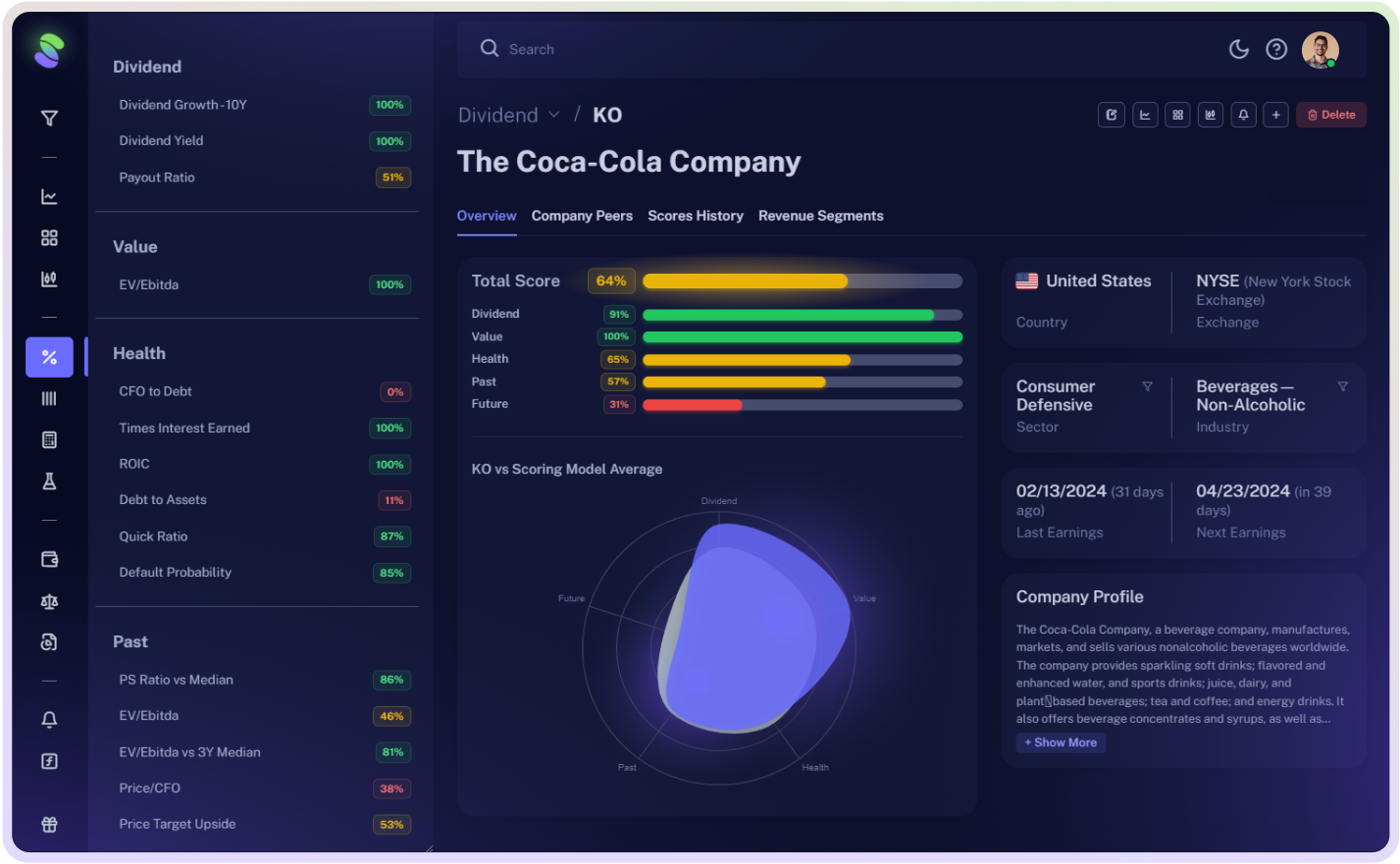
- Composite scoring across dividend, value, health, and forward-looking dimensions
- Ratio-level detail — payout ratio, ROIC, debt-to-assets, times interest earned
- Peer comparison within the same industry classification, not just the broad market
💼 Earnings Season Triage
Scenario: A portfolio holds 25 names and 18 report within a two-week window.
Traditional Approach: Skim headline numbers, miss guidance nuance, and discover the real story weeks later when the stock has already repriced.
Jenova: The Fundamental Stock Analyst processes results and transcripts, flagging guidance revisions, margin inflections, and management tone shifts. The Macro Strategist frames which surprises reflect company execution versus sector-wide conditions.
- Beat/miss quality assessment, not just headline comparison
- Guidance revision tracking across the portfolio
- Company-specific versus macro-driven attribution
📱 Screening From Your Phone Between Meetings
Scenario: A market-moving headline breaks and you have eleven minutes before your next commitment.
Traditional Approach: Desktop-only screening tools mean the analysis waits until evening, by which point the move is priced in.
Jenova: Full feature parity across web, iOS, and Android — with speech-to-text for hands-free queries. Every conversation and screening result syncs across devices.
- Complete agent access on mobile, not a stripped-down companion app
- State-of-the-art speech-to-text for voice queries
- Settings, memory, and history synchronized across all devices
🎯 Building a Defined-Risk Position From a Screen
Scenario: A screen surfaces a compelling small-cap, but position sizing at conviction level would breach the investor's risk limits.
Traditional Approach: Either take undersized equity exposure or skip the idea entirely.
Jenova: The Options Strategist evaluates the volatility surface and proposes structures — spreads, collars, or defined-risk directional trades — that express the thesis within the risk budget, with the Portfolio Management Strategist confirming the fit.
- Strategy selection matched to implied volatility conditions
- Greeks-aware position sizing
- Exit and management framework defined before entry
Frequently Asked Questions
Is Jenova's AI stock screener free?
Yes. The free tier includes all core features with limited monthly usage, giving full access to the Fundamental Stock Analyst and other research agents. Paid tiers start at $20/month for 30× the free usage allowance, custom model selection, and no watermarks on generated documents. Usage resets monthly on your billing date with no daily caps.
How is an AI stock screener different from a traditional screener?
A traditional screener applies fixed numerical filters and returns a list. An AI stock screener interprets plain-language criteria, reads primary sources like filings and transcripts, and explains why each candidate qualified. Industry analysis indicates AI screeners process data orders of magnitude faster than manual review — but the more meaningful difference is the reasoning attached to each result.
Can it analyze SEC filings and earnings calls directly?
Yes. The Fundamental Stock Analyst works from SEC filings, analyst estimates, and market sentiment data. You can also attach documents and knowledge bases directly to any session for grounded analysis on materials you supply.
Does an AI stock screener replace a financial advisor?
No — and the data suggests investors don't want it to. In the HSBC survey, 73% of investors use AI for finance and investment, but only 12% cited it as the most influential factor in their last decision versus 37% for financial professionals. Half prefer a hybrid model. Treat AI screening as research acceleration, not decision delegation.
Which AI models power the analysis?
Jenova provides always-current access to models from OpenAI, Anthropic, Google, DeepSeek, and xAI. Subscribers can select their preferred model per conversation and toggle reasoning mode for higher-quality output on complex valuation work. There's no vendor lock-in.
Does it work on mobile?
Yes, with full feature parity across web, iOS, and Android. All settings, chat history, and memory sync across devices, and speech-to-text is available for voice-driven queries.
Conclusion
The bottleneck in individual stock research was never access to filters — free screeners have been widely available for twenty years. The bottleneck is interpretation: turning a list of forty tickers into three well-understood investment cases with defined risk and appropriate sizing.
An AI stock screener closes that gap by attaching reasoning to results. On Jenova, that reasoning comes from specialist agents that share context — the Fundamental Stock Analyst for valuation and filing work, the Technical Stock Analyst for entry timing, and the Portfolio Management Strategist for allocation and risk. With persistent memory, live data through MCP tools, and multi-model access, your screening workflow stays current instead of resetting every session.
The investors adopting AI research tooling are doing so alongside professional judgment, not in place of it. Build the workflow that gives you both.
Explore the full agent library at Jenova.
For Developers: Every agent in this article is available programmatically via the Jenova API — integrate equity research, technical analysis, and portfolio intelligence into your application with a single integration. Full documentation →