AI Starship Captain Game: Command a Crew in Open-Ended Space RPGs
2026-10-17
Roleplay Game Master turns any device into an AI starship captain game. You command the ship, give orders, and shape the story through your decisions. Scripted space games limit you to preset dialogue trees, and tabletop campaigns depend on a group's schedule. This AI acts as your always-available game master instead: it voices your crew, generates missions, and adapts the galaxy to every order you give. As of October 2026, generative AI has made it possible to captain a starship whose story responds to you, rather than one that only branches along predetermined paths.
- ✅ Unlimited memory. Your ship's history, crew relationships, and past missions carry forward across sessions.
- ✅ Consistent characters. Your first officer, engineer, and rival captains stay true to their personalities.
- ✅ Complete creative freedom. You design the ship, the faction, the stakes, and the tone.
- ✅ Available anywhere. Play on web, iOS, or Android whenever you have a few minutes.
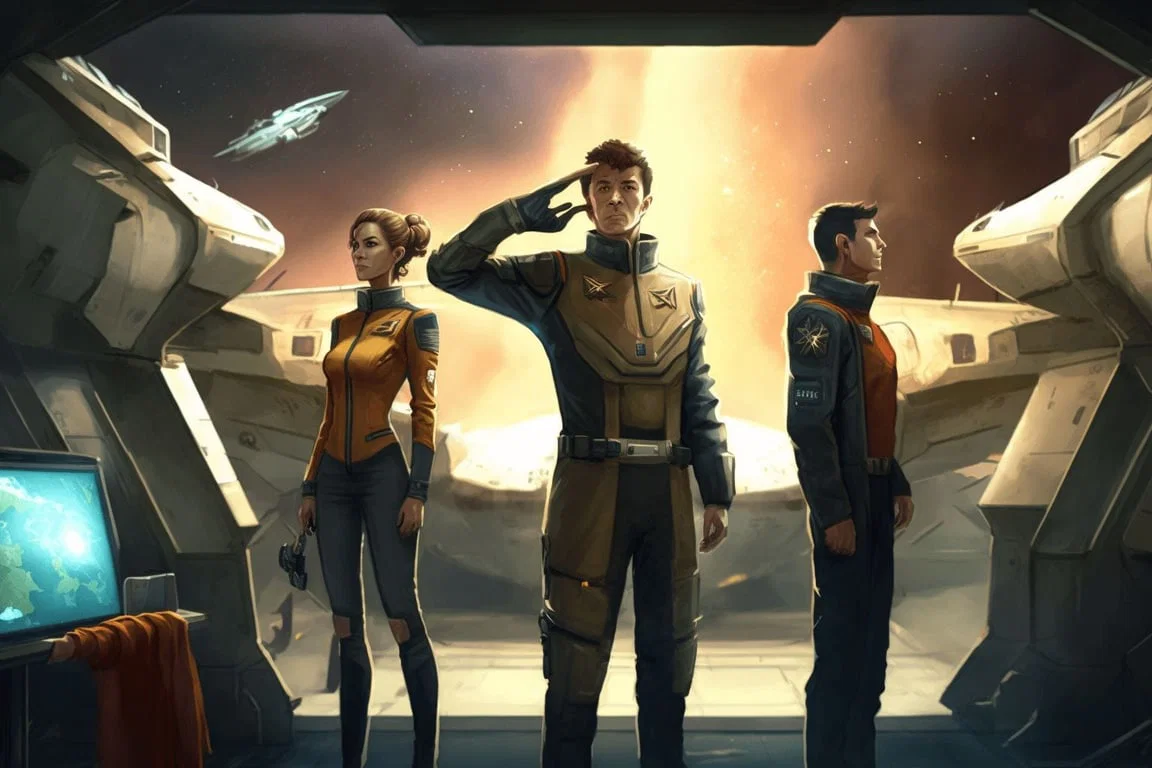
Fans of space opera have imagined sitting in the captain's chair for decades. Few games deliver a convincing version of it: one where the crew argues back, a first-contact negotiation can fail in unexpected ways, and a decision made in week one comes back in week ten. To see why an AI-driven approach changes that, it helps to look at where traditional captain experiences fall short.
Quick Answer: What Is an AI Starship Captain Game?
An AI starship captain game is an interactive space roleplay where an AI game master narrates the galaxy, voices your crew, and responds to your command decisions in real time, producing a unique, persistent campaign instead of a scripted storyline.
Key capabilities:
- Open-ended command decisions covering combat, diplomacy, exploration, and crew management
- AI-voiced crew members with distinct personalities, loyalties, and conflicts
- Persistent campaign memory, so consequences carry across sessions
- Fully custom settings, from gritty military sci-fi to lighthearted retro-futurist adventure
Why Scripted Space Games Leave Captains Wanting More
Role-playing is one of gaming's largest categories, and AI is changing it quickly. Research on generative AI in games describes a shift toward "living games" that adapt, grow, and evolve, meaning games that can adjust their characters and storylines to how each person plays.
**$44.78 billion**: [Estimated global role-playing games market size in 2026, projected to reach $72.76 billion by 2035](https://www.businessresearchinsights.com/market-reports/role-playing-games-market-123713)
36.1% CAGR: Projected growth of the AI in gaming market, from $5.8 billion in 2026 to $51.3 billion by 2033
89% of developers: Report that AI is changing what players expect from games, according to a Google Cloud and Harris Poll survey of 615 developers
Player expectations have moved. Yet the authentic captain experience remains frustratingly difficult to find:
- Finite dialogue trees. Writers can only script so many branches, so your "choices" usually lead back to the same handful of outcomes.
- Crews without memory. NPC officers rarely remember that you overruled them three missions ago, or that you saved their homeworld.
- Tabletop logistics. A live sci-fi campaign needs a skilled game master, a committed group, and recurring calendar slots.
- Fixed settings. You fly someone else's ship in someone else's universe, under someone else's rules.
The academic community has taken notice. Researchers building co-creative AI games describe AI characters that act as active narrators driven by their own persona rather than as passive assistants, which is the dynamic a good bridge crew needs.
This is exactly the gap an AI game master was built to fill.
Why Roleplay Game Master Works as Your Starship Captain Game
Roleplay Game Master is a dedicated AI storyteller built for immersive, open-ended roleplay. You describe the starship, the crew, and the corner of the galaxy you want to explore. From there, the AI runs the campaign: it narrates sensor readings, plays every character aboard and beyond, and lets your orders reshape the story.
It doesn't impose a fixed plot. Each session builds on the last, and your command record becomes part of the campaign.
| Traditional Approach | Roleplay Game Master |
|---|---|
| Scripted dialogue with a few preset branches | Free-form commands, with the story adapting to whatever you say |
| Crew NPCs that reset between missions | Unlimited memory, so crew remember your decisions and history |
| Tabletop campaigns tied to group schedules | Play solo, anytime, on any device |
| One developer-defined universe | Any setting you imagine, from military flagship to smuggler's freighter |
| Character voices drift over a long campaign | Consistent personalities across hundreds of exchanges |
🧭 Real Command Authority
Every order matters. Divert power to shields, hail the unknown vessel, or bluff your way past a blockade, and the narrative responds to the specific choice you made. There's no "correct" option hidden behind the menu, because there is no menu.
👥 A Crew With Personalities
Your tactical officer can be loyal but reckless, your chief engineer brilliant and insubordinate, your diplomat quietly ambitious. Because the AI keeps characters consistent, these traits produce real friction and real loyalty over time.
🌌 A Galaxy That Remembers
Long campaigns depend on continuity. The AI game master tracks alliances, grudges, damaged systems, and unresolved mysteries, so the derelict you ignored in session two can come back at a much worse moment.
🎨 Any Tone, Any Setting
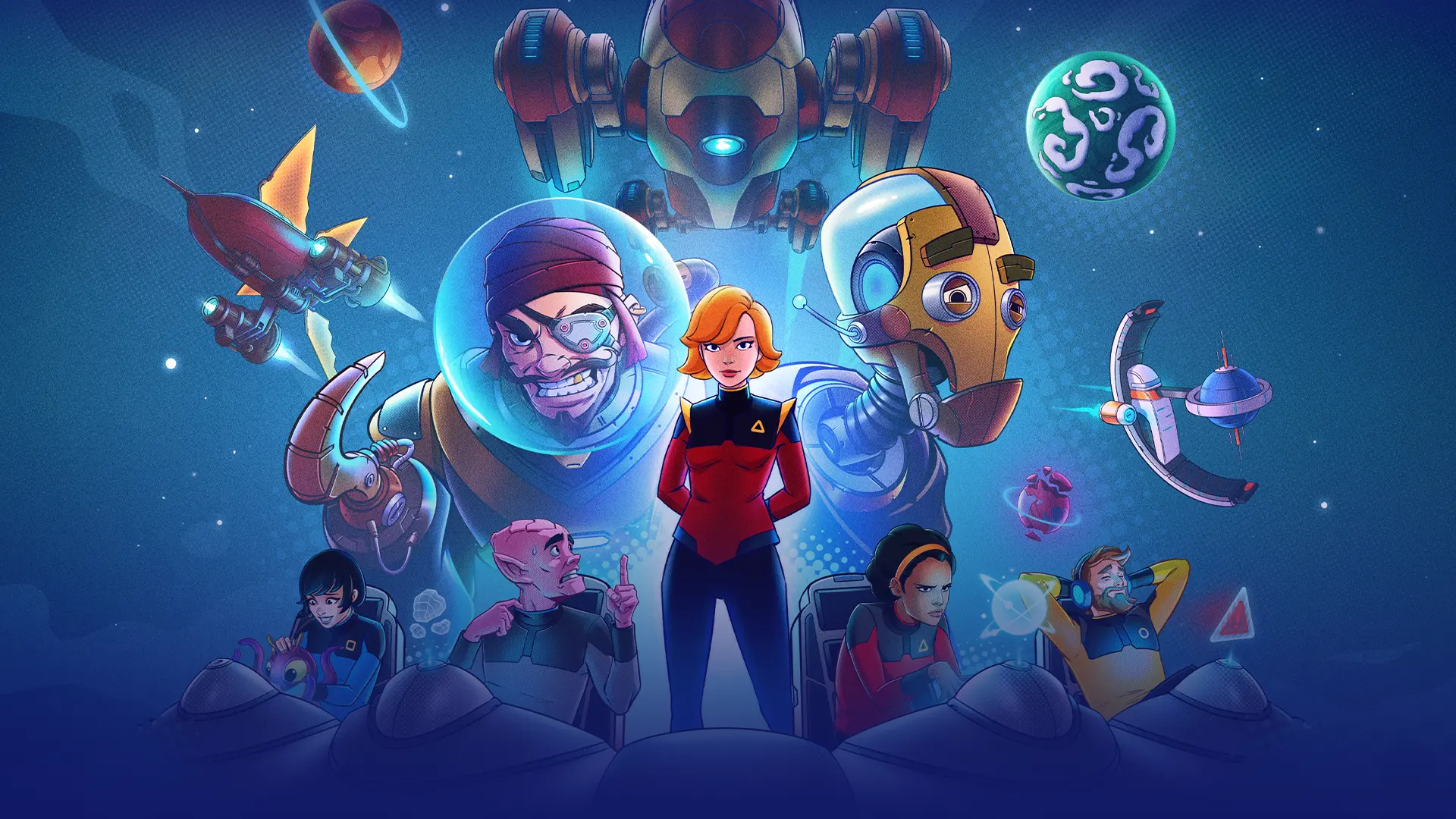
Do you want hard sci-fi with realistic travel times, or a colorful romp with space pirates and robot sidekicks? You set the rules, and the AI adapts its narration style to match.
Example prompts to launch your campaign:
"I'm captain of a battered exploration frigate on the edge of charted space. Introduce my senior officers and give me a distress signal with something wrong about it."
"Run a first-contact scenario where the alien species communicates only through mathematics, and my science officer disagrees with my approach."
"Start a campaign where I've just been promoted after my captain died in battle, and half the crew doesn't trust me yet."
Related Agents You'll Also Find Useful
Captaining a starship often sparks other creative projects. These agents fit naturally alongside your campaign.
Creative Fiction Writer
If you want to turn your campaign into a polished novella or short story series, this storytelling partner helps shape raw adventure logs into finished prose.
- Original fiction across any genre, including science fiction
- Research support for authentic worldbuilding
- Editorial feedback from first draft to final manuscript
Game Designer Assistant
If you're also designing your own space game, whether tabletop or digital, this agent helps you build the systems behind it.
- Brainstorming and systems analysis for ship combat, economies, and progression
- Game design documentation
- Expertise across genres and platforms
Comic Creator
If you want your crew's best moments shown as sequential art, Comic Creator can turn a defining mission into a visual story.
- Sequential art and dynamic page layouts
- Bold, consistent visual styles
- Formats from single issues to graphic novel sagas
Try your first command session free, with no credit card required.
How to Start Your AI Starship Captain Game
Step 1: Open the AI Game Master
Launch the AI game master on web or mobile. There's nothing to install and no character sheet to fill out before you begin.
Step 2: Define Your Ship and Setting
Describe your vessel, your rank, and the universe's tone in a sentence or two. Specificity helps: a "science vessel with a skeleton crew" plays very differently from a "dreadnought at the front lines."
"I command the ISV Meridian, a 40-person research ship. The galaxy is tense after a ceasefire. Tone: grounded, morally gray, slow-burn mystery."
Step 3: Meet Your Crew
Ask the AI to introduce your senior staff, or create them yourself. Give each officer a want and a flaw, and the AI will play them consistently from then on.
"Give me a first officer who was passed over for my command and resents it, but is the best tactician in the fleet."
Step 4: Issue Orders and Live With the Consequences
Play the way a captain would: give orders, ask for reports, and make judgment calls under pressure. The AI narrates outcomes, introduces complications, and has your crew react in character.
"Red alert. Hail them on all frequencies, and tell engineering to quietly prep the jump drive in case this goes badly."
Step 5: Return to Your Campaign Anytime
Close the app and pick up later. The AI remembers where you left off, including the damaged warp coil, the uneasy alliance, and the officer who still hasn't forgiven you.
Results & Use Cases
🚀 Running a Long-Haul Exploration Campaign
Scenario: A sci-fi fan wants a months-long campaign charting unknown space, with recurring characters and slowly unfolding mysteries.
Traditional Approach: Recruit a group, find a game master willing to prep weekly, and hope everyone stays committed. Or play a scripted game whose story ends after a set number of hours.
Roleplay Game Master: The campaign runs on the player's schedule, with persistent memory linking every session.
- Plot threads from early sessions resurface naturally
- Crew relationships change based on accumulated decisions
- No scheduling or prep work required
⚔️ High-Stakes Diplomacy and Tactical Standoffs
Scenario: A player wants to test their judgment in tense first-contact or blockade scenarios where a wrong word could start a war.
Traditional Approach: Strategy games reduce diplomacy to stat checks, and dialogue-driven games offer three or four pre-written responses.
Roleplay Game Master: Negotiations play out in free-form conversation, with alien envoys and rival captains reacting to tone, phrasing, and leverage.
- Bluffs, concessions, and threats all carry narrative weight
- Officers offer conflicting advice in character
- Outcomes vary between playthroughs
📱 A Captain's Log on Your Commute
Scenario: A busy professional wants a sense of adventure in 10-minute bursts during train rides.
Traditional Approach: Mobile space games tend toward simplified mechanics, timers, and grind loops.
Roleplay Game Master: Short, story-rich sessions on iOS or Android, with speech-to-text for giving orders hands-free.
- Resume mid-mission without losing context
- Settings sync across phone and desktop
- Each micro-session advances the larger campaign
✍️ From Campaign to Published Story
Scenario: A writer realizes their campaign has produced a compelling narrative arc they want to publish.
Traditional Approach: Manually reconstruct events from memory and notes, then draft from scratch.
Outcome: The campaign serves as a detailed story bible, and this fiction-writing partner helps turn key arcs into polished chapters.
- Characters and settings arrive already developed through play
- Dialogue drawn from real in-game moments
- Editorial guidance shapes pacing and structure
Frequently Asked Questions
Is there a free AI starship captain game?
Yes. You can start an AI starship captain game with Roleplay Game Master for free, with all core features and limited monthly usage. Players who want longer or more frequent sessions can upgrade to paid plans starting at $20 per month, which include significantly higher usage limits and custom model selection.
How is an AI captain game different from traditional space RPGs?
Traditional space RPGs rely on pre-written dialogue and scripted branches, so your options are limited to what writers anticipated. An AI captain game generates narration and character responses in real time based on your actual commands. Research on generative games describes this as storylines that adapt in real time based on player actions.
Can I create my own starship, crew, and universe?
Yes. You define everything: ship class, crew personalities, factions, technology level, and tone. The AI game master builds the campaign around your setup and keeps characters consistent. If you later want to formalize your universe into a playable game system, the Game Designer Assistant can help design mechanics and documentation.
Does the AI remember my campaign between sessions?
Yes. Persistent memory means your ship's history, crew relationships, unresolved plot threads, and past decisions carry forward every time you return. You don't need to recap previous sessions. You can pick up mid-mission, and earlier choices can resurface with real consequences later in the campaign.
Can I play an AI starship captain game on mobile?
Yes. The experience works with full feature parity across web, iOS, and Android, and your campaign syncs between devices. Built-in speech-to-text lets you give bridge orders by voice, which suits short sessions during commutes or breaks.
Conclusion
The captain's chair has always stood for authority, consequence, and the unknown. Scripted games could only gesture at that, with finite dialogue trees, forgetful crews, and stories that end where the writers stopped. An AI starship captain game changes the equation: your orders shape the narrative, your officers remember how you've led them, and the galaxy keeps responding for as long as you keep flying.
Whether you want a sprawling exploration saga, tense diplomatic standoffs, or a quick space adventure on your commute, interactive sci-fi roleplay is now open-ended in a way it wasn't before.
Take command and try Roleplay Game Master now. Explore more at Jenova.
For Developers: Roleplay Game Master is available programmatically via the Jenova API. With a single API call, you can integrate persistent, character-consistent interactive storytelling into your game or app. Full documentation →