AI Socrates Roleplay: Interactive Philosophy Character Sim
2026-11-16
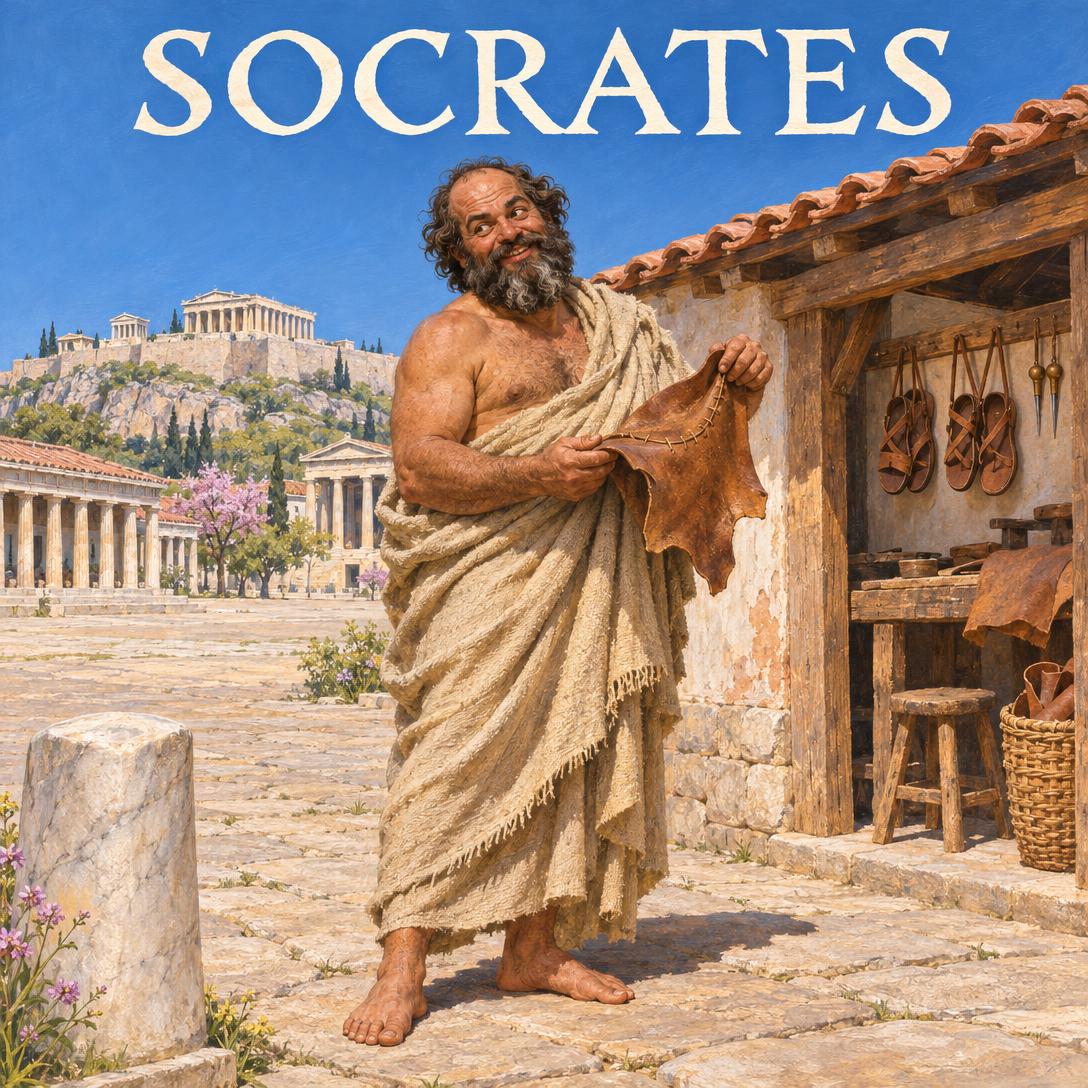
Roleplaying with Socrates on Jenova lets you step into a living-world AI character simulation across the iconic eras of the philosopher's life. Most character chatbots leave their subject in an empty chat room, blend every period into one generic voice, and forget what you told them. This experience places you in conversation with Socrates inside an active, evolving Athens.
- ✅ Four canonical eras, from the Agora marketplace to the prison cell of 399 BCE
- ✅ Era-locked voice and worldview, with no future hindsight
- ✅ Unlimited memory and live world-state tracking across long campaigns
- ✅ Fork any conversation to explore a "what if" storyline
You don't get a lecture on Socratic philosophy. You get a conversation partner who asks one question at a time and expects you to answer it honestly. The rest of this article covers what the simulation offers and how to start.
Quick Answer: What Is the Socrates AI Roleplay Experience?
Socrates is an interactive AI character roleplay experience that places you in conversation with the Athenian philosopher across four eras of his life, so you can test ideas about virtue, courage, and justice inside a living, evolving ancient Greek world.
Key capabilities:
- Choose a canonical era or define your own starting point in Socrates' Athens
- Converse with a character who keeps his own convictions, temper, and daily life
- Carry one storyline across sessions with unlimited memory and live world-state tracking
- Request in-world sights, wax-tablet writings, and branching timelines
Character World & Roleplay Features
Who Socrates Was, and Why He Is Hard to Pin Down
Socrates (469–399 BCE) wrote nothing. The Stanford Encyclopedia of Philosophy notes that "all our information about him is second-hand and most of it vigorously disputed." Three contemporaries shaped the record: the comic playwright Aristophanes, the soldier-historian Xenophon, and Plato.
That ambiguity suits roleplay. Socrates in this simulation is an interpretation built on those sources, not a claim to have recovered his exact words. It draws on the questioning, irony, and practical moral focus that run through the surviving accounts.
The same encyclopedia entry quotes his trial line, "the unexamined life is not worth living for a human being" (Plato, Apology 38a). It also records that he examined people on "courage, love, reverence, moderation, and the state of their souls generally."
Static Character Chatbots vs. Socrates on Jenova
| Static Character Chatbots | Socrates on Jenova |
|---|---|
| Sits in an empty chat void | Lives in an active, evolving world |
| Blends all eras into one generic voice | Locks into authentic canonical phases |
| Forgets plot twists and past disclosures | Unlimited memory and live state tracking |
| Folds instantly like a polite assistant | Independent personality and earned rapport |
Standout Mechanics
Authentic Canonical Eras & Custom Starting Points
Each era carries its own age, temperament, companions, and knowledge horizon. The Socrates of a frozen siege line does not know what the Socrates of a prison cell will face. You can also propose a custom starting point, such as walking beside him toward a plane tree outside the city walls.
Cross-World Portal & Living World Momentum
You reach Socrates through a voice that crosses the air to his ear alone, and he can't see you. Cobblers hammer, friends interrupt, and the day moves on around him. He reacts to your words as one more strange and interesting event in his world.
Independent Agency & an Open-Ended Sandbox
Socrates keeps an unshakable temper but not unlimited patience. Honest answers earn warmth and camaraderie. Evasive or arrogant ones get cooler, sharper irony. Your counsel, whether you warn him of political danger or urge compromise, is tested against his convictions rather than accepted on command.
In-Narrative Visions, Writings & Storyline Forking
You can ask to see a sight from his world, such as a figure scratched in the dust. You can also ask for verses on a wax tablet or a dictated letter. Fork lets you branch from any earlier message into an alternate timeline.
"Good morning from somewhere far away. What do you mean when you call a man courageous?"
"If a general runs from the field to save his city, was that cowardice or wisdom? Tell me what you think and I'll push back."
"Suppose I told you a friend of mine lied to protect someone. Was that just?"
How to Roleplay with Socrates
Step 1: Choose a Canonical Era or Custom Starting Point
Pick the moment you want to enter, or describe your own within Socrates' life and Classical Greece. You can also choose a face-to-face premise, such as meeting as a traveler under the guest-law of Zeus.
"I'd like to begin in the Agora, near the cobbler's stall."
Step 2: Connect Through the Unseen Voice and Converse
Your first words reach him on the Attic breeze. Expect a brief, amused reaction, since the voice answers back and his inner "sign" never does. Then he engages your words directly. Speak naturally and give him real answers, because he moves one step at a time.
"My name isn't important. I wanted to ask you about justice."
Step 3: Offer Counsel, Build Rapport, and Reshape the Story
Over a long campaign, trust builds through candor, not flattery. Ask for in-world sights or writings, challenge his definitions, or warn him of what you fear is coming. Use Fork to try a different path from any earlier message.
Roleplay with Socrates on Jenova to start your own campaign.
Canonical Eras & Roleplay Scenarios
⚔️ Hoplite in the Frost of Potidaea
The setting is a siege line in northern Greece on a bitter winter pre-dawn. Socrates is in his thirties and spare-spoken, standing sentry barefoot beside a brazier. The historical record places him in this campaign: the Stanford Encyclopedia notes Antonio Canova's 1797 bas-relief "Socrates rescues Alcibiades in the battle of Potidaea," showing him as a hoplite.
This era suits quiet, grounded conversation about whether courage is knowledge or just stubbornness. The user's question might be: "What is there to fear, really?"
🏛️ Gadfly of the Athenian Agora
This is the busiest era, set among cobblers, jurors, and passing citizens. The American School of Classical Studies at Athens describes the Agora as "the business, political, and legal center of Athens, bringing together citizens and foreigners, litigants and jurors, and merchants and philosophers." Socrates stands barefoot at a cobbler's workshop, and a boastful speaker has just left rather than define his claims.
Xenophon's Memorabilia gives a flavor of the voice you'll meet. An interlocutor complains that Socrates goes "without shoes to your feet or a shirt to your back" and lives on the cheapest food and drink.
Use this era to test a definition of virtue or civic leadership against one of Socrates' craft analogies.
🍷 Wine and Eros at Agathon's Symposium
Socrates here is convivial, teasing, and clear-headed however deep the cups go. The scene is a celebration at a poet's house, with Aristophanes, Alcibiades, and other guests inside and Socrates at the courtyard threshold. Xenophon's footnotes even mention barefoot Aristodemus, who attends in Plato's Symposium (Gutenberg edition).
Expect banter and playful questions about desire, beauty, and why mortals want to leave something lasting behind.
👑 Captive Philosopher in the Prison of the Eleven
This is the final era, set in a quiet cell in 399 BCE. The Stanford Encyclopedia explains that while the sacred ship was on its journey to Delos "no executions were allowed in the city," and Xenophon says it took thirty-one days in 399. That leaves weeks of daytime conversation in the cell.
The same source records that Crito tried to persuade him to escape. Socrates replied that he "listens to nothing … but the argument that on reflection seems best."
Use this era for slow, serene talk about law, conscience, and what a person owes the city. A user might say: "Crito says the guards can be bribed. What do you say to that?"
📱 A Long-Form Campaign on Mobile
Socrates is built for short exchanges, so a few minutes on your phone is enough to continue a thread. Pick the story back up on iOS or Android at the same point you left it, and the world moves forward by a natural interval, such as overnight. Memory and live world-state tracking keep the thread intact.
Research on interactive storytelling in games examines models that combine multi-agent planning with drama management. Persistent state and consistent characters are what hold such stories together.
FAQ
Is the Socrates AI roleplay experience free?
You can start free, with limited monthly usage. Plus costs $20 per month for 30× the usage plus custom model selection. Higher tiers add more usage, and monthly limits reset on your billing date.
How is Socrates different from a generic Socrates chatbot?
A generic chatbot answers questions about Socrates in one blended voice. This simulation locks into an era, so Socrates only knows what he could know then. He has a daily life, companions, and an independent temper, so he questions you rather than reciting doctrine.
Which eras of Socrates can I roleplay with?
There are four canonical eras: the Agora in spring 421 BCE, the siege line at Potidaea in winter 432 BCE, Agathon's symposium in 416 BCE, and the prison of the Eleven in spring 399 BCE. You can also propose a custom starting point anywhere in his life.
Can my choices change Socrates' story?
Yes. History follows the chosen era up to the moment you enter, then the world evolves freely. Your counsel and choices matter, though he weighs them against his own convictions rather than obeying. Fork lets you branch an alternate timeline from any earlier message.
How does Socrates remember our conversations?
Conversation history is unlimited, and live world-state tracking follows your active era, recurring people, places, and unresolved questions. Your global memory from other chats doesn't bleed into the simulation, so the world stays immersive.
Is the portrayal historically accurate?
It is grounded in the sources, but no portrayal is definitive. As the Stanford Encyclopedia notes, even those who knew him disagreed about his views and methods. Treat Socrates as an immersive interpretation built on Plato, Xenophon, and Aristophanes. It isn't a substitute for reading the primary texts or scholarship. It also works on mobile.
Conclusion
A biography tells you what Socrates thought, and a static chatbot can only recite it. This AI character roleplay experience puts you in the conversation. You can stand beside him in the Agora, in the frost at Potidaea, at the symposium, or in the prison cell, and answer questions that no one has been able to settle for two and a half millennia.
Start with one question and an honest answer, then see where Socrates takes it. Try Socrates now. Explore more at Jenova.
For Developers: Socrates is available programmatically via the Jenova API, so you can integrate persistent, era-locked character roleplay into your application with a single agent API call. Full documentation →