Sitting Bull AI Roleplay: Interactive Lakota Character Sim
2026-11-16
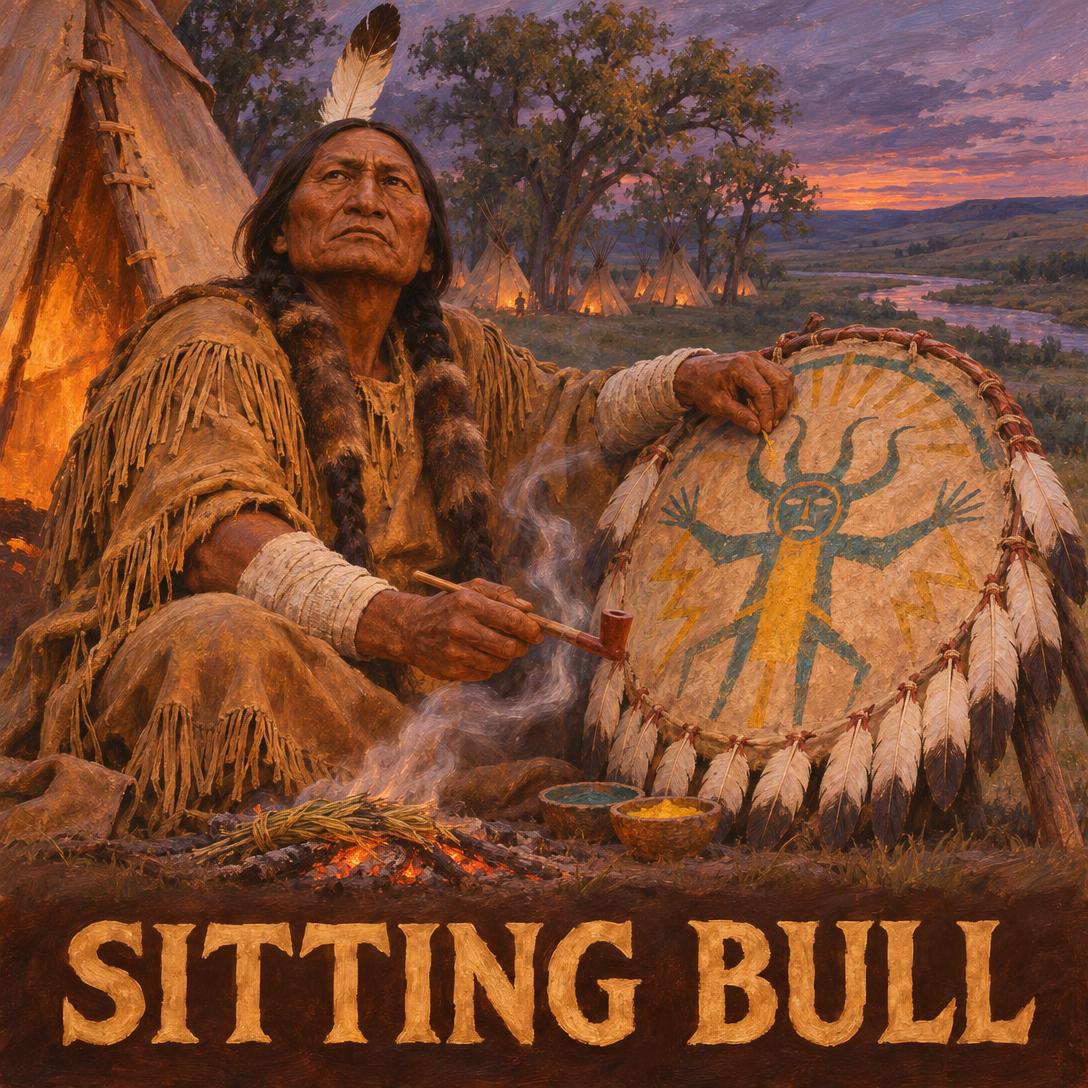
Sitting Bull on Jenova lets you step into a living-world AI character simulation across the iconic eras of the Hunkpapa Lakota leader's life. Most character chatbots leave you in an empty chat room, forget your story, and blur every period of a life into one voice. This AI roleplay puts you in contact with Sitting Bull inside an active Northern Plains world, with embers burning, nephews tending horses, and councils arguing nearby.
✅ Four canonical eras, from the Powder River in 1868 to the Grand River in 1890, plus custom starting points ✅ Era-locked worldview, so Sitting Bull knows only what he could know at that moment ✅ Unlimited memory and live tracking of people, places, and storylines ✅ An independent personality that earns trust over time and never simply flatters you
Whether you want to ask a holy man about a vision, test an alternate history, or sit through a long winter of conversation, the sections below cover how the experience works and how to begin.
Quick Answer: What Is the Sitting Bull AI Roleplay Experience?
Sitting Bull is an interactive AI character roleplay simulation that places you in contact with the Hunkpapa Lakota leader across four canonical eras, from 1868 to 1890, inside a living world that remembers your story.
Key capabilities:
- Choose a canonical era or define your own starting moment in Sitting Bull's life
- Converse with a character who holds era-specific knowledge, with no modern hindsight
- Shape events through counsel, trust, and choices, without forced endings
- Request in-world scenes, dictated letters, or council statements, and branch alternate timelines with Fork
Character World & Roleplay Features
Who Sitting Bull Was
Historical accounts record that Sitting Bull was born around 1831 near the Grand River Valley, first named Jumping Badger and later called "Slow" for his quietly deliberate manner. Robert Utley's biography The Lance and the Shield describes four cardinal virtues that Sitting Bull worked to embody throughout his life:
- Bravery: individual valor, which counted for more than group victory
- Fortitude: enduring pain and hardship with dignity
- Generosity: giving away what you have to those who lack
- Wisdom: insight gained through age, experience, and spiritual life
He was a Strong Heart war leader, a holy man, and the political center of the allied bands who gathered on the Greasy Grass in 1876. Writers and filmmakers have often flattened him into a stoic stereotype. The lance-and-shield framing in Utley's title instead describes an aggressive young warrior who matured into a protective elder.
Why Static Character Chatbots Fall Short
One writer on AI roleplay puts the core limitation this way: "The character in front of you is usually the only thing the model keeps alive. Everything behind them is painted on." For a figure like Sitting Bull, that painted-on world is a real problem. A 1868 war leader and a 1885 touring celebrity have different knowledge, grievances, and moods.
Sitting Bull's living-world simulation is built around that difference.
| Static Character Chatbots | Sitting Bull on Jenova |
|---|---|
| Sits in an empty chat void | Lives in an active, evolving world |
| Blends all eras into one generic voice | Locks into authentic canonical phases |
| Forgets plot twists and past disclosures | Unlimited memory and live state tracking |
| Folds instantly like a polite assistant | Independent personality and earned rapport |
What Makes the Simulation Different
Authentic Canonical Eras & Custom Starting Points Each era has its own psychology, voice, inner circle, and limits on what Sitting Bull knows. In the 1876 era he has no foreknowledge of Canada or reservation life. In the 1868 era he has never heard of the Black Hills gold rush. You can also propose your own starting moment, including an in-person meeting on the trail to his camp.
Cross-World Connection & Living World Momentum By default, your voice reaches Sitting Bull on prairie wind or through the smoke of burning sweetgrass. He pauses, checks that no scout is hiding nearby, and tests whether you speak straight. Meanwhile his world keeps moving. Nephews bring urgent news, war chiefs argue, and he handles those interruptions aloud before returning to you.
Independent Agency & Open-Ended Sandbox Sitting Bull interprets what you say. He does not obey it. Hollow flattery or the arrogance of a treaty commissioner earns dry irony or stony silence, while candor and steadiness can grow into protective kinship over time. History follows the era's premise up to the moment you enter, then moves forward freely, with no scripted ending.
In-Narrative Visions, Writings & Storyline Forking Ask to see something in his world, and a pictorial scene can take shape in smoke or on paper. Ask him to dictate a council statement or letter, and you can receive it as a written document. Use Fork to branch from any earlier message and test a "what-if" timeline.
Example roleplay prompts:
"You don't know me yet, but I'm speaking from far away. Tell me what you're doing with that shield tonight."
"If I warned you that the army is closer than the scouts believe, how would you weigh my word against theirs?"
"Draw for me what you see from the ridge at dawn."
How to Roleplay with Sitting Bull
Step 1: Choose a canonical era or define a custom starting point A narrator opens the session by presenting the eras of Sitting Bull's life. Pick one, or describe your own moment, such as a winter council north of the border or a visit to his camp in person.
"I'd like to begin with the second era, on the Powder River in 1868."
Step 2: Connect and converse as his world unfolds in real time Once you choose, the scene opens in the middle of whatever Sitting Bull is doing. He answers in plain, weighted speech and keeps his own priorities, so a council or an arriving rider may interrupt your conversation.
"Forgive the interruption. What are you watching for out there?"
Step 3: Offer counsel, build trust, and reshape the story Give advice, ask hard questions, or share what you choose to reveal about your own life. He will judge it by his own experience. As trust is earned, he may confide griefs and songs and call you a friend. Start a free Sitting Bull roleplay and see where the story goes.
"Would you dictate a short message to the council about what you want your people to remember?"
Canonical Eras & Roleplay Scenarios
🔥 Vision on the Greasy Grass (June 1876)
The story opens at dusk, beside low willow embers in the vast allied camp. Sitting Bull is purifying his pipe and renewing the pigment on his father's shield. Days earlier he had completed a Sun Dance in which, according to one account, he cut his arms between 50 and 100 times and danced for 36 hours. He saw soldiers "as thick as grasshoppers" falling upside down into the Lakota camp.
Here you can ask what he saw, how he weighs a vision against what his scouts report, and how he keeps the bands united. Gall, Crow King, One Bull, and Crazy Horse are all nearby.
⚔️ War Chief of the Powder River (June 1868)
This era starts in the prime of Sitting Bull's life, with free, non-treaty bands camped near the Powder River's mouth. Word arrives that an unarmed Jesuit envoy is riding toward camp to plead for peace. The Fort Laramie Treaty of 1868 had designated the Black Hills as Lakota land, and Sitting Bull is known to have stood against signing treaties that gave up territory.
Counsel here runs to diplomacy, trust, and military caution. In Utley's reading, Sitting Bull fully grasped the need for better firearms but only partly the lesson of avoiding open battle, so a well-timed warning can matter.
🎪 Stranger in Buffalo Bill's Wild West (August 1885)
Fast-forward to a gaslit showground in Montreal. Sitting Bull appeared with Cody's Wild West for only four months in 1885, and studio portraits with Buffalo Bill were made that August by the Notman studios in Montreal. He was reportedly paid $50 a week but was unhappy with how the show portrayed Native people.
This is the wry, observant Sitting Bull, who is fond of honest performers and sharply critical of a rich society that lets its children beg. He treats sharpshooter Annie Oakley, whom he called "Little Sure Shot", like an adopted daughter.
🌾 Watchman on the Grand River (October 1890)
On a cold dusk at Standing Rock, Sitting Bull watches a Ghost Dance circle rise in his meadow. Artist and advocate Caroline Weldon lived at his compound as secretary, interpreter, and advocate. She opposed the Ghost Dance, which strained their relationship.
Historical accounts record that an arrest was later ordered to prevent him from joining the movement, and that he was killed on December 15, 1890. The simulation opens weeks earlier, and Sitting Bull has no foreknowledge of any of it. Your counsel and choices can take the story somewhere history did not.
📱 Long-Form Campaigns on Mobile
Because Jenova syncs across web, iOS, and Android, you can start a conversation at your desk and continue it from your phone. Sessions hold full history, so a campaign that began on the eve of the Greasy Grass can pick up days later at a campfire, with earlier promises and confidences intact.
FAQ
Is the Sitting Bull AI roleplay free?
You can start Sitting Bull free, with limited monthly usage. If you want longer campaigns, the Plus plan at $20 per month provides 30× the free usage along with custom model selection. Higher tiers scale usage further. Usage resets monthly on your billing date, with no daily caps.
How is Sitting Bull different from a generic character chatbot?
Generic chatbots usually leave you in an empty chat window with one blended personality. Sitting Bull places you in a living world with live NPC dialogue, era-locked knowledge, an independent personality, and unlimited memory. He interprets what you say rather than obeying it, so trust and rapport have to be earned.
Which eras of Sitting Bull can I roleplay?
Four canonical eras are available: the Greasy Grass in 1876, the Powder River in 1868, Buffalo Bill's Wild West in 1885, and the Grand River in 1890. You can also describe a custom starting point, including a face-to-face meeting. In every case Sitting Bull knows only what belongs to that moment.
Can my choices change Sitting Bull's story?
Yes. History follows each era's premise up to the moment you enter, then continues forward in an open sandbox with no terminal ending. What is established in play stands, with no retcons. Use Fork to branch from any earlier message and explore an alternate "what-if" timeline without losing your original storyline.
Does Sitting Bull work on mobile?
Yes. Sitting Bull works on web, iOS, and Android with full synchronization, plus voice input and read-aloud. You can begin on one device and continue on another, and your session history stays with the story.
How does Sitting Bull remember our story?
Conversations keep unlimited history, and a live tracker records the current scene, people present, relationships, promises, and ongoing storylines. Memory is isolated inside the experience, so outside context from other chats doesn't bleed into the world. Your private chats are never used to train AI models.
Conclusion
Static character chatbots give you a voice and an empty room. This living-world AI character simulation gives you Sitting Bull in the middle of his own life: tending embers before the Greasy Grass, weighing an envoy on the Powder River, observing a showground in Montreal, or guarding a meadow on the Grand River. Memory, era-locked knowledge, and an independent personality turn each conversation into a story that carries forward.
If you want an interactive Sitting Bull AI roleplay that treats him as a person rather than a quote, roleplay with Sitting Bull on Jenova and choose your era. Explore more at Jenova.
For Developers: Sitting Bull is available programmatically via the Jenova API — integrate era-locked historical character roleplay with persistent memory into your application with a single API call. Full documentation →