AI Side Quest Generator: Story Hooks That Fit Your Campaign
2026-09-05
Game Designer Assistant helps you generate a side quest that belongs in your campaign — hook, NPCs, branches, and rewards — from a single brief. As of September 2026, most Dungeon Masters still roll a generic table or lift a fetch quest from a module; this AI writes optional content that informs the main plot instead of stalling it.
✅ Story-tied hooks that connect to your factions, maps, and villains ✅ Branching outcomes, named NPCs, and rewards in one pass ✅ D&D, Pathfinder, OSR, and original settings ✅ Web, iOS, and Android — prep between sessions or at the table
Every campaign needs detours that feel worth taking. To understand why a dedicated side quest generator matters, it helps to look at why most optional content still plays like a shopping list.
Quick Answer: What Is an AI Side Quest Generator?
Game Designer Assistant is an AI game design partner that generates side quests with hooks, NPCs, branches, and rewards that fit your campaign in one conversation. You brief the table; it returns run-ready optional content.
Key capabilities:
- Hooks that inform the main plot, the region, or a named NPC's arc
- Branching paths, failure states that still pay off, and clear scene objectives
- Rewards, rumors, and complications matched to party level and tone
- Names, lore briefs, and live play when you pair it with related agents
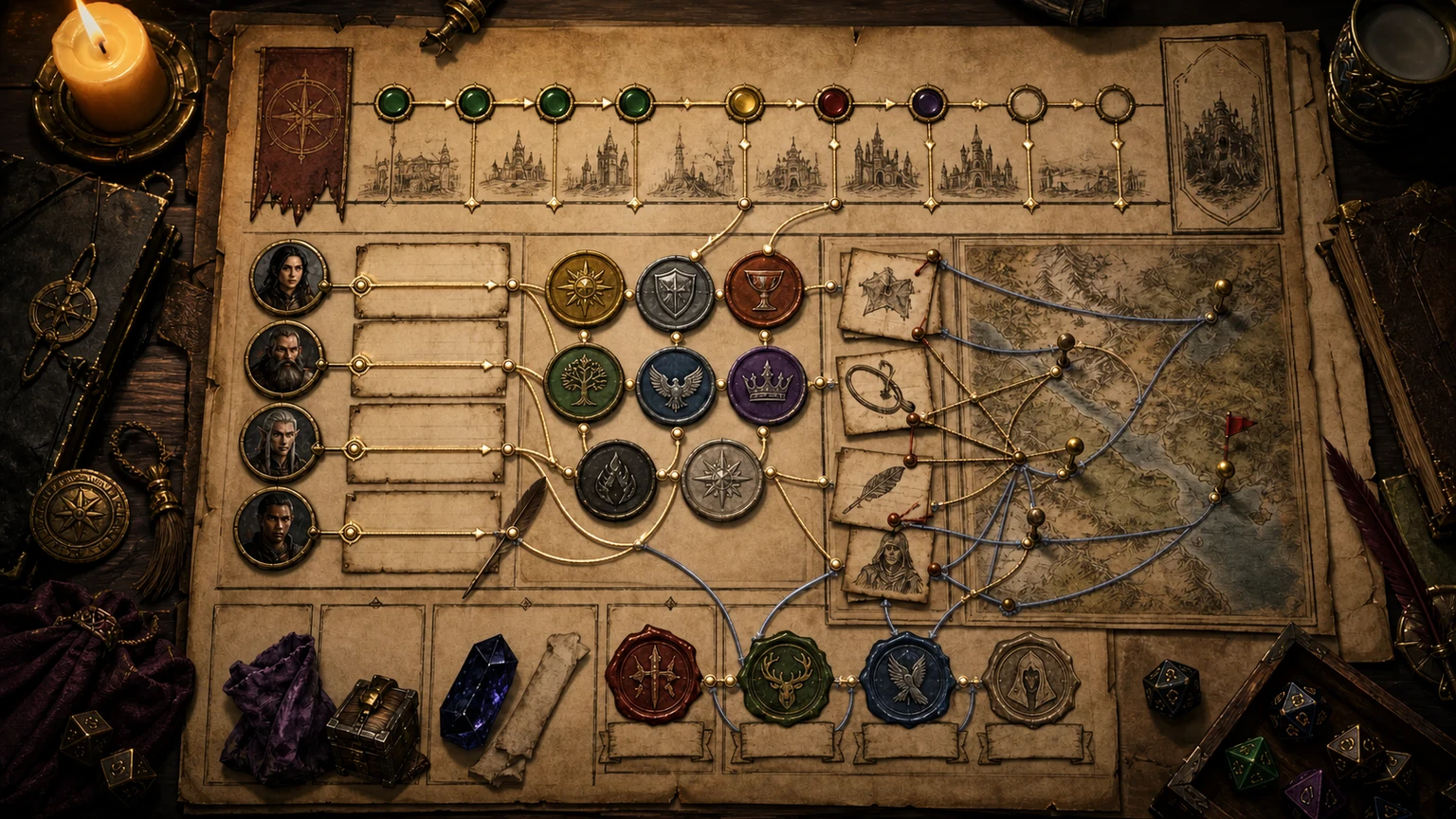
Why Side Quests Are So Hard to Get Right
A side quest is supposed to make the world feel larger than the main plot. In practice it is the first thing DMs cut when Thursday arrives. The global tabletop RPG market is valued at $2.41 billion in 2026 and is projected to keep expanding — which means more tables, more published modules, and more sessions that still need optional content tailored to this party.
3.4 million — U.S. adults who participated in tabletop role-playing games in 2023, according to figures cited from the National Endowment for the Arts
That audience still sits down to a lot of "collect ten pelts" work. Designers who study nonlinear play argue that a good side quest informs the main plot or the area — lore, NPCs, even the reward. Writers treating optional content as civic planning note that side quests are a natural fit for worldbuilding: short enough not to dilute the spine, modular enough to skip. Hitting that standard on a weeknight is another problem.
But writing a side quest that players choose to take is frustratingly difficult:
- Random tables spit out "rescue a merchant" with no tie to your villain, map, or last session
- A real optional story needs a location, a main goal, and optional beats — not a one-line hook
- Branches, failure that still yields a scene, and rewards that teach the world take hours to design
- New DMs already drowning in rules skip the detour, and the setting starts feeling like a hallway
A Hook Is Not a Quest
Quest-based RPG design works when every scene has a clear objective, and those objectives still serve the larger hunt. A useful brief looks like location / main goal / optional stuff — not a prompt that ends at "the barkeep has a job." Without that skeleton, a generator (or a tired DM) produces flavor text instead of play.
Optional Does Not Mean Disposable
Players chase side content when the story is unique and the reward is worth the time, a point RPG Maker designers keep returning to. Community design talk also favors
. A d20 on a wilderness chart cannot do that.Published Modules Will Not Know Your Table
2,100 — New TTRPG modules published in 2023, according to figures cited from the Canadian Heritage Ministry
More books do not mean a side quest that remembers your party's cleric swore an oath to a river cult. Fantasy titles still hold about 52% of the TTRPG market, but your hexcrawl, horror one-shot, or city crawl is not on that shelf.
Prep Time Collides With Real Life
42% — Share of new players deterred by complex rules and expensive starter kits
If the core game already feels heavy, optional quests are the first casualty. That is how a living world turns into a sequence of planned set pieces.
This is exactly what the design partner was built for.
Why Game Designer Assistant
Game Designer Assistant is a standalone game design partner — not a chatbot that vaguely "helps with D&D." You brief it the way you would brief a co-writer: party, region, tone, what the main plot is doing, and how optional the detour should feel. It returns a run-ready side quest: hook, objectives, NPCs, branches, rewards, and a way back to the spine of the campaign.
| Traditional Approach | Game Designer Assistant |
|---|---|
| Roll on a "dungeon hooks" or "book quests" table | Hook written against your villain, faction, or map |
| One-line job from a tavern rumor chart | Location, main goal, and optional beats in one writeup |
| Linear fetch with a gold payout | Branches, failure that still yields a scene, rumor payoff |
| Generic magic item from a hoard table | Reward that teaches lore or changes a relationship |
| 30–90 minutes to make optional content feel authored | A first draft in one message; a revision in the next |
Story-Tied Hooks, Not Random Jobs
Ask for a side quest in a dock ward while the party hunts a smuggler, and you should not get "kill rats in a cellar" unless the rats are the smuggler's ledger. The assistant treats the main plot as a constraint. That matches what strong optional design actually does: fold important NPCs into side content by tying their personal arcs to the job.
"Write a side quest for 4 level 5 characters in a canal city. Main plot: they are hunting a relic smuggler. The quest should be skippable, inform the docks faction, and still help if they fail. Grim, not goofy. Include a named NPC with a private agenda."
Structure You Can Run
Brainstorming is cheap. What you need at the table is a one-page run sheet: opening boxed text, the real objective, two branches, a failure scene, morale, and what the quest giver still pays if the party walks away. That is game design documentation, not a random title.
"Turn this into a one-page DM sheet: hook, location, main goal, two optional beats, failure scene, reward, and three rumors that point at the main plot."
Genre Fluency Beyond One System
A city mystery in D&D 2024, a downtime job in Pathfinder 2e, an OSR carousing consequence, or an original sci-fi bounty should not share the same skeleton. Because this AI is trained as a game designer across genres — not a single-system rumor mill — you can ask for the same political favor in a different rules language and get objectives that match how that table actually plays.
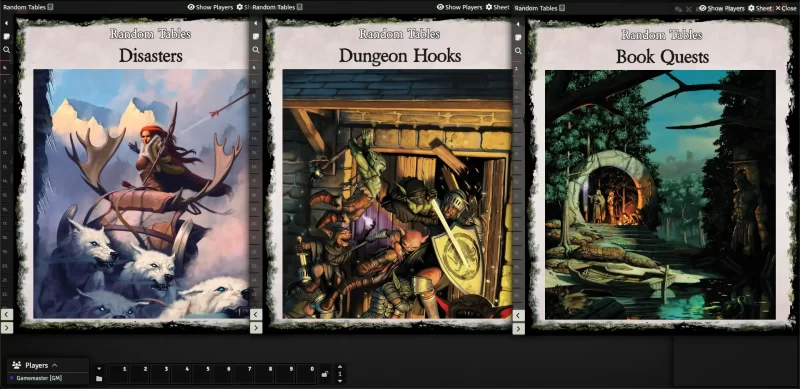
Random tables and VTT decks are still useful for sparking a tone — disasters, dungeon hooks, book quests. AI game-master tools already show a split between full play and GM-aide modes (story, NPCs, campaign log). This product sits in the aide lane: it writes the optional quest so you can run it. Platforms that let you craft quests with branching paths prove demand for authored side content; this AI specializes in making that content match the campaign you already have.
Related Agents You'll Also Find Useful
If you generate side quests every week, a few other agents sit in the same workflow.
Roleplay Game Master
If you also need to run the detour — voices, rulings, and NPC consistency — the Roleplay Game Master picks up where the writeup ends. Hand it the quest sheet and play the favor, the chase, or the failed stakeout without losing character voices between sessions.
- Unlimited memory across the campaign
- Consistent NPCs and factions
- Any scenario, from a market pickpocket to a planar errand
Name Generator
A side quest lands harder when the missing barge, the dock boss, and the cursed ledger have names the table will repeat. Name Generator is a naming consultant with cultural and linguistic range — useful for people, places, ships, and the item that is secretly the real reward.
- Names for NPCs, locations, crews, and loot
- Tone matching (grimdark, mythic, folkloric, comedic)
- Batch lists when a whole guild needs identities
Deep Research
When the optional job needs to feel researched — canal law, period smuggling, or published-setting politics — Deep Research pulls sources and synthesizes them with citations. Use it before you generate the quest if you want the ecology or institution to survive a player who actually reads.
- Multi-source briefs with inline citations
- Faction methods, travel hazards, and regional custom
- Campaign bibles you can attach as context
Try the design assistant free — no credit card required.
How to Generate a Side Quest in Minutes
Step 1: Brief the Campaign Spine Tell the assistant what the main plot is doing and who is at the table. Level, party size, and one line of recent history matter more than a full character sheet. A side quest for four 5th-levels who just burned a faction's trust should not read like a fresh tavern job.
"Party of 4, average level 5. Paladin, Wizard, Rogue, Cleric. They publicly shamed the Dock Syndicate last session. Main plot: recover a stolen relic before the solstice. I need a skippable side quest, not a new campaign."
Step 2: Set Place, Tone, and How Optional It Is Region is the minimum. Better briefs include time pressure, whether failure is allowed, and whether the reward should be loot, lore, or a relationship. This is the same information a good random-table deck encodes as "dungeon hooks" or "book quests" — plus the campaign those cards cannot see.
"Canal docks at night, rainy, no comedy. Must be skippable in 45 minutes of play. If they ignore it, the world still reacts. Reward should be intel on the relic, not another magic weapon."
Step 3: Generate, Then Stress-Test the Branches Ask for the quest, then poke it: "Give me a failure scene that is not a TPK." "Tie the quest giver to the Syndicate without making this mandatory." "Add a second optional beat that only exists if they already helped the river priest." Iteration is the point of a conversational side quest generator.
"Rebuild this with two branches and a no-fail-state version: every choice yields a different rumor or contact. Keep the main goal to one location."
Step 4: Package It for the Table Request a run sheet: boxed text, objectives, branches, failure, reward weights, and what NPCs will say if the party talks instead of stabs. If you need names, pull in the naming consultant. If you want to play the scene solo or between sessions, hand the sheet to the roleplay GM.
"Give me a one-page DM run sheet: boxed text, main goal, two optional beats, failure scene, reward, and three rumors that still serve the relic plot."
Results & Use Cases
🗺️ Empty City, Full Map
Scenario: The party reaches a canal city two sessions earlier than you expected. You have a dock map and no optional content.
Traditional Approach: Flip a rumor table, get "missing cargo," then spend an hour inventing why anyone cares.
Game Designer Assistant: You describe the city, the relic hunt, and the Syndicate grudge. You get a skippable dock job, a named clerk with a private agenda, and rumors that still feed the main plot.
- Clear location / goal / optional beats
- Failure that yields a different contact, not a dead end
- A second version if they try to sell the job to the city watch
🎲 One-Shot That Still Has Detours
Scenario: Three-hour one-shot. You want two optional scenes so completionists have something to chase without blowing the clock.
Traditional Approach: Steal two rooms from a module and hope they do not derail the villain reveal. Designers building small quest games often track which optional paths were taken so the ending can acknowledge them — that tracking is easy to skip when you are improvising.
This AI: You ask for a spine plus two side quests that can be ignored, failed, or finished, each with a distinct reward. Pair NPC and location names with Name Generator so the table remembers who they helped.
- Two optional quests, one rest, one climax
- Each detour teaches the region or the villain
- Names the table will repeat in the recap
📱 Writing Tonight's Side Quest on Mobile
Scenario: You are on a train with a phone and a session in three hours. The bard said they would "check on the missing choir."
Traditional Approach: Laptop, PDFs, and a blank page, or you improvise a fetch quest that feels hollow.
The quest designer on Jenova: Same agent on iOS or Android. Voice or type the brief, screenshot the run sheet, sit down ready. Digital TTRPG platforms already account for a large share of how people play; a generator that travels with you is the missing piece, not another tab of rumor charts.
- Full feature parity on phone and web
- Iterate while you commute
- Paste the run sheet into your VTT notes
🎯 Faction Errand That Feeds the Villain
Scenario: The "side" quest should secretly be the campaign villain testing the party.
Traditional Approach: Recolor a guild job and hope someone asks a name.
Design partner + research: Draft the job as a skippable favor with a fleeing lieutenant. If you want the faction's methods to match a historical or published analogue, run a short Deep Research brief first, then feed the findings into the quest prompt. Play the conversation with the Roleplay Game Master if you want to rehearse the NPC before game night.
- Combat or social scene that reveals a faction
- Intel that changes the next main-plot session
- Lore that survives a curious player
FAQ
What is a side quest generator?
A side quest generator is a tool that produces optional adventure content from inputs like party level, location, and tone. An AI version, such as Game Designer Assistant, also takes your main plot, factions, and failure conditions into account, then writes a run-ready hook, branches, NPCs, and rewards instead of a one-line rumor.
Is Game Designer Assistant free?
Yes. Jenova offers a free tier with core features and limited monthly usage, so you can generate side quests without a credit card. Higher tiers increase usage if you are prepping a full campaign. Check current plans on the site when you subscribe.
How is this different from a random quest table?
Tables and VTT decks are strong at sparks: disasters, dungeon hooks, book quests. They do not know your relic plot, the Syndicate grudge, or that the party will skip anything that looks like a fetch. This AI is a design partner. Use a table for tone; use the assistant when the detour has to fit this campaign and still be skippable.
Can it generate side quests for D&D and other systems?
Yes. You can specify D&D 2024 pacing, Pathfinder 2e downtime, OSR carousing, or an original system. State the rules and the time budget in the first message. The more precise you are about "skippable in 45 minutes" versus "multi-session optional arc," the closer the first draft will be.
Does a side quest generator work on mobile?
Jenova runs on web, iOS, and Android with the same agents and history. That matters for DMs who prep on a phone between work and game night, or who need a replacement job when the party walks into an unmapped district.
Will AI-generated side quests feel generic?
Treat the first output as a strong draft. Generic results usually mean a generic brief. Name the villain, the last session, and what "optional" means at your table. Then ask for a failure scene and a reward that is not gold. If a player would still call it a fetch quest, say so and regenerate that beat.
Conclusion
Side quests fail when they are either a random job from a biome table or a second main plot in disguise. A good side quest generator has to do both jobs: stay optional, and still make the world feel like it noticed the party.
Game Designer Assistant is the AI that sits in that gap — story-tied hooks, branches that pay off on failure, rewards that teach the setting, and a run sheet you can use tonight. When you also need names, lore, or someone to play the scene, the related agents above stay in the same campaign.
Try the AI side quest designer for your next unmapped district. Explore more at Jenova.
For Developers: Game Designer Assistant is available programmatically via the Jenova API — integrate story-tied side quest generation into your VTT or campaign app with a single API call. Full documentation →