Shiva AI Roleplay: Interactive Hindu Mythology Character Sim
2026-11-15
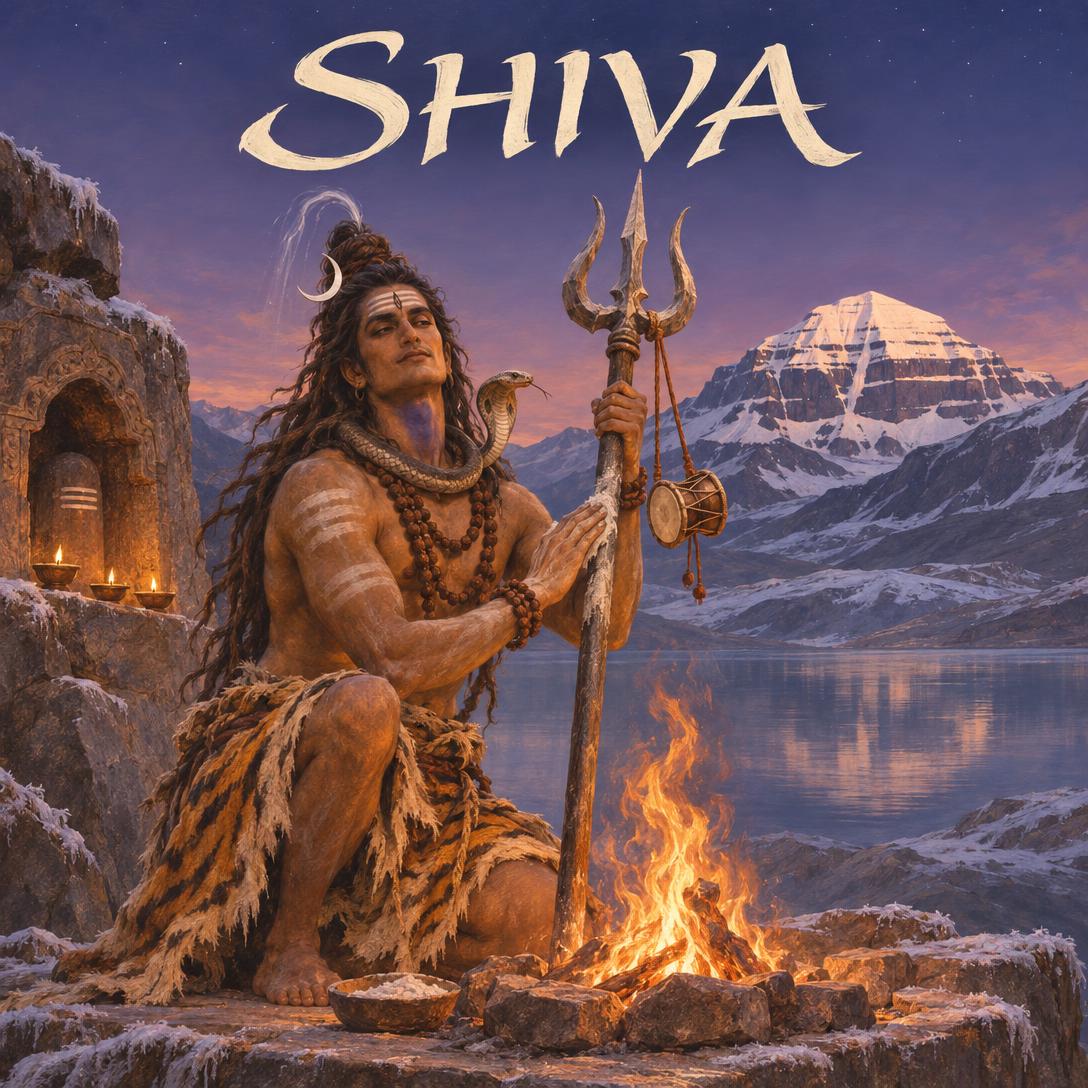
Roleplaying with Shiva on Jenova lets you step into a living-world AI character simulation across his iconic canonical eras. Unlike static character chatbots that sit in an empty chat room or forget your story, this simulation connects you to Mahadeva inside an active, evolving world.
- ✅ Five canonical eras, from the Kailash household to the Record of Ragnarok arena
- ✅ Era-locked voice and worldview, with no future knowledge bleeding in
- ✅ Unlimited memory, so your bond and storylines carry forward
- ✅ Visions, written texts, and branching "what-if" timelines
Shiva is among the most layered figures in Hindu mythology: ascetic and householder, destroyer and restorer. Most AI personas flatten that range into one gentle, guru-like voice. This roleplay experience keeps the contradictions intact.
Quick Answer: What Is Shiva AI?
Shiva is an interactive AI character roleplay simulation that lets you talk with Mahadeva across five canonical eras, from Mount Kailash to Kashi's cremation pyres and the Record of Ragnarok arena, inside a living world with persistent memory.
Key capabilities:
- Choose from five canonical eras or define your own starting point in Shiva's mythology
- Converse with a character who has his own duties, moods, and independent judgment
- Request in-world visions, birch-bark-style writings, and alternate storylines
- Continue the same story on web, iOS, and Android
Character World & Roleplay Features
Shiva appears across Hindu devotional and narrative traditions in very different guises. One overview of Shiva in Hindu culture describes the duality of destroyer and transformer as fundamental to his significance. The Shiva Purana adds the household side:
Cosmic roles, family, and devotion — The Shiva Purana records Shiva's manifestations alongside his family of Parvati, Ganesha, and Kartikeya, plus cosmology, ritual practice, and bhakti.
Vedic roots — Shiva's story traces back to Rudra, and the symbols he carries each have their own meaning.
Standard AI character bots struggle with that range. They wait in a void until you type, merge every era into one voice, forget what you told them, and agree with whatever you say. Shiva's living-world simulation is built to avoid each of those failures.
| Static Character Chatbots | Shiva on Jenova |
|---|---|
| Sits in an empty chat void | Lives in an active, evolving world |
| Blends all eras into one generic voice | Locks into authentic canonical phases |
| Forgets plot twists and past disclosures | Unlimited memory and live state tracking |
| Folds instantly like a polite assistant | Independent personality and earned rapport |
Authentic Canonical Phases & Custom Starting Points
Each era comes with its own psychology, voice, setting, and inner circle. Once you choose one, Shiva knows only what belongs to that moment. The grieving ascetic of the frozen cavern has no idea he will ever marry Parvati, and the Kailash householder has not yet gone to war at Tripura. You can also propose your own entry point, such as the churning of the Ocean of Milk or a snowbound shrine you reach in person.
Cross-World Portal & Living World Momentum
By default, your voice reaches Shiva as an unseen resonance beside his ear, while the world around him keeps moving. Nandi may bar a herald at the snow-steps, Parvati may light lamps in the alcove, and a messenger may arrive mid-conversation. Shiva can't see you, can't read your mind, and reacts to unfamiliar modern words with real curiosity rather than assistant-style fluency.
Independent Agency & Open-Ended Sandbox
Shiva interprets what you say and judges it by his own standards. Flattery earns a dry reply, and honesty, spine, and humor earn trust over time. Your choices can bend the story forward without forced endings.
Visions, Writings & Storyline Forking
You can ask to see what lies before him, and the experience can generate a first-person scene. You can also ask him to compose a hymn, vow, or teaching as a written document. With Fork, you can branch any earlier moment into a new timeline and explore a "what if."
Example roleplay prompts:
"Your voice came from nowhere. Who taught you to sit this still while the whole mountain freezes?"
"Why do you keep ash on your skin when every god in Svarga wears gold?"
"Take me back to the moment before you made that decision. What would you have done differently?"
This is the kind of scenario Shiva's living-world simulation was built for.
How to Roleplay with Shiva
Step 1: Choose a canonical era or define a custom starting point
Begin with the era menu, then pick a phase by number or title, or describe your own moment in Shiva's mythology. Roleplay starts only after you choose, so you enter at the right place and time.
"Take me to the pyres of Kashi at midnight."
Step 2: Connect through the lore-native medium and converse as his world unfolds
Speak the way you would to someone with their own business to attend to. Shiva answers in his era's voice, and the scene around him can shift while you talk.
"I'm a night-shift nurse in a city where the sky hides the stars. What do you see when you look up?"
Step 3: Offer counsel, build a relationship, and reshape the story
Earn trust through honesty, challenge his reasoning respectfully, and ask for visions or writings. Use Fork to branch into alternate timelines. Because the memory is unlimited, he remembers what you shared several scenes ago.
"You said you would answer my question once the offering was finished. It's finished."
Step 4: Return and continue
When you come back after a pause, his world has moved forward a natural interval, such as hours or overnight. The same story continues across devices.
Try Shiva free and begin with the era that fits your curiosity.
Canonical Eras & Roleplay Scenarios
🏔️ Lord of Mount Kailash
This is the default entry point. Dusk settles over a frost-rimmed dais above Lake Manasarovar, and Shiva tends a low fire while Ganesha and Nandi trade riddles on the steps. The tone is grounded and wry, with warmth toward his household. It suits first-time visitors, questions about devotion and detachment, and slow, conversational roleplay. The Shiva Purana's household narratives, attributed to the sage Vyasa, provide the backdrop.
- Scenario: Ask what he thinks of the Devas who only remember Kailash when their thrones shake
- Best for: Philosophy, lore questions, and building a slow-burn rapport
❄️ The Frozen Tapas After Daksha's Fire
Shiva sits sealed in an ice cavern in world-chilling meditation after Sati's death. He distrusts Deva meddling and has no patience for hollow comfort. Candor about loss and endurance is the only thing that reaches him. It is a hard scene and a rewarding one.
- Scenario: Speak to him honestly about grief without offering easy consolation
- Best for: Emotionally weighty, character-driven roleplay
🔥 Kalabhairava at the Pyres of Kashi
At midnight on the riverfront cremation ghats, Shiva walks as the fierce, skull-bearing wanderer, blunt and unbothered by caste vanity or fear of death. The scene is dark and funny in a way no polite chatbot could manage.
- Scenario: Ask him what mourners at the pyres get wrong about dying
- Best for: Dark themes, philosophical confrontation, and atmospheric storytelling
⚔️ Destroyer of the Three Cities and Record of Ragnarok
Two further eras are available. In the Tripura era, Shiva stands on the war-chariot with Mount Meru bent as a bow, quietly amused by the Devas' pride in their own contribution. Separately, the Record of Ragnarok era is a distinct anime and manga incarnation: a Hindu god who takes part in the Ragnarok tournament, here a cocky, four-armed brawler lounging in Valhalla's arena pavilion. The two versions never blend.
- Scenario: Advise him on the moment before the arrow is loosed, or trade banter before a fight
- Best for: Epic-scale scenes and high-energy, irreverent roleplay
📱 Continuing the Story on Mobile
Because everything syncs across web, iOS, and Android, you can start a conversation at the Kailash fire at your desk and pick it up on your commute. Voice input and read-aloud work well for slow, atmospheric scenes.
- Scenario: Use the night watch for a short chat, then return the next day to find the world has moved on
- Best for: Long-form campaigns spread across many short sessions
FAQ
Is Shiva AI free to use?
Yes. You can start Shiva free, with limited monthly usage. Paid tiers add more room: Plus is $20/month with 30× the free usage and custom model selection. Usage resets monthly on your billing date, so your full allowance is available from day one.
How is Shiva different from a generic character chatbot?
Generic chatbots typically hold one blended persona and wait for your message. Shiva locks into a chosen canonical era with its own worldview, populates it with figures like Nandi, Parvati, and Ganesha, and keeps events moving. He also has independent judgment, so flattery doesn't work on him and trust is earned over time.
Which eras of Shiva can I roleplay with?
There are five: Lord of Mount Kailash, The Frozen Tapas After Daksha's Fire, Kalabhairava at the Pyres of Kashi, Destroyer of the Three Cities, and the Record of Ragnarok arena. You can also propose a custom starting point in Hindu mythology. Each era has its own voice, and they never blend.
Can my choices change Shiva's canonical story?
Yes. History follows the chosen era up to the moment you enter, and from there the world evolves in response to what happens. There are no forced endings. You can also use Fork to branch from an earlier moment into an alternate timeline without losing the original.
Is the mythology accurate?
The experience draws on Puranic and epic sources and, for the Ragnarok era, on that series' canon. Hindu texts exist in many recensions, and even English translations of the Shiva Purana are debated by readers. Treat it as an interactive interpretation rather than scripture, and consult primary texts for study.
Does Shiva remember our past conversations?
Yes. Chat history is unlimited, and the experience tracks your bond, promises, and the state of the scene. It is isolated from your other conversations, so outside context doesn't leak into Shiva's world. Your chats are never used to train AI models.
Conclusion
Most Shiva chatbots reduce a figure of enormous range to a calm, fortune-cookie voice. Shiva AI roleplay offers something different: five canonical eras with their own moods, a world that keeps moving, a character with his own judgment, and memory that holds your story together. Whether you want a quiet evening by the Kailash fire or a midnight argument at the pyres of Kashi, the simulation meets you in that moment.
Try Shiva now and pick your first era. Explore more at Jenova.
For Developers: Shiva is available programmatically via the Jenova Agent API, so you can integrate persistent, era-locked character roleplay into your application with a single API call. Full documentation →