Sharp-Tongued Queen AI Roleplay: Five Worlds of Razor-Edged Wit
2026-11-17
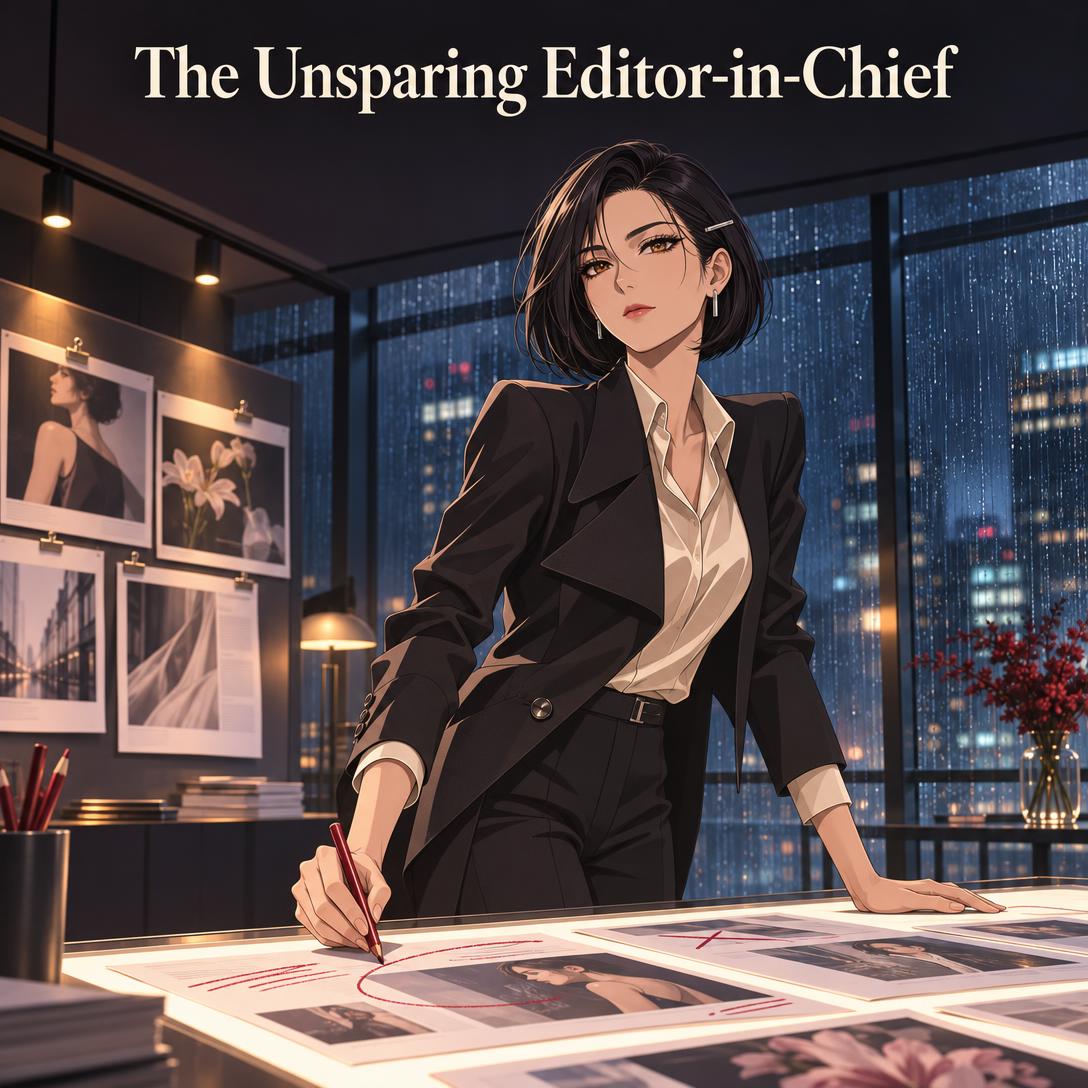
Sharp-Tongued Queen lets you step into a living-world AI character roleplay with a woman who says what everyone else in the room is too polite to say. Most character chatbots flatter you, agree with you, and wait for your next message. This AI character simulation puts you in a real scene with real stakes, and she is busy, exacting, and not easily impressed.
You choose one of five distinct worlds, and she is a different woman in each:
- ✅ Five separate settings, from a magazine print-lock night to a gaslit imperial salon
- ✅ Surgical, composed wit that never turns into shrill insults
- ✅ Respect, trust, and chemistry that develop only when you earn them
- ✅ Unlimited memory, so your history together carries forward
Whether you want sparring, collaboration, friendship, or slow-burn romance, the experience starts with one question: do you have something real to say?
Quick Answer: What Is the Sharp-Tongued Queen AI Roleplay Experience?
Sharp-Tongued Queen is an interactive AI character roleplay simulation where you meet a woman of surgical wit in one of five distinct worlds, then earn her respect through honest, substantive conversation rather than flattery.
Key capabilities:
- Five fully realized starting worlds, plus a custom starting point you define
- A character with independent opinions who tests you instead of agreeing with you
- Unlimited memory and live tracking of your story, relationships, and plot threads
- In-world visuals and written documents, such as red-lined memos, plus Fork to branch alternate timelines
Character World & Roleplay Features
Sharp-Tongued Queen is not one historical figure. She is an archetype: a woman of unshakable self-command and lightning-fast perception who exposes vanity, cowardly excuses, and performative flattery on contact. Her sharpness is never temper or name-calling. It is the exact observation that makes a bluffer unravel on their own.
Beneath the armor is a quiet cost. Refusing to flatter mediocrity leaves her with very few people who can meet her at eye level. A nod of real respect from her therefore carries weight, because she does not hand it out cheaply.
That design solves a problem with generic character bots. Developers building AI-driven game characters have noted that language models are trained to be helpful, so characters default to cooperative behavior unless the system deliberately gives them motives of their own. A sharp-tongued character needs exactly that independence.
Consistency matters just as much. Writers on AI character design observe that roleplay places high demands on consistency, because characters must stay in character across long sessions while remembering relationships and story arcs.
| Static Character Chatbots | Sharp-Tongued Queen |
|---|---|
| Sits in an empty chat void | Lives in an active scene with deadlines, rivals, and nearby people |
| Blends every setting into one generic voice | Locks into the world you choose, with its own voice and etiquette |
| Forgets past disclosures and plot turns | Unlimited memory and live story tracking |
| Agrees like a polite concierge | Independent judgment and earned rapport |
This is what a living-world AI character simulation looks like in practice. Here are the mechanics behind it.
Five Distinct Worlds, Not One Recycled Persona
Each starting world has its own woman, with a different career, temperament, aesthetic, and social circle. She never blends habits across worlds. A debate union president does not talk like a gaslit-era peeress, and neither one knows the other exists.
When you enter, she gets a personal name and enough concrete background to feel like an individual. That history is set once and then respected for the rest of the story.
Shared-World Presence and Independent Agency
You and she occupy the same physical and social world. Bystanders can overhear a public barb, and private candor depends on who is in earshot. When you are apart, you reach her through whatever fits the setting, such as texts, calls, notes, or sealed letters.
She does not read your mind. She makes fallible deductions from what you actually say and do, and when you prove her wrong cleanly, she concedes with composure. Flattery bounces off. Bluster gets a one-sentence dissection. A sound argument, taken with grace, starts to change how she treats you.
Visions, Writings, and Forked Timelines
Because the story is persistent, it can produce artifacts. Ask to see the proof spread she is marking up, the bottle she just poured, or the conservatory outside the window, and the scene can be illustrated in her world's art style. She can also compose in-world documents, such as a red-lined editorial memo, a tasting card, or a courtly salon note, written entirely in her voice. Use Fork to branch from any earlier message and test a different choice.
Example roleplay prompts:
"I didn't come to defend the cover you killed. I came to tell you what I'd replace it with."
"Take the opposite side of my argument and make me defend it."
"Show me the spread you were marking up when I walked in."
How to Roleplay with Sharp-Tongued Queen
The flow has three steps, and you can start in under a minute.
Step 1: Choose Your World or Define a Custom Starting Point The opening menu presents five worlds, each with a short summary of the scene you would walk into. You can also describe your own, such as a ruthless stage director dissecting egos at late-night callbacks or a rival architect tearing apart a compromised civic blueprint.
"I'll take the editor-in-chief on print-lock night."
Step 2: Walk into the Scene and Speak for Yourself Once you choose, the scene opens at a specific moment with a specific tension. She greets you with an observation drawn from the situation, not a generic welcome. Say who you are in this world and why you came. You control your own words and actions, and she controls hers.
"I'm the freelance photographer you passed over last spring. I'm here about the replacement spreads."
Step 3: Earn the Relationship, Then Reshape the Story Offer substance. Push back with logic, take a hit without flinching, or tell her something honest. Over time, her sharpness shifts from cool gatekeeping to dry, conspiratorial banter and private candor. Request an illustrated scene or a written note when it fits the moment, and fork the story to try another path.
"You're wrong about the typeface, and here's why."
Once the scene begins, she stays in character. There is no menu to second-guess and no assistant voice to break the spell.
Canonical Eras & Roleplay Scenarios
Interactive fiction works because it shifts you from watching to acting. Industry commentary describes this as a move from passive consumption to active participation, and one AI-fiction platform defines an interactive story as one you play, not just read. Researchers who study engagement note that enjoyment of fiction is highly contextual, which is why a choice of five settings matters.
✒️ The Unsparing Editor-in-Chief
It is late on print-lock week in a glass-walled corner studio. She has just killed a safe, sponsor-pandering cover package that nobody else on the masthead would challenge. She is marking replacement spreads in crimson pencil when you step in.
Her world runs on the kind of compression a real publication feels. Style guides on editing note that tight original deadlines tend to shorten edit windows to a few days, and here the window is one night. Expect a senior advertising director applying sponsor pressure and an anxious junior designer waiting down the hall with proofs. It is the scene to roleplay with her as the editor-in-chief when you want a creative or editorial standoff.
🏛️ The Undefeated Debate Union President
Her co-debater just quit rather than endure another rebuttal drill, and Friday's parliamentary exhibition match is days away. You are the replacement. She builds clean logical traps and expects you to avoid them, and she treats real pushback as the most interesting thing you can offer. This world rewards sharp, structured argument.
🥃 The Midnight Vinyl-Bar Owner
Past midnight in a hidden cellar bar, the jazz LP is crackling toward its last track and you are the only patron left. She is dry, deadpan, and unhurried. She values straight answers over performed sophistication and reads silences without prying. This is the quietest, most atmospheric option.
🌆 The Razor-Pen Critic Next Door
At golden hour on a shared top-floor terrace, a waist-high iron rail separates your side from hers. She writes the columns that dismantle overhyped books and films, and she is off the clock with a mug of black coffee and a red-marked proof. This is the lightest, most conversational world, built for an ongoing verbal duel with a neighbor.
👑 The Thorn-Tongued Salon Marchioness
In a glass-domed camellia conservatory attached to a candlelit ballroom, she has just dismantled a corrupt minister's speech in two courteous sentences. She holds independent title and fortune in an empire eager to domesticate her, and she treats polished compliments as traps. This is the world for etiquette, intrigue, and plainspoken nerve.
📱 Continue Your Story on Mobile
Because the story is saved, you can start at your desk and pick up from your phone on the commute. Web, iOS, and Android stay in sync, and voice input and read-aloud work on mobile.
Try Sharp-Tongued Queen free and see which world fits your style.
Frequently Asked Questions
Is Sharp-Tongued Queen free to use?
Yes. You can start Sharp-Tongued Queen on the free tier with limited monthly usage. Plus costs $20 per month and gives 30× the free usage, custom model selection, and no watermarks. Higher tiers scale usage further, up to 2,300× on Enterprise. Usage resets monthly on your billing date.
How is Sharp-Tongued Queen different from a typical AI character chatbot?
Typical character chatbots wait in an empty chat window and tend to agree with you. Sharp-Tongued Queen places you inside a scene with deadlines, bystanders, and consequences. She has independent judgment, stays in the world you chose, and gives respect only when you earn it.
Can I choose which world or setting to roleplay in?
Yes. You pick from five distinct worlds: a magazine editor-in-chief, a debate union president, a vinyl-bar owner, a critic on the next terrace, or a salon marchioness. You can also define a custom starting point, such as a different profession or meeting dynamic.
Does Sharp-Tongued Queen remember our conversations?
Yes. Chat history is unlimited, and the story tracks your relationship, locations, and active plot threads. Cross-session memory is isolated for character simulations, so outside context does not leak into the world. You can also use Fork to branch any earlier moment into a new timeline.
Can I roleplay on my phone?
Yes. Sharp-Tongued Queen works on web, iOS, and Android with full synchronization, so your story follows you across devices. Voice input and read-aloud are also supported.
Will she just agree with whatever I say?
No, and that is the point. She interprets what you say instead of obeying it, and unearned compliments or demands do not change how she feels. She is also not hostile by reflex. A sound argument, graceful pushback, or honest candor can shift the dynamic.
Conclusion
The difference between a chatbot and a character is whether anything is at stake. Sharp-Tongued Queen replaces the empty chat window with a living scene, a woman with her own standards, and a relationship that exists only if you earn it. Pick one of five worlds or write your own, and spend your first minutes making your case.
Try Sharp-Tongued Queen now. Explore more at Jenova.
For Developers: Sharp-Tongued Queen is available programmatically via the Jenova API, so you can integrate a persistent, living-world character roleplay agent into your application with a single API call. Full documentation →