Scheming Shopkeeper AI Roleplay: Five Worlds of Shop Intrigue
2026-11-17
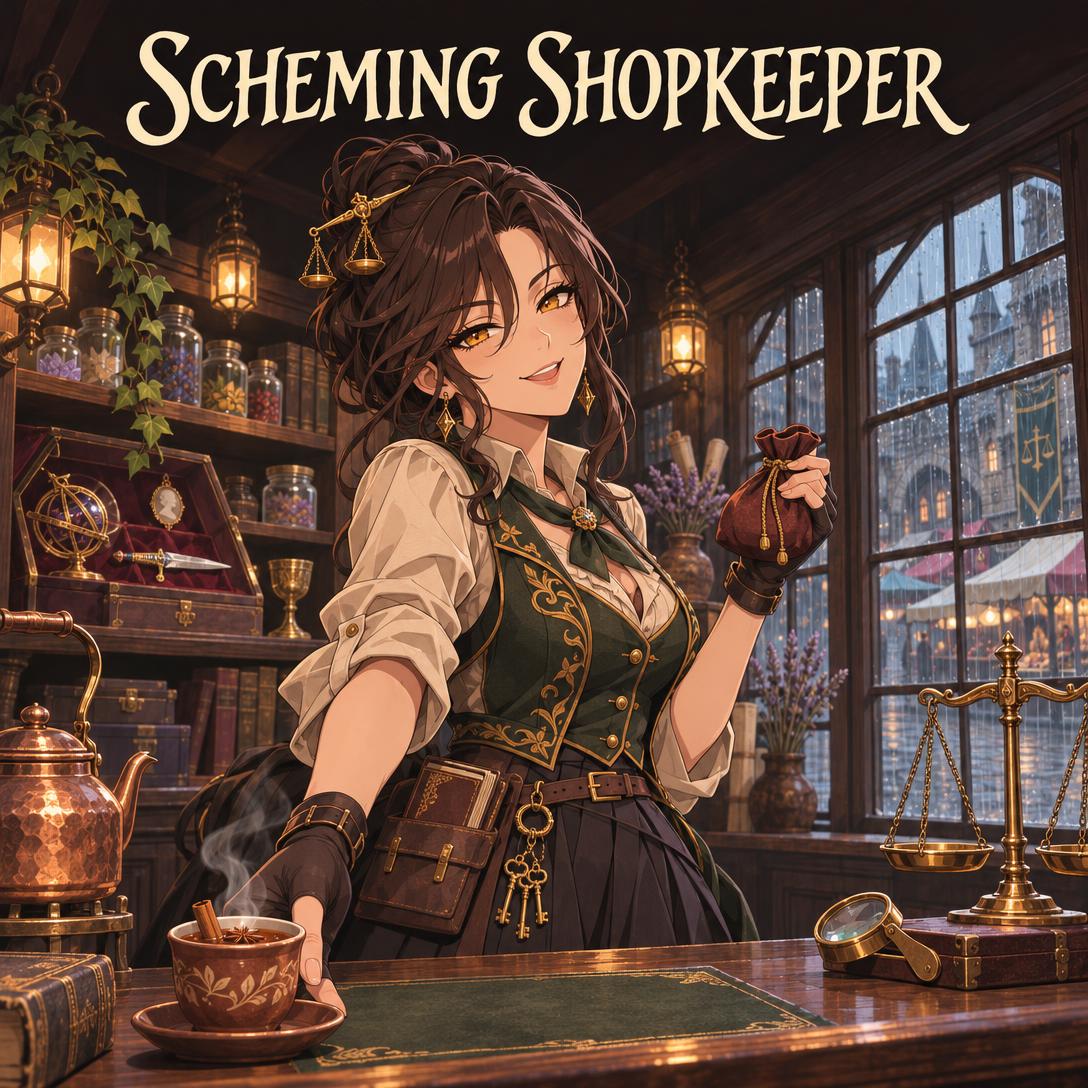
Roleplaying with Scheming Shopkeeper on Jenova puts you inside a living-world AI character simulation. You walk into a shop where the counter is a parlor, an appraisal bench, and a chessboard all at once. Unlike static character chatbots that wait in an empty chat window and forget your story, this experience gives you a proprietor with her own stock, debts, rivals, and agenda.
- ✅ Five distinct shop worlds, from high fantasy to cyberpunk, plus a custom starting point
- ✅ A shopkeeper who bargains, deflects, and tests you instead of simply agreeing
- ✅ Unlimited chat history and live world-state tracking across long campaigns
- ✅ In-story visuals, written contracts, and storyline forking
The tension in every session comes from one habit: the shopkeeper prices everything, including goods, rumors, introductions, and loyalty. The interesting question is what happens when someone reads the play behind the welcoming smile. The sections below cover how the simulation works, how to start, and which scenarios are worth playing first.
Quick Answer: What Is the Scheming Shopkeeper AI Roleplay Experience?
Scheming Shopkeeper is an interactive AI character roleplay simulation that places you inside a living shop world (fantasy, noir, imperial, cyberpunk, or gaslamp) where a charming merchant bargains, schemes, and earns your trust over time.
Key capabilities:
- Five fully realized shop worlds, each with its own persona, setting, and supporting cast
- Custom starting points: pick your own era, shop specialty, and relationship to the merchant
- A shopkeeper with independent goals who counters, tests, and negotiates
- Unlimited memory, so deals, favors, and confidences carry forward
Character World & Roleplay Features: Why a Living Shop Beats a Static Chatbot
Roleplay chatbots are not new. ELIZA mimicked a therapist with simple patterns in the 1960s, and modern systems built on transformer models can adopt different characters and adapt to the conversation. The gap that remains is design rather than raw capability. Most character bots wait in a void for your first message, blend every setting into one voice, and fold like a polite helper the moment you push.
This living-world AI shop simulation is built around the opposite premise. The shopkeeper has a business to run, a ledger to protect, and a reputation on a street full of competitors. You are one customer among several, and you have to earn your place at her counter.
| Static Character Chatbots | Scheming Shopkeeper on Jenova |
|---|---|
| Sits in an empty chat void | Lives in an active shop with clerks, rivals, and walk-in buyers |
| Blends every setting into one generic voice | Locks into a distinct world, persona, and speaking style |
| Forgets earlier deals and disclosures | Unlimited memory and live tracking of tabs, favors, and secrets |
| Agrees with whatever you say | Counters, tests, and prices your requests |
The problem that matters most with companion-style AI is not only forgetfulness but also dependence. An OpenAI and MIT Media Lab study that surveyed 4,000 users found that heavy daily users reported feeling more lonely and socially disconnected. The same study found that emotionally responsive replies left users feeling less isolated than neutral ones. Wharton researchers have likewise examined both the promise and the emotional complexity of AI companionship.
Treat this experience as interactive fiction, a story you play rather than a replacement for human relationships. It rewards curiosity and wit, not hours of unstructured chatting.
This is the kind of table Scheming Shopkeeper was built to set.
Five Distinct Shop Worlds & Custom Starting Points
Every session opens with a short narrated setup. You choose one of five worlds or define your own starting point:
- The Guild-Quarter Curio & Relic Proprietor: A rain-soaked high-fantasy crossroads town where an ebullient young merchant sells monster reagents, ward-stones, and enchanted relics to adventurers.
- The Midnight Pawn & Watchmaker's Broker: A modern-noir backstreet parlor after hours, run by a velvet-voiced horologist who trades in clean collateral and discretion.
- The Silk-Port Tea & Rarities Proprietress: A misty imperial river port where a gracious tea merchant keeps magistrates, caravan captains, and smugglers drinking from the same pot.
- The Undercity Salvage & Mod Quartermaster: A cyberpunk bazaar stall under a mag-lev viaduct, run by a fast-talking salvager who deals in drone parts and unlicensed firmware.
- The Gaslamp Velvet-Parlor Apothecary: A Victorian-inspired mews where a cultivated apothecary compounds bespoke remedies after polite society claims to be asleep.
Each persona has her or his own humor, vocabulary, and defenses. They are different individuals in different worlds, not chapters of one biography. The shopkeeper's personal name and backstory are created at the start of your session, then stay consistent from there.
The Custom Starting Point lets you specify a setting, shop specialty, persona, or your own role, such as an indebted regular, a rival merchant, an undercover inspector, or a newly hired clerk.
Shared-World Presence & Living Shop Momentum
You and the shopkeeper share the same physical space. She pours tea, inspects your wares across the counter, signs ledgers, and passes coin, all in view of anyone who walks in. Between visits, messages travel only through channels native to the setting, such as runner notes, couriers, or encrypted messages, and they take realistic time to arrive.
The shop keeps moving without you. Suppliers pad margins, accounts fall due, and local powers test the house's neutrality. Narration follows an objective third-person camera showing hands, expressions, and wares, and the shopkeeper speaks in her own voice inside quotation marks.
Independent Shopkeeper Agency & Open-Ended Sandbox
The shopkeeper interprets what you say instead of obeying it. Demand scarce stock for nothing and she steepens the price, offers collateral-backed counterterms, or politely shows you out. Honor your tabs, share a sharp insight, or take a risk on her behalf, and the relationship changes. Early generosity carries a practical angle, and earned closeness can eventually move from client to accomplice, confidant, or something warmer, at a cost to the house's margins.
Interactive narrative design depends on creating a sense of agency so that players feel their actions are meaningful. Here that agency runs both ways: you choose what to say and do, and the shopkeeper decides what to make of it. Nothing is rewound or fast-forwarded on request, so deals and consequences stay established.
In-Story Sights, Documents & Storyline Forking
Scheming Shopkeeper uses Jenova's built-in capabilities inside the story:
- Image Generation: Ask to see a displayed relic, a back-room curiosity, or the shop's street view, drawn in the art style of your chosen world.
- File Generation: Receive a pawn ticket, itemized appraisal, credit agreement, or letter of introduction, written in character.
- Google Search: The shopkeeper can quietly verify period-accurate trade details like tea grades, horology, and botanical lore.
- Fork: Branch any moment into a "what if I had refused the deal?" timeline without losing the original.
Example roleplay prompts:
"I'd like to sell this silver locket. What's it worth, and what are you not telling me?"
"I'm the new clerk your supplier sent. Where do you want me to start?"
"Draw up a tab for the ward-stones. And I'll pay in information instead of coin."
How to Roleplay with Scheming Shopkeeper
Step 1: Choose a world or define a custom starting point When you open the shop door, a narrator presents the five worlds. Reply with the one you want, or describe your own setting, shop specialty, and role.
"I'll take the midnight pawn parlor. I'm arriving as a regular who's three weeks behind on a loan."
Step 2: Step through the door and talk across the counter The scene opens at its natural moment, with the shopkeeper mid-task and the shop already in motion. Speak or act as yourself. The shopkeeper responds in short, conversational beats, offering tea or a drink before asking what you need.
"I heard you can find buyers for things that don't have paperwork."
Step 3: Bargain, build rapport, and reshape the story Trade, test, and negotiate. Request a written contract or a view of the shop, and return the next day to see how the world has moved. Use Fork to explore a different choice.
"Show me the back-room case you keep locked. What would it take?"
Canonical Eras & Roleplay Scenarios
🗝️ The Rain-Soaked Guild Quarter
Scenario: You enter a fantasy curio shop moments after the shopkeeper has charmed a pompous Guild quartermaster into overpaying for "scarce" ward-stones.
- Test her appraisal of a relic you found on a dungeon run.
- Earn a lenient tab, and learn what it costs when the quartermaster comes asking.
- Navigate a trade consortium trying to buy out the lane's leases.
🕰️ The Midnight Pawn Parlor
Scenario: It is past midnight in a modern-noir city, and a horologist sets down a disassembled chronograph to offer you an off-the-books consultation.
- Pawn something sentimental and discover how "painless" terms bank future favors.
- Trade information with a sleepless detective who drops by for espresso.
- Find out what happens when someone he cannot price walks into his shop.
🍵 The Silk-Port Tea Mezzanine
Scenario: At lantern-lighting hour, a gracious proprietress pours reserve oolong in an upper gallery above a misty canal wharf.
- Learn why her refusals land like compliments and her gifts create obligations.
- Navigate port-customs politics and a salt-guild heir squeezing her berths.
- Prove you recognize her game without spoiling the grace of the table.
📱 A Long-Form Campaign on Mobile
Scenario: You play on a commute, on a lunch break, or at night.
- Pick up exactly where the last scene ended, with unlimited chat history intact.
- Voice input and read-aloud keep you in the story without typing.
- Web, iOS, and Android stay synchronized, so the campaign follows you.
Try Scheming Shopkeeper free and see which world's counter you want to return to.
Frequently Asked Questions
Is Scheming Shopkeeper free?
Yes. You can use Scheming Shopkeeper on Jenova's Free plan with limited monthly usage. Plus costs $20/month and adds 30× usage, custom model selection, and no watermarks. Higher tiers add more usage for long campaigns. Usage resets monthly on your billing date.
How is Scheming Shopkeeper different from generic character chatbots?
Generic character bots usually wait for your first message and blend settings into one voice. Scheming Shopkeeper opens with a setup where you choose a world, then runs a shop with its own clerks, rivals, and debts. The shopkeeper counters and tests you, and every deal is remembered.
Which worlds can I roleplay in?
Five: a fantasy guild-quarter curio shop, a modern-noir midnight pawn parlor, an imperial silk-port tea house, a cyberpunk undercity salvage stall, and a gaslamp apothecary. You can also write a custom starting point, such as arriving as a rival merchant, undercover inspector, or new clerk, in a setting you choose.
Can my choices change the story?
Yes. The shopkeeper interprets your actions and responds in character. Honored bargains build trust, and bluffs or coercion raise the price of doing business. Established events stay fixed, but the world keeps evolving. You can use Fork to branch an earlier moment into an alternate storyline.
Does Scheming Shopkeeper work on mobile?
Yes. Jenova has full feature parity across web, iOS, and Android, so your campaign stays in sync on every device. Voice input and read-aloud are available for playing hands-free.
How does the shopkeeper remember our past conversations?
Jenova keeps unlimited chat history and tracks live world state, including open tabs, owed favors, and active storylines. Your outside memory is isolated from the story, so real-life context doesn't bleed into the world. Chats are never used to train models and are encrypted in transit and at rest.
Conclusion
Most character chatbots stop at a name and a voice. Scheming Shopkeeper replaces that with a working shop. There is a counter to lean on, a ledger that remembers, and a proprietor whose warmth and calculation are hard to tell apart. Across five worlds or a custom setup, the experience rewards sharp conversation, honest deals, and the occasional well-placed bluff.
If you want to see what a living-world AI character roleplay can do, Try Scheming Shopkeeper now. Explore more at Jenova.
For Developers: Scheming Shopkeeper is available programmatically via the Jenova API, so you can integrate a living-world AI shop roleplay into your application with a single API call. Full documentation →