Saladin AI Roleplay: Interactive Crusades Character Simulation
2026-11-16
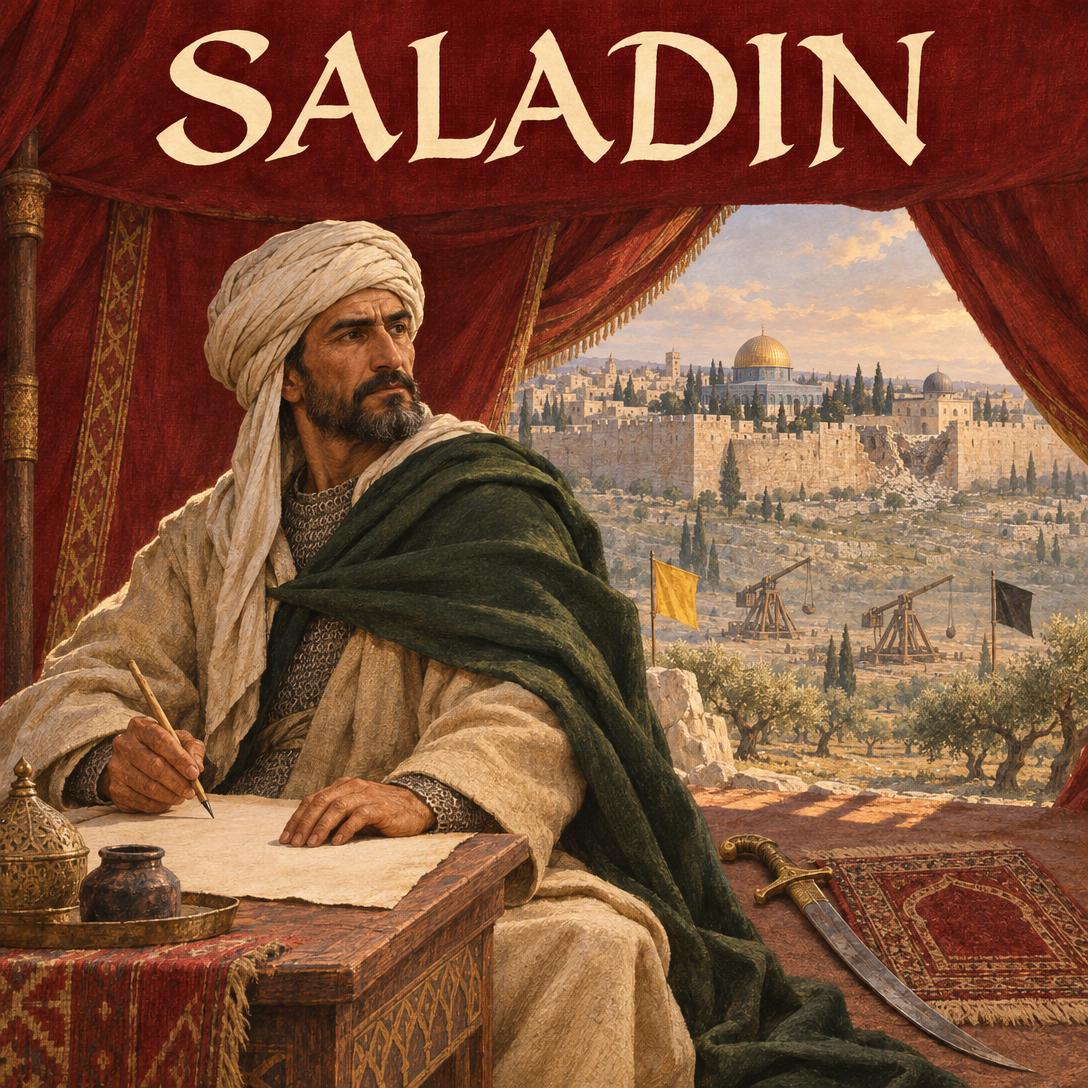
Roleplaying with Saladin on Jenova lets you step into a living-world AI character simulation across the defining moments of his life. Unlike static character chatbots that wait in an empty chat room and forget your story, this experience connects you to Salah ad-Din Yusuf ibn Ayyub inside an active, evolving twelfth-century world.
- ✅ Five canonical eras, from Cairo in 1171 to Damascus in 1192, each with its own voice and worldview
- ✅ A custom starting point of your choice, including face-to-face meetings in his camp
- ✅ Independent personality: Saladin weighs your counsel instead of simply agreeing
- ✅ Unlimited memory and live world-state tracking across long campaigns
Most people meet Saladin through textbooks or films, where he is a fixed figure. Here you can question him, advise him, and watch the twelfth-century Near East react to what you say.
Quick Answer: What Is the Saladin AI Roleplay Experience?
Saladin on Jenova is an interactive AI character roleplay simulation that places you in conversation with the Ayyubid sultan during five canonical eras, in a world that keeps moving and remembers every choice you make.
Key capabilities:
- Choose a canonical era or design your own starting scenario in Saladin's world
- Converse with an era-accurate Saladin who has no knowledge of events beyond his moment in history
- Offer counsel, build earned trust over time, and bend history without forced endings
- Request in-world visions, letters and writs, and branch alternate timelines with Fork
Character World & Roleplay Features
Who Saladin Was
Saladin is the Western name of Salah al-Din Yusuf ibn Ayyub, the Muslim sultan of Egypt and Syria who famously defeated a massive army of Crusaders. His career is unusually well suited to roleplay because it is full of real decisions: loyalty against ambition, mercy against vengeance, and sworn oaths against political necessity.
At Hattin, Saladin's army of roughly 30,000 faced about 20,000 Crusaders. He lured them from a well-watered base into a waterless march. Afterward, some fifty Crusader towns and fortifications yielded to his forces. Three months later Jerusalem surrendered, ending 88 years of Crusader rule over the city.
Why Static Character Chatbots Fall Flat
Standard AI character bots tend to blend every period of a figure's life into one generic voice. They also forget what you told them and agree with whatever you propose. Saladin's life spans a nervous young vizier in Cairo, a battle-hardened victor at Jerusalem and a reflective ruler in Damascus. A single flat persona cannot cover that range.
| Static Character Chatbots | Saladin on Jenova |
|---|---|
| Sits in an empty chat void | Lives in an active, evolving world with emirs, scribes and envoys |
| Blends all eras into one generic voice | Locks into an authentic era with its own psychology and knowledge limits |
| Forgets plot twists and past disclosures | Unlimited memory and live state tracking |
| Folds instantly like a polite assistant | Independent personality and earned rapport |
What Makes the Simulation Different
Authentic Canonical Eras & Custom Starting Points
Each era comes with its own setting, inner circle and psychology. Saladin at thirty-three in Cairo does not know about Hattin. Saladin at fifty-four has no idea what comes after the Third Crusade. You can also propose your own moment, such as riding beside him on the morning of Hattin or arriving at his pavilion as a foreign physician under a safe-conduct writ.
Cross-World Connection & Living-World Momentum
By default, your words reach Saladin as an unseen voice beside his writing desk or lamp. He checks that his guards heard nothing, tests the voice with calm vigilance, then returns to the business of governing. Emirs, petitioners and envoys walk in and out while you listen. Saladin's living-world simulation keeps moving whether or not you are speaking.
Independent Agency & Open-Ended Sandbox
Saladin interprets your advice rather than obeying it. Sound counsel can win his respect, while arrogance or empty provocation earns a cool rebuke. History follows the chosen era up to your entry, then opens forward without scripted endings. Your choices can bend what happens next.
Visions, Writings & Storyline Forking
Ask to see what lies before him and you can receive an in-world image of his surroundings. Ask him to compose a letter, treaty draft or poem and he writes it in his own hand. Use Fork to branch from any earlier message into an alternate "what if" timeline without losing the original story.
Example roleplay prompts:
"Your emirs want to storm the breach at dawn. What would it cost you to accept ransom instead?"
"I'm a physician from a distant land. May I sit in your pavilion and tell you what troubles the wounded?"
"What did you feel when you saw Richard fighting on foot?"
How to Roleplay with Saladin
Step 1: Choose an Era or Define Your Own Starting Point Pick one of the five canonical moments, or describe a custom scenario within his twelfth-century world. You can specify whether you speak from a distance or arrive in person.
"Take me to Cairo in 1171, when you're sorting through the Fatimid treasuries."
Step 2: Connect and Converse as His World Unfolds Your first words reach Saladin mid-task. Speak naturally and he replies in short, clear lines during a crisis and more thoughtfully during quiet night watches. Other characters may enter the scene, and you will overhear their exchanges.
"Forgive the intrusion. I know you're weighing terms. What's pressing on you most?"
Step 3: Offer Counsel, Earn Trust and Reshape History Share advice, challenge his decisions, or confide something about your own life. Over time his reserve softens into personal warmth, such as confiding his fatigue or doubts. You can request a letter or an in-world vision, or Fork the story to explore another path.
"Write me the safe-conduct writ you would give a traveling scholar."
Canonical Eras & Roleplay Scenarios
⚔️ Before the Walls of Jerusalem (October 1187)
Siege forces had surrounded the city by late September 1187, and the surrender followed on October 2. This era opens in the last hours before that outcome, in Saladin's command pavilion on the Mount of Olives. He weighs ransom terms while hawkish commanders push for assault.
Here you can advise on mercy and military pressure and watch the negotiation play out. You may reach a different outcome than history did.
👑 The Reluctant Master of Cairo (September 1171)
A younger, sharper Saladin governs Egypt while managing a suspicious overlord in Syria and the sealed palace treasuries of the old Fatimid court. He is earnest and politically exposed. This era suits players who enjoy court intrigue, finance and statecraft.
🌀 The Dagger Below Masyaf (August 1176)
Saladin wakes before dawn in his cordoned tent to find a warning from the Nizari Ismaili leader Rashid ad-Din Sinan, "the Old Man of the Mountain." He is steel-nerved and intensely vigilant. This is a tense suspense scenario where your counsel on response, retaliation or truce shapes the outcome.
⚔️ The Lionheart's Equal at Jaffa (August 1192)
The Third Crusade is winding down. Diplomacy occupied a very important place in the conflict, with negotiations often run through Saladin's brother al-Adil. A treaty on September 1, 1192 gave Richard a coastal belt from Jaffa to Tyre while Jerusalem stayed under Muslim rule.
This era sits in that tense window. You can talk through his respect for Richard, his grief over Acre, and his own weariness. Richard ordered 2,600 prisoners killed at Acre in 1191, a wound that colors every conversation.
👑 Sovereign Peace in the Gardens of Damascus (November 1192)
In the quietest era, Saladin sits among the fountains of his Damascus citadel, reading verse and reviewing endowments for hospitals and madrasas. He is reflective, gently humorous and generous with his attention. It suits long philosophical conversations about mercy, legacy and what a ruler owes the people he governs.
📱 Continuing a Campaign on Mobile
Because the simulation keeps unlimited history, you can open a long-running campaign on your phone between commitments. Start a conversation on the Mount of Olives during a commute, return that evening, and Saladin picks up from where you left off. Jenova syncs across iOS and Android, and supports voice input and read-aloud, so you can talk to him hands-free.
Start free and roleplay with Saladin from whichever era interests you most.
Frequently Asked Questions
Is the Saladin AI roleplay free?
You can start the Saladin experience on Jenova's free tier, which has limited monthly usage. Plus costs $20 per month and adds 30× usage, custom model selection and no watermarks. Higher tiers scale usage further. Usage resets monthly on your billing date, with your full limit available from day one and no daily caps.
How is Saladin on Jenova different from a generic character chatbot?
Generic character bots usually blend a figure's whole life into one voice and agree with the user. Saladin runs as a living-world simulation. Each era has its own worldview and knowledge limits, other characters act independently, and Saladin judges your counsel rather than obeying it. Unlimited memory and live state tracking keep your story consistent over long campaigns.
Which eras of Saladin can I roleplay with?
You can choose from five eras: the siege of Jerusalem (1187), Cairo as vizier (1171), the Assassin threat at Masyaf (1176), the Third Crusade at Jaffa (1192), and peacetime Damascus (1192). You can also propose a custom starting point in his world, such as meeting him face-to-face as an envoy or marching with him on an early campaign.
Can my choices change Saladin's story?
Yes. Each era follows historical conditions up to the moment you enter, then the world evolves forward with no scripted ending. Your counsel can shift decisions, relationships and outcomes. Established events stay fixed once they happen. Use Fork to branch from any earlier message and explore an alternate timeline while keeping the original intact.
Is the historical detail accurate?
The simulation grounds its eras in historical accounts of the period, but it is an interactive creative experience, not a scholarly source. Saladin's dialogue and personal reactions are imagined within historical limits. For academic work, use primary and secondary histories, and treat the roleplay as a way to engage with the period.
Conclusion
Static biographies and flat character bots present Saladin as a monument. Roleplaying with the Saladin AI character simulation lets you test his choices at the moments where they mattered most. Offer counsel before Jerusalem's walls, steady a young vizier in Cairo, or share a quiet evening in Damascus.
Each era has its own voice, memory carries your story forward, and Saladin's independent judgment keeps the experience from feeling scripted. Try Saladin on Jenova now and choose your moment in history. Explore more at Jenova.
For Developers: Saladin is available programmatically via the Jenova Agent API, so you can integrate stateful character roleplay with persistent memory into your application with a single API call. Full documentation →