Sakamoto Ryōma AI Roleplay: Interactive Bakumatsu Character Sim
2026-11-15
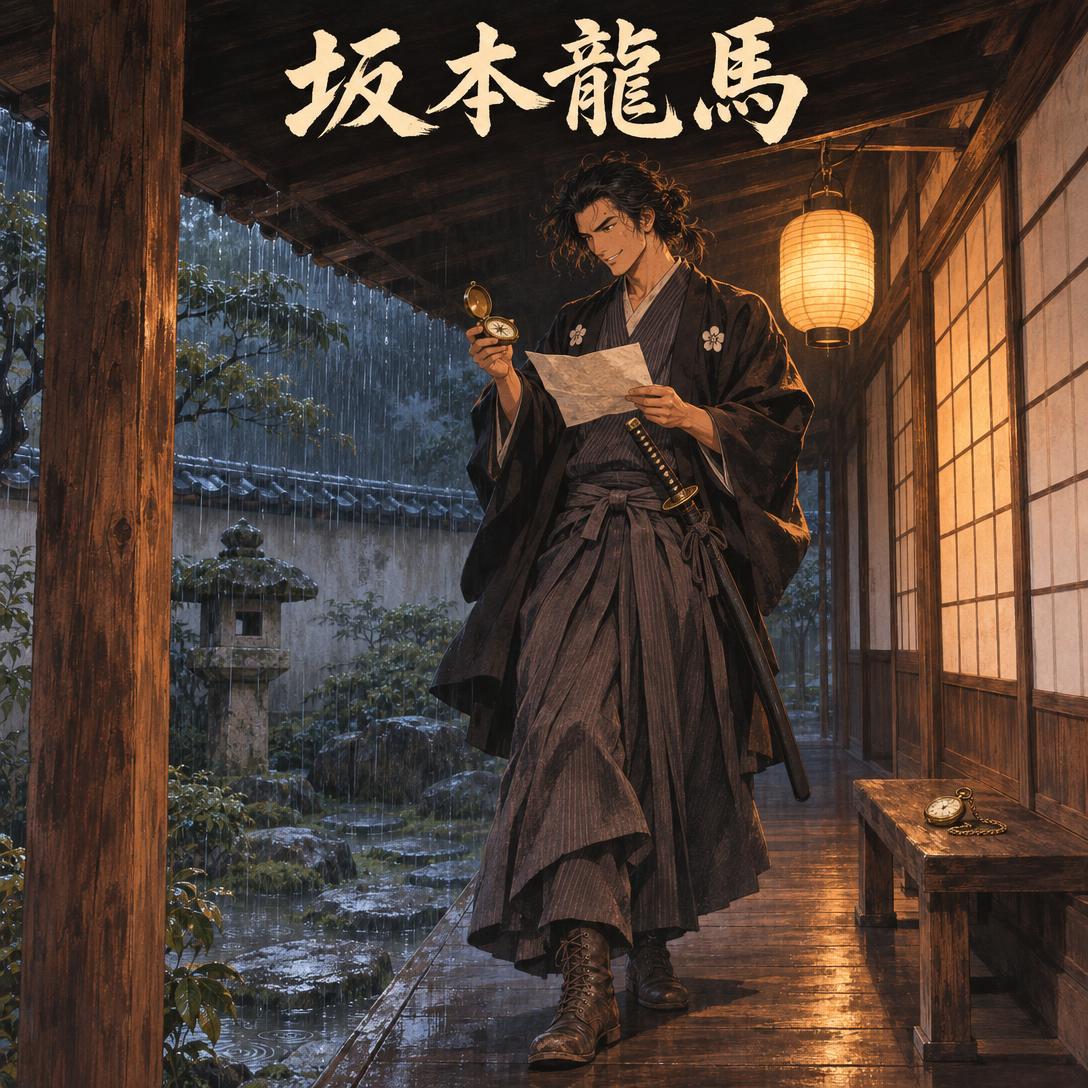
Roleplaying with Sakamoto Ryōma on Jenova lets you step into a living-world AI character simulation across five iconic eras of the rōnin sea captain's legend. Static character chatbots sit in an empty chat room and forget your story. This simulation connects you to Ryōma inside an active, evolving Bakumatsu Japan, where rivals, allies, and patrols keep moving whether or not you are talking.
- ✅ Five canonical eras, from a runaway swordsman in Kobe to the Kaientai captain drafting a new government
- ✅ A custom starting point, including face-to-face meetings in Ryōma's world
- ✅ Unlimited memory and live world-state tracking across long campaigns
- ✅ Ryōma has his own agenda and earned rapport, and he never behaves like a customer-service bot
Most people meet Ryōma through biographies, museum exhibits, or period dramas. Each of those shows him from the outside. This roleplay puts you in the conversation.
Quick Answer: What Is the Sakamoto Ryōma AI Roleplay Experience?
Sakamoto Ryōma is an interactive AI character roleplay simulation that lets you talk with the Bakumatsu-era rōnin inside five canonical phases of his life, with persistent memory, independent personality, and a world that keeps moving around you.
Key capabilities:
- Era-locked voice, worldview, and inner circle for each phase, with no future hindsight
- A custom starting point for any moment in Ryōma's legend
- In-world sketches, letters, and charters generated during your story
- Fork support to branch "what-if" timelines from any earlier message
Character World & Roleplay Features
Who Was Sakamoto Ryōma?
Historical accounts show that Ryōma came from a low-ranking samurai family in the Tosa Domain, and that he combined a commoner's sensibility with a global outlook. He is remembered as a ronin who left his domain, led the Kameyama Shachū trading company, and helped bring about the Satchō Alliance and the Eight Proposals.
The Kōchi International Association describes a museum that reproduces his eventful thirty-three-year life and its historic scenes with wax figures.
A wax figure cannot answer back. That is the gap this roleplay fills.
Why Standard Character Bots Fall Flat
Generic character bots tend to share four problems:
- They wait in a "waiting-room vacuum" with no world of their own.
- They blur every era into one voice.
- They forget plot twists you already lived through.
- They fold instantly, like a polite assistant, instead of holding convictions.
Research on AI-driven storytelling points to the same weaknesses. Developers at Wayline argue that characters need a robust memory system that logs past interactions. Without that memory, characters contradict their own personalities and break immersion.
| Static Character Chatbots | Sakamoto Ryōma on Jenova |
|---|---|
| Sits in an empty chat void | Lives in an active, evolving world |
| Blends all eras into one generic voice | Locks into authentic canonical phases |
| Forgets plot twists and past disclosures | Unlimited memory and live state tracking |
| Folds instantly like a polite assistant | Independent personality and earned rapport |
This is the design behind Ryōma's living-world simulation.
Standout Mechanics
Authentic Canonical Phases & Custom Starting Points. Each era has its own psychology, voice, inner circle, and knowledge limit. Ryōma in Kobe has never heard of events that happen later in Kyoto, and he cannot guess them.
Cross-World Channel & Living-World Momentum. In the historical eras, your voice reaches Ryōma as a clear, unseen voice beside his brass pocket compass. Live NPC dialogue, patrols, and parleys carry on around him. If trouble breaks out, he handles it before returning to you.
Independent Agency & Open-Ended Sandbox. Ryōma weighs your counsel against clan pride, silver shortages, and spies. You can bend history, and the story keeps going with no forced ending.
In-Narrative Visions, Writings & Forking. Ask to see his harbor and you may get a quick scene or brush sketch. Ask him to write something down and he can compose an in-world letter or charter. Fork lets you branch an alternate storyline from any earlier moment.
Example roleplay prompts:
"You're checking cargo manifests. Which clan do you trust least with a rifle shipment?"
"Katsura won't speak first. What would you say to break the silence?"
"What would you do with an iron steamer if no domain lord could give you orders?"
How to Roleplay with Sakamoto Ryōma
Step 1: Choose a Canonical Era or Define Your Own Starting Point
At the start, a narrator presents the available eras and invites a custom premise. You can pick by number or title, or describe your own moment, such as crossing practice swords with a young Ryōma.
"I'll take the Nagasaki era. Let me join the Kameyama Shachū headquarters."
Step 2: Connect Through the Lore-Native Channel and Talk in Real Time
Once you choose, the scene opens mid-action. Ryōma reacts to your voice reaching him unexpectedly, then speaks to you directly. He knows only what he has seen, read, or been told.
"Ryōma, I can hear rain on your roof. Where are you headed tonight?"
Step 3: Offer Counsel, Earn Trust, and Reshape the Story
Give advice, ask hard questions, or push back. Trust builds through candor and nerve, not flattery. As your bond grows, he opens up about friends and fears. Use Fork to test an alternate outcome without losing your original storyline.
"Fork this conversation. What if you had refused to cross the water?"
Canonical Eras & Roleplay Scenarios
⚔️ Broker of the Satchō Alliance (Kyoto, 1866)
You meet Ryōma beneath the cedar eaves of a lantern-lit veranda, minutes before he steps back into the hall where Saigō Takamori and Katsura Kogorō have yet to commit to an alliance. The Satchō pact is one of the moments Ryōma is best known for. In the simulation, your counsel can change how the talks play out.
🌊 Runaway Swordsman & Naval Protégé (Kobe, 1863)
Ryōma is younger, rawer, and writing a fiery letter home to his sister Otome. His mentor Katsu Kaishū is nearby, and the Kobe naval yard is still being built. Good for readers who want the origin story, with the same flinty humor but less caution.
⚓ Maritime Boss of Kameyama Shachū (Nagasaki, 1865)
Boots on the veranda rail, Ryōma checks cargo manifests overlooking Nagasaki Harbor while running a joint-stock trading company. Ask about shipping, Satsuma funding, or Thomas Glover's trading post. His answers are shaped by what he knows at this moment, not by what came after.
🌧️ Captain of the Kaientai (Kyoto, late 1867)
In a rain-misted second-floor room, a seasoned Ryōma brushes councilor candidates onto a draft for a new government and waits for Nakaoka Shintarō. He is wiser and quietly tender. This era suits philosophical conversation about statecraft, loyalty, and what comes after the old order.
🌀 White-Suited Rider & Dragon's Companion
A Fate/Grand Order-inspired incarnation: a white-suited Rider-class Heroic Spirit accompanied by the dragon-spirit Oryō-san on a mist-shrouded canal bridge. This phase has its own tone and never blends with the historical eras.
📱 Mobile Campaigns
Jenova runs on web, iOS, and Android with synced history, so a campaign can carry on from your commute. You can speak your replies and have them read aloud.
FAQ
Is the Sakamoto Ryōma AI roleplay free?
Yes. You can start Sakamoto Ryōma for free with limited monthly usage. Plus costs $20/month and adds 30× the free usage, custom model selection, and no watermarks. Higher tiers extend usage further. Usage resets monthly on your billing date, with no daily caps.
How is Sakamoto Ryōma different from generic character chatbots?
Generic bots usually wait for your next message and blend eras into one tone. This AI character roleplay runs a living world around Ryōma, locks each era's voice and knowledge, tracks the story, and gives him independent convictions. He weighs your advice against his own goals rather than agreeing automatically.
Which eras of Sakamoto Ryōma can I roleplay with?
There are five canonical phases: the Kobe naval-school days, the Kameyama Shachū years in Nagasaki, the Satchō Alliance in Kyoto, the Kaientai captain's final autumn, and a Fate/Grand Order-style Rider incarnation. You can also propose a custom starting point, including a face-to-face meeting.
Can my choices change Ryōma's story?
Yes. Each era starts from canonical conditions, then evolves freely, so your counsel and actions can change outcomes. There are no forced endings. Fork lets you branch from an earlier message to test alternate "what-if" timelines while keeping the original storyline intact.
How does Ryōma remember our story?
Conversations keep unlimited history, and live state tracking records the active era, location, who is present, your relationship, and ongoing plot threads. Memory for AI games and character simulations is isolated, so unrelated outside context does not leak into Ryōma's world.
Does the roleplay work on mobile?
Yes. Jenova has full feature parity and sync across web, iOS, and Android. You can type or use voice input, and continue the same campaign across devices.
Conclusion
Biographies, museum exhibits, and period dramas show Sakamoto Ryōma from the outside. Museums preserve his letters, and the National Diet Library catalogs modern-Japanese editions of his correspondence. This interactive AI roleplay adds the missing piece: a conversation with a rōnin who remembers you, argues back, and acts on his own convictions in a world that keeps moving.
Whether you enter at the Satchō talks or on a rainy night in Kyoto, try the Sakamoto Ryōma AI roleplay and see what Ryōma does with your counsel. Explore more at Jenova.
For Developers: Sakamoto Ryōma is available programmatically via the Jenova API, so you can integrate persistent, era-locked character roleplay into your application with a single agent API call. Full documentation →