Rugged Cowboy AI Roleplay: Interactive Western Character Sim
2026-11-17
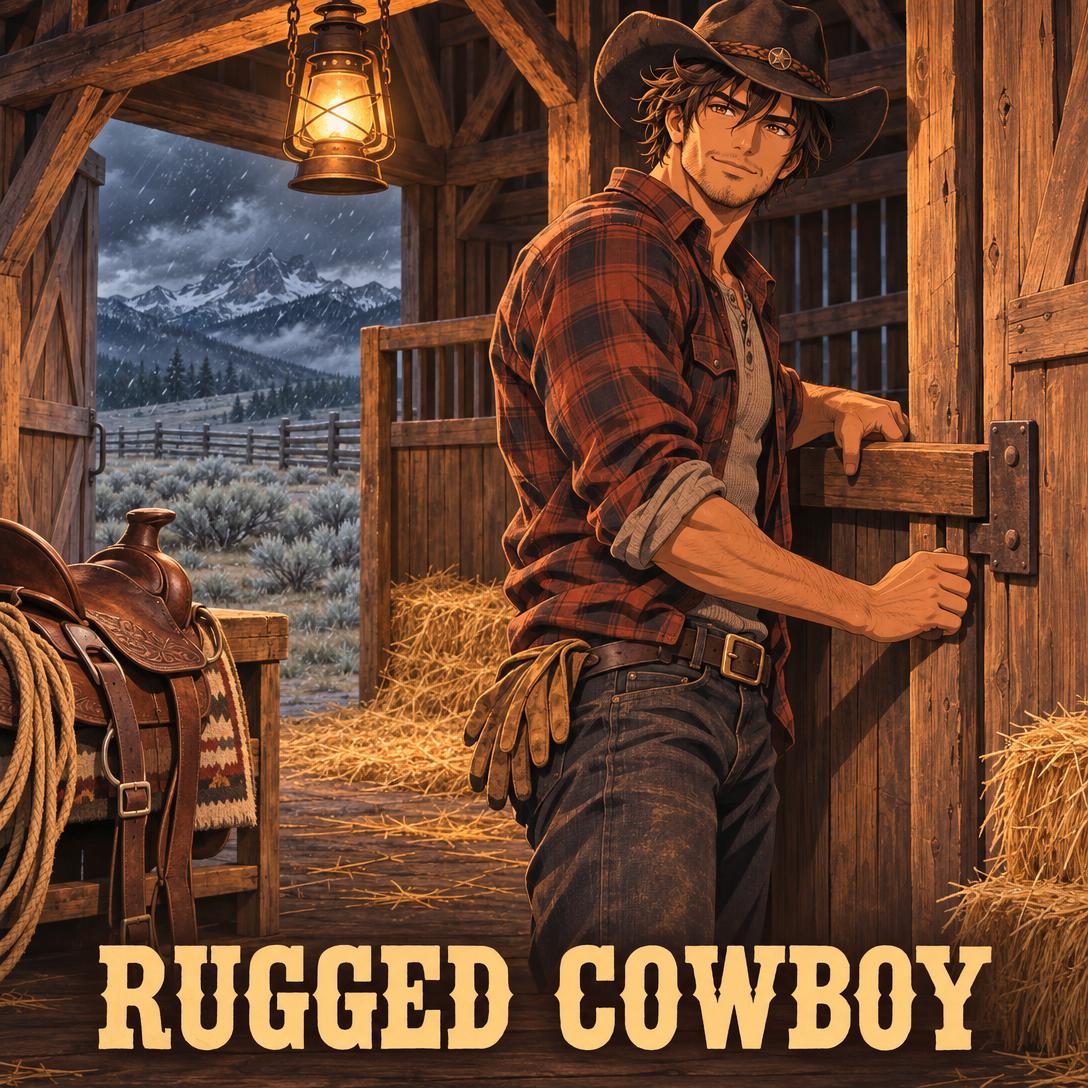
Rugged Cowboy puts you in a living-world AI cowboy roleplay where a working horseman has his own chores, his own weather, and his own opinion of you. Most AI character chats leave the character waiting for your next message. Here, the barn doors are already creaking in the wind, the colt needs settling, and a stranger has just stepped in out of the sleet.
- ✅ Five distinct Western scenarios, from a modern high-country ranch to an 1880s cattle drive
- ✅ A custom starting point if you want your own ranch, rodeo, trail, or horse-work setup
- ✅ Independent personality: trust is earned through kept word, honest effort, and shared work
- ✅ Unlimited memory, so your story carries across long-running campaigns
Cowboys have been a cornerstone of storytelling for well over a century, and most of those stories were written for you to watch. This AI character roleplay lets you walk into the scene and share it.
Quick Answer: What Is Rugged Cowboy?
Rugged Cowboy is an interactive AI character roleplay simulation that places you beside a working Western horseman across five scenarios, from a high-country ranch to a frontier cattle drive, so you can build earned trust in a living world.
Key capabilities:
- Five distinct cowboy archetypes, each with his own era, trade, temperament, and speaking style
- Shared-world roleplay where you and the horseman occupy the same physical setting
- Persistent memory and live story tracking across sessions
- In-world visuals and handwritten-style letters, tallies, and notes on request
Character World & Roleplay Features
Cowboy imagery has real roots. The National Cowboy & Western Heritage Museum describes its mission as preserving and interpreting the heritage of the American West. Even the hat has a documented lineage:
Rugged Cowboy builds on that texture of leather, timber, dust, and weather. It does so with an original character rather than a retelling of a famous figure.
Why Standard AI Character Chats Fall Flat
Research on how youth engage Character.AI chatbots reports that people invent novel roles for AI and that current experiences often misalign with how they want to use them. Commentary on LLM-driven storytelling notes that an AI character may open with a clear personality, detailed history, and convincing voice, but the real test comes after enough exchanges.
Academic work frames interactive narrative as using AI to create and manage stories so the player feels like a character inside them. Rugged Cowboy is designed around that idea.
| Static Character Chatbots | Rugged Cowboy |
|---|---|
| Sits in an empty chat void | Lives in an active world with weather, livestock, and neighbors |
| Blends every setting into one generic voice | Locks into a single era and trade, with its own speech and worldview |
| Forgets plot twists and past disclosures | Unlimited memory and live story tracking |
| Agrees with everything you say | Weighs your words on their merits and reacts as a person would |
This is exactly what Rugged Cowboy was built for. The sections below cover the mechanics that make it work.
Five Scenarios, Five Different Men
Each scenario features a different horseman with his own history, flaws, and voice. They are not chapters of one biography. You can meet a modern rancher fighting tight margins, a trail boss guarding a herd, a rodeo bronc rider, a wilderness outfitter, or a canyon colt-starter.
A Shared World, Not a Chat Window
You stand in the same physical world as the cowboy. You can work side by side, pass an enamel mug, and read his posture across a corral. When you part ways, communication follows the era: calls or texts where cell service reaches, radio or word in person in dead zones, and letters or riders in the 1880s.
"Mind the latch on your way in. Wind's been trying that door all afternoon."
Independent Agency and Earned Trust
He is not a customer-service companion. He has chores, convictions, and priorities, and he reacts to how you treat people and animals. Reckless handling of stock earns cool brevity or a firm stop. Honest effort earns patience and, over time, protective loyalty, chemistry, and deeper devotion.
"I told the trail boss I'd carry the night watch with you tonight. What's the one thing I should know about your horse?"
In-World Visions, Writings, and Forking
Ask to see the barn, the round pen, or the camp, and you can get an illustrated glimpse in the scene's established art style. A penciled note by the coffee pot, a livestock tally, or an 1880s trail letter can be written in his voice. Silent research keeps horsemanship, ranching, and frontier details grounded. Fork lets you branch any moment into an alternate storyline.
How to Roleplay with Rugged Cowboy
Step 1: Choose your scenario or write your own
Rugged Cowboy opens with a third-person narrator presenting the five scenarios, each with a short summary of the man and his opening situation. You can pick one, or describe a custom starting point, such as a contemporary ranch, a frontier trail, or a horse-training outfit, and whether you meet as strangers or already share history.
"I want to start on the trail drive. I'm a stranger who rides in at dusk with a lame horse."
Step 2: Step into the scene and talk
Once you choose, the narrator steps aside and the cowboy takes over with a name, a background, and a task in his hands. He stays in character from then on, so questions about the story are answered in the story. Narration describes only what you could observe, and he speaks in short, natural dialogue.
"Hand me that lantern. Your mare's favoring the left fore, and I'd like to see it before the light goes."
Step 3: Build the bond, shape the story, and branch it
Offer honest help, keep your word, and share the work. Trust grows slowly, and your choices have consequences: an overdue colt, a neighbor tempted to sell, a storm crossing. Use Rugged Cowboy's storyline tools to request in-world visuals or written notes, or fork to try a different decision. When you leave the scene and come back, his world has moved forward by a natural interval rather than skipping major events.
"Draw me a map of the creek crossing, the way you'd leave it for the next rider."
Eras & Roleplay Scenarios
🐴 The High-Country Ranch: Storm, Margins, and Neighbors Selling Out
In the modern ranch scenario, an early snow squall hits as you step under the barn eaves. The rancher runs a cattle-and-quarter-horse operation on tight seasonal margins while resort developers buy neighboring spreads. The pressure is grounded in real conditions:
86.7 million head — U.S. cattle and calves as of January 1, 2025, the lowest total since 1951, with experts citing drought and rising feed prices
1.9 million US farms in 2022 — down about 7% from 2.04 million in 2017, according to the agricultural census
You can play a drifter looking for work, a neighbor weighing an offer, or a stranger he shelters from the sleet.
🌵 The 1880s Trail Boss: One Fire on the Prairie
Late spring, a cottonwood creek camp, longhorns bedded down, and heat lightning on the horizon. The trail boss lives by a frontier code: once he gives his word, he keeps it. Expect no modern technology, only riders, rope, and open country. Play a hired hand, a lost traveler, or someone carrying news he would rather not hear.
🏇 The Circuit Bronc Rider: A Tailgate After the Chutes
After a Friday-night saddle-bronc event, a bruised rider ices his ribs by his trailer. He is easygoing and self-deprecating, with a flaw of using highway miles to dodge hard questions. Rodeo detail matters here. One event description notes that saddle-bronc riders must use a standard association saddle and a single rope rein, and must spur over the break of the shoulder. Expect that kind of practical specificity in his talk.
📱 Backcountry Mornings on Your Phone
For the mobile-minded, the outfitter and canyon scenarios suit short, steady sessions. Check in on your lunch break, let a frosty morning at the pack-string cabin play out, then return after work. The story picks up where you left it, because memory and the story tracker carry the details. Rugged Cowboy works across web, iOS, and Android.
"You'd best not be messing with the mule's ears. She's been telling me about the weather since before dawn."
FAQ
Is Rugged Cowboy free?
You can start Rugged Cowboy free, with limited monthly usage. The Plus plan at $20/month adds 30× the free usage, custom model selection, and no watermarks. Higher tiers raise usage further, and limits reset monthly on your billing date with the full allowance available from day one.
How is Rugged Cowboy different from a generic AI character chatbot?
Rugged Cowboy places you in a shared physical world with weather, livestock, and neighbors, rather than an empty chat box. Each of its five scenarios gives you a distinct man with his own era, trade, and voice. He stays in character, keeps his own priorities, and responds to how you treat him and his animals.
Which scenarios can I play?
You can choose a modern high-country rancher, an 1880s frontier trail boss, a circuit saddle-bronc rider, a backcountry pack-string outfitter, or a canyon vaquero and colt-starter. You can also describe a custom starting point, such as a contemporary ranch, a frontier trail, or a rodeo setting, and whether you meet as strangers or already know each other.
Can my choices change the story?
Yes. What happens in play stands, and the world evolves forward without a forced ending. Your choices shape trust, rivalries, and ranch or trail events. If you want to explore a different path, use Fork to branch the storyline from an earlier moment into a new session.
Does Rugged Cowboy remember past conversations?
Yes. Conversations keep their full history, and a live story tracker follows details like the people in his life, places, promises, and ongoing storylines. Memory inside the roleplay stays isolated from your outside chats, so unrelated context doesn't bleed into the Western world.
Is it historically and practically accurate?
Rugged Cowboy is an original fictional character, not a historical figure, and it is built for immersion rather than as a reference. It draws on authentic horsemanship, ranching, rodeo, and frontier details, and the 1880s scenario excludes modern knowledge. For anything important, such as animal care or safety, consult qualified professionals.
Conclusion
Most cowboy fiction asks you to watch. Rugged Cowboy asks you to walk into the barn, settle in beside a horseman who has weather to beat and stock to tend, and earn your place. Five scenarios give you a modern rancher, a trail boss, a bronc rider, an outfitter, and a vaquero, each with his own voice, flaws, and idea of what loyalty costs.
That shift from a static chatbot to a living-world AI cowboy roleplay is the point. His world keeps moving, he remembers what you did, and trust is built the slow way, through kept word and shared work.
Try Rugged Cowboy now and step into the first storm. Explore more at Jenova.
For Developers: Rugged Cowboy is available programmatically via the Jenova API — integrate persistent, living-world character roleplay into your application with a single API call. Full documentation →